Artwork
White Cow
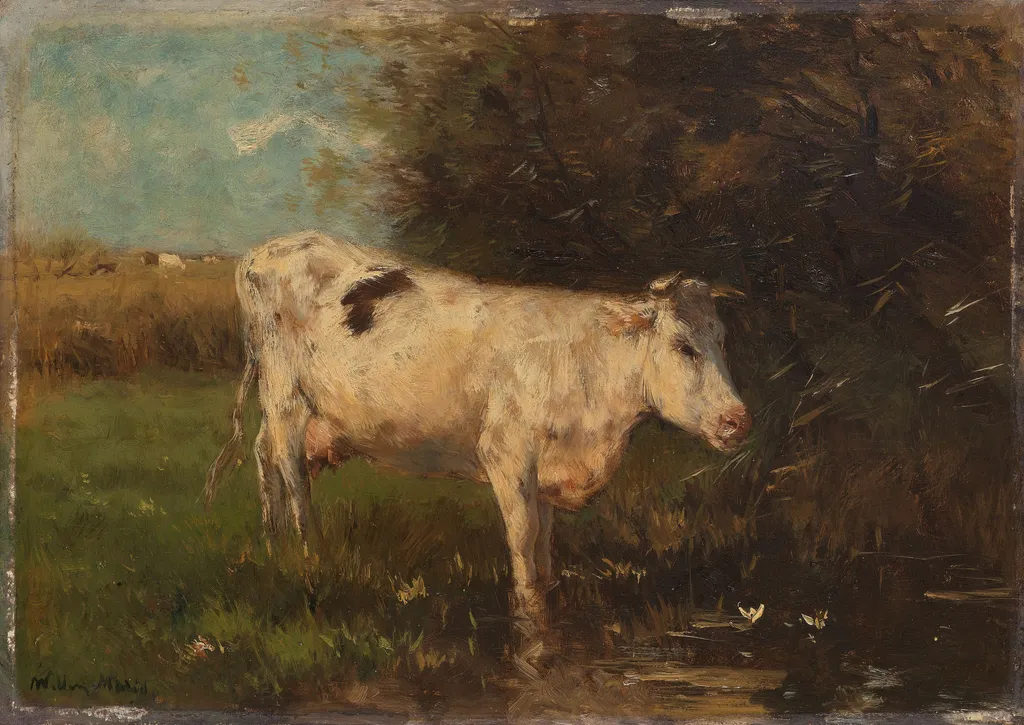
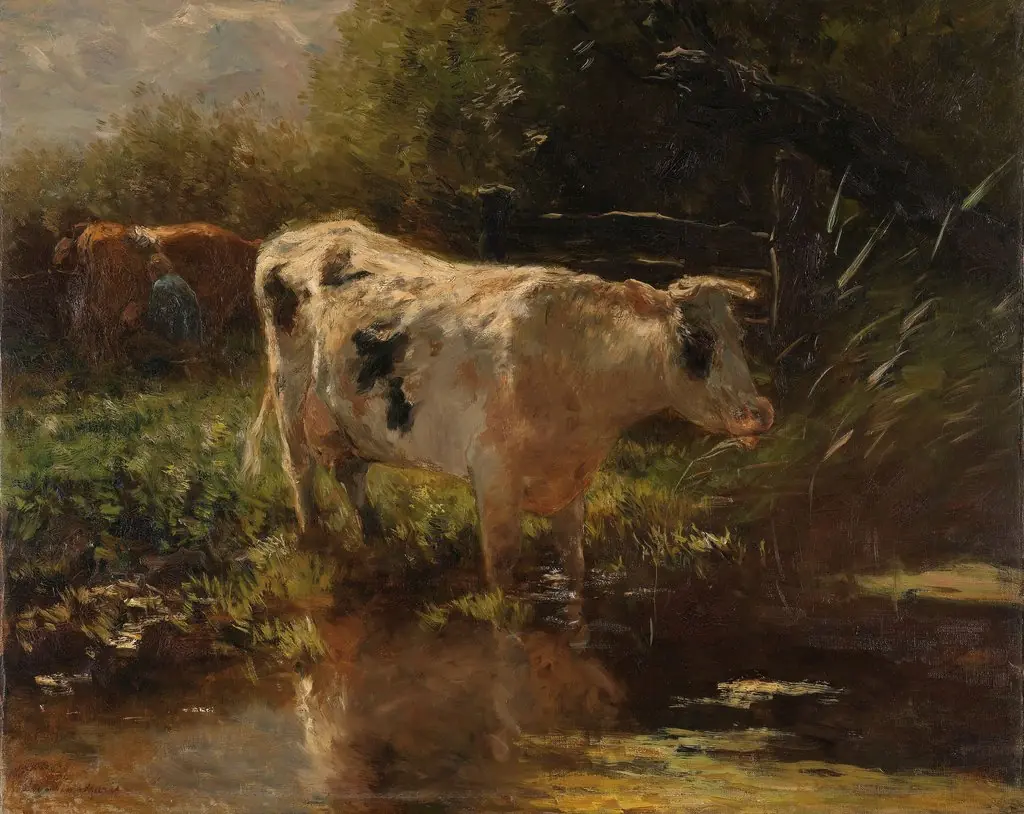
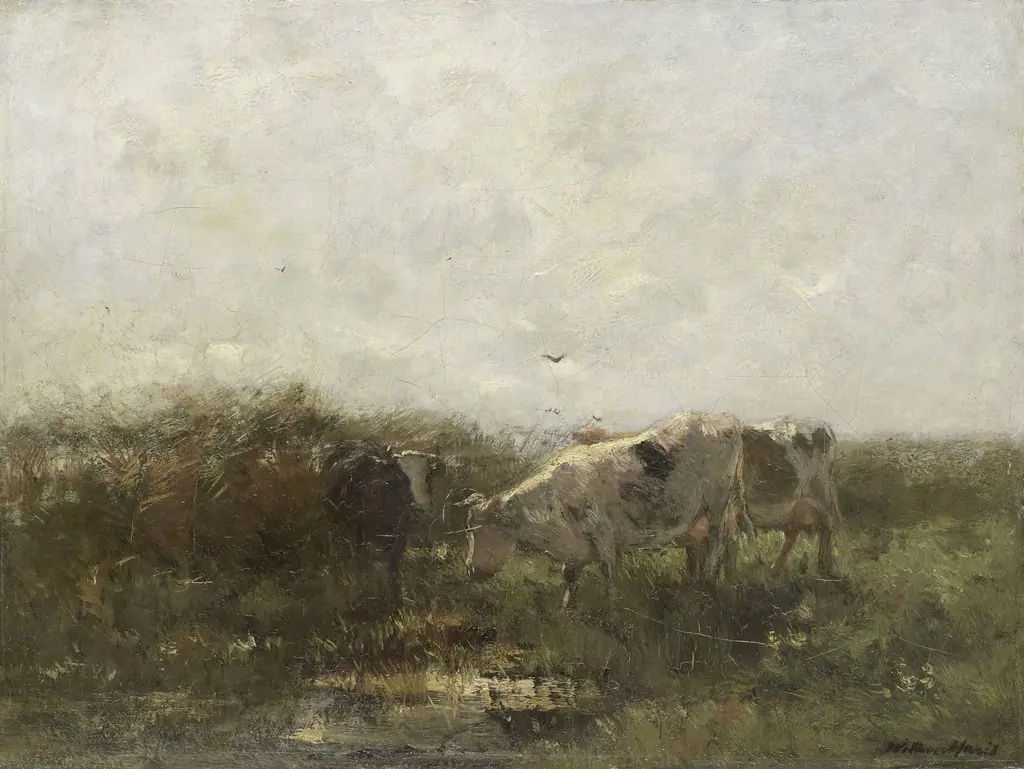
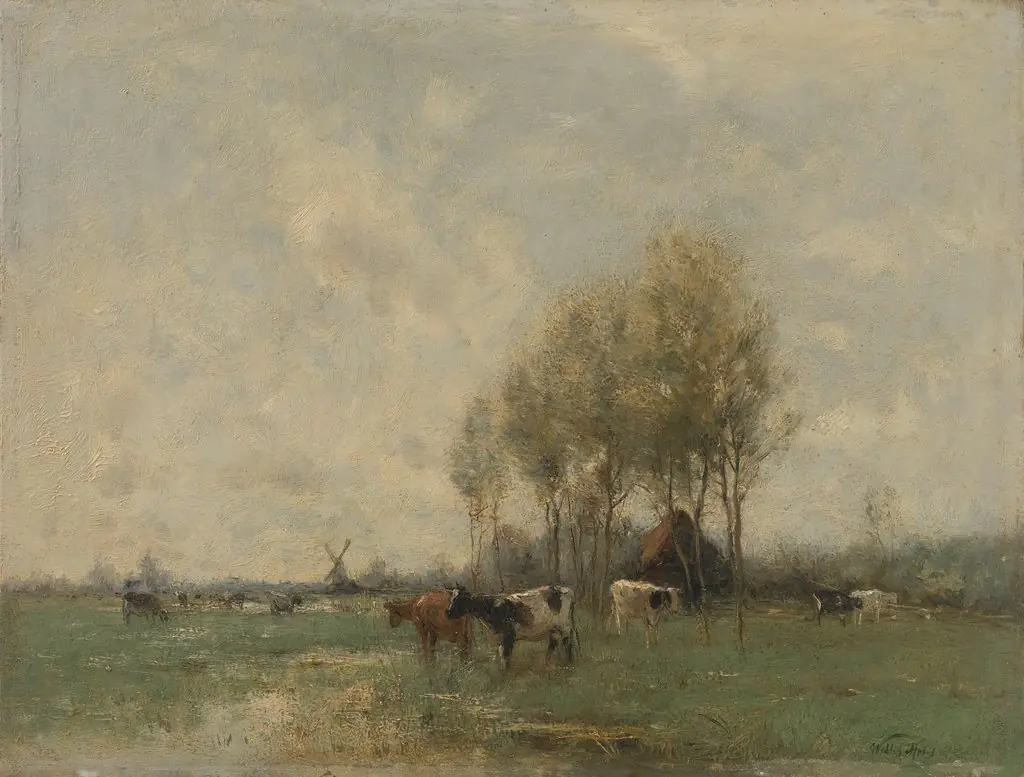
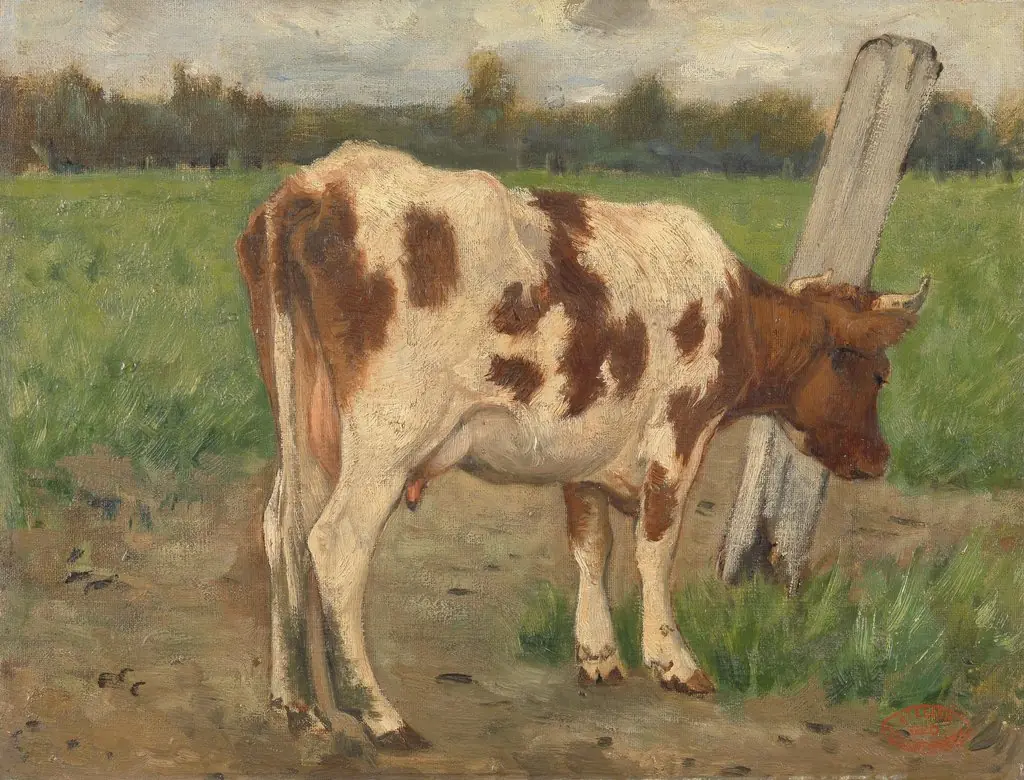
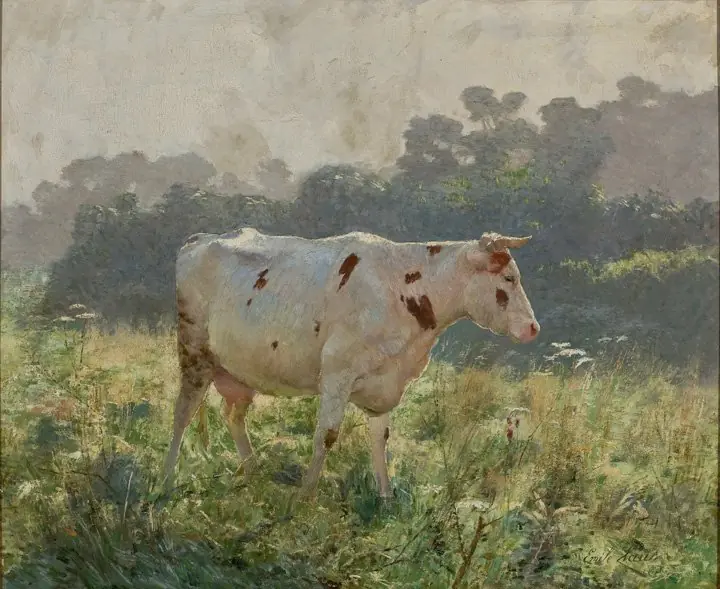
White Cow is an oil painting by the Impressionist artist Willem Maris. It dates from 1898 and is held in the collection of the Rijksmuseum.
About this work
Subject & Meaning
The painting belongs to the Dutch animalier tradition, emphasizing the animal’s presence within a tranquil, open landscape rather than narrative or allegory.
The subject of Willem Maris’s White Cow (1895) is a single white cow positioned in a rural pasture, framed by grass, water, and sky. The painting belongs to the Dutch animalier tradition, emphasizing the animal’s presence within a tranquil, open landscape rather than narrative or allegory. Maris’s rendering of the cow’s form and the surrounding environment reflects a focus on naturalistic observation and pastoral serenity, aligning with 19th-century Dutch realist tendencies.
The work’s composition and the cow’s calm demeanor suggest an idealized vision of rural life, devoid of industrial modernity, evoking themes of harmony with nature.
Technique & Style
Created in 1895, White Cow is an oil painting executed on a wooden panel support. The work measures 27 centimeters in height and 37 centimeters in width, classifying it as a small-scale animal art piece. Willem Maris applied oil paint to depict a rural pastoral scene featuring a cow within a landscape that includes grass, a body of water, a shore, and the sky.
The medium of oil on panel was a traditional choice for Dutch animal painters, allowing for the detailed rendering of textures and light characteristic of the genre. The composition focuses on the interplay between the animal subject and its natural surroundings, emphasizing the quiet atmosphere of the countryside.
History & Provenance
Willem Maris executed the oil painting White Cow in 1895. Created on a panel support, the work measures 27 by 37 centimeters and depicts a bovine subject within a rural landscape. The piece entered the collection of the Rijksmuseum, where it remains housed.
While the specific circumstances of its commission and the detailed chain of ownership prior to its museum acquisition are not specified in the available records, the work's inception is firmly established as 1895, marking it as a late example of the artist's animal genre studies.
Context
White Cow (1895) is an oil painting on panel by Dutch artist Willem Maris, exemplifying his specialization in animal and rural genre scenes characteristic of the Hague School. The work depicts a solitary cow in a pasture beside water and sky, reflecting 19th‑century Dutch pastoral realism. It is part of the Rijksmuseum collection, underscoring its significance within Dutch art history and the museum’s focus on national genre painting.
Scholarship on Maris often situates White Cow alongside his broader oeuvre of livestock studies, highlighting the artist’s role in elevating everyday rural subjects to fine‑art status.
Overview
Willem Maris's "White Cow," painted in 1898, is an oil painting that captures a tranquil pastoral scene. The artwork features a single cow positioned by a body of water, surrounded by lush grass. This piece exemplifies Maris's focus on rural life and animal subjects, characteristic of his late 19th-century output. It is currently part of the collection at the Rijksmuseum.
Own this work as a print
Artist & collection