Artwork
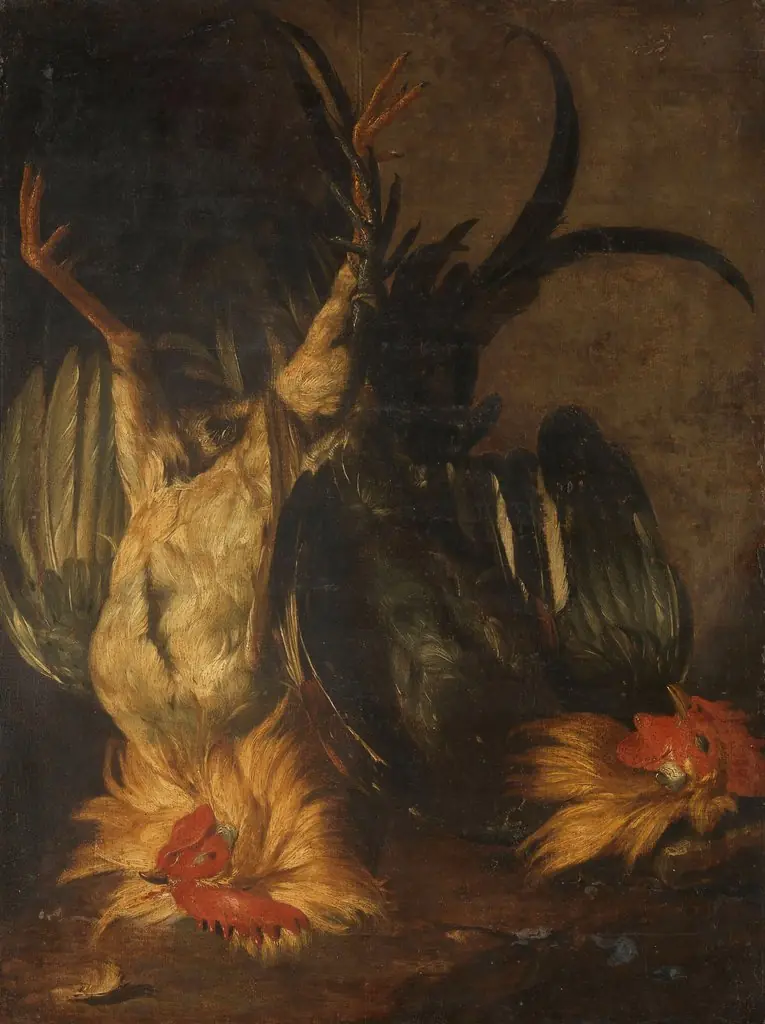
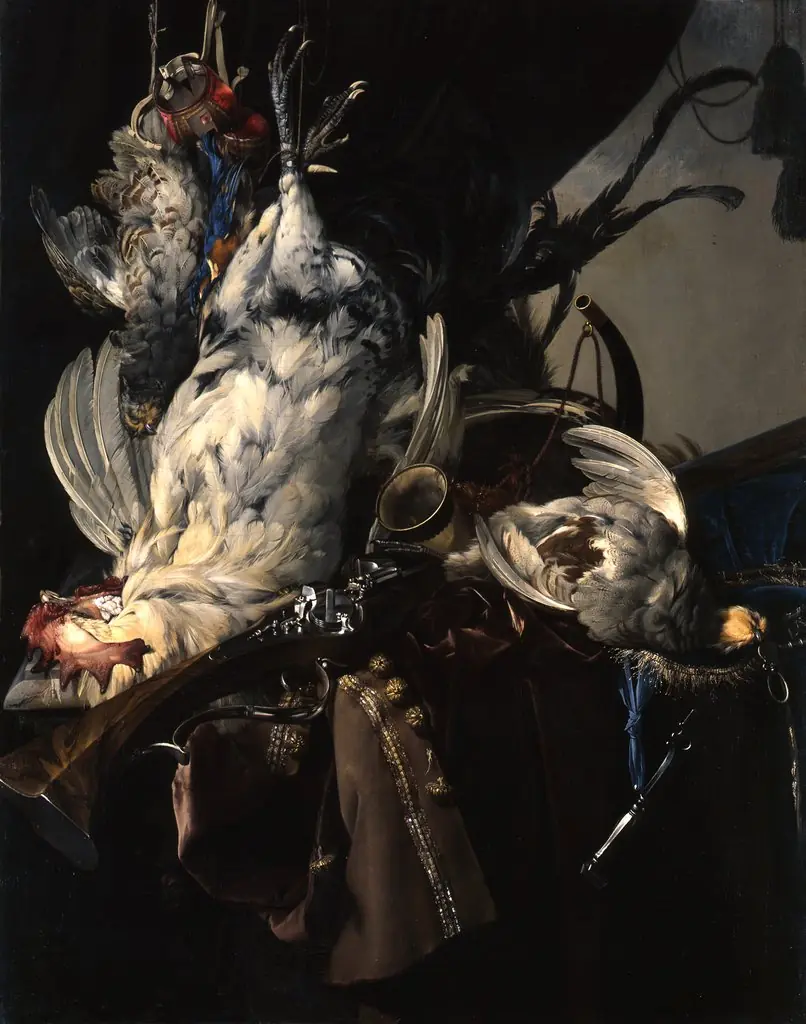
Still Life with Fowl
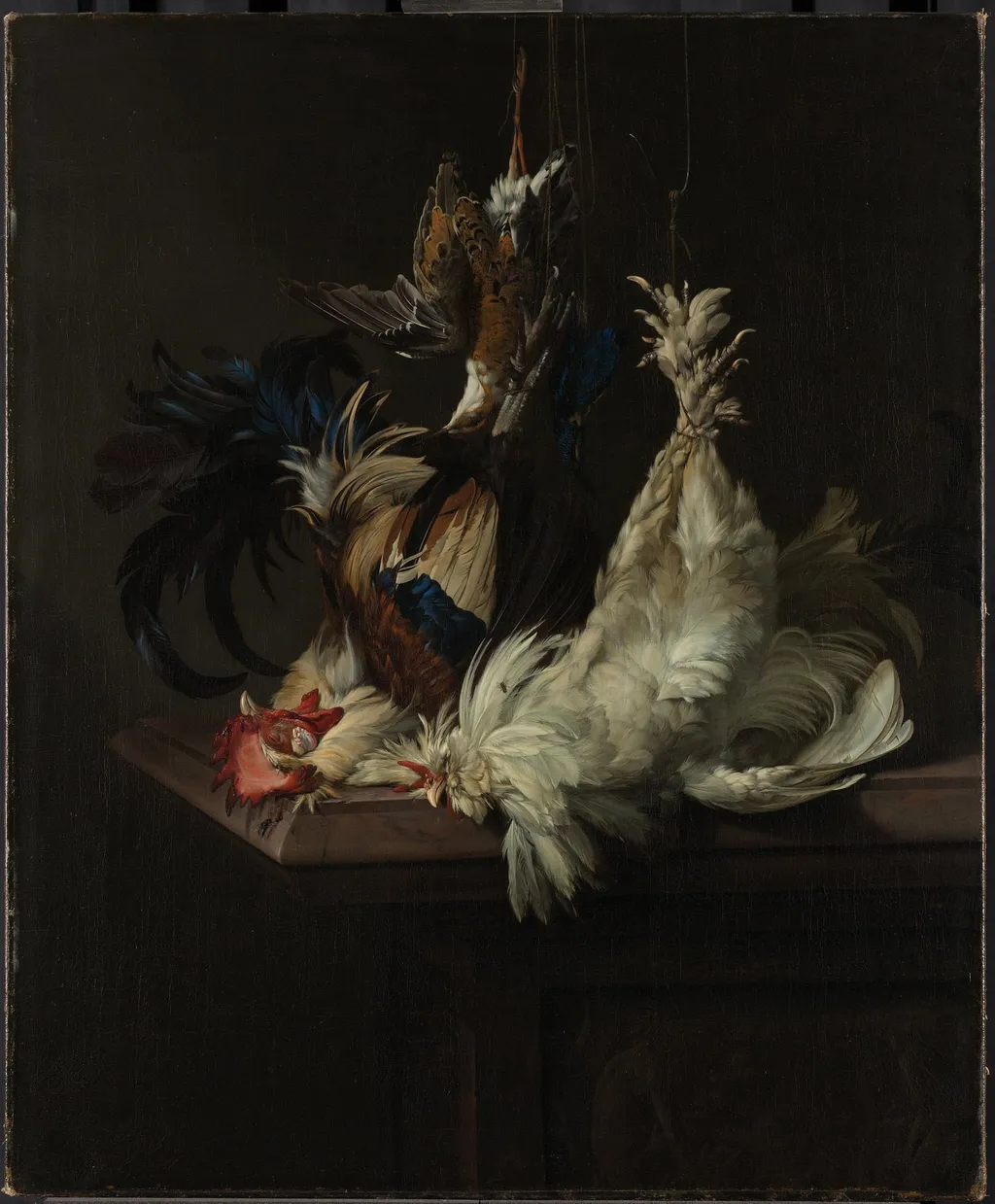
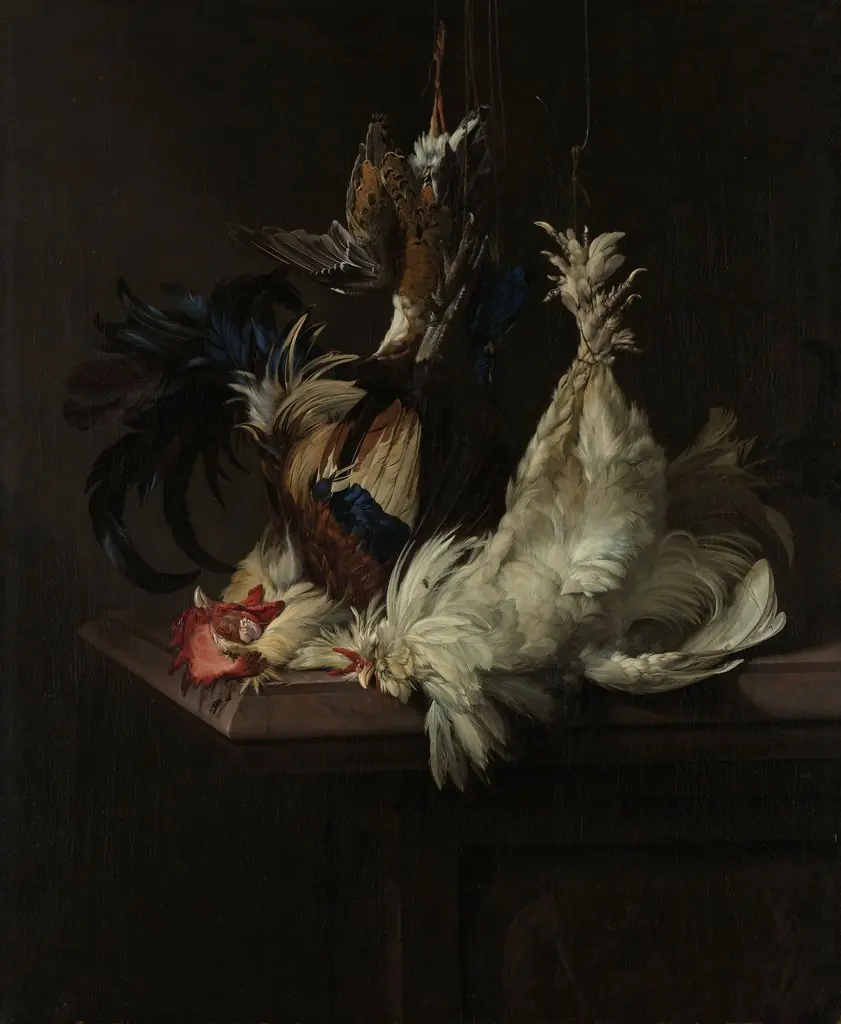
Still Life with Fowl is an unspecified painting by the Dutch Golden Age artist Willem van Aelst. It dates from 1658 and is held in the collection of the Rijksmuseum.
About this work
History & Provenance
The 1658 painting, listed in German-language scholarship as "Stillleben mit totem Geflügel", is part of the museum's collection of works by Willem van Aelst.
Willem van Aelst painted Still Life with Fowl in 1658, likely created in Amsterdam after his return from Italy. The work entered the collection of the Rijksmuseum in Amsterdam, where it remains in the museum's holdings. It was later acquired by the National Gallery of Art in Washington, D.C., and has been part of its collection since 1943.
The painting has been exhibited at the National Gallery of Art in a 2012 exhibition titled 'Elegance and Refinement: The Still-Life Paintings of Willem van Aelst'.
Still Life with Fowl is held by the Rijksmuseum in Amsterdam. The 1658 painting, listed in German-language scholarship as "Stillleben mit totem Geflügel", is part of the museum's collection of works by Willem van Aelst. No specific inventory or accession number is provided in the sources, nor is any exhibition history documented for the work.
Context
Willem van Aelst established himself as one of the most prominent still-life painters of the Dutch Golden Age, specializing in floral and game subjects. His work is notable for introducing asymmetry into bouquet still lifes and for his exceptional skill as a colorist, achieving remarkable mastery in the rendering of fabrics, metals, and bird feathers. He was among the earliest artists to specialize specifically in hunting still lifes.
His international career significantly shaped his context; after working in France and serving as court painter to Grand Duke Ferdinando II de' Medici in Florence, he returned to Amsterdam in 1656. There, his success allowed him to reside on the Prinsengracht. Van Aelst's influence endured through his prominent pupils, including Rachel Ruysch and Maria van Oosterwijck, and his followers, such as Jan van Huysum.
The 1658 painting Still Life with Fowl, housed in the Rijksmuseum, exemplifies his focus on dead game and poultry, a genre he helped pioneer.
Legacy
Still Life with Fowl (1658) belongs to the body of work that secured Willem van Aelst's standing as one of the most prominent still-life painters of his generation in Amsterdam. His broader output, including this early Amsterdam-period game piece, is held in major public collections such as the Rijksmuseum, the Mauritshuis, the National Gallery of Art in Washington, and thirteen public collections in the United Kingdom. Van Aelst's specialization in hunting still lifes, a field in which he was among the earliest practitioners, and his introduction of asymmetry into floral compositions shaped subsequent generations of Dutch still-life painters.
His pupils Maria van Oosterwijck, Isaac Denies, Ernst Stuven, and Rachel Ruysch carried his methods forward, while his followers Anthonie Beauregaert and Cornelis Lelienbergh extended his approach. He is also documented as an influence on Johann Daniel Bager, Jean-Baptiste Oudry, Jan van Huijsum, Frank Pietersz. Verheyden, and Paolo Porpora.
A 2012 exhibition at the National Gallery of Art, "Elegance and Refinement: The Still-Life Paintings of Willem van Aelst," reflects the continuing scholarly attention devoted to his oeuvre.
Overview
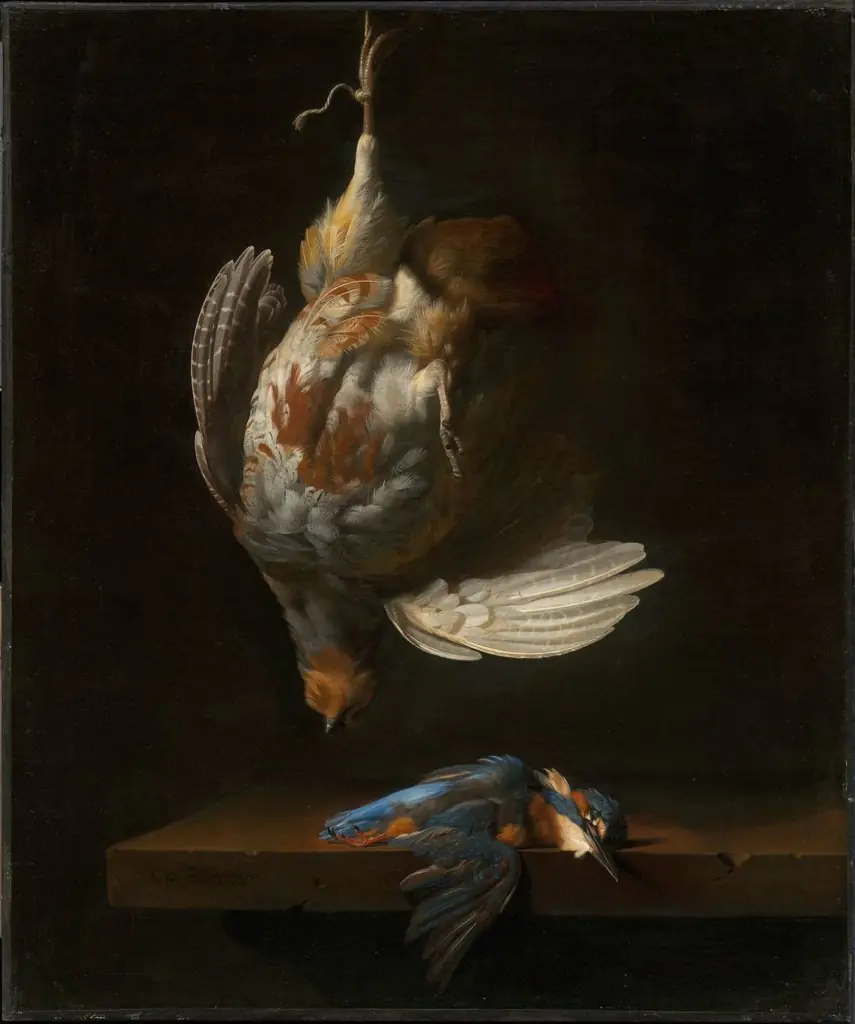
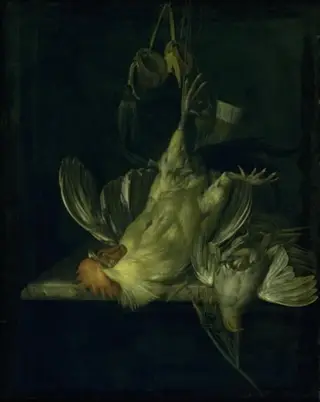
Willem van Aelst’s Still Life with Fowl presents an arrangement of four dead birds, two roosters, a water rail and a kingfisher, suspended from cords and displayed above a polished marble slab. The composition is rendered with a restrained palette of muted grays, soft violets and cool blues, giving the scene a calm, almost meditative quality.
Subject & Meaning
The work depicts the birds in an inverted, almost theatrical pose, emphasizing their texture and form rather than narrative content. Small flies are shown crawling over the feathers, a detail that blurs the line between painted illusion and possible actual insects, inviting viewers to contemplate the boundary between representation and reality.
Technique & Style
Van Aelst employs meticulous brushwork to achieve a lifelike surface, especially in the rendering of plumage, which appears almost tactile. The subtle modulation of light across the marble base and the delicate handling of atmospheric blues and violets reflect the Dutch still‑life tradition’s focus on surface detail and controlled composition.
Own this work as a print
Artist & collection
Artist
Willem van Aelst (16 May 1627 – buried 22 May 1683) was a Dutch Golden Age artist who specialized in still-life painting with flowers or game.