Artwork
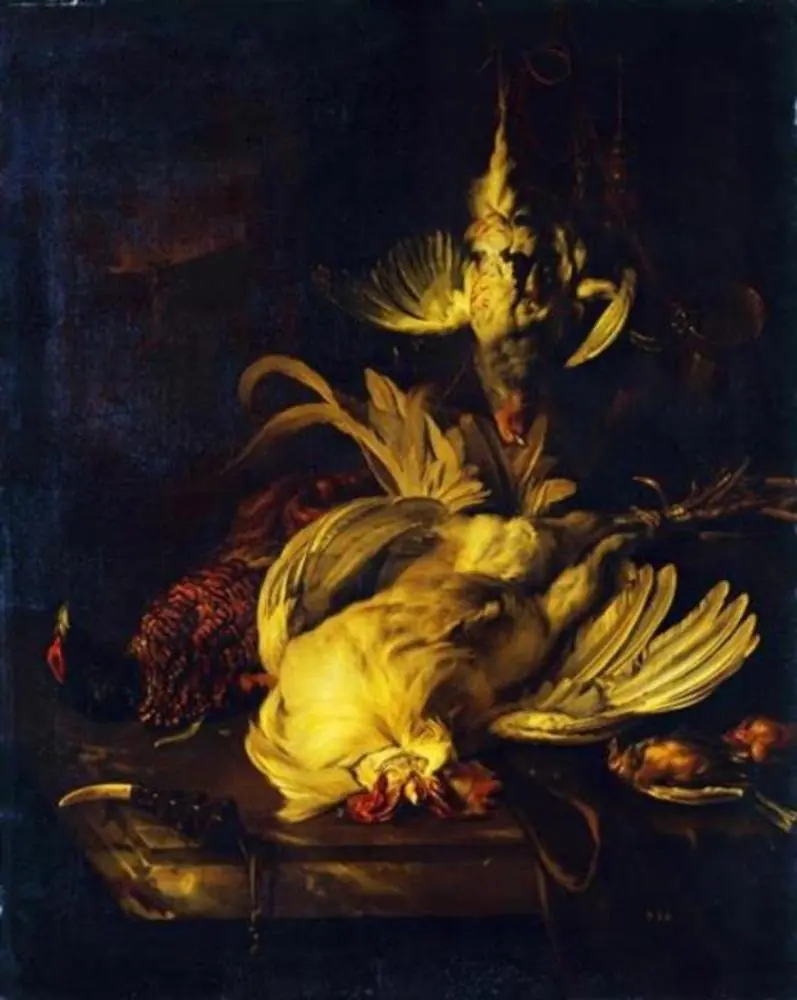
Still life with game and hunting gear
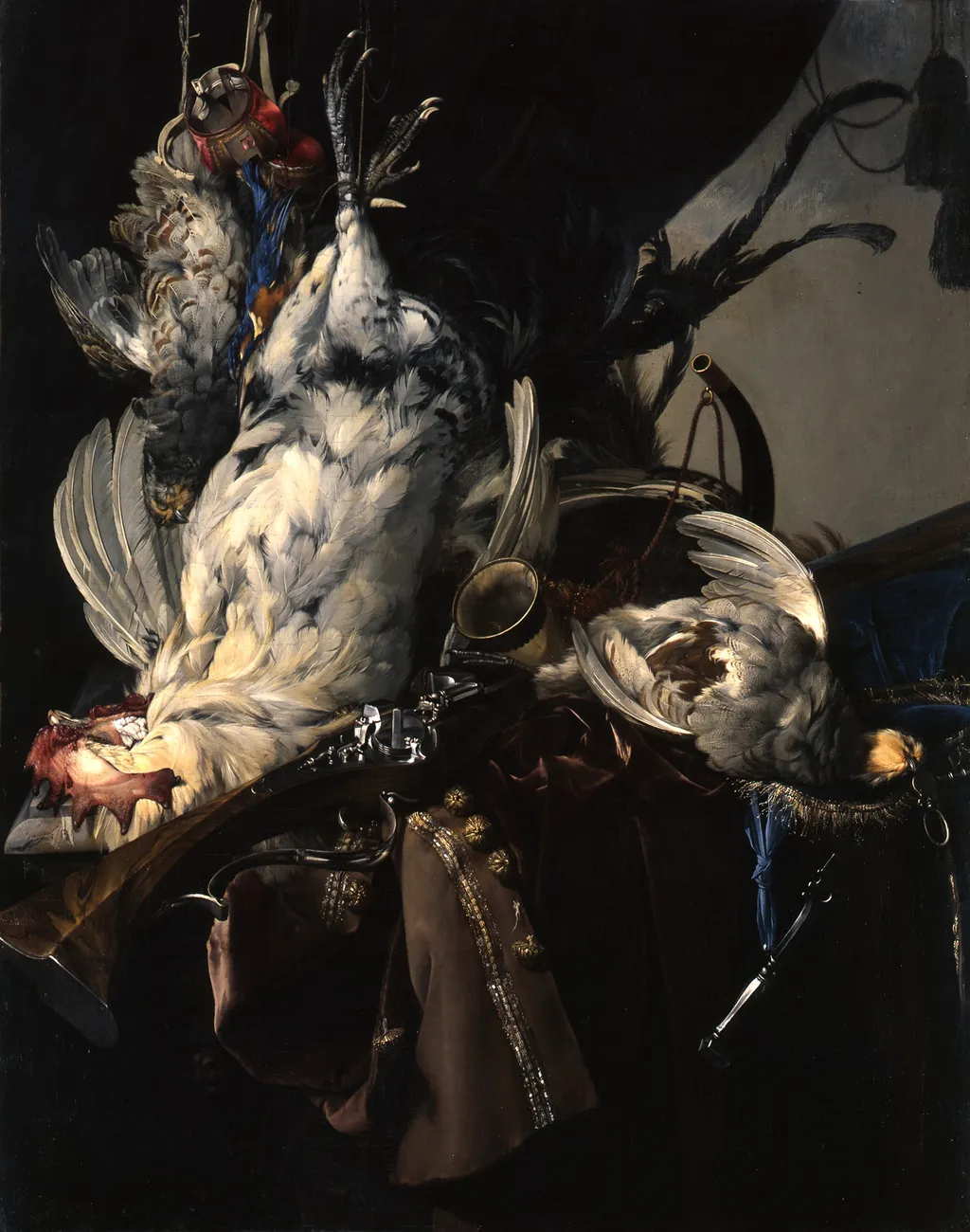
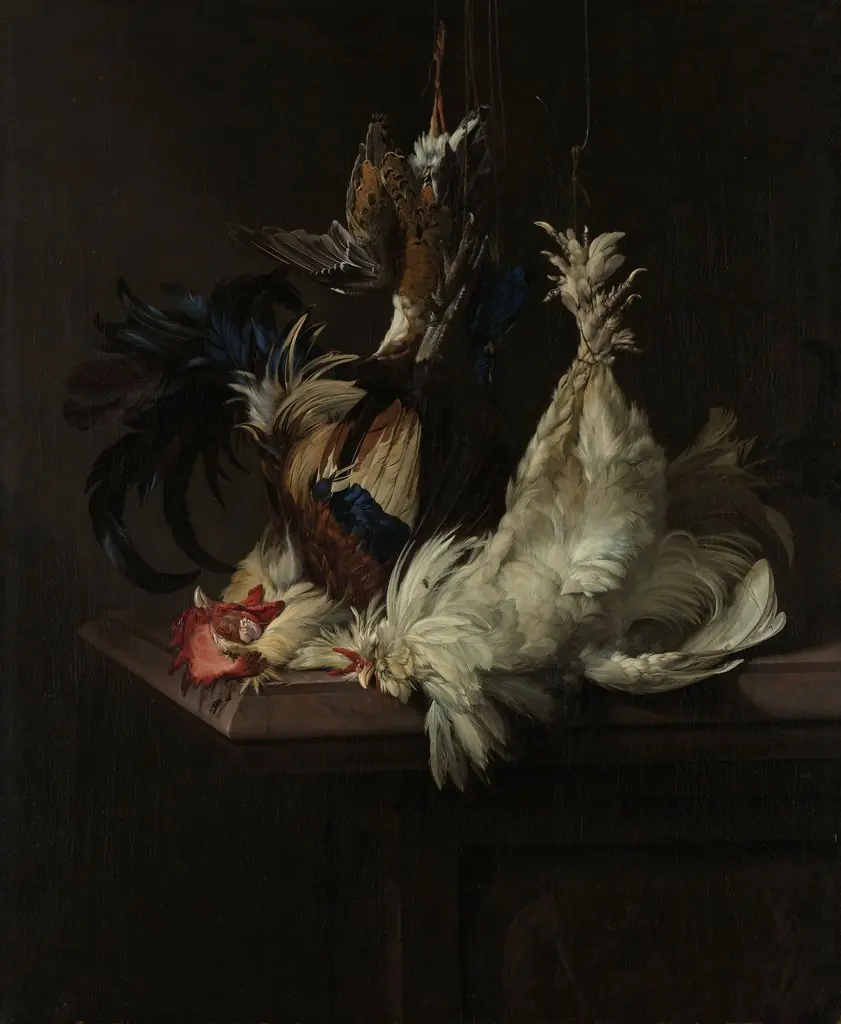
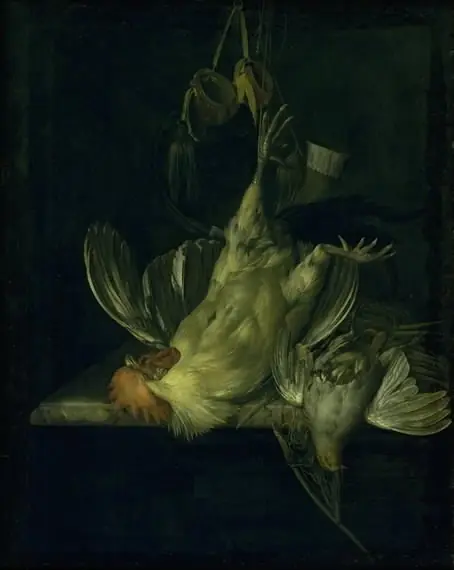
Still life with game and hunting gear is a paint painting by the Dutch Golden Age artist Willem van Aelst. It dates from 1660 and is held in the collection of the Gemäldegalerie Berlin.
About this work
Subject & Meaning
The composition combines realistic animal depiction with symbolic hunting accessories to convey themes of mortality and human control over the wild.
The painting depicts a dead Grey Partridge alongside a rifle and hunting equipment, symbolizing the hunter's successful pursuit and the abundance of the natural world. These elements reference traditional Dutch hunting still life iconography that celebrates mastery over nature and the pleasures of the chase. The work reflects 17th-century Dutch cultural values where such still lifes served as moral and aesthetic statements about order, skill, and the fleeting nature of life.
The composition combines realistic animal depiction with symbolic hunting accessories to convey themes of mortality and human control over the wild.
The painting is housed in the Gemäldegalerie Berlin, part of the Kaiser Friedrich Museumsverein collection.
Technique & Style
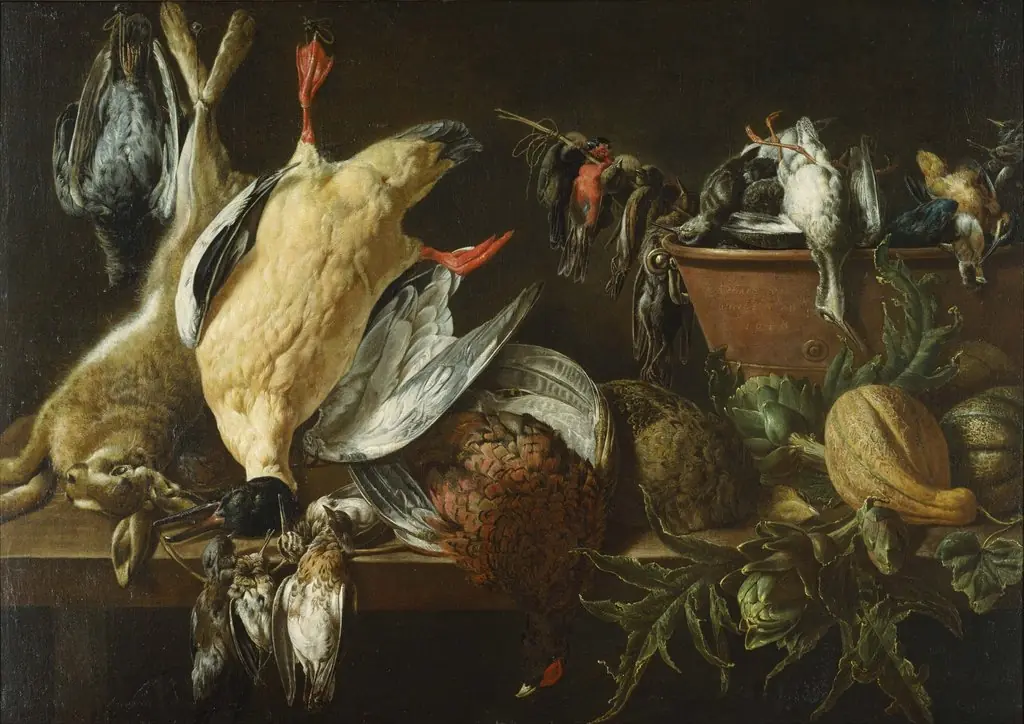
The work is executed in paint on canvas, a standard support for seventeenth-century Dutch still life painting. Its dimensions are 86.5 cm in height by 68 cm in width, giving it a vertical format suited to the hanging display of game pieces and accoutrements. The composition depicts a chicken, a rifle, and a Grey Partridge, presenting the hunting subject matter through the combination of dead game and the tools of the chase.
Willem van Aelst's handling reflects the refined Dutch still life tradition of 1660, in which such subjects were typically rendered with careful attention to surface textures and tonal contrasts between soft plumage, metallic weaponry, and the woven or fabric elements of the hunting gear. The vertical canvas format supports the cascading arrangement characteristic of hanging game compositions.
History & Provenance
The painting is housed in the Gemäldegalerie Berlin, where it is accessioned under the inventory of the Kaiser Friedrich Museumsverein (KFMV) and Marcus Kappel. It has been part of the museum's collection since its acquisition, forming a continuous exhibition presence within the institution's displays of Dutch Golden Age still lifes. The work was created in 1660 by Willem van Aelst and remains on view in the Gemäldegalerie's permanent collection.
Context
Willem van Aelst’s Still Life with Game and Hunting Gear (1660) occupies a pivotal place in the development of Dutch Golden Age still-life painting, particularly within the subgenre of jachtstillevens (hunting still lifes). Scholars highlight van Aelst’s technical mastery, evident in the meticulous rendering of textures, from the iridescent feathers of the game birds to the reflective surfaces of the rifle and metalware, which exemplifies the heightened illusionism characteristic of late 17th-century Dutch still lifes. His work is often situated within a broader European context, reflecting influences from Italian and Flemish traditions while advancing a distinctly Dutch emphasis on naturalism and material abundance.
Critical reception has positioned van Aelst as a key figure in the transition from the austere, symbolic still lifes of the early 17th century to the more opulent, decorative compositions of the later Baroque period. The painting’s inclusion in the Gemäldegalerie Berlin underscores its historical significance, as the museum’s collection is recognized for preserving works that define the evolution of still-life painting in Northern Europe. The work’s provenance, tied to the Kaiser Friedrich Museumsverein and Marcus Kappel, further attests to its esteemed status among collectors and institutions.
Overview
Still Life with Game and Hunting Gear is a 17th-century painting by Dutch artist Willem van Aelst, held in the Gemäldegalerie Berlin.
Own this work as a print
Artist & collection
Artist
Willem van Aelst (16 May 1627 – buried 22 May 1683) was a Dutch Golden Age artist who specialized in still-life painting with flowers or game.