Artwork
Portrait of Diederik, Baron van Leyden van Vlaardingen with his Wife and three Sons
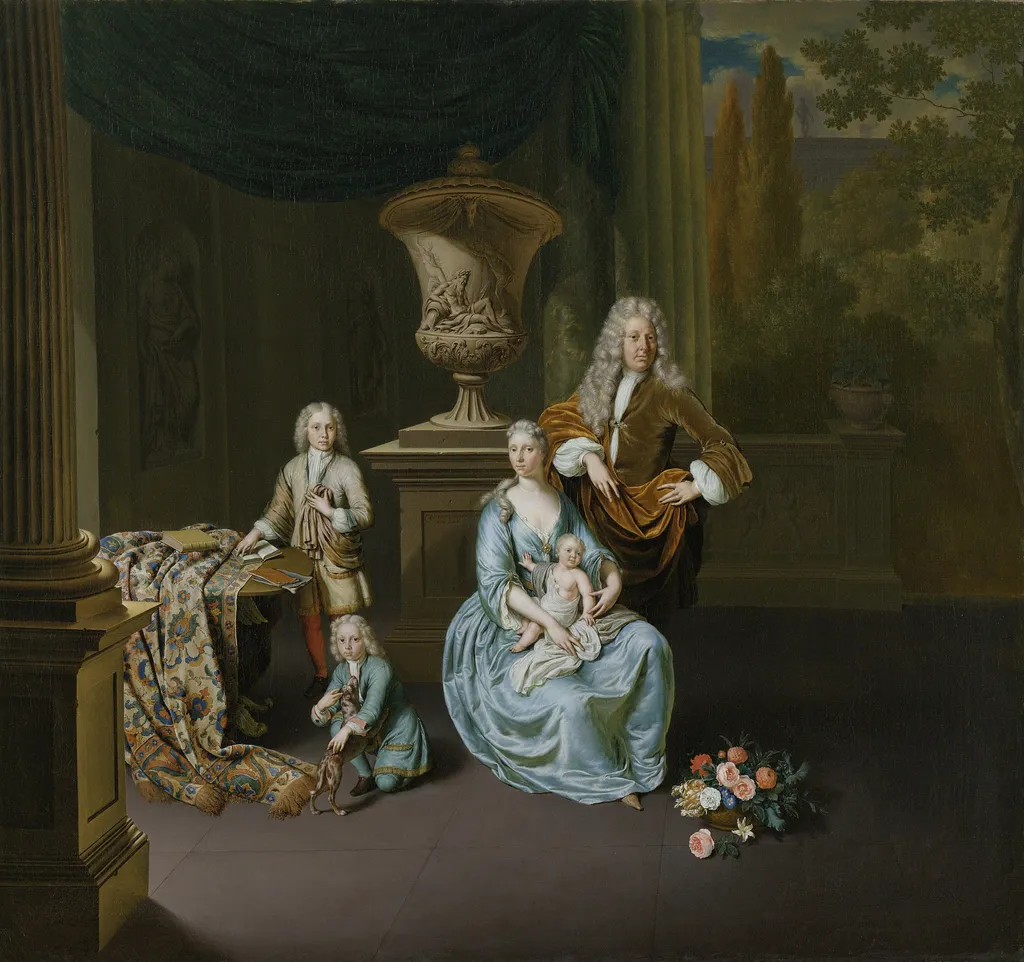
Portrait of Diederik, Baron van Leyden van Vlaardingen with his Wife and three Sons is an oil painting by Willem van Mieris. It dates from 1728 and is held in the collection of the Rijksmuseum.
About this work
History & Provenance
According to the associated catalogue entry, it is classified as a portrait executed in oil paint on canvas and dated 1728.
The portrait was created by Willem van Mieris in 1728. Executed in oil on canvas, the work measures 88 cm in height and 95 cm in width. It depicts Diederik, Baron van Leyden van Vlaardingen, his wife, and their three sons. The painting is currently held in the collection of the Rijksmuseum.
The painting is held by the Rijksmuseum in Amsterdam, as recorded in its collection and location data. According to the associated catalogue entry, it is classified as a portrait executed in oil paint on canvas and dated 1728.
No specific inventory or accession number is provided in the available sources, and no exhibition history is documented.
Overview
Willem van Mieris painted this family portrait in 1728 using oil on canvas. The work, now in the Rijksmuseum, presents Diederik, Baron van Leyden van Vlaardingen, his wife, and their three sons within an interior setting. The composition balances the figures across the picture plane, emphasizing the relationships among the family members.
Subject & Meaning
The central figure, the baron, stands beside his wife, who cradles an infant, while the two older sons occupy the foreground. The arrangement conveys lineage and continuity, highlighting the baron’s role as patriarch and the family's social standing. The inclusion of a book and a pet dog adds layers of education and domesticity to the scene.
Technique & Style
Van Mieris renders the textiles with meticulous detail, achieving a tactile quality that suggests the richness of the garments. Light falls across the figures, creating subtle chiaroscuro that models forms and adds depth. The background features a large vase and a painted landscape, integrating decorative elements typical of early‑18th‑century Dutch portraiture.
Context
The painting reflects the social aspirations of Dutch nobility in the early 1700s, where portraiture served both as personal commemoration and as a display of wealth. The baron’s wig, the sons’ elaborate attire, and the opulent interior furnishings all signal status within the hierarchical society of the Dutch Republic.
Own this work as a print
Artist & collection

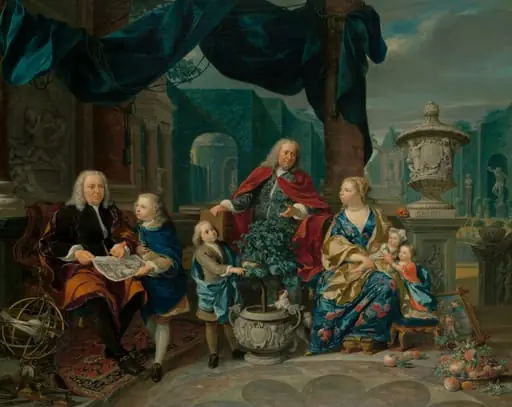 Portrait of David van Mollen and Son-in-Law Jacob Sydervelt with his Family
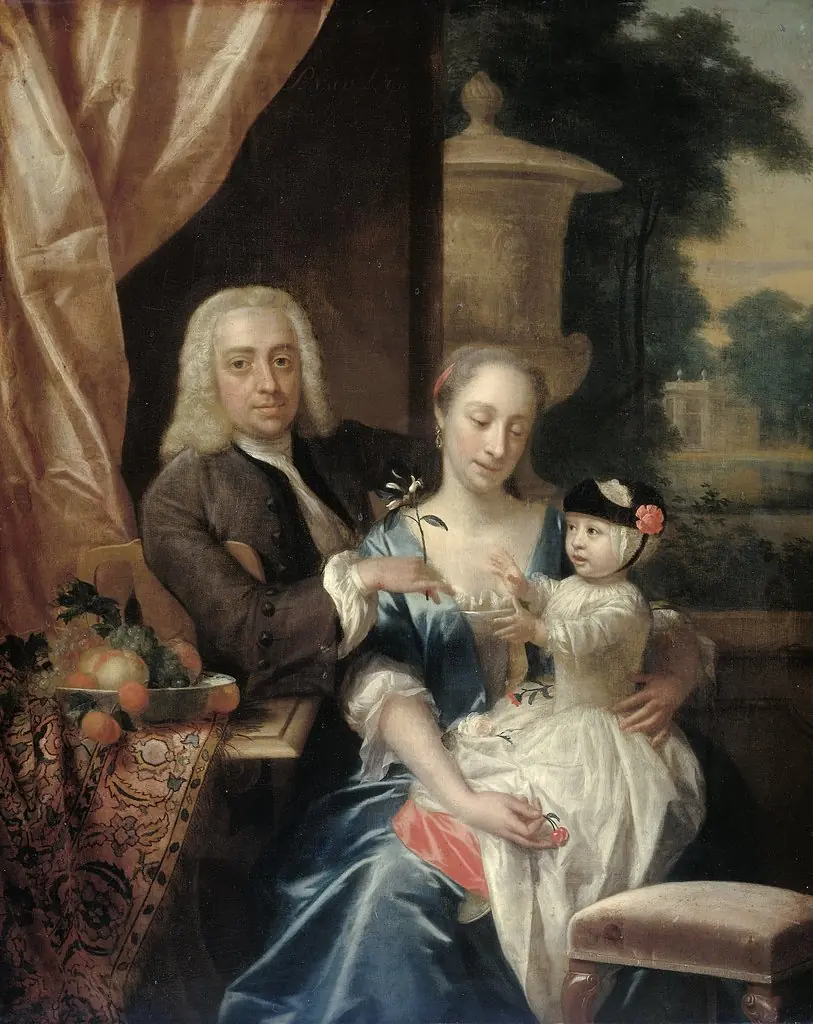 Family Portrait of Isaac Parker, his Wife Justina Johanna Ramskrammer and their young Son Willem Alexander
 A Family Group on a Terrace in the Grounds of a Villa. Possibly the English Businessman George Jackson and his Family
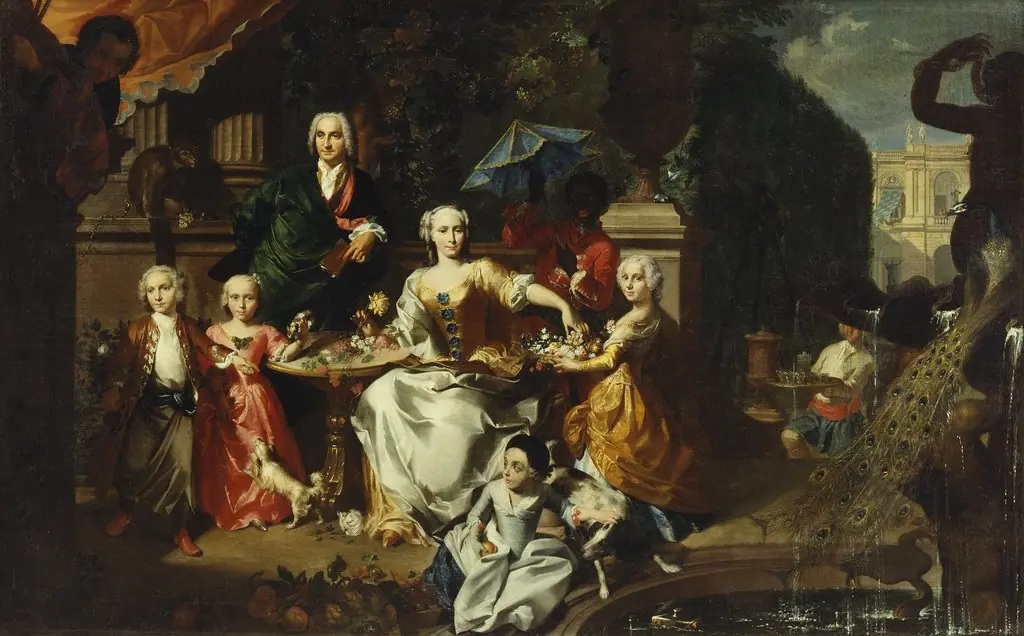 A Family Group on a Terrace in the Grounds of a Villa. Possibly the English Businessman George Jackson and his Family
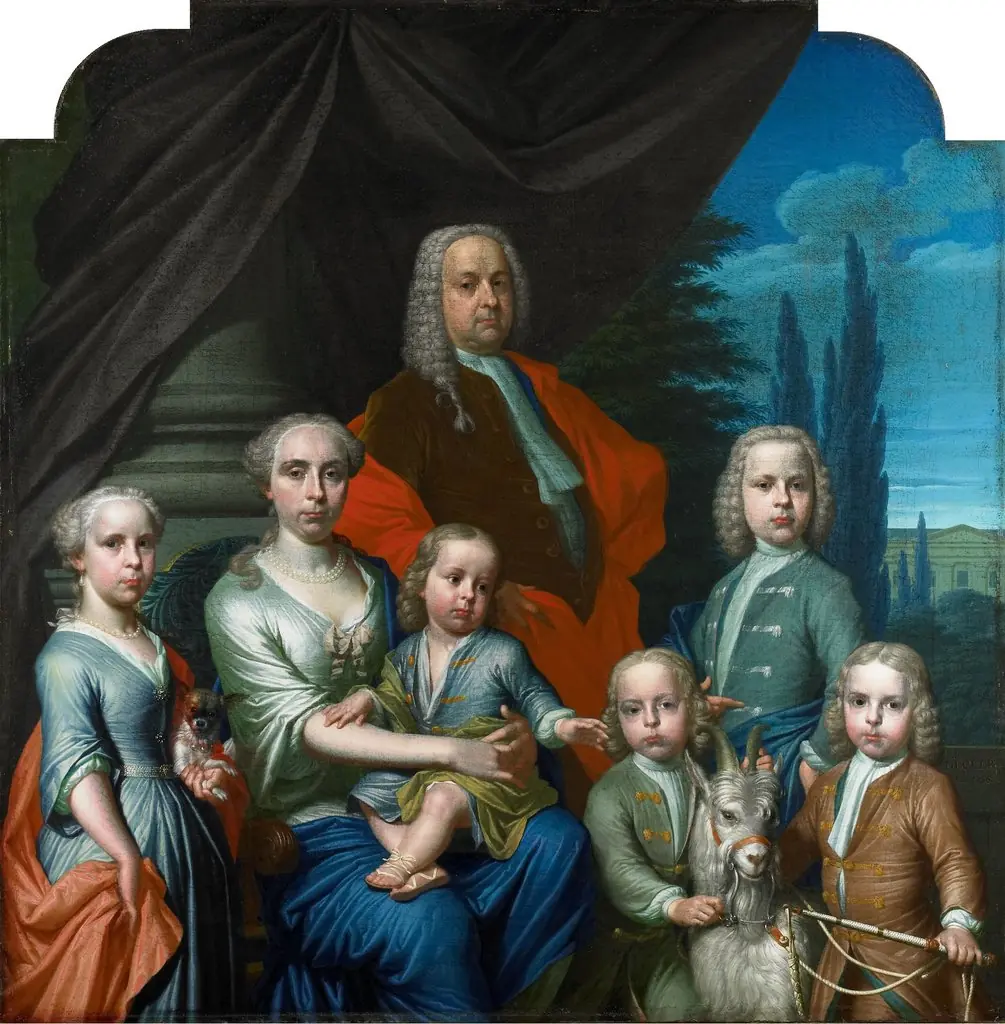 Willem Philip Kops, with his Wife and Children
 Willem Philip Kops (1695-1756), with his Wife and Children
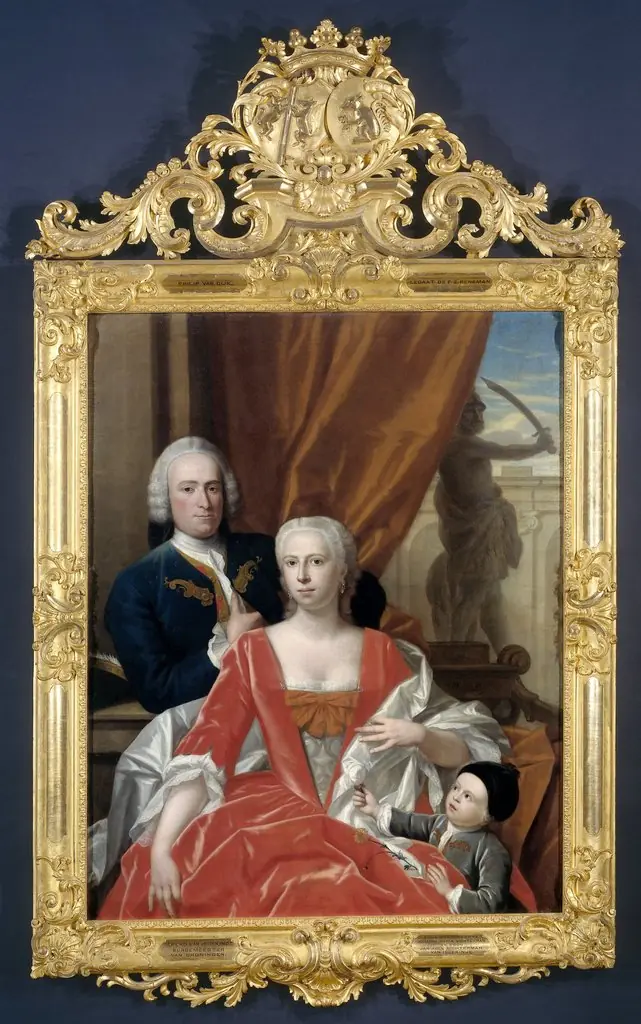 Berend van Iddekinge with his Wife and their Son
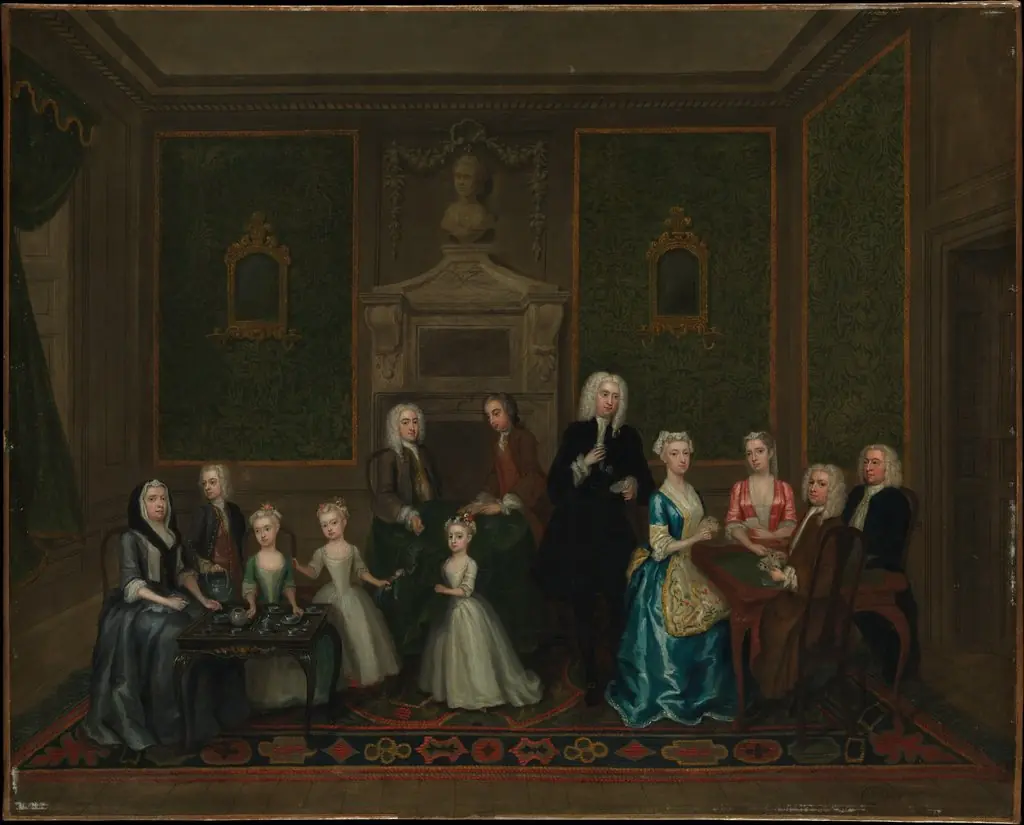 The Strong Family
 Winter
 The family of the Grand Dauphin
 Portrait of Ambassador P.G. Chernyshev with Family
- Portrait of Theodorus Bisdom van Vliet and his Family