Artwork
De rarekiek (’t Fraay Curieus)
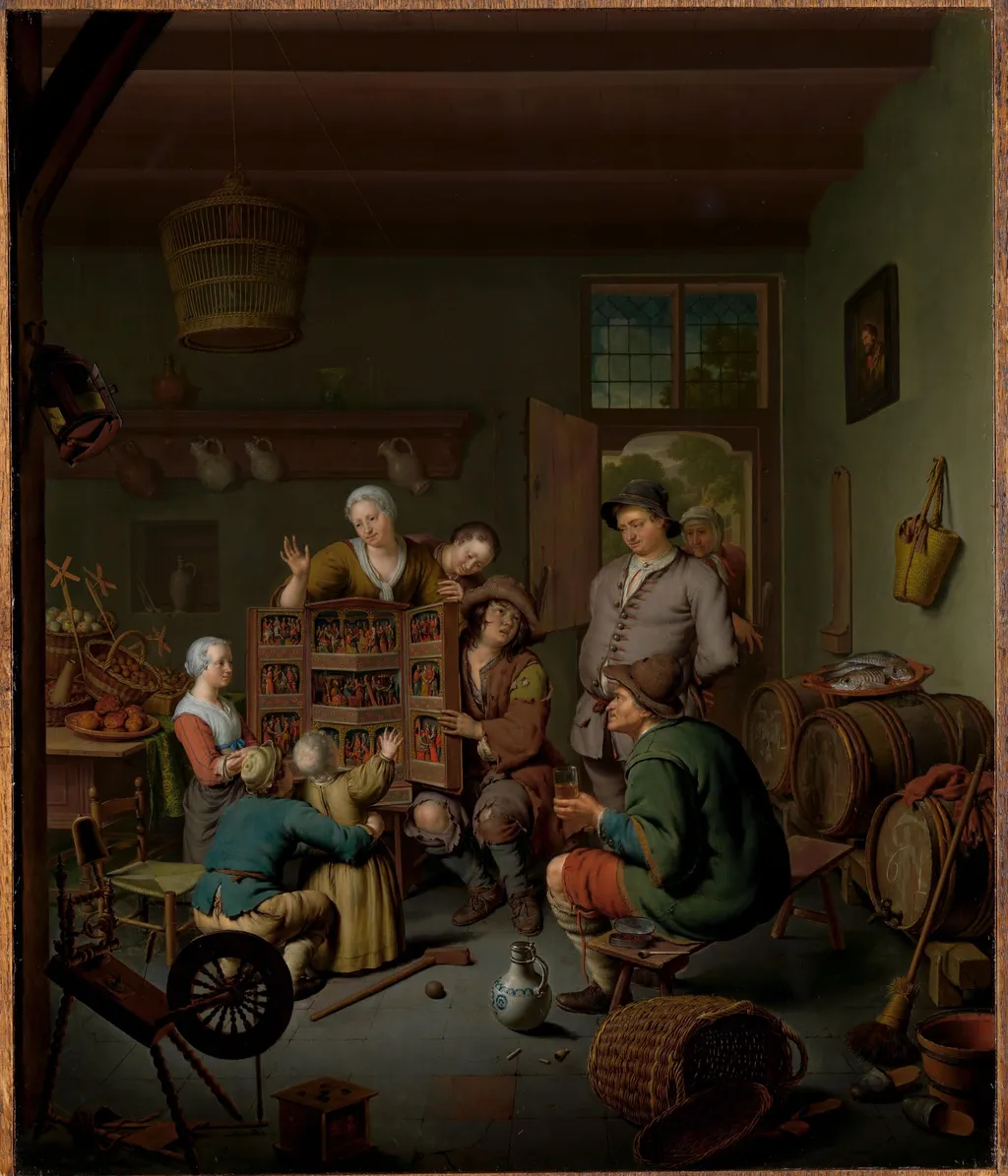
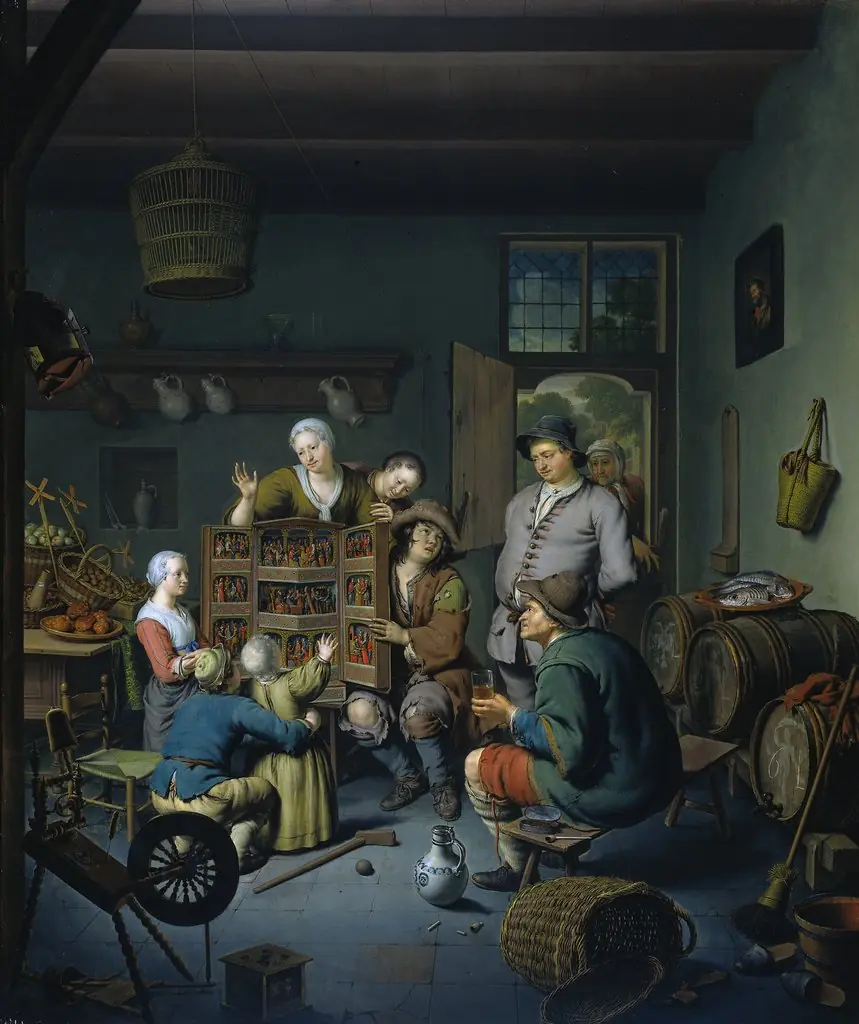
De rarekiek (’t Fraay Curieus) is an unspecified painting by the Rococo painting artist Willem van Mieris. It dates from 1718 and is held in the collection of the Rijksmuseum.
About this work
Technique & Style
Stylistically, the composition reflects the artist's later specialization in shop and market interiors, often framed by an arched opening.
Executed in 1718, this work is an oil painting on panel measuring 58 by 49 centimeters. The piece exemplifies the Leiden fine painting tradition, characterized by meticulous attention to detail and a refined finish. Stylistically, the composition reflects the artist's later specialization in shop and market interiors, often framed by an arched opening.
The figures display a classicizing elegance influenced by the sculptural forms of Francis van Bossuit, moving away from strict realism toward an idealized representation of upper-class refinement even within genre scenes. This approach aligns with the theoretical shift advocated by Gerard de Lairesse, emphasizing beauty and proportion over the direct observation typical of earlier Dutch Golden Age works.
History & Provenance
The painting is dated 1718, placing it in the later phase of Willem van Mieris's career, when he specialized in shop and kitchen interiors viewed through arched openings. The work is also known under the alternative title 'Le Spectacle rare de Fraay Curieus'. It was executed in oil on panel, measuring 58 × 49 cm. The Rijksmuseum in Amsterdam holds the painting in its collection.
Context
Willem van Mieris operated as a second-generation member of the Leiden school of fijnschilders, a tradition of fine painting established by Gerrit Dou and continued by his father, Frans van Mieris the Elder. While initially upholding his father's reputation for meticulous detail, Van Mieris later diverged in subject matter under the influence of theorist Gerard de Lairesse. De Lairesse advocated for ennobling genre scenes through classical canons of beauty, a shift evident in Van Mieris's later depictions of upper-class society and idealized figures.
This classical approach was further reinforced by the sculptures of Francis van Bossuit, whose poses Van Mieris frequently adapted. As one of the last representatives of this minute style, he helped transition Dutch art from the seventeenth-century focus on realistic observation to an eighteenth-century emphasis on classical perfection.
Overview
De rarekiek (’t Fraay Curieus) is a small-scale painting that captures a street entertainer presenting a wooden triptych to a gathering crowd. The work records the moment when the performer, using the exclamations “beautiful!” and “extraordinary!” to attract attention, displays miniature scenes that illustrate a chivalric romance.
Subject & Meaning
The central figure is an itinerant showman holding a box that opens to reveal painted vignettes of knights and heroic deeds. Around him, listeners lean in, suggesting a communal experience of storytelling that predates widespread literacy, where visual tableaux served as a portable narrative device.
Legacy
The composition offers insight into the intersection of visual art and popular performance, highlighting a moment when painted images acted as a portable theater. It remains a valuable reference for scholars studying early modern public spectacle and the role of itinerant artists in disseminating literary themes.
Own this work as a print
Artist & collection

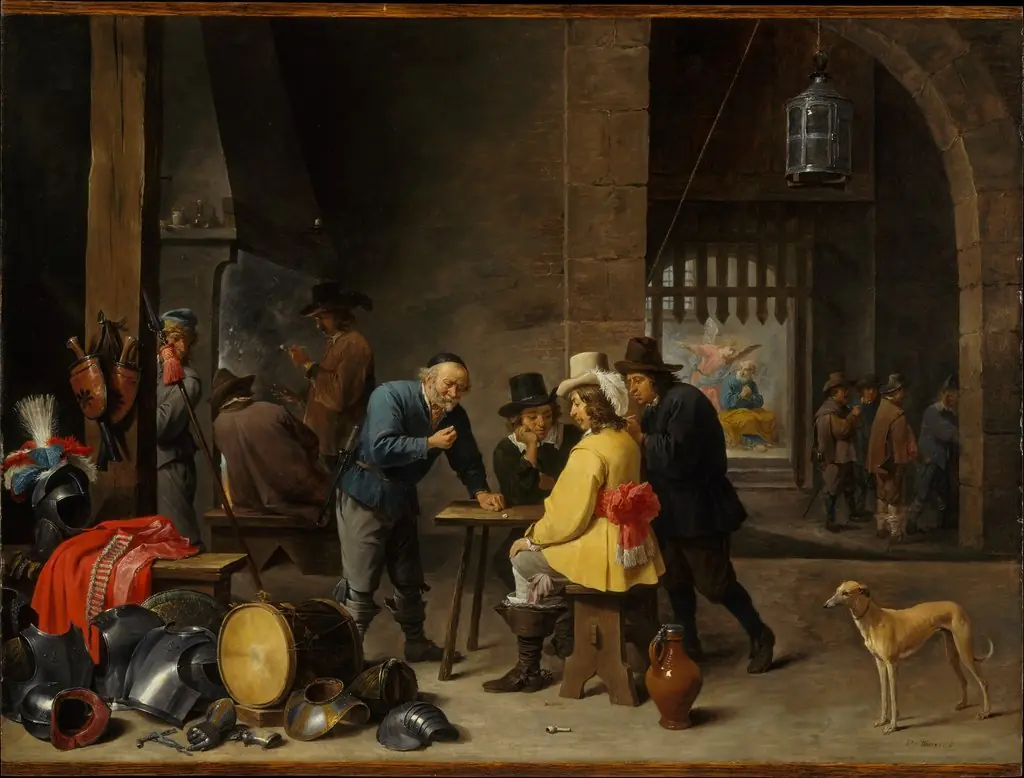 Guardroom with the Deliverance of Saint Peter
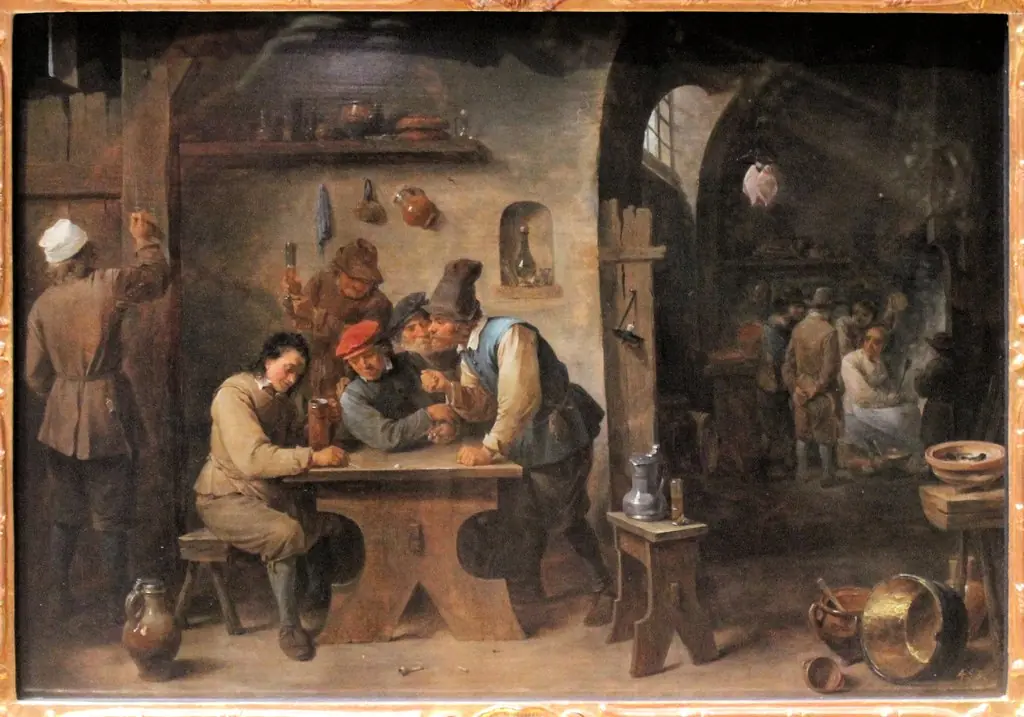 The Reckoning
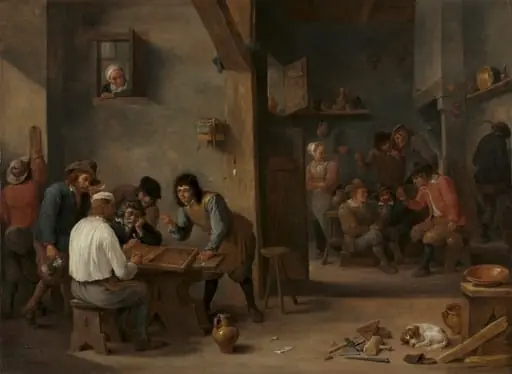 Game of Backgammon
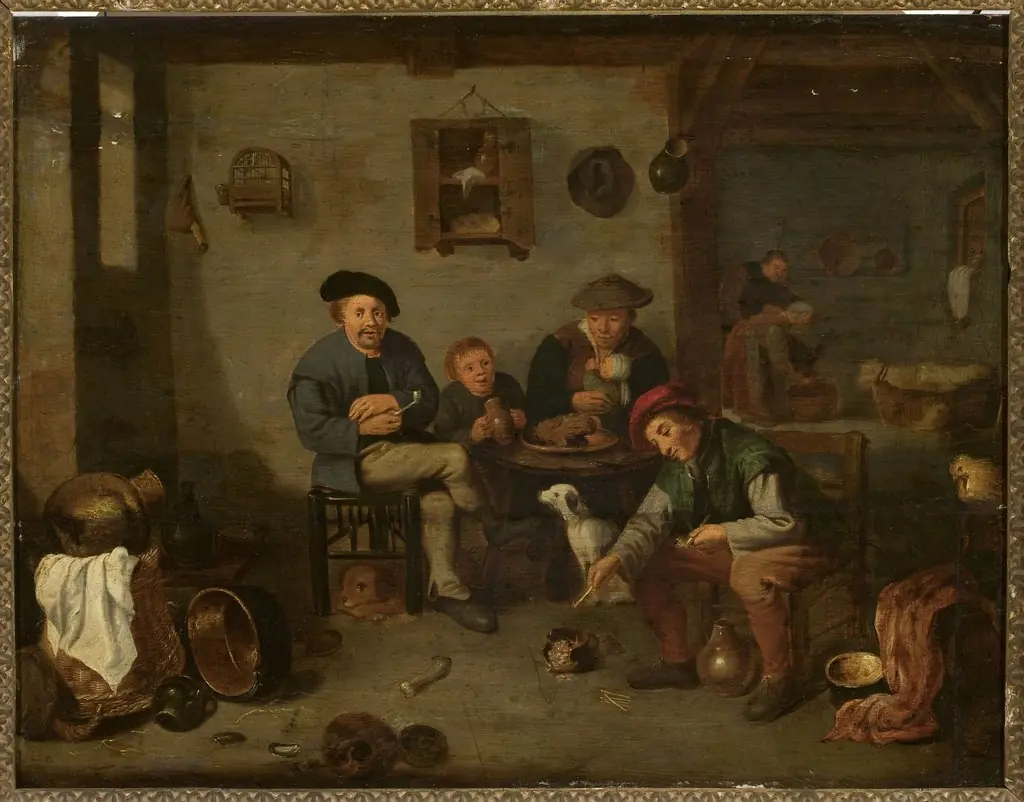 Genre scene in the countryside
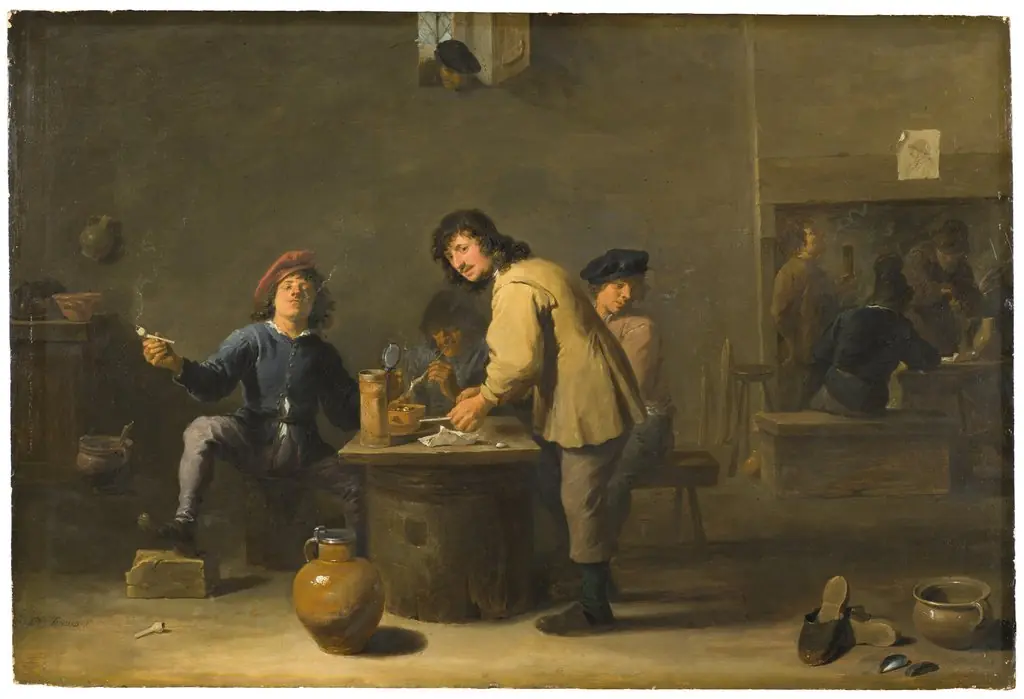 Tavern Scene with Pipesmokers
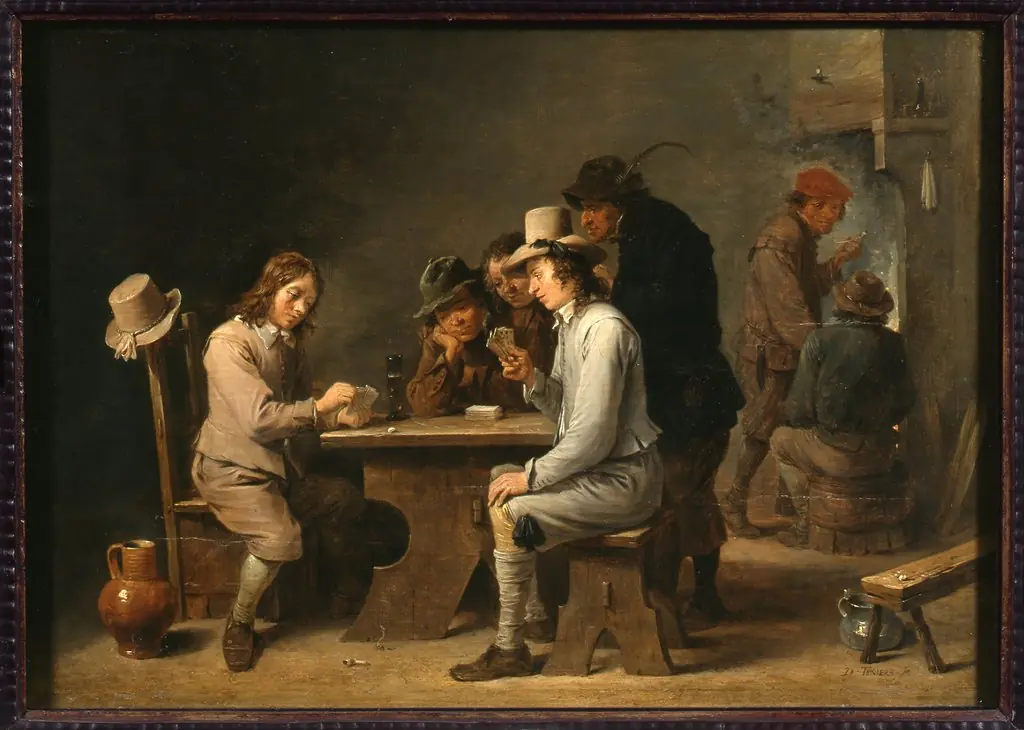 The card players
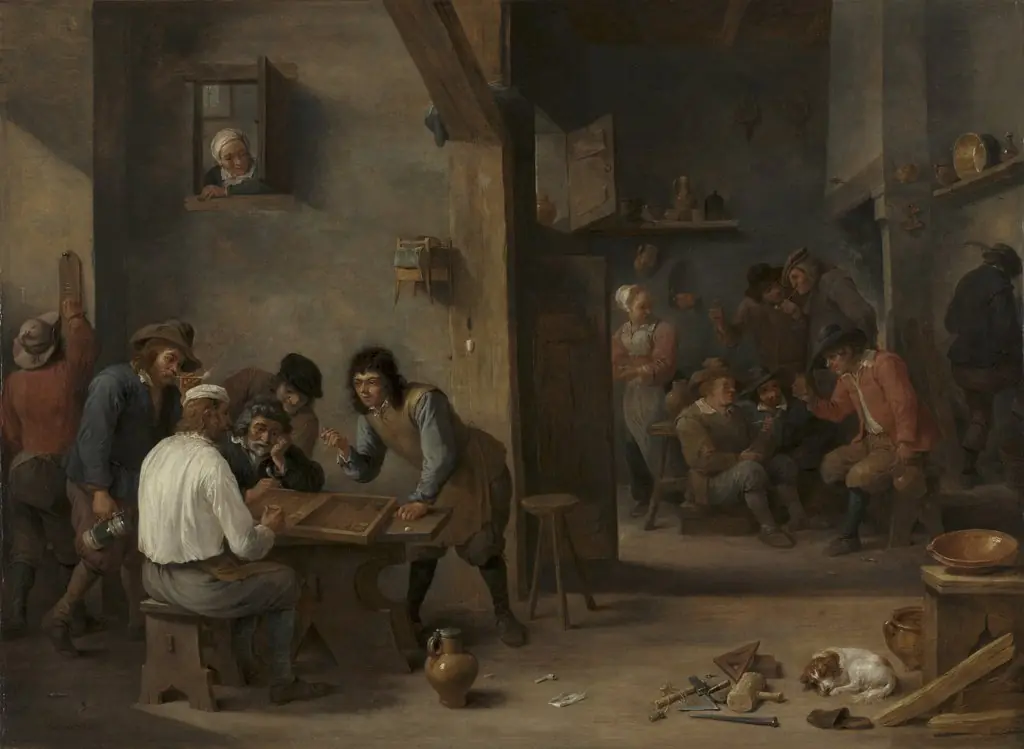 Game of Backgammon
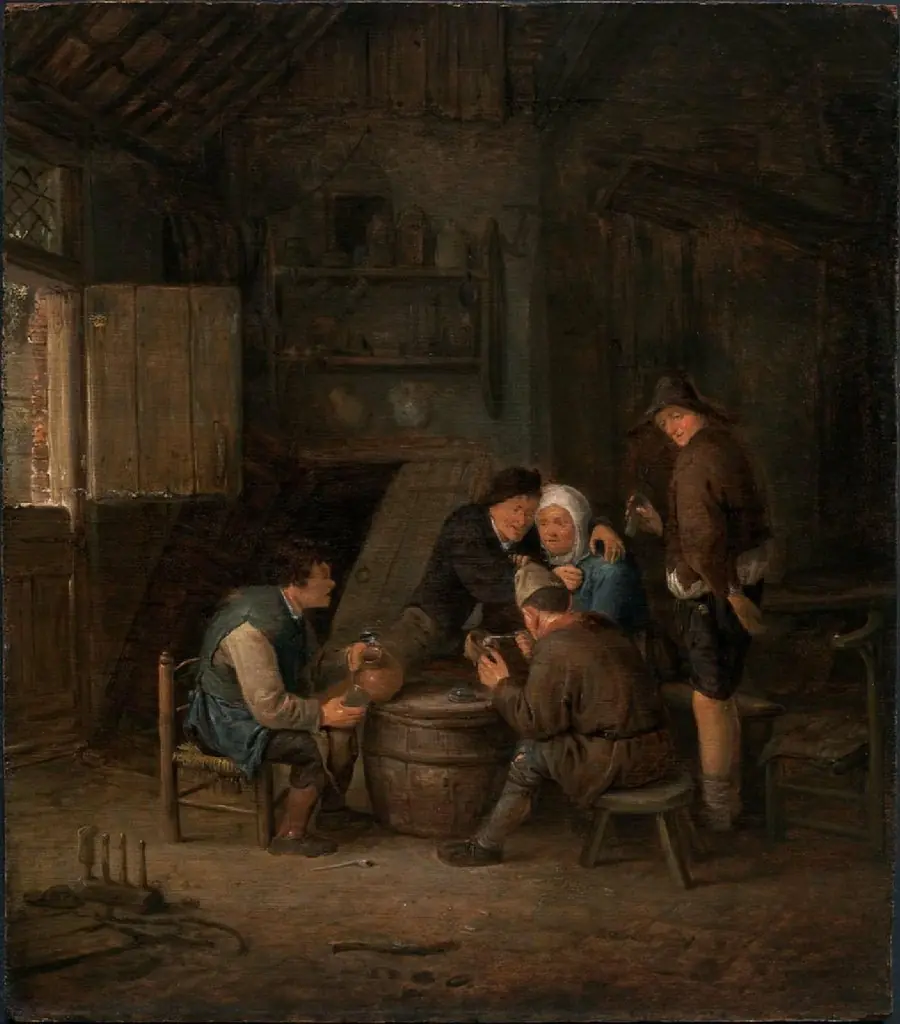 Peasants Gathered Round a Barrel
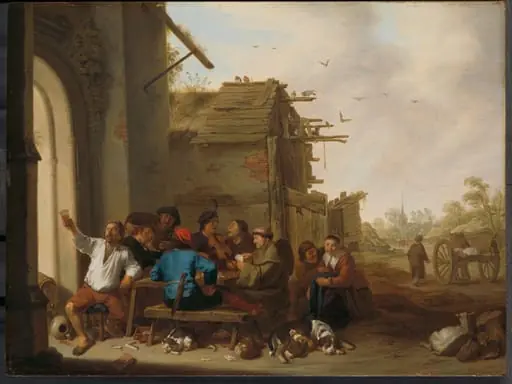 Figures before a Village Inn
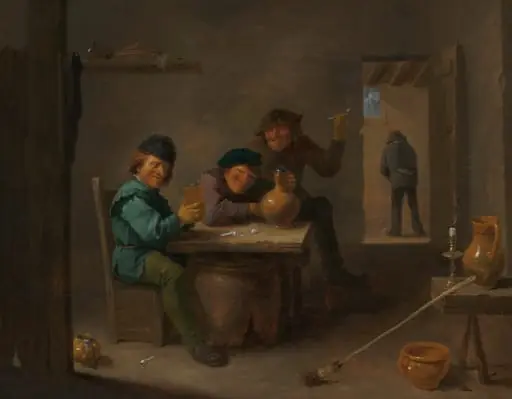 Peasants in a Tavern
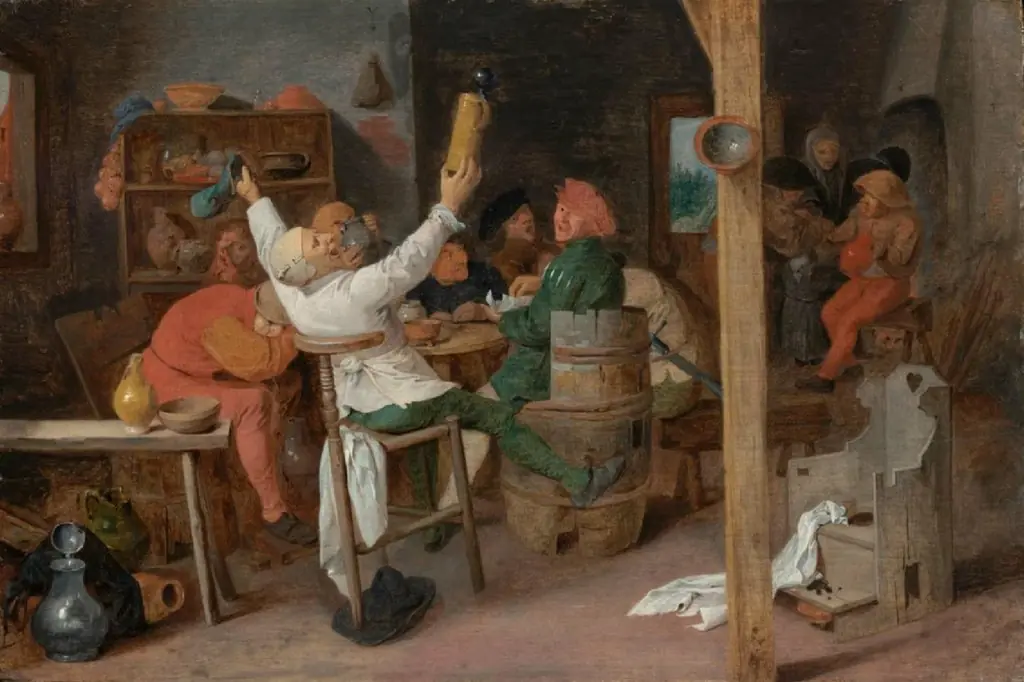 Peasants Carousing in a Tavern
- The Raree-show (’t Fraay Curieus)