Artwork
The Fish Seller
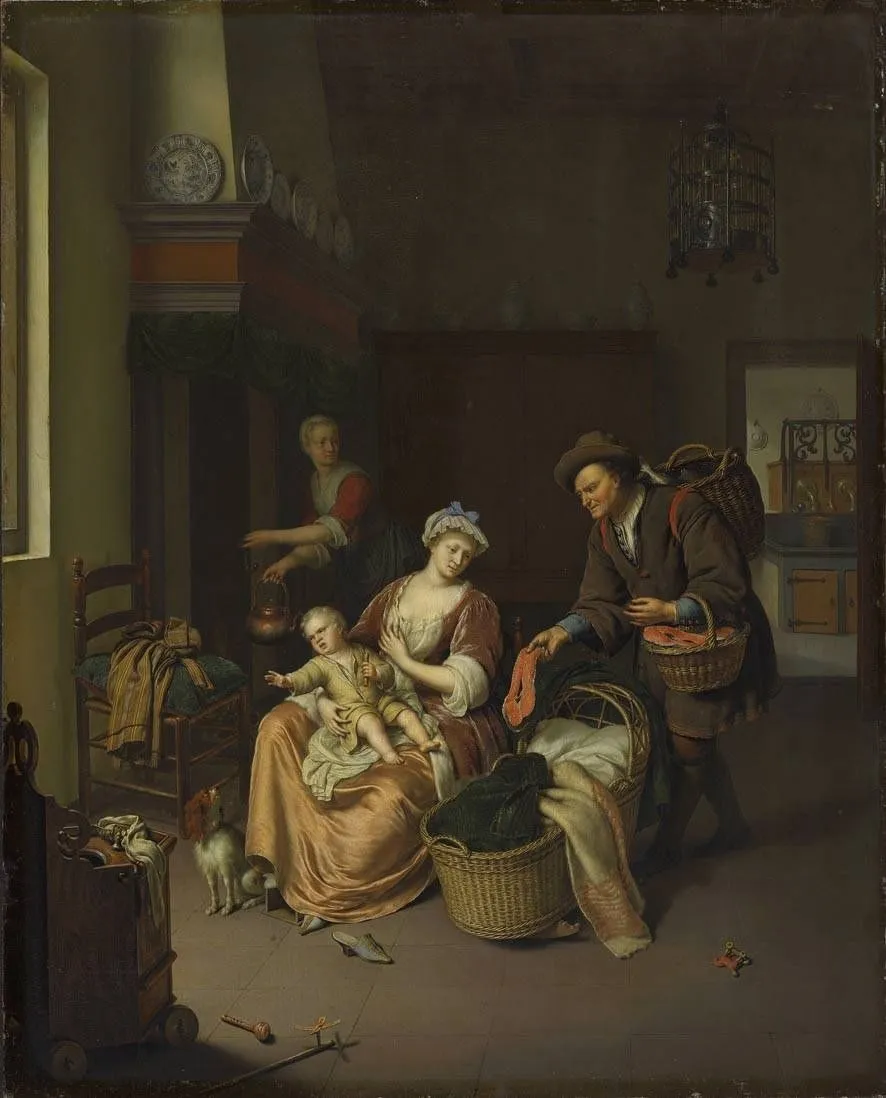
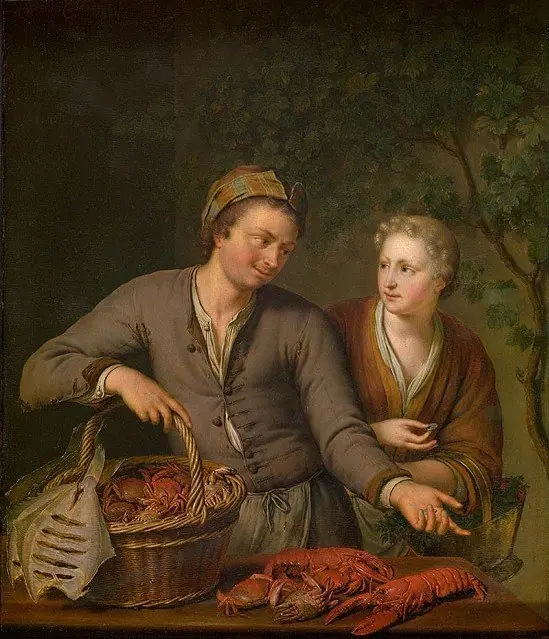
The Fish Seller is an unspecified painting by the Rococo painting artist Willem van Mieris. It dates from 1719 and is held in the collection of the Bavarian State Painting Collections.
About this work
Technique & Style
Stylistically, the work aligns with the Leiden fijnschilders tradition, emphasizing delicate detail and polished surfaces over broad brushwork.
The Fish Seller is an oil on panel painting executed in 1719 by Willem van Mieris. The work measures 60.7 cm in height and 48.8 cm in width. The composition depicts a scene of genre art, centered on a woman and a man in an interior setting associated with fishmongering.
Van Mieris employs a refined, smooth handling typical of Dutch fine painting of the period, with meticulous attention to the textures of flesh, fabric, and fish. The palette is restrained yet varied, using earthy tones and subtle glazes to model form and suggest depth. Stylistically, the work aligns with the Leiden fijnschilders tradition, emphasizing delicate detail and polished surfaces over broad brushwork.
History & Provenance
The work titled The Fish Seller was created in 1719 by Willem van Mieris. It measures 60.7 cm by 48.8 cm and depicts a fishmonger in an interior scene. The painting entered the collection of the Bavarian State Painting Collections, where it remains on display at the Alte Pinakothek.
Its creation history is documented through its commission and execution in the early 18th century, reflecting the genre conventions of Dutch genre painting.
The Fish Seller is held in the collection of the Bavarian State Painting Collections and is located at the Alte Pinakothek. The work, created in 1719, measures 60.7 cm in height and 48.8 cm in width. The provided sources do not contain information regarding a specific inventory or accession number, nor do they list any exhibitions in which the painting has been displayed.
Legacy
The Fish Seller exerted modest influence on later Dutch genre painting through its vivid portrayal of everyday commerce, inspiring contemporaries to emphasize realistic market scenes. Its reputation rests on faithful representation of 18th-century Amsterdam street life, with scholars noting its role in documenting social customs. The work’s legacy persists in collections and studies of Dutch Golden Age genre painting, particularly within the Bavarian State Painting Collections where it remains on display.
Overview
Willem van Mieris’s 1719 work The Fish Seller presents a modest interior where a woman seated in a golden‑toned dress cradles an infant, while a man in subdued clothing stands nearby holding a basket. The scene is rendered in subdued lighting, with scattered objects, a dog, a chair, a table, contributing to a sense of quiet domestic routine.
Subject & Meaning
The composition captures a moment of everyday commerce and family life, emphasizing the intimacy between mother, child, and the fishmonger who assists them. The juxtaposition of the woman’s warm attire against the man’s muted dress underscores differing social roles, while the presence of the infant suggests themes of continuity and domestic stability within a modest household.
Context
Created during a period when Dutch artists increasingly focused on intimate, middle‑class scenes, the painting aligns with van Mieris’s broader oeuvre of domestic genre subjects. It illustrates the continuation of the Dutch tradition of portraying market and household activities, while also incorporating a subtle moral undertone common to the era’s visual narratives.
Artist & collection



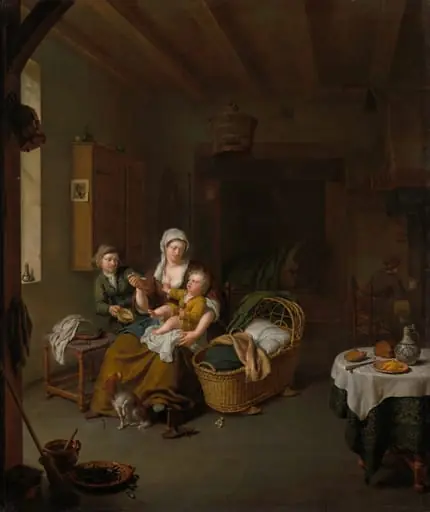 A Mother Feeding her Child (The Happy Mother)
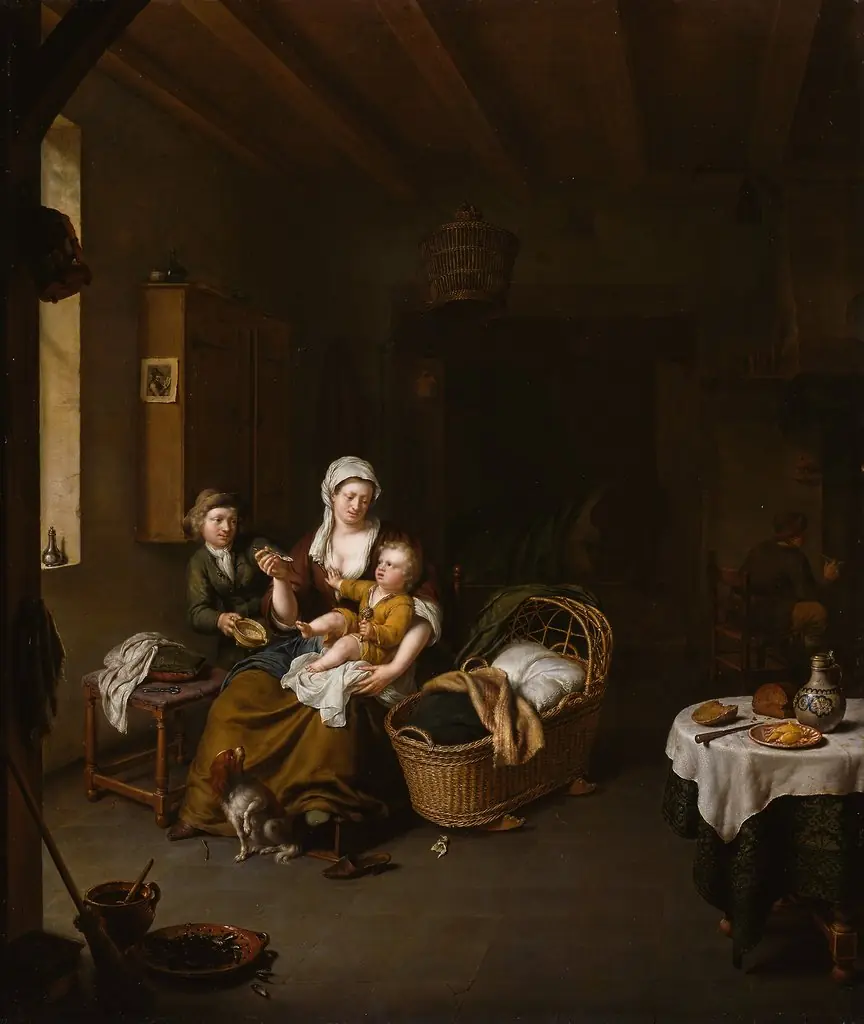 A Mother Feeding her Child (The Happy Mother)
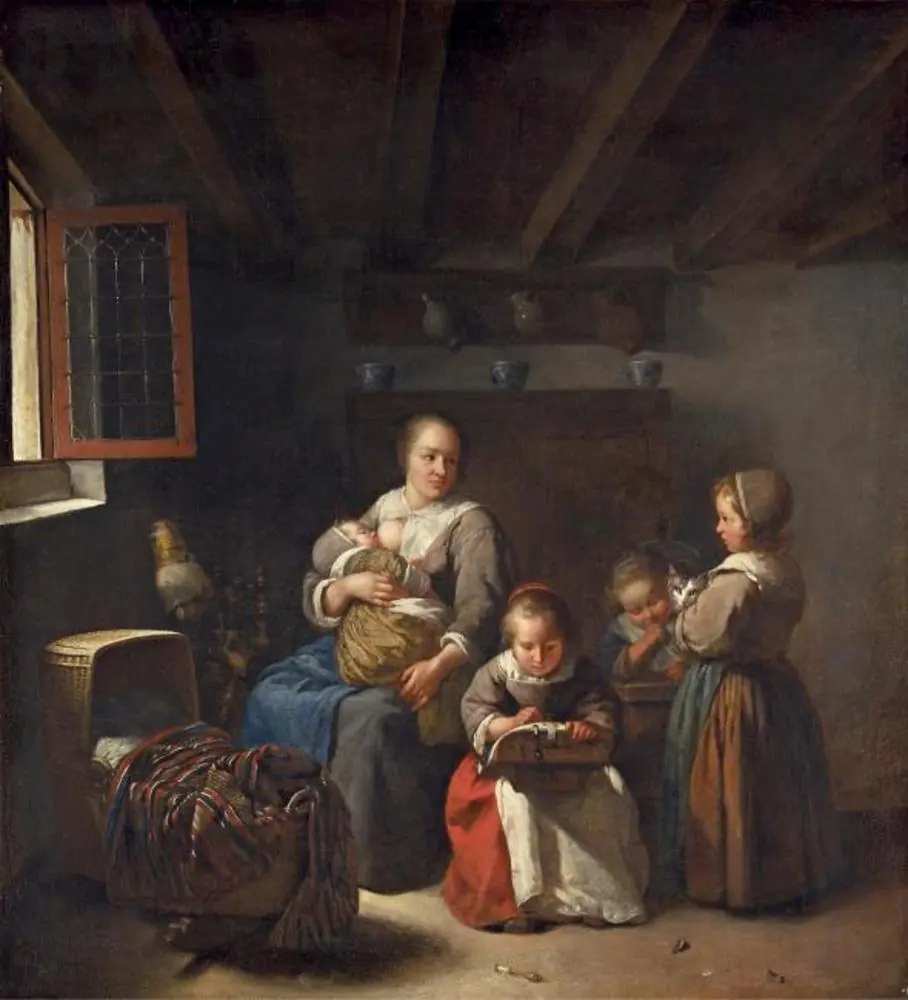 Nursing mother with three girls
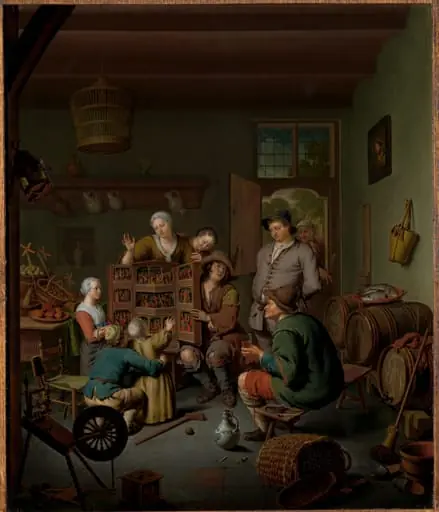
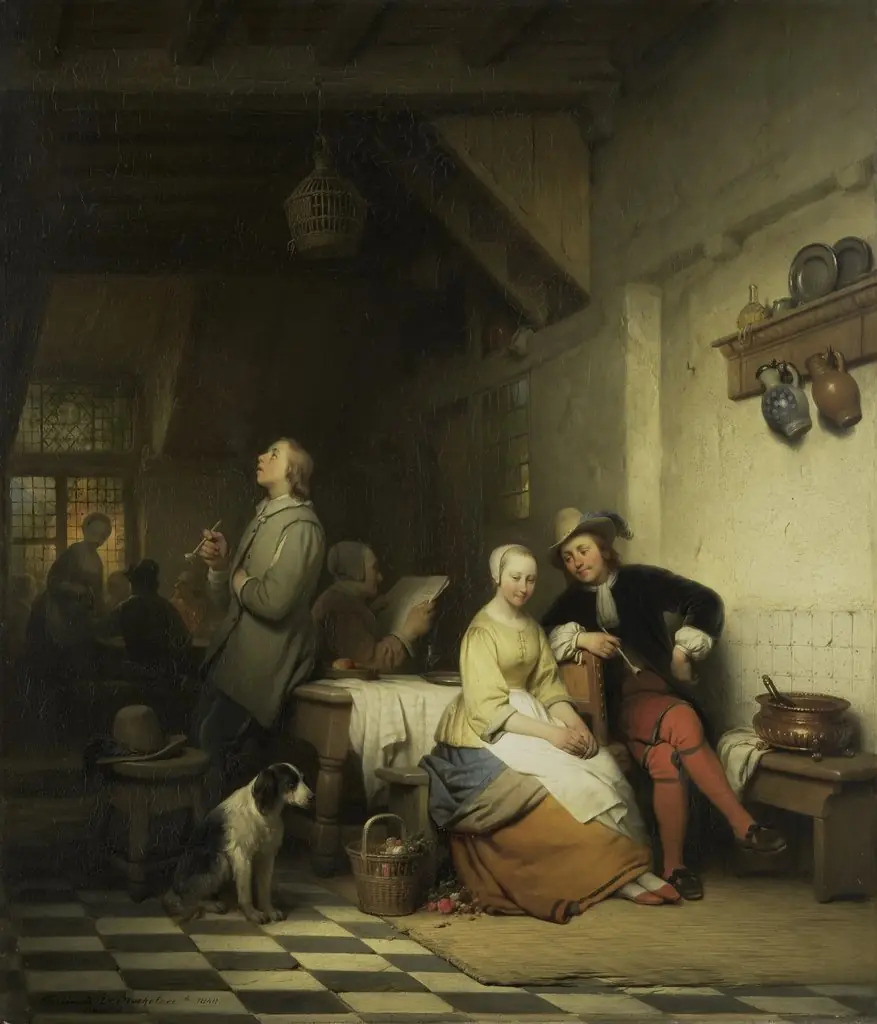 Interior of an Inn, with Figures in Seventeenth-Century Costume
 Interior of an Inn, with Figures in Seventeenth-Century Costume
 Mother with two children
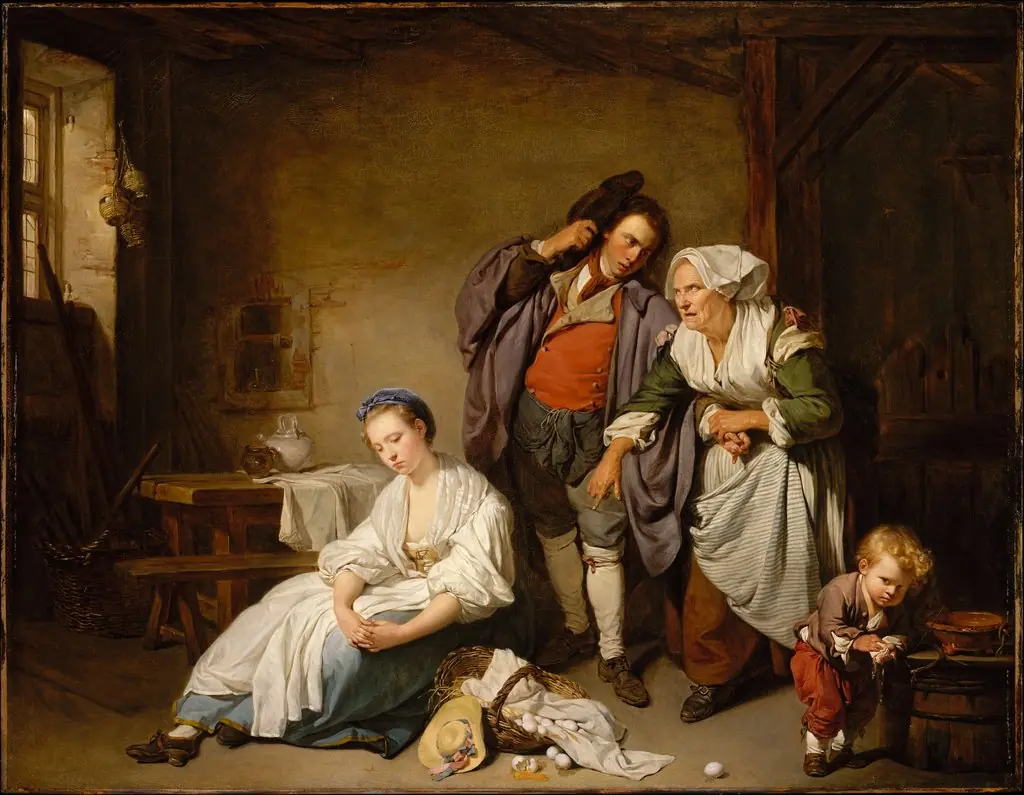 Broken Eggs
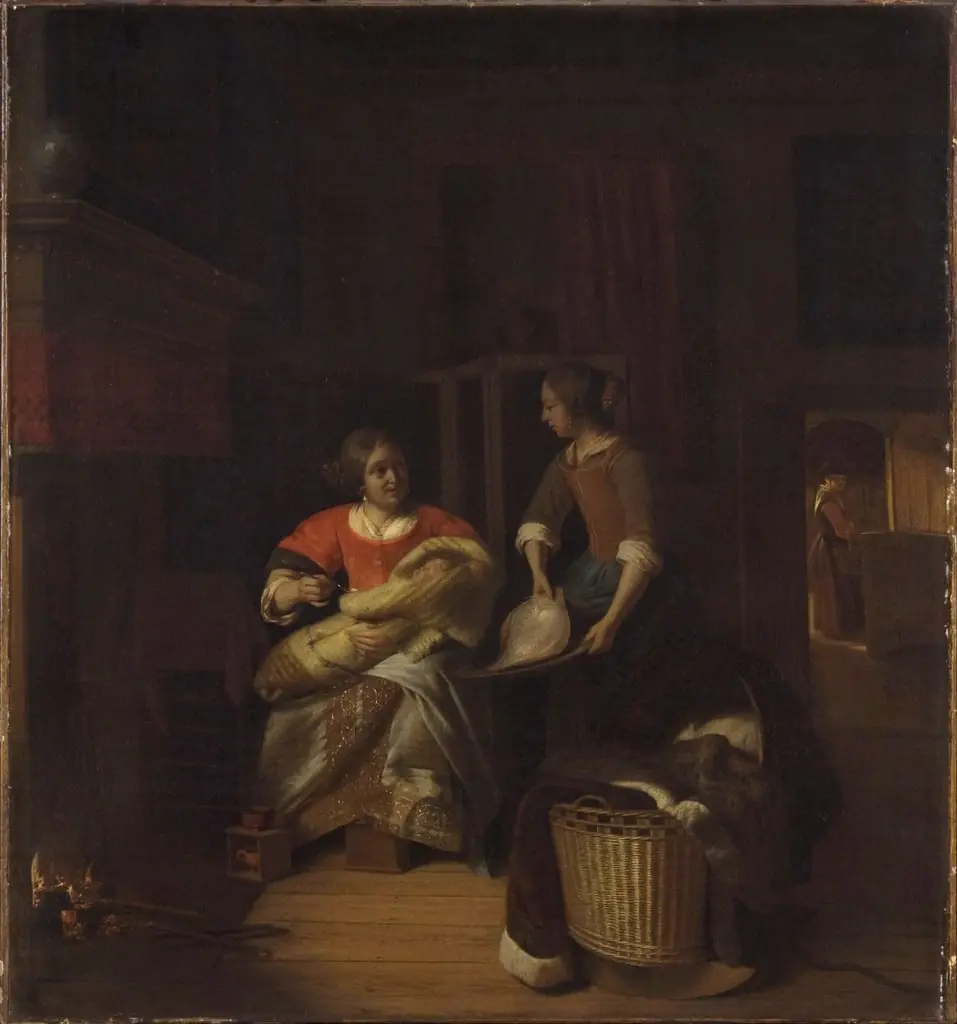 A Lady and a Child with a Serving Maid
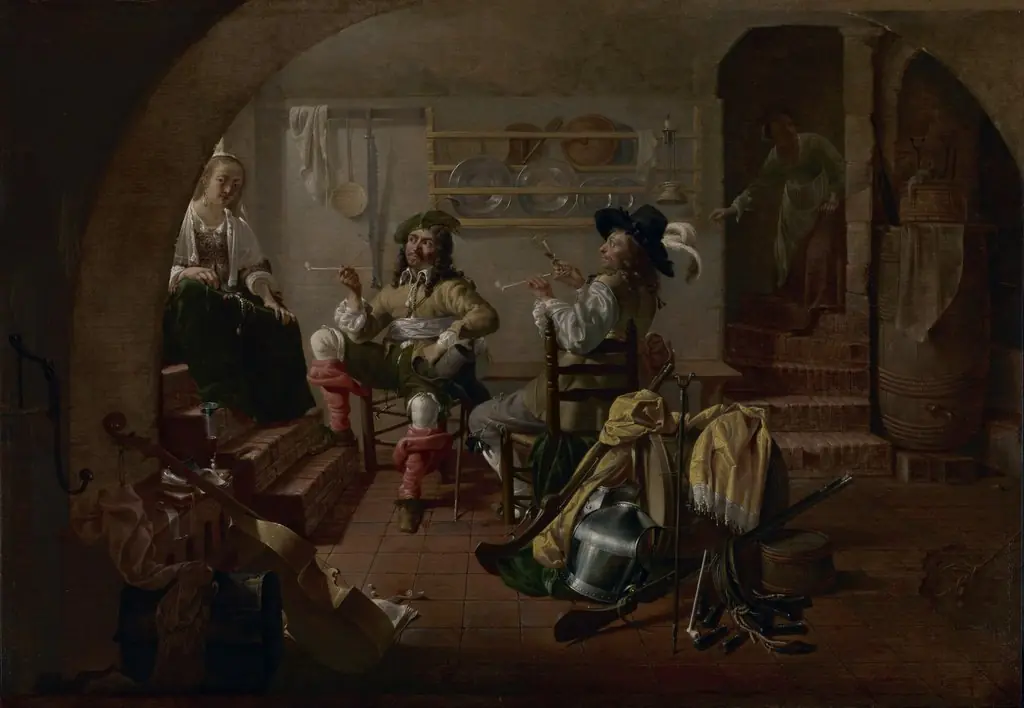 Interior with Soldiers and Women
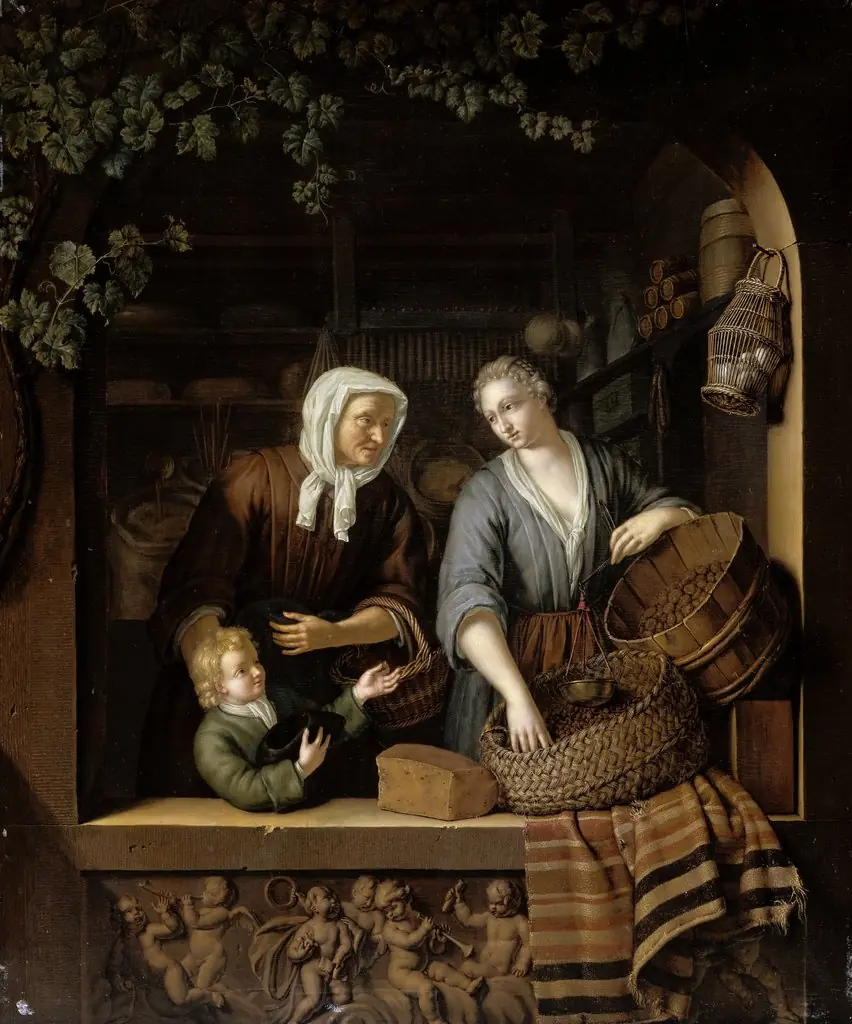 The Grocer’s Shop
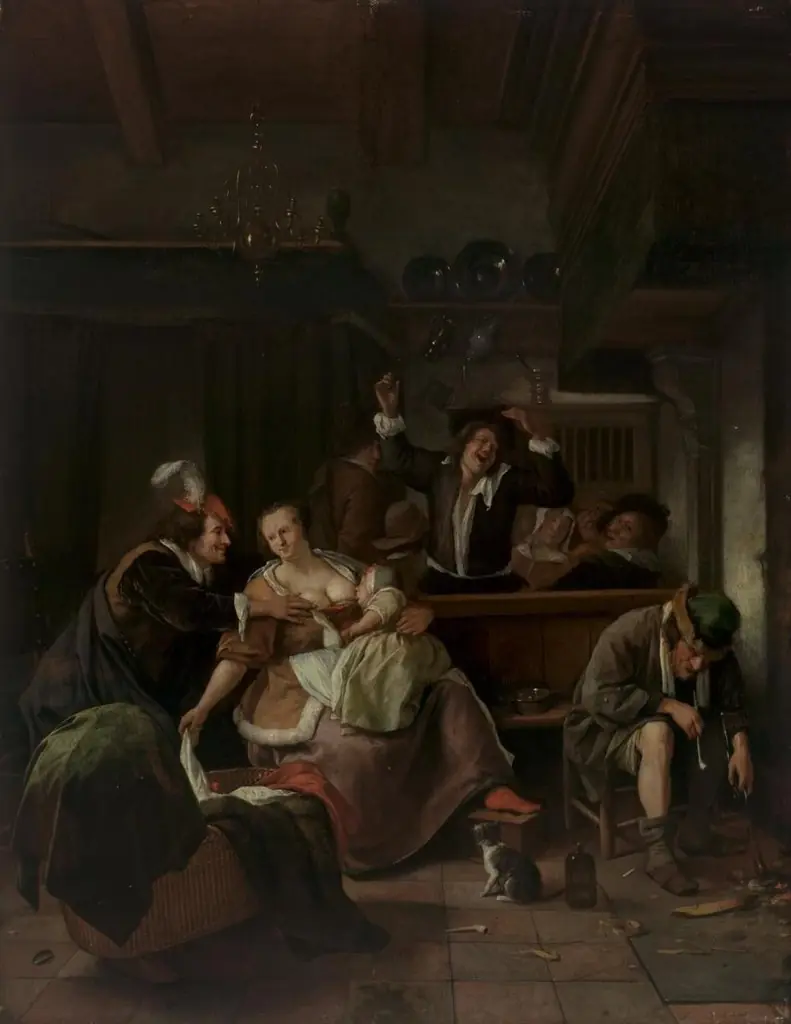 Interior
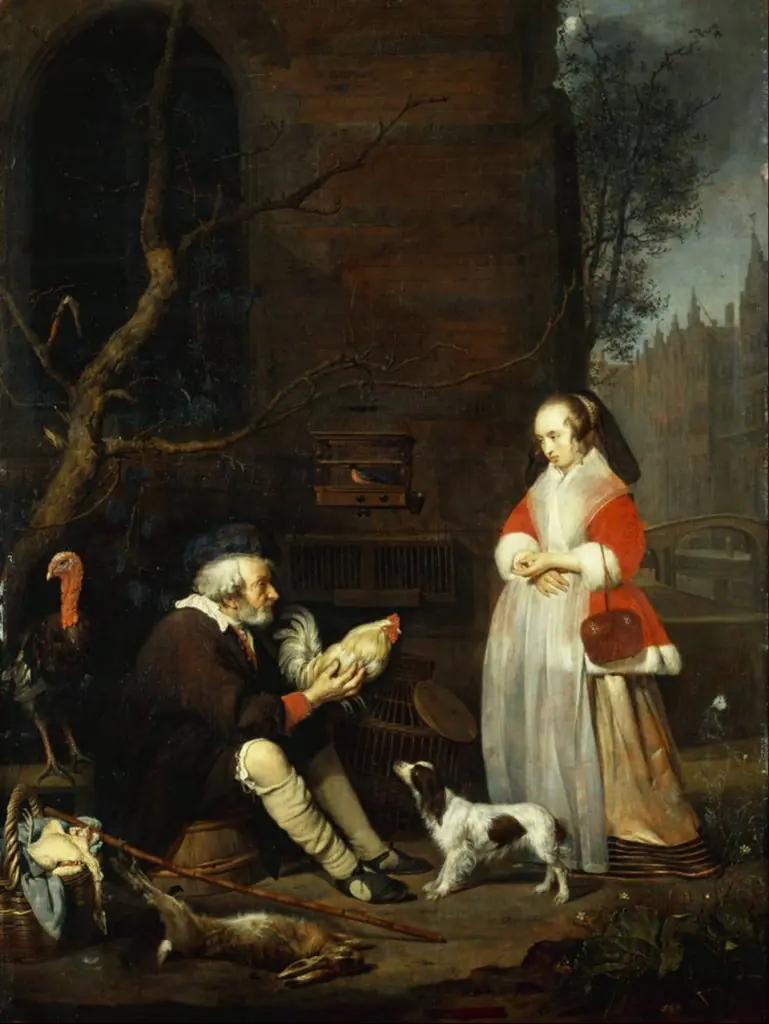
- The Poultry Seller