Artwork
Interior view of the Roman Colosseum
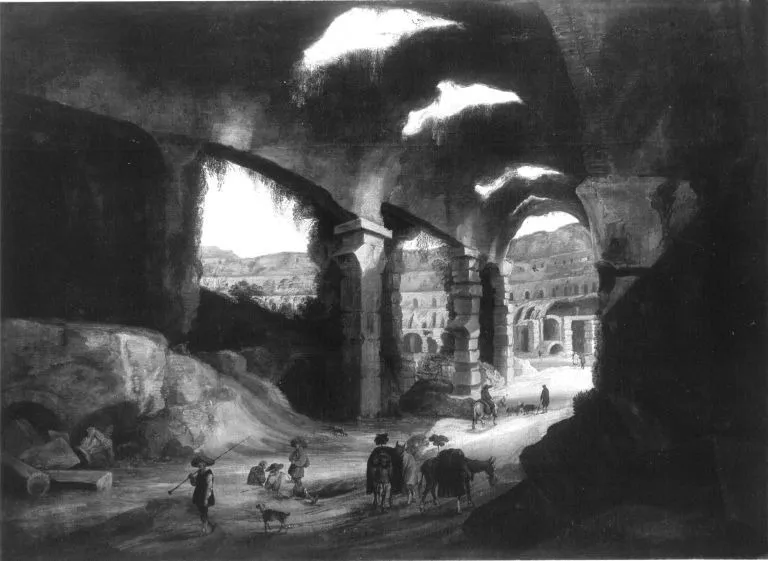
Interior view of the Roman Colosseum is an oil painting by the Dutch Golden Age artist Willem van Nieulandt II. It dates from 1610 and is held in the collection of the Bavarian State Painting Collections.
About this work
History & Provenance
The piece is currently held by the Bavarian State Painting Collections at the Alte Pinakothek in Munich.
Willem van Nieulandt II created the oil painting Interior view of the Roman Colosseum in 1610. Executed on canvas, the work measures 105 cm in height and 145 cm in width. The piece is currently held by the Bavarian State Painting Collections at the Alte Pinakothek in Munich.
The artwork is classified as a history painting that depicts the interior of the Colosseum. While the specific commission details are not recorded in the available sources, the creation date is firmly established as 1610, marking it as a significant early 17th-century Dutch interpretation of Roman antiquity.
Context
The interior view of the Roman Colosseum painted by Willem van Nieulandt II exemplifies the history painting genre popular in early 17th-century Dutch and Flemish art, reflecting the period's fascination with antiquarian subjects and classical antiquity. Executed in oil paint around 1610, the work measures 105 cm by 145 cm and is housed in the Alte Pinakothek, part of the Bavarian State Painting Collections. Scholarship identifies the painting as a product of van Nieulandt's training within a family of artists active in Amsterdam, situating it within broader networks of Dutch artists documenting Rome's antiquities.
Its composition and subject matter contributed to contemporary debates on the aesthetic value of historical ruins, influencing later vedute painters.
Overview
This 1610 oil painting by Willem van Nieulandt II presents a view from within the Roman Colosseum, capturing the monumental scale and atmospheric qualities of the ancient amphitheater. The Flemish artist, who worked during the early seventeenth century, produced the work as part of a broader European fascination with Italian architecture and ruins. The painting now resides in the Alte Pinakothek collection in Munich.
Subject & Meaning
The composition places the viewer inside the vast shell of the Colosseum, surrounded by soaring arches and columns that recede into shadow. Small figures and animals populate the foreground, providing scale and animating the ruin with signs of contemporary life. A luminous opening in the background offers the only source of natural light, suggesting the passage from enclosed darkness to the world beyond and perhaps symbolizing the contrast between the arena's violent past and its present state as a site of pilgrimage and contemplation.
Technique & Style
Van Nieulandt employs strong chiaroscuro to model the architectural forms and create spatial depth, allowing dramatic contrasts between the dim interior vaulting and the bright exterior glow. The careful rendering of stonework textures and perspectival construction of the arcades demonstrates the artist's training in Netherlandish precision, while the subject matter reflects the Italianate landscape tradition he helped popularize among Northern European painters.
Artist & collection

Artist
Guilliam or Willem van Nieulandt or van Nieuwelandt (1582/84–1635) was a Flemish painter, engraver, poet and playwright from Antwerp.

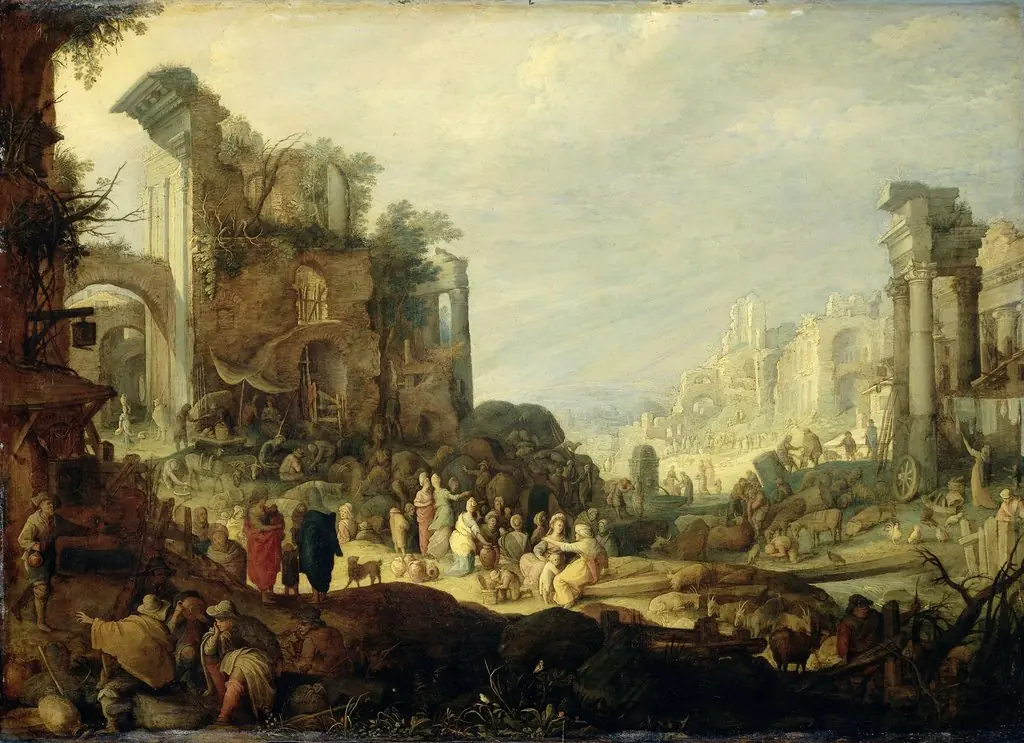 Landscape with Roman Ruins and the Meeting of Rebecca and Eliezer
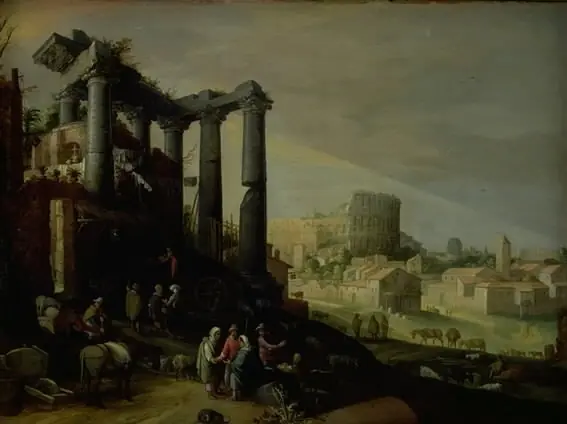 Landscape with a View of Campo Vaccino in Rome
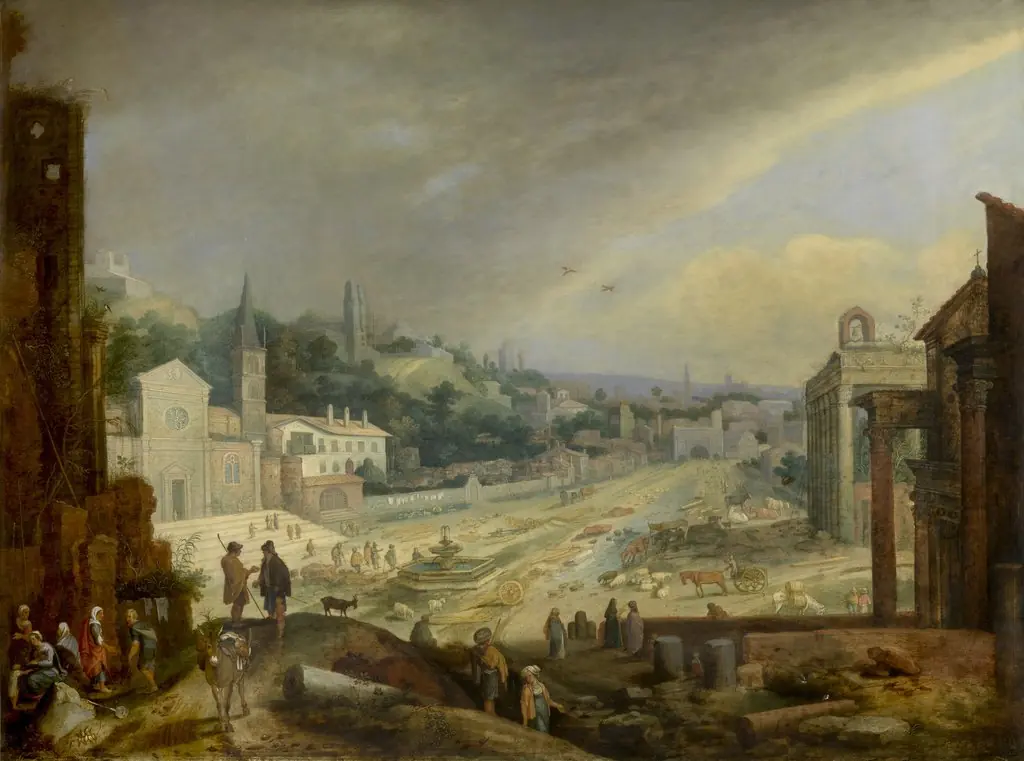 A View on the Campo Vaccino in Rome
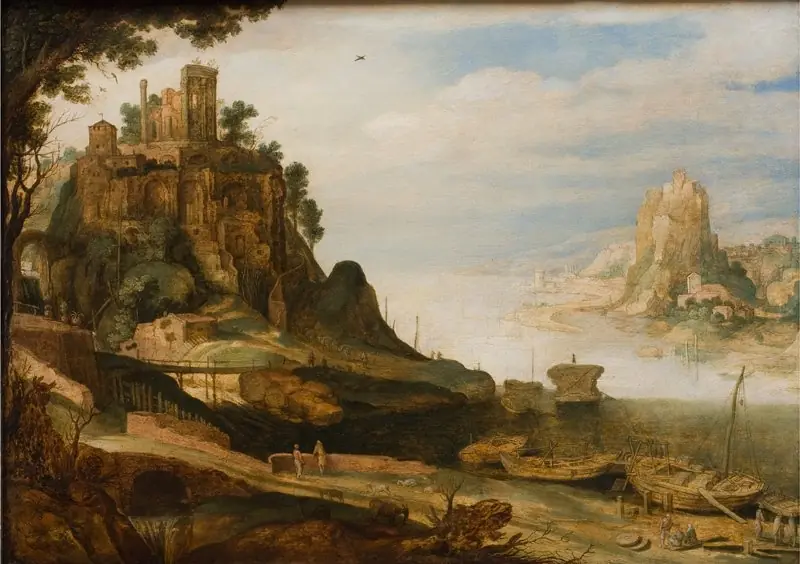 Coast Landscape with the so-called Temple of Sibyl at Tivoli
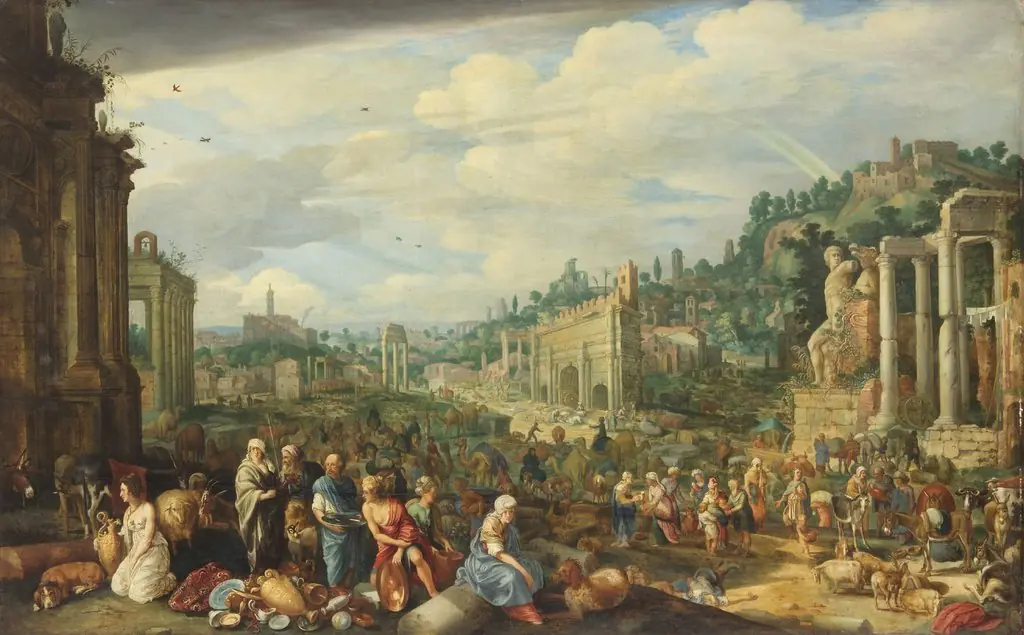 Ansicht des Campo Vaccino in Rom (Aufbruch der Israeliten aus Ägypten)
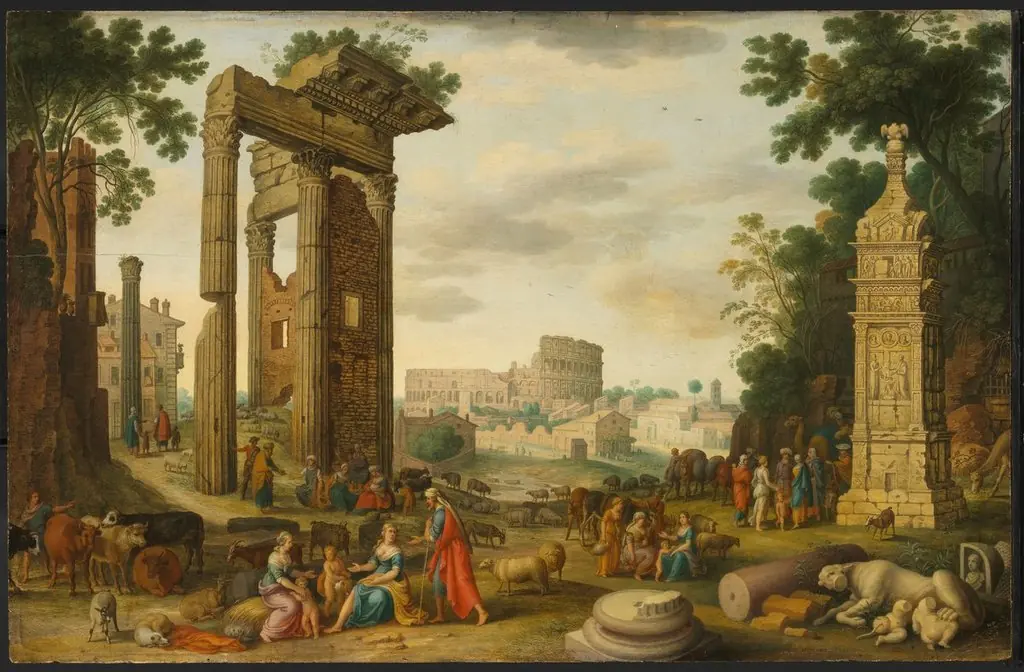 Roman Ruins and the Monument of Igel
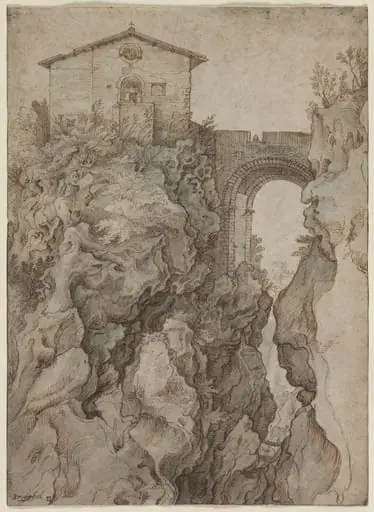 Ponte San Rocco at Tivoli
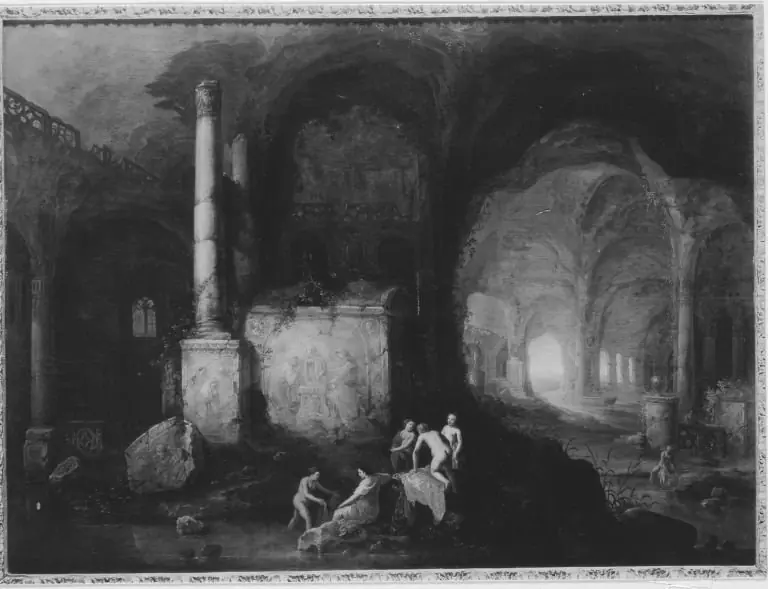 Badende Mädchen in einer Felsgrotte
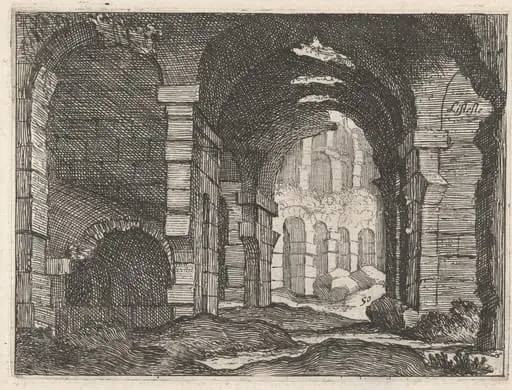 The Ruins of the Colosseum
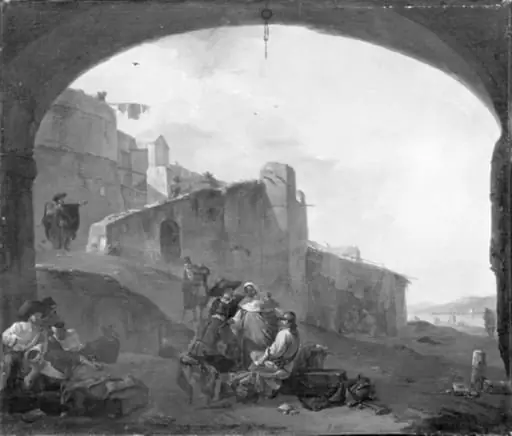 The Gipsy Woman Telling the Soldiers their Fortunes
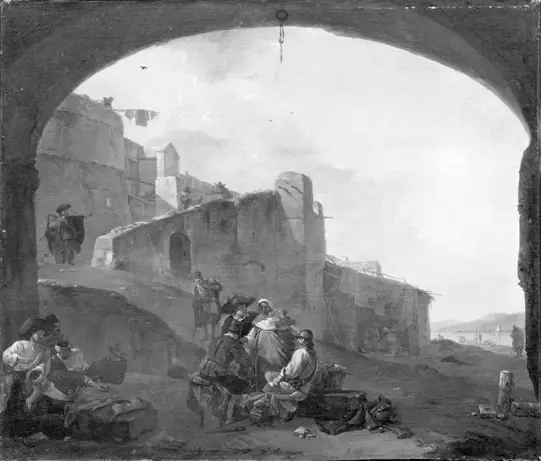 The Gipsy Woman Telling the Soldiers their Fortunes
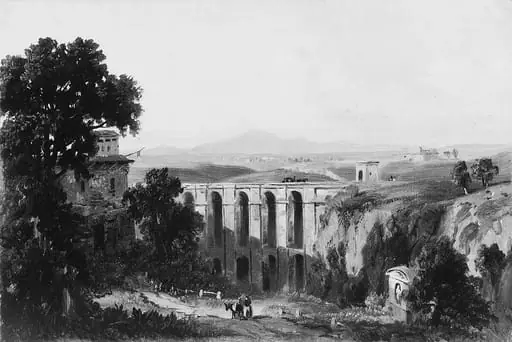 Civita Castellana and Mount Soracte, 1852
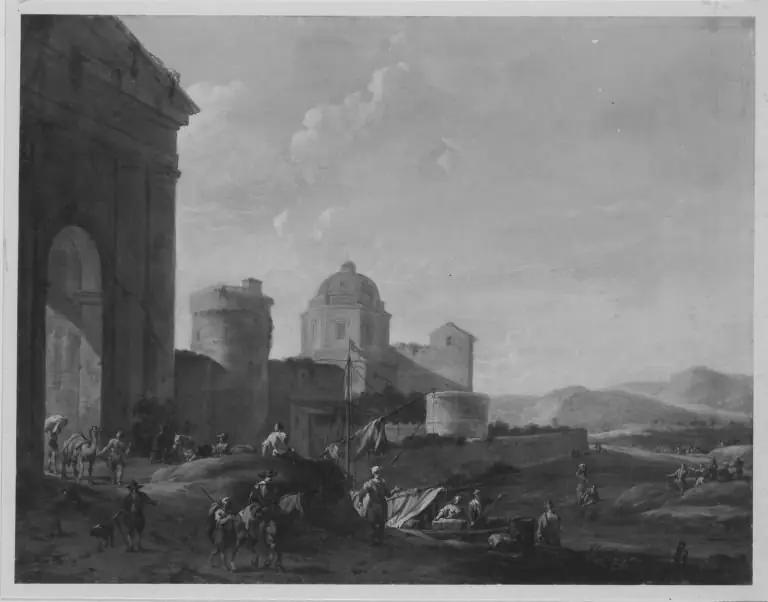 Fantasielandschaft
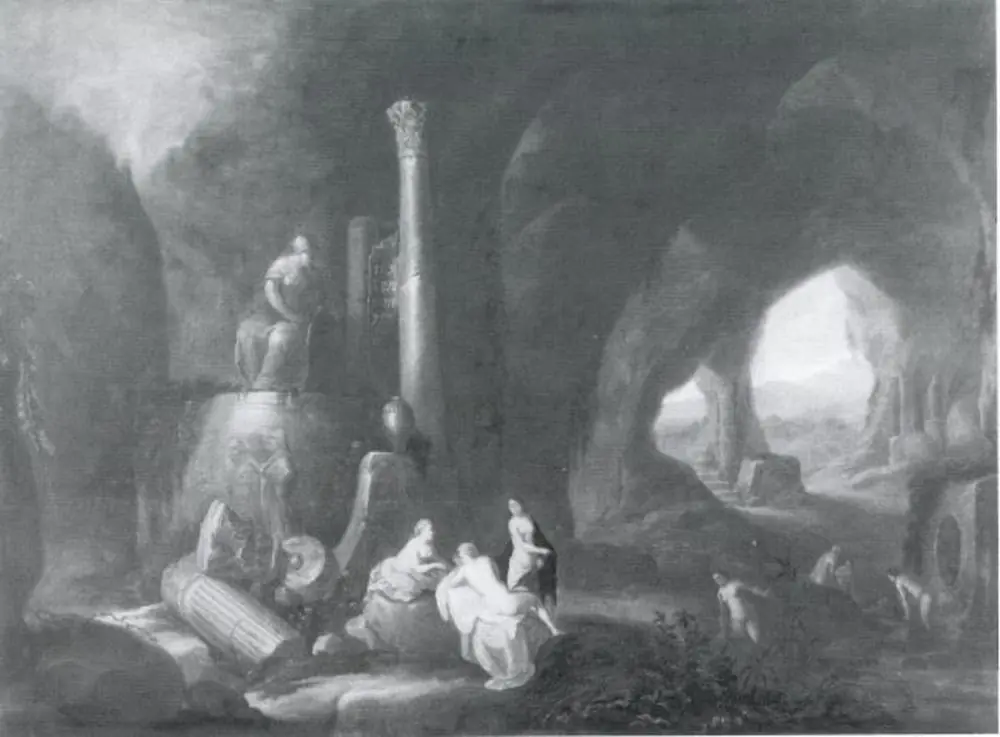 Nymphs in a Cave with Antique Ruins
 Travelers Resting in Gigantic Caverns
 Fountains
 View of Unidentified Ruins