Artwork
A Childhood Idyll
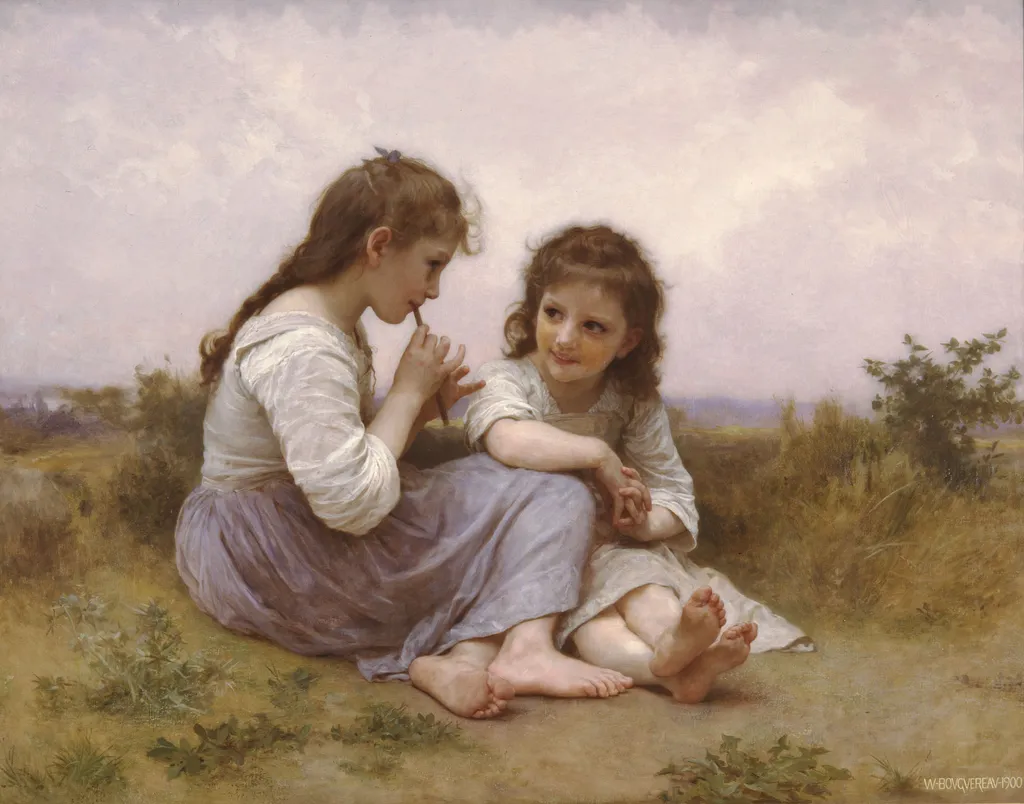
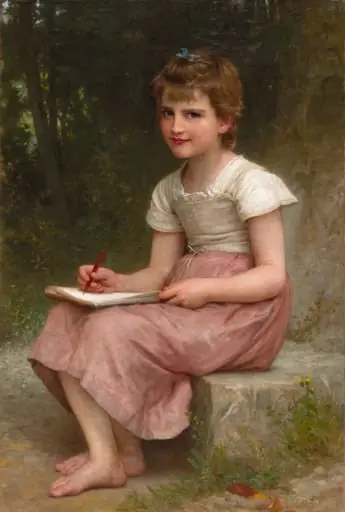
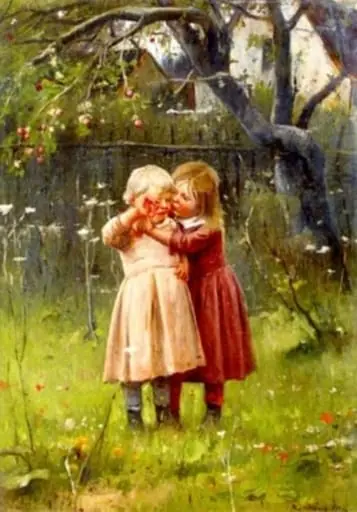
A Childhood Idyll is an oil painting by the Academic Art artist William Adolphe Bouguereau. It dates from 1900 and is held in the collection of the Denver Art Museum.
About this work
Overview
Painted in 1900 by French artist William-Adolphe Bouguereau, this oil-on-canvas work captures a tender, quiet moment between two young girls in a rural setting. Though often associated with academic traditions, the painting reflects a shift toward intimate, everyday subjects. It resides in the Denver Art Museum’s collection, where it is noted for its delicate rendering and emotional restraint.
Subject & Meaning
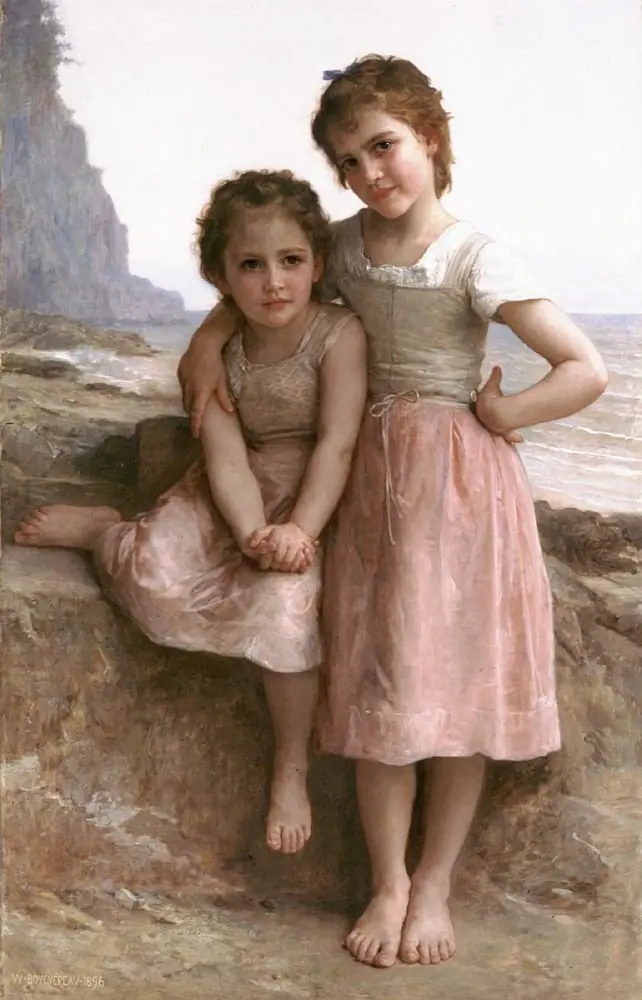
The younger girl responds with a gentle, curious smile, while the elder’s hand rests lightly on her shoulder, an unspoken gesture of care.
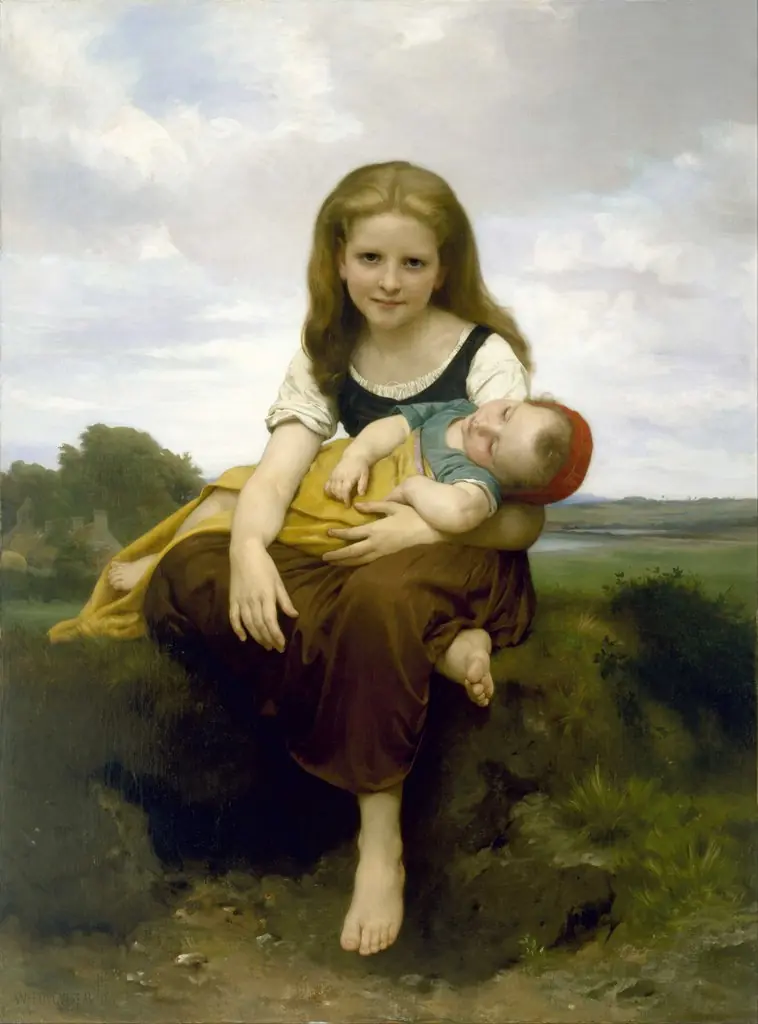
The scene portrays two barefoot girls in a grassy field, one leaning toward the other as if sharing a whispered secret. The younger girl responds with a gentle, curious smile, while the elder’s hand rests lightly on her shoulder, an unspoken gesture of care. Dressed in soft, light-hued garments, they embody innocence and quiet companionship, evoking a sense of fleeting childhood tranquility without overt narrative or symbolism.
Technique & Style
Bouguereau employed traditional academic methods, using multiple layers of glaze to achieve luminous skin tones and smooth fabric textures. The background is softly blurred, directing attention to the figures, while the grass and sky are rendered with subtle tonal gradations. His precise brushwork and controlled lighting enhance the realism, yet the composition avoids theatricality, favoring stillness and naturalism.
History & Provenance
Created near the end of Bouguereau’s career, the painting reflects his enduring interest in idealized rural life. It entered the Denver Art Museum’s collection in the 20th century, likely through private acquisition or donation. While not widely exhibited during its early years, it has since become a representative example of late 19th- to early 20th-century French academic genre painting in American collections.
Context
In 1900, the art world was increasingly embracing modernist movements, yet Bouguereau remained committed to classical techniques and sentimental themes. His focus on childhood and nature stood in contrast to the bold abstractions emerging in Paris. This work aligns with a broader academic tradition that valued emotional resonance through idealized realism, even as it fell out of critical favor among avant-garde circles.
Legacy
Though later dismissed by modernist critics for its sentimentality, the painting continues to be appreciated for its technical precision and quiet emotional depth. It offers insight into the enduring appeal of domestic intimacy in academic art. Today, it serves as a reference point for understanding the transition between 19th-century traditions and the rise of modern aesthetics in Western art.
Own this work as a print
Artist & collection
Artist
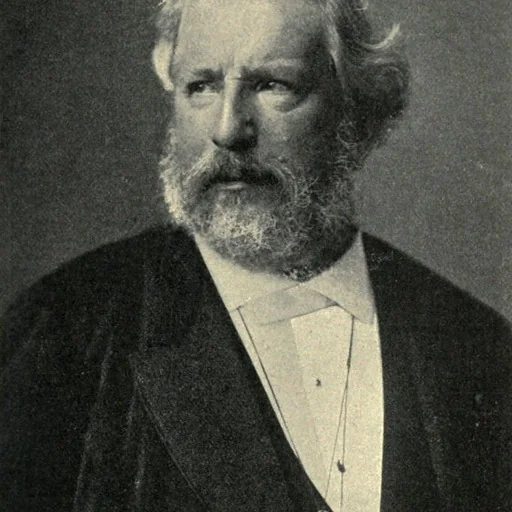
William-Adolphe Bouguereau (French pronunciation:; 30 November 1825 – 19 August 1905) was a French academic painter.