Artwork
The Nut Gatherers
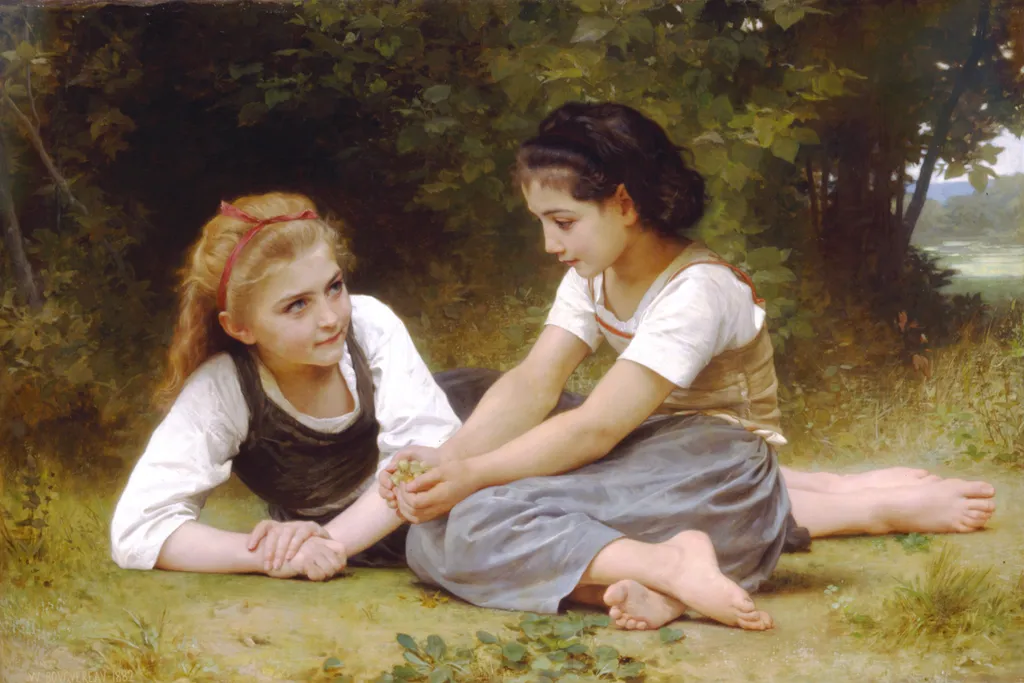
The Nut Gatherers is an oil painting by the Academic Art artist William Adolphe Bouguereau. It dates from 1892 and is held in the collection of the Detroit Institute of Arts.
About this work
An oil painting by French artist William Adolphe Bouguereau showing two young girls in a quiet moment outdoors. It has hung at the Detroit Institute of Arts since 1954, a gift from William E. Scripps, and is one of the museum's most visited works. Bouguereau often painted children in soft, natural settings like this.
Subject & Meaning
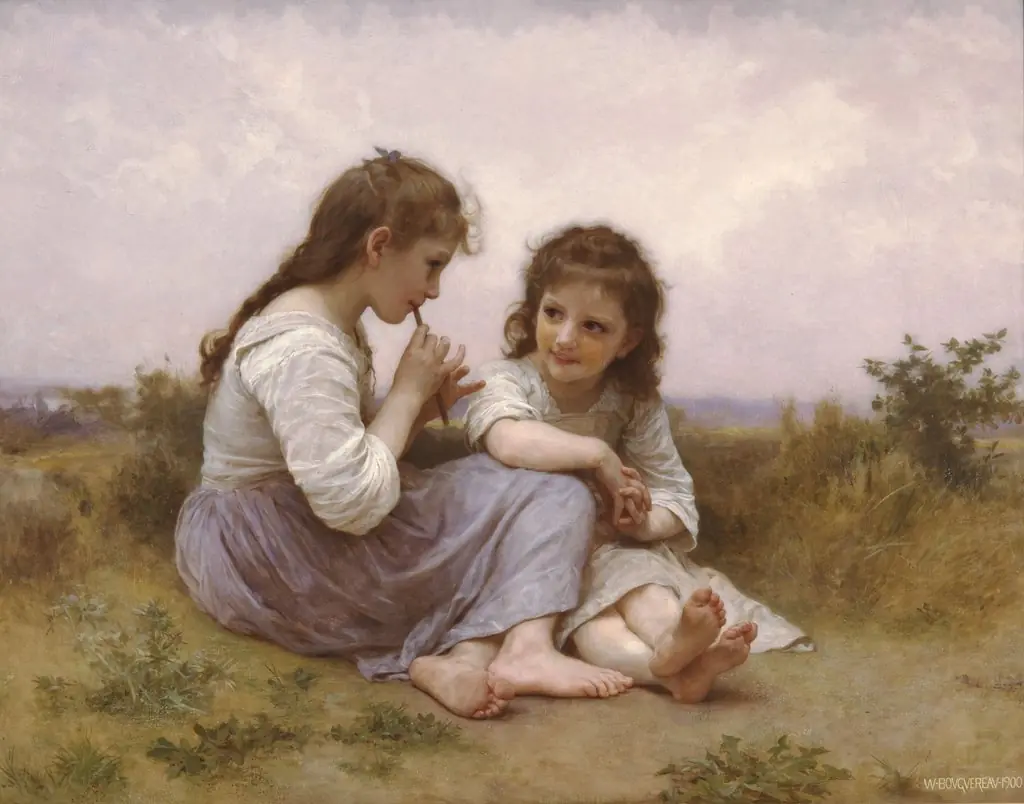
The Nut Gatherers depicts two young girls resting at the edge of a wood after collecting hazelnuts, one holding the gathered nuts in her lap.
The Nut Gatherers depicts two young girls resting at the edge of a wood after collecting hazelnuts, one holding the gathered nuts in her lap. Bouguereau’s composition emphasizes youthful innocence and pastoral leisure, situating the figures in a rural landscape abundant with hazelnut foliage (Corylus avellana) and clover. The scene’s iconography, barefoot girls in simple dresses, relaxed postures, and direct gazes, conveys themes of childhood freedom and the idyllic harmony of nature.
The painting’s title and imagery evoke the seasonal activity of nut gathering, a traditional rural pastime that, in academic art, often symbolized wholesome simplicity and the virtues of agrarian life. The inclusion of plantain and other flora further grounds the scene in a recognizable, unspoiled natural setting, reinforcing the work’s nostalgic idealization of childhood and rural existence.
Technique & Style
Created in 1882, The Nut Gatherers is an oil painting executed on canvas, adhering to the academic art movement's standards for medium and finish. The work employs a horizontal format, with dimensions recorded as 87.6 cm in height and 134 cm in width, though some records cite 176 cm by 131 cm. Stylistically, the piece depicts two young girls resting at the edge of a wood after collecting hazelnuts, characterized by their barefoot state, waist-length hair, and direct eye contact with the viewer. The composition features a rural setting with specific botanical elements such as grass, plantain, and broad-leaved trees.
The figures are rendered in a genre art style, capturing a moment of repose with one girl holding the gathered nuts, emphasizing the artist's focus on realistic detail and idealized rural life.
History & Provenance
The Nut Gatherers was painted in 1882 by William-Adolphe Bouguereau, as confirmed by multiple sources documenting its creation that year. The work was originally owned by James Edmund Scripps, followed by his son, William Edmund Scripps. In 1954, William Edmund Scripps donated the painting to the Detroit Institute of Arts, where it has since remained part of the permanent collection.
There is no evidence in the provided sources of a direct commission for the work; it appears to have been executed as an independent creation by the artist.
William-Adolphe Bouguereau's 1882 oil painting, The Nut Gatherers, is held in the permanent collection of the Detroit Institute of Arts in Detroit, Michigan. The work was originally owned by James Edmund Scripps and William Edmund Scripps before being donated to the museum by William E. Scripps in 1954. It is currently recognized as one of the institution's most popular pieces and remains on permanent display.
While the sources confirm its acquisition date and current location, they do not provide a specific inventory or accession number for the artwork, nor do they list a detailed history of past exhibitions beyond its status as a staple of the museum's permanent collection.
Legacy
The Nut Gatherers has become one of Bouguereau’s most celebrated genre scenes, its popularity reinforced by frequent display and scholarly attention. After being donated by William E. Scripps in 1954, the oil painting entered the permanent collection of the Detroit Institute of Arts, where it is regularly exhibited and cited as a hallmark of academic art. Its widespread reproduction in books, postcards, and online platforms has extended Bouguereau’s reputation beyond the 19th‑century salons into contemporary art discourse, influencing later genre painters who emulate its intimate domestic realism.
The work’s enduring presence in museum catalogues and multilingual Wikipedia entries underscores its lasting legacy as a symbol of 19th‑century French rural life.
Overview
William-Adolphe Bouguereau's 1882 oil painting, The Nut Gatherers (also known as Les Noisettes), depicts two young girls engaged in a tranquil outdoor activity. This work exemplifies the French artist's characteristic style, focusing on idealized figures within natural settings. The painting is rendered in oil, a common medium for Bouguereau, and remains a notable example of his extensive oeuvre.
Context
Since its installation at the Detroit Institute of Arts, The Nut Gatherers has consistently ranked among the museum's most frequently viewed artworks. Its enduring appeal to visitors underscores Bouguereau's ability to create compositions that resonate with a broad audience, characterized by their accessible subject matter and refined execution. The painting's popularity reflects a continued public appreciation for academic realism.
Own this work as a print
Artist & collection
Artist
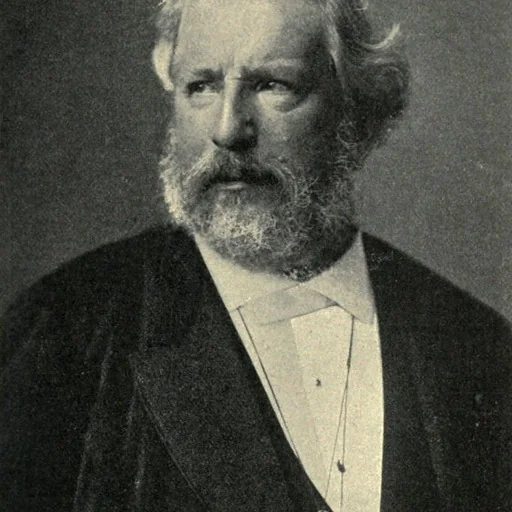
William-Adolphe Bouguereau (French pronunciation:; 30 November 1825 – 19 August 1905) was a French academic painter.