Artwork
The Temple of Vesta and the Falls at Tivoli
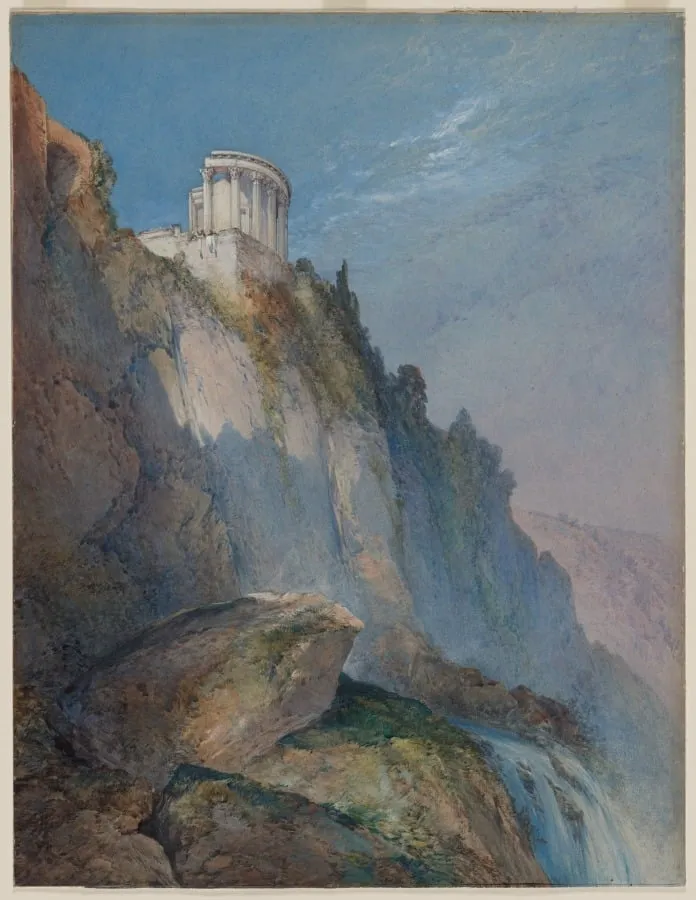
The Temple of Vesta and the Falls at Tivoli is a drawing by the Impressionist artist William Callow. It dates from 1859 and is held in the collection of the Cleveland Museum of Art. Created in 1859, this large watercolor by Callow presents a detailed landscape of Tivoli’s natural and architectural features.
- Accession no.
- 2011.4
- Credit line
- Sundry Purchase Fund
About this work
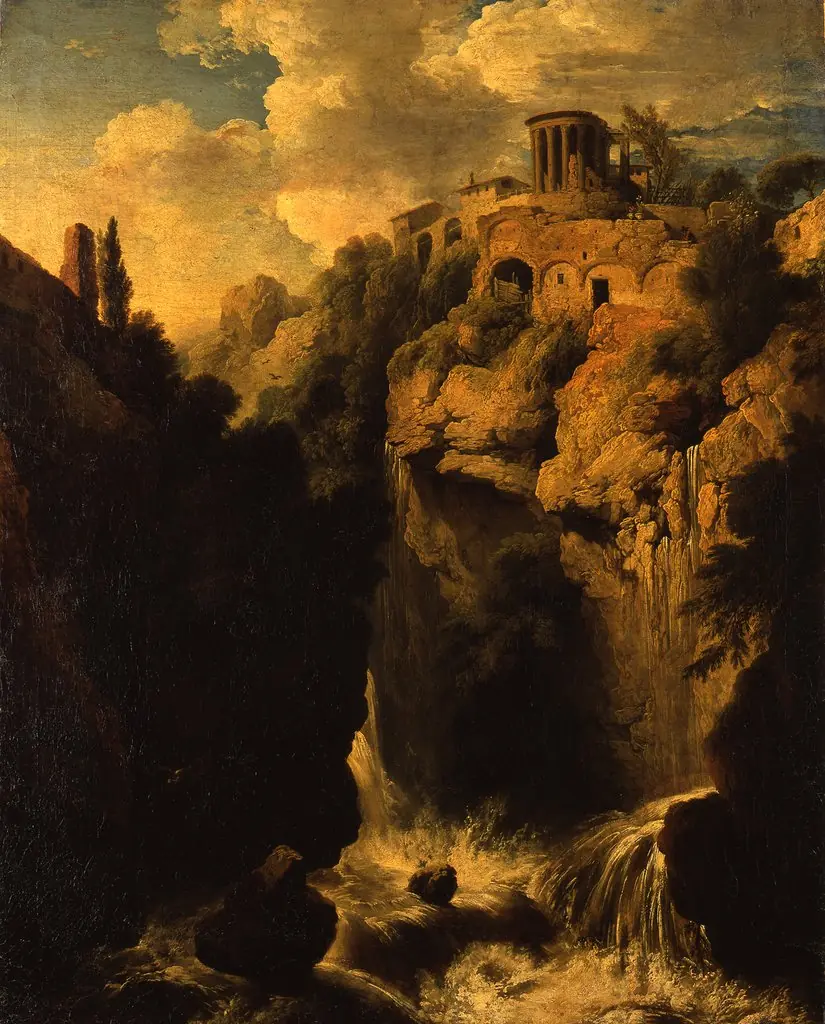
You see a waterfall crashing over mossy rocks, with a small white temple perched on a cliff above it.
You see a waterfall crashing over mossy rocks, with a small white temple perched on a cliff above it. Tiny figures hang laundry in the distance, almost lost in the mist.
Callow painted this in 1859 as a big, finished watercolor, not just a sketch. The rocks and water look real enough to touch, but the temple glows like a bright spot in a dream. It’s a mix of careful detail and soft light.
If you like this, look up sfumato, the way artists blur edges to make scenes feel hazy and deep.
Overview
Created in 1859, this large watercolor by Callow presents a detailed landscape of Tivoli’s natural and architectural features. Executed as a finished presentation piece rather than a preparatory sketch, it was exhibited at the Society of Painters in Water Colours in London. The composition balances precise rendering with atmospheric softness, emphasizing the interplay between the rugged terrain and the distant temple.
Subject & Meaning
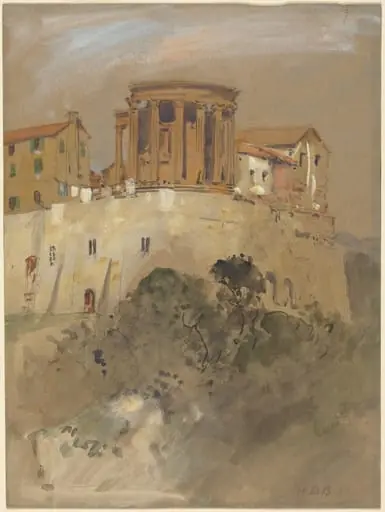
The scene centers on the cascading falls of Tivoli, framed by moss-laden rocks, with the Temple of Vesta rising above as a quiet focal point. The inclusion of tiny figures drying laundry along the temple’s base introduces a subtle human presence, grounding the sublime landscape in daily life. This juxtaposition suggests a harmony between nature, antiquity, and ordinary activity, without overt symbolism.
Technique & Style
Callow employed a refined watercolor technique, layering transparent washes to achieve luminous effects. The rocks and water are rendered with sharp, tactile detail, while the temple and distant sky are softened through delicate tonal transitions. The contrast between crisp foreground elements and hazy background creates depth, evoking a sense of spatial recession akin to sfumato, though executed in watercolor rather than oil.
History & Provenance
The work was completed in 1859 and publicly shown that same year at the Society of Painters in Water Colours in London, a key venue for watercolor artists of the period. Its exhibition marked its status as a polished, finished work intended for public appreciation. No earlier studies or later ownership records are widely documented, suggesting it was conceived and presented as a standalone piece.
Context
In mid-19th-century Britain, topographical watercolors like this one reflected a broader interest in travel, classical ruins, and natural beauty. Artists often combined scientific observation with romantic sensibility. Callow’s depiction aligns with this trend, presenting Tivoli not merely as a location but as a harmonious blend of nature and cultural heritage, appealing to contemporary tastes for picturesque landscapes.
Legacy
Though not widely reproduced or studied today, the drawing exemplifies the technical ambition of Victorian watercolorists who sought to elevate the medium beyond sketching. Its careful balance of realism and atmosphere influenced later landscape artists interested in the emotional resonance of place. The work remains a quiet testament to the potential of watercolor to convey both precision and poetic stillness.
Artist & collection