Artwork
Swans in Central Park
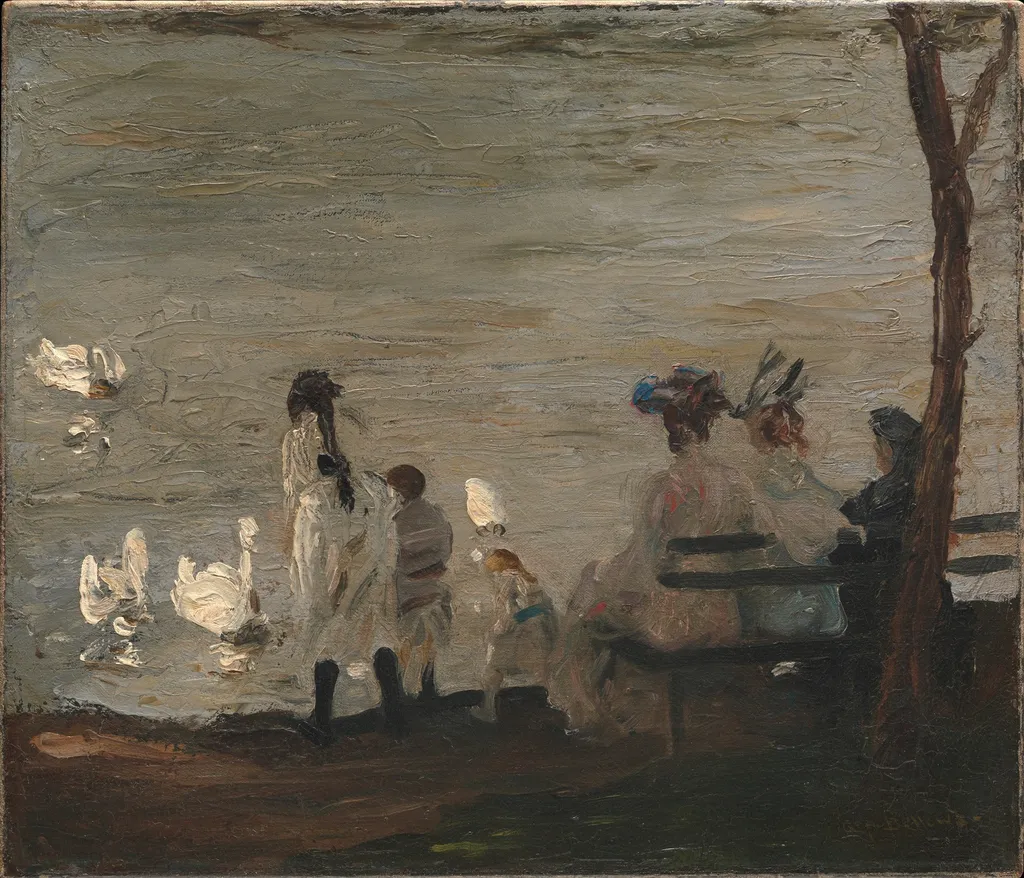
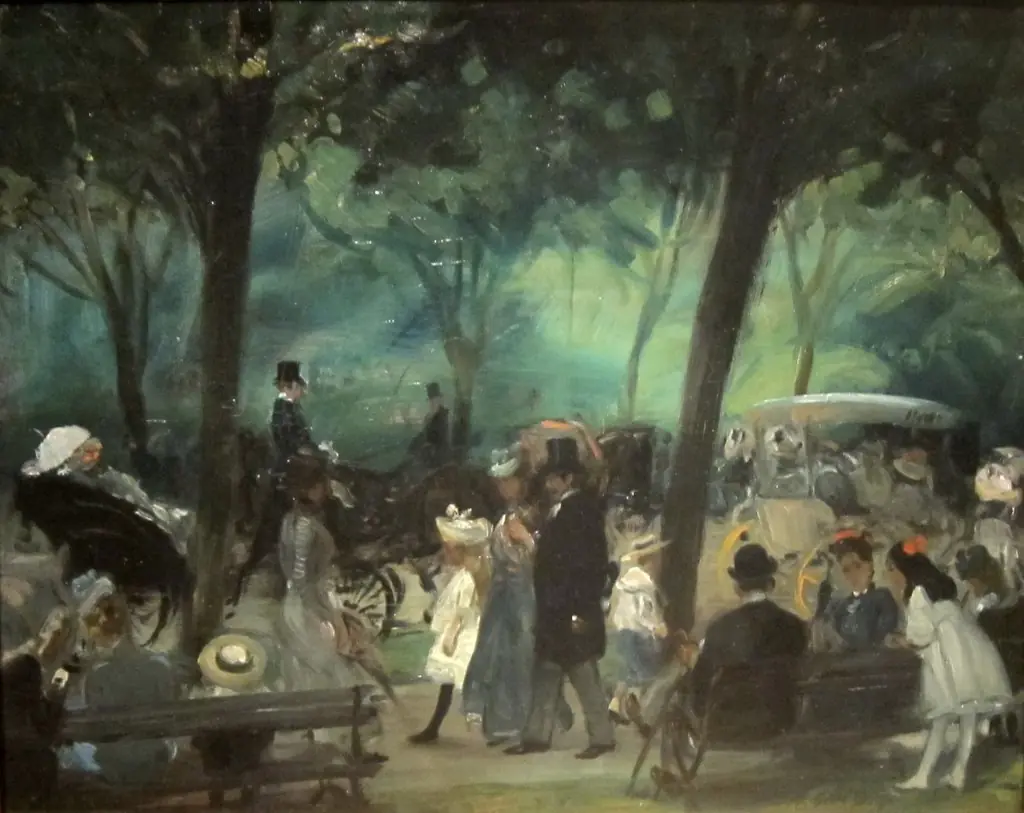
Swans in Central Park is an oil painting by George Bellows. It dates from 1906 and is held in the collection of the Metropolitan Museum of Art.
About this work
Subject & Meaning
The swans serve as focal points, their graceful forms contrasting with the urban park setting and evoking themes of nature amid modernity.
The painting depicts a woman and a child in Central Park interacting with two swans on a pond, emphasizing an intimate, serene moment of human–animal connection. The swans serve as focal points, their graceful forms contrasting with the urban park setting and evoking themes of nature amid modernity. Through the choice of subject and composition, the work conveys a sense of calm and familial tenderness, using the swans’ symbolism of purity and harmony to frame the scene’s emotional resonance.
Technique & Style
George Bellows created Swans in Central Park in 1906 using oil paint applied to a canvas support. The work is classified as a painting and measures 46.7 cm in height by 54.3 cm in width. Stylistically, the composition depicts a woman, a child, and a swan within an urban park setting.
History & Provenance
George Bellows executed the oil painting Swans in Central Park in 1906. Created early in the artist's career, the work depicts a woman and child observing a swan, rendered on canvas. The piece entered the collection of the Metropolitan Museum of Art, where it remains held.
Specific details regarding the original commission or intermediate ownership history prior to its museum acquisition are not provided in the available records.
Legacy
Swans in Central Park (1906) exemplifies George Bellows’ shift toward subjects of urban leisure, combining vigorous brushwork with a balanced composition of figures and water. The oil on canvas, measuring 46.7 × 54.3 cm, depicts a woman, child, and swan within Central Park, reflecting contemporary interest in public recreation. Its inclusion in the Metropolitan Museum of Art’s collection has positioned the work as a reference point for studies of early twentieth‑century American realism, influencing later artists who examined city parks as sites of social interaction. Its provenance and dimensions are recorded in the museum’s catalogue entry.
Overview
George Bellows, a prominent American realist, completed Swans in Central Park in 1906 using oil paint. This painting captures a moment of everyday life within New York City's iconic green space, a common theme for the artist. The work, now part of The Metropolitan Museum of Art’s collection, features a group of figures, including a woman and a child, observing swans on the water, reflecting Bellows's interest in urban leisure and natural elements within the city.
Context
As an American realist, George Bellows was widely recognized for his powerful portrayals of New York City's urban landscape and its inhabitants. His work frequently explored the daily routines and leisure activities of city life, earning him considerable acclaim during his generation. Swans in Central Park exemplifies his commitment to depicting authentic, unvarnished scenes, contributing to his reputation as a leading figure in American art of the early 20th century.
Own this work as a print
Artist & collection

Artist
George Wesley Bellows (August 12 or August 19, 1882 – January 8, 1925) was an American realist painter, known for his bold depictions of urban life in New York City.