Artwork
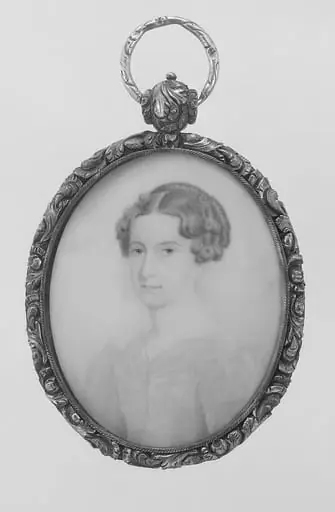
Portrait of a Lady
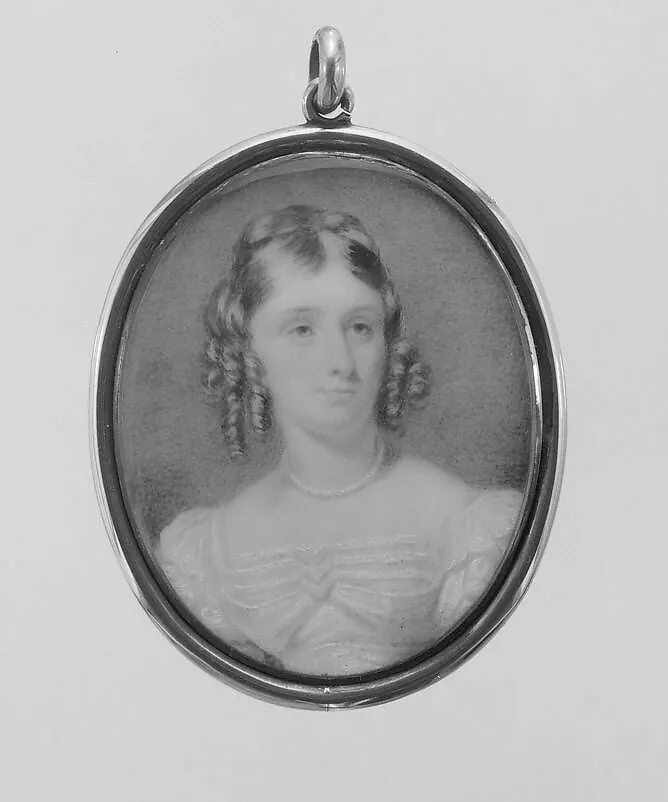
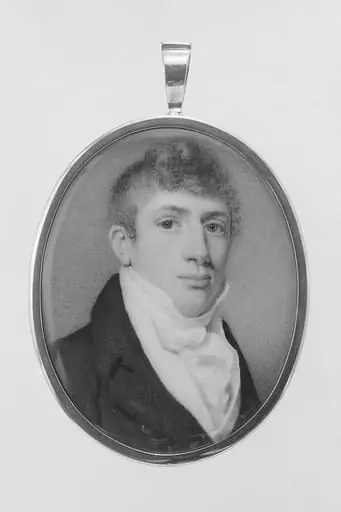
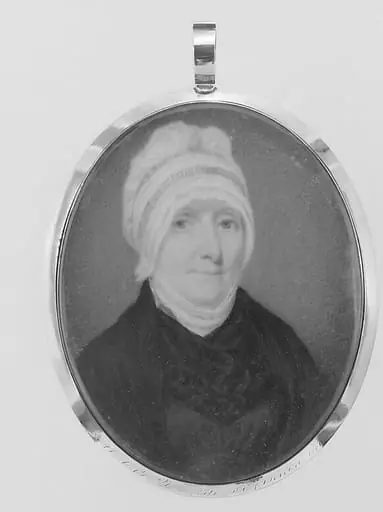
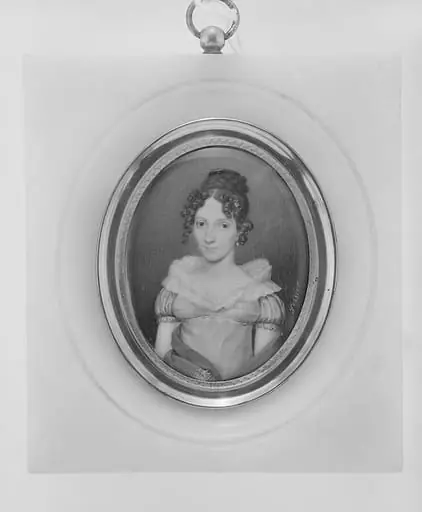
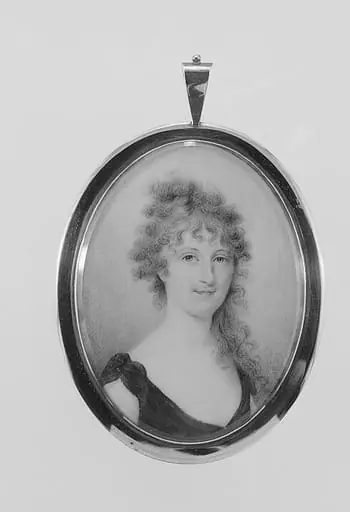
Portrait of a Lady is a watercolor painting by the British Romanticist artist William John Thomson. It dates from 1822 and is held in the collection of the Metropolitan Museum of Art.
About this work
A woman in a dark dress looks straight out, her face softly lit, her skin glowing under tiny brushstrokes on ivory. This is a miniature, small enough to hold in the hand. In 1822 people carried such portraits in lockets, and the artist built up the light in thin, transparent glazes.
Technique & Style
The compact dimensions and refined handling reflect the conventions of the miniature portrait tradition in which Thomson worked.
The portrait is executed in watercolor on ivory, a miniature-painting technique that exploits the smooth, luminous surface of the ivory support to produce delicate tonal gradations and a soft, translucent flesh quality typical of early nineteenth-century portrait miniatures. The small-scale format, with dimensions of approximately 6.4 by 5.2 centimeters, is consistent with the intimate handling associated with the medium. The watercolor pigments are applied in thin, controlled washes over the ivory ground, allowing the natural warmth of the support to filter through and lend a characteristic glow to the sitter's features.
The compact dimensions and refined handling reflect the conventions of the miniature portrait tradition in which Thomson worked.
History & Provenance
Portrait of a Lady is a watercolor on ivory painted by William John Thomson in 1822, as recorded in the Metropolitan Museum of Art’s catalogue. The work entered the museum’s collection through the acquisition of the piece identified as 2006.235.204, listed in the museum’s records and documented on Wikidata. Its creation is dated to the early 19th century, with the inception date recorded as 1822-01-01.
The painting depicts a solitary woman and is classified within the American Wing’s portrait genre. No earlier ownership or commission details are provided in the available sources.
William John Thomson's 1822 watercolor on ivory, titled Portrait of a Lady, is held in the collection of the Metropolitan Museum of Art in New York. The work is accessioned under the number 2006.235.204 and is classified within the museum's American Wing. While the source material confirms its current location and specific inventory number, the provided records do not contain details regarding a public exhibition history for this specific miniature portrait.
Overview
William John Thomson, an American-born artist active in Great Britain, created Portrait of a Lady in 1822. This watercolor on ivory is a miniature, a format for which Thomson was well-regarded. The work captures a woman's likeness and reflects the artistic trends of British Romanticism, a movement that influenced many of Thomson's portraits and other intimate works.
Context
During the early 19th century, miniature portraits held significant personal value, often functioning as portable keepsakes. Individuals would carry these small artworks, sometimes set into lockets or small frames, as intimate reminders of family members or loved ones. This practice predates photography and underscores the role of art in preserving personal connections and memories within a private sphere.
Artist & collection
Artist
William John Thomson (3 October 1771 – 24 March 1845) was an American-born painter of silhouettes, portraits and miniatures who was active in Great Britain.