Artwork
Yosemite Falls, from Glacier Point
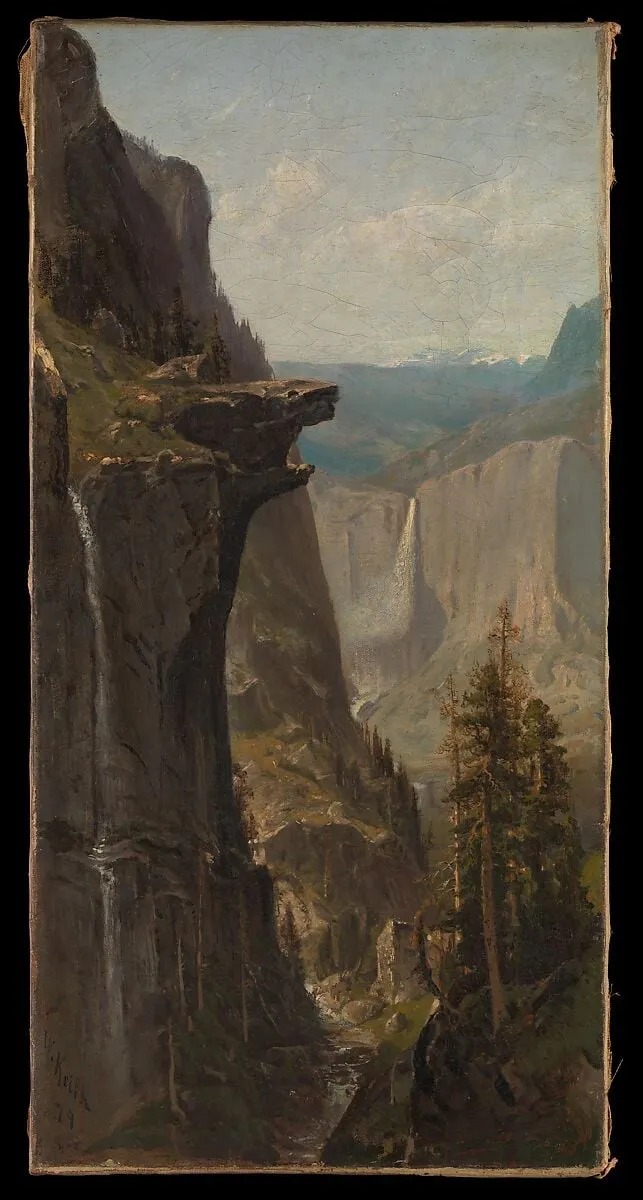
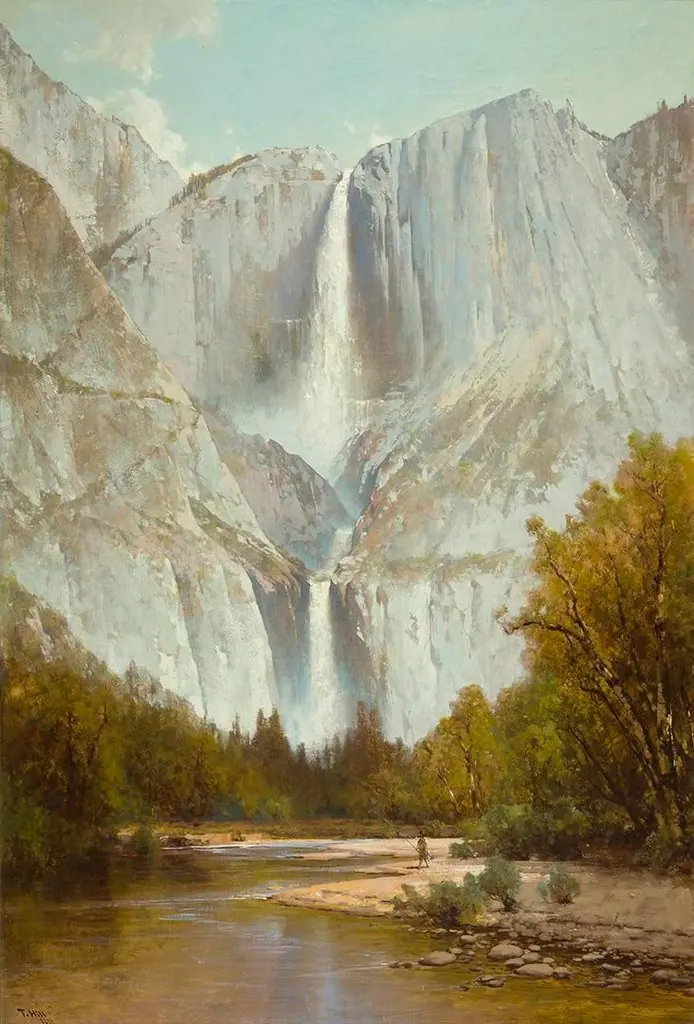
Yosemite Falls, from Glacier Point is an oil painting by the American Impressionist artist William Keith. It dates from 1879 and is held in the collection of the Metropolitan Museum of Art.
About this work
Subject & Meaning
The inclusion of trees in the foreground adds depth and scale to the scene, reinforcing the vastness of the wilderness environment.
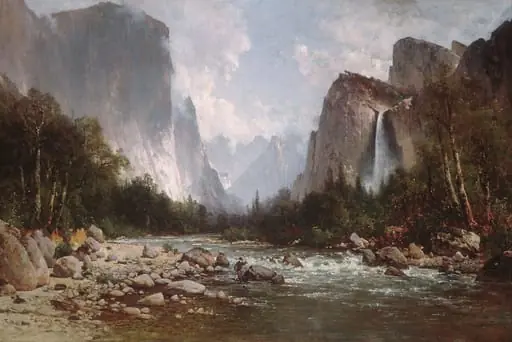
William Keith's 1879 oil painting, Yosemite Falls, from Glacier Point, depicts a grand landscape centered on the Yosemite Falls waterfall, framed by mountains and trees. The work captures the natural grandeur of the Yosemite Valley as viewed from the elevated vantage point of Glacier Point. As a landscape genre piece, the painting emphasizes the majestic scale of the American West, presenting the waterfall and surrounding peaks as dominant subjects.
The composition highlights the interplay between the vertical descent of the water and the rugged mountain terrain, characteristic of Keith's focus on California's natural scenery. The inclusion of trees in the foreground adds depth and scale to the scene, reinforcing the vastness of the wilderness environment.
Technique & Style
Created in 1879 by William Keith, this work is an oil painting executed on canvas. The piece functions as a landscape composition, vertically oriented with dimensions of 66 by 33 units. Visually, the artwork depicts a natural scene featuring a prominent waterfall, mountainous terrain, and trees.
As a representative example of Keith's output during this period, the painting utilizes traditional oil media to render the topography of Yosemite Falls as viewed from Glacier Point. The work is classified within the genre of landscape painting, focusing on the grandeur of the American West through its specific arrangement of geological and botanical elements.
History & Provenance
William Keith completed Yosemite Falls, from Glacier Point in 1879, an oil on canvas measuring 66 × 33 cm that belongs to the American Wing landscape genre. The work was painted at Glacier Point and later entered the collection of the Metropolitan Museum of Art, where it remains on view. No documentary evidence indicates a specific commission or private patronage; the painting entered the museum through a standard acquisition process.
Its creation reflects the late‑19th‑century American fascination with Yosemite’s geology, and the piece has been catalogued in the museum’s records since its acquisition.
The painting is held by The Metropolitan Museum of Art, New York, where it is recorded as accession number 1975.1.209. It entered the museum in 1975 through an anonymous gift. The work has not been recorded in major traveling exhibitions in available institutional records, and no exhibition history prior to its acquisition by the museum is documented.
Overview
Yosemite Falls, from Glacier Point is an oil on canvas painting that captures the grandeur of the iconic waterfall as viewed from a prominent vantage point. The composition features the towering cascade against a dark cliff face, framed by pine trees under a pale sky. The artist's rendering imbues the falls with an ethereal quality, suggesting a remembered vision or an abstract concept rather than a strictly literal depiction, fostering a contemplative atmosphere.
Context
This work emerged from the artist's personal experience, painted from memory following a visit to Yosemite. Such a process allowed for an interpretation of the landscape filtered through recollection, rather than direct observation. It aligns with a tradition in American art where natural wonders were not just documented but also imbued with spiritual or emotional significance, often rendered with a sense of awe and quiet reflection.
Artist & collection

Artist
William Keith (November 18, 1838 – April 13, 1911) was a Scottish-American painter famous for his California landscapes.