Artwork
Nevada Falls, Yosemite
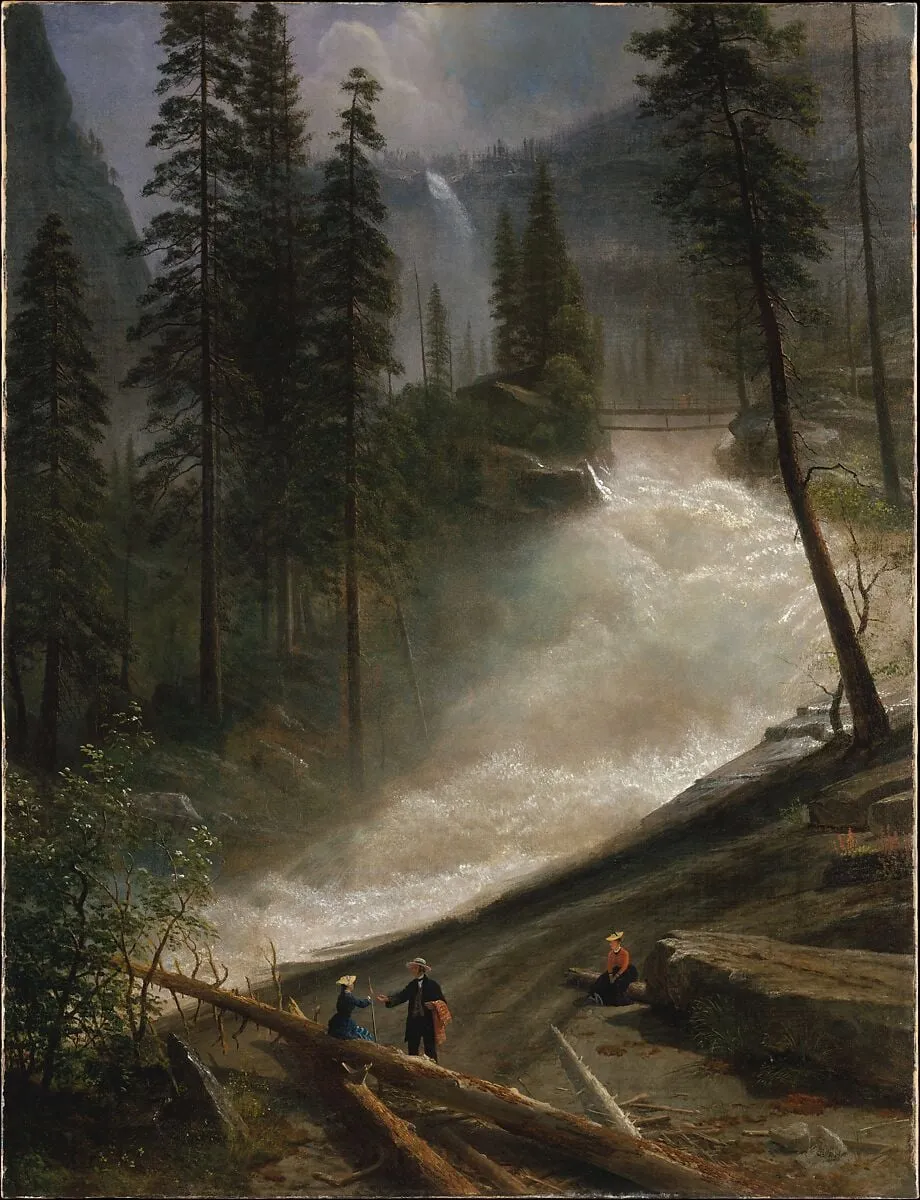
Nevada Falls, Yosemite is an oil painting by the Hudson River School artist Albert Bierstadt. It dates from 1872 and is held in the collection of the Metropolitan Museum of Art.
- Accession no.
- 1979.490.3
- Credit line
- Gift of Mrs. J. Augustus Barnard, 1979
About this work
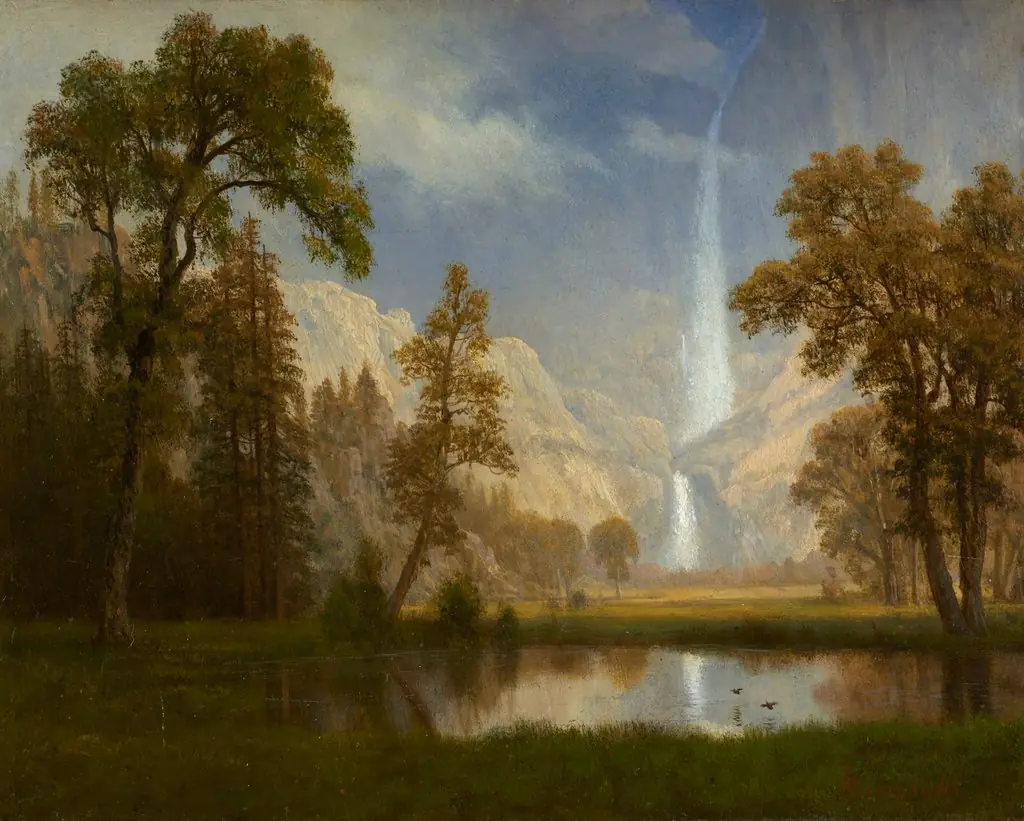
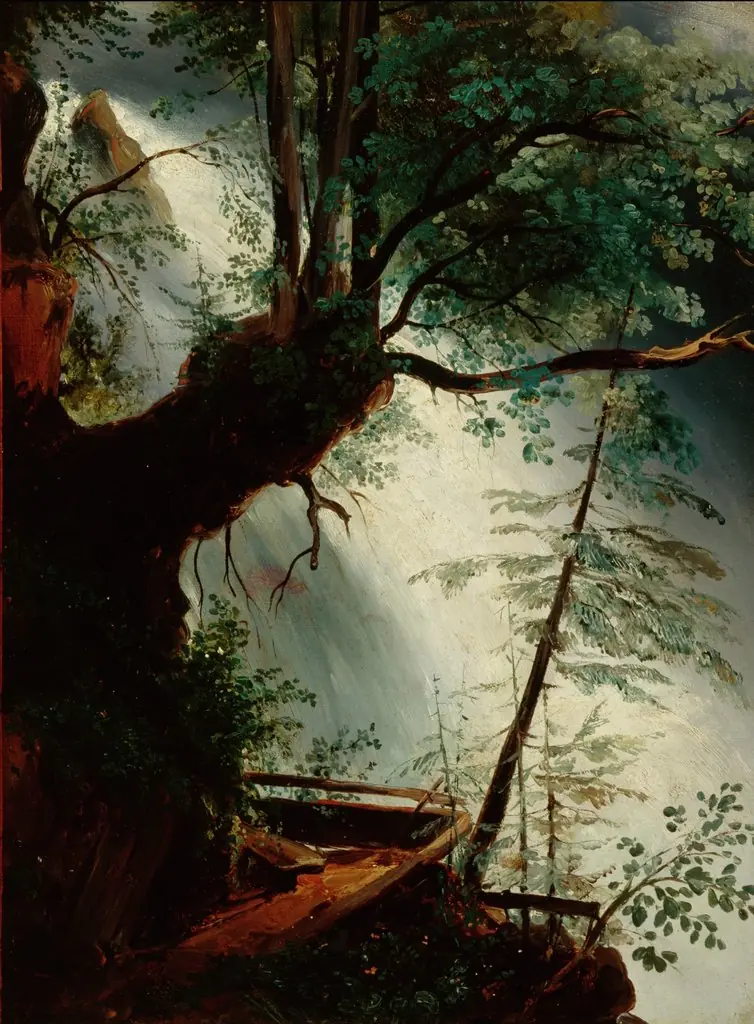
At Nevada Falls in Yosemite Valley, the Merced River drops nearly six hundred feet onto the boulders below, throwing up spray that catches the light. Albert Bierstadt painted the scene around 1872 and tucked tiny tourists into the foreground, including two women in hiking gear, a sign that visitors could now climb the trail to the falls.
Subject & Meaning
The painting depicts Nevada Fall in Yosemite, a dramatic waterfall plunging through a rugged wilderness setting.
The painting depicts Nevada Fall in Yosemite, a dramatic waterfall plunging through a rugged wilderness setting. Bierstadt includes small human figures, a man and woman, positioned within the vast landscape, a compositional device that emphasizes the sublime scale of nature relative to human presence. The iconography follows conventions of 19th-century American landscape painting, where untamed wilderness represents national identity, manifest destiny, and the spiritual transcendence found in the American West.
The waterfall itself functions as a focal point of natural power and grandeur, while the surrounding trees and terrain reinforce the theme of pristine, unspoiled wilderness. The work symbolizes the Romantic ideal of nature as a source of awe and moral renewal, characteristic of the Hudson River School and Rocky Mountain School traditions to which Bierstadt belonged.
Technique & Style
Nevada Falls, Yosemite is executed in oil on canvas, a medium Bierstadt used consistently for his Yosemite subjects. The support is a moderately sized canvas measuring 99.1 by 76.2 cm, oriented in a vertical format well suited to depicting the cascading waterfall flanked by trees and small staffage figures of a man and a woman. As a landscape painting, the work belongs to the tradition of American plein-air and studio landscape practice of the mid-nineteenth century, in which Bierstadt was a leading figure.
The composition centers on the falls themselves, with surrounding forest elements and human figures providing scale. No specific information regarding the painting's current condition, surface handling, or particular stylistic characteristics beyond its landscape genre and medium is recorded in the available sources.
History & Provenance
Nevada Falls, Yosemite by Albert Bierstadt is held in the collection of the Metropolitan Museum of Art, where it is classified within The American Wing. Its physical dimensions are 99.1 cm in height by 76.2 cm in width, and it is catalogued as an oil-on-canvas landscape painting dated to 1872. No exhibition history beyond its placement in the Metropolitan Museum of Art's collection is documented in the available sources.
Overview
Albert Bierstadt's "Nevada Falls, Yosemite," an oil on canvas from approximately 1872-1873, captures the dramatic cascade of the Merced River in California's Yosemite Valley. This painting, measuring 39 by 30 inches, is part of the Metropolitan Museum of Art's American Wing collection. It exemplifies Bierstadt's sustained engagement with the American West, depicting the powerful natural forces and scenic grandeur that characterized his celebrated landscape works.
Context
By the early 1870s, Yosemite Valley had become increasingly accessible to travelers from the Eastern United States, largely due to the completion of the transcontinental railroad in 1869 and improved stagecoach routes. Despite this influx of visitors, Bierstadt consistently portrayed the region as an unspoiled natural paradise. His repeated visits during this period, following an earlier expedition in 1863, allowed him to gather fresh material while observing the valley's evolving relationship with tourism.
Legacy
"Nevada Falls, Yosemite" is one of at least twenty-five views of the valley painted by Bierstadt, collectively contributing to its recognition as a significant subject for American landscape art. His extensive body of work depicting Yosemite played a crucial role in shaping public perception of the region's grandeur. This artistic influence, in turn, supported the broader cultural movement advocating for the preservation of such natural wonders.
Artist & collection

Artist
Albert Bierstadt (January 7, 1830 – February 18, 1902) was a German-American painter best known for his lavish, sweeping landscapes of the American West.