Artwork
Merced River, Yosemite Valley
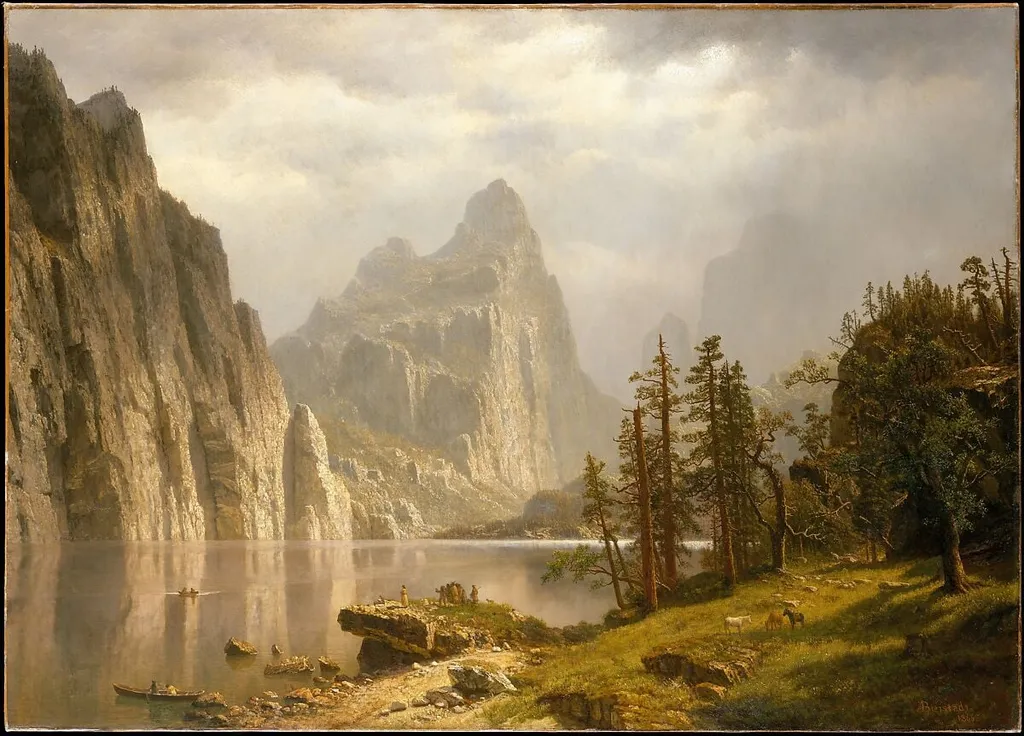
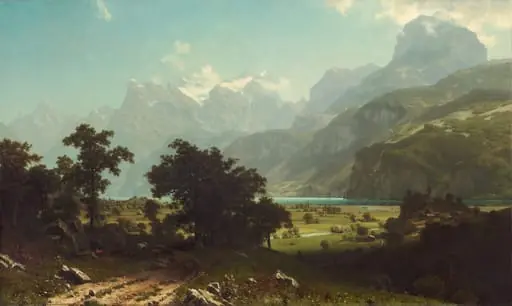
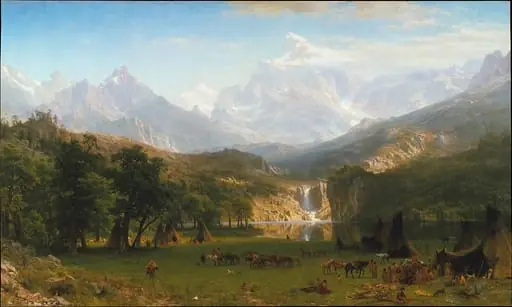
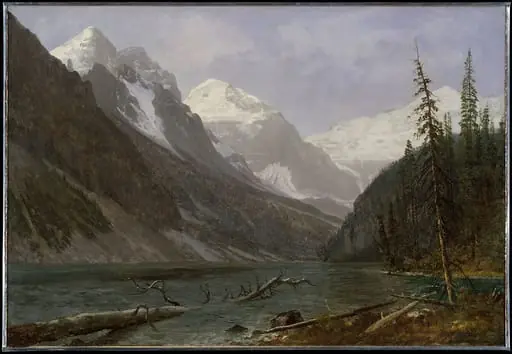
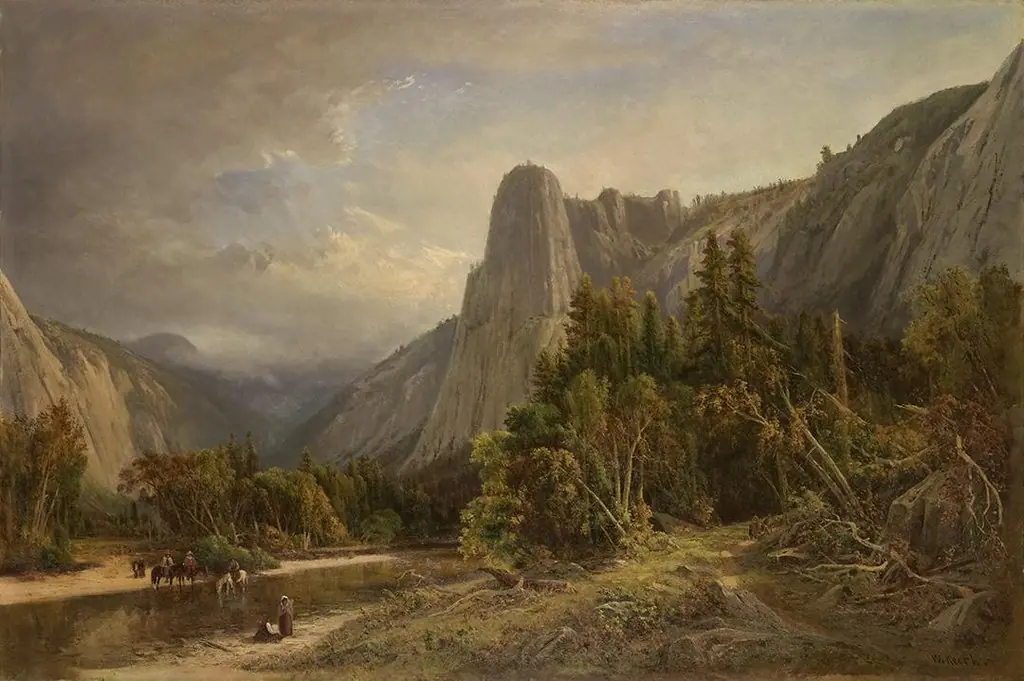
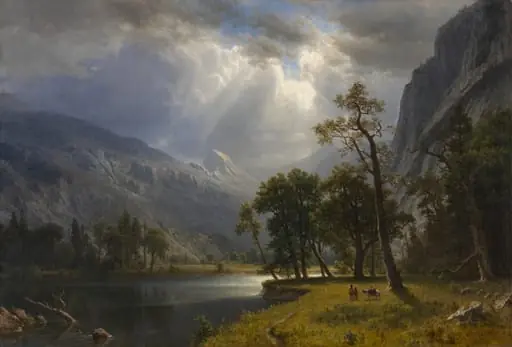
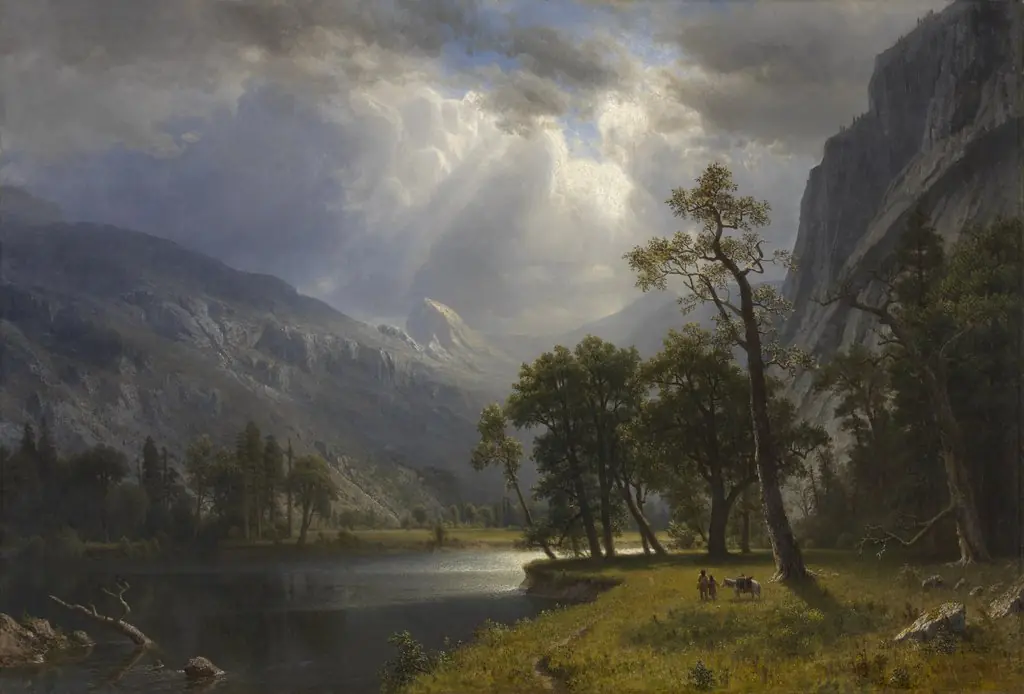
Merced River, Yosemite Valley is an oil painting by the Hudson River School artist Albert Bierstadt. It dates from 1866 and is held in the collection of the Metropolitan Museum of Art.
About this work
In May 1863 Albert Bierstadt left New York for the West with the journalist Fitz Hugh Ludlow, and by August the two were camping in California's Yosemite Valley. Three years later, back in his studio, Bierstadt worked his field sketches into this canvas: a wide view of the Merced River where granite peaks dwarf small figures, lit with the soft atmospheric glow of his western panoramas.
Overview
Albert Bierstadt's 1866 oil painting, Merced River, Yosemite Valley, captures the dramatic landscape of the American West.
Albert Bierstadt's 1866 oil painting, Merced River, Yosemite Valley, captures the dramatic landscape of the American West. This large-scale canvas depicts the iconic valley, with the Merced River winding through towering granite peaks. It exemplifies Bierstadt's signature style of grand panoramas that brought the sublime beauty of the frontier to audiences in the East, solidifying his reputation as a leading painter of the American landscape.
Subject & Meaning
The composition presents a sweeping view of the Merced River, framed by immense, rugged granite formations. In the meticulously rendered foreground, a small group of figures, likely members of the Indigenous Miwok community who long inhabited the valley, gather by the water. Their diminutive presence underscores the overwhelming scale of the natural environment, conveying a sense of the sublime power of the American wilderness.
Technique & Style
Bierstadt employed a distinct approach to render the vastness of Yosemite. He meticulously detailed the rocks and vegetation in the foreground, creating a sharp visual clarity. In contrast, the distant mountains are softened by a hazy, atmospheric light, dissolving into a smoother appearance.
This interplay between sharp detail and ethereal distance enhances the painting's powerful, awe-inspiring effect, characteristic of the Hudson River School's engagement with the sublime.
History & Provenance
This painting originated from Albert Bierstadt's second expedition to the American West in 1863, undertaken with journalist Fitz Hugh Ludlow. During their time in California's Yosemite Valley, Bierstadt created on-site sketches, possibly influenced by Carleton E. Watkins's earlier stereoscopic photographs. He completed the large canvas in his New York studio in 1866.
The Metropolitan Museum of Art acquired the work in 1909, a gift from the sons of William Paton.
Context
Merced River, Yosemite Valley was created during a pivotal period when the American federal government began to consider the formal protection of natural wonders like Yosemite. Such grand depictions of the Western landscape contributed to public awareness and appreciation, playing a role in the conservation movement that ultimately led to Yosemite's designation as a national park in 1890.
Artist & collection

Artist
Albert Bierstadt (January 7, 1830 – February 18, 1902) was a German-American painter best known for his lavish, sweeping landscapes of the American West.