Artwork
Lazarus M. Goldsmith
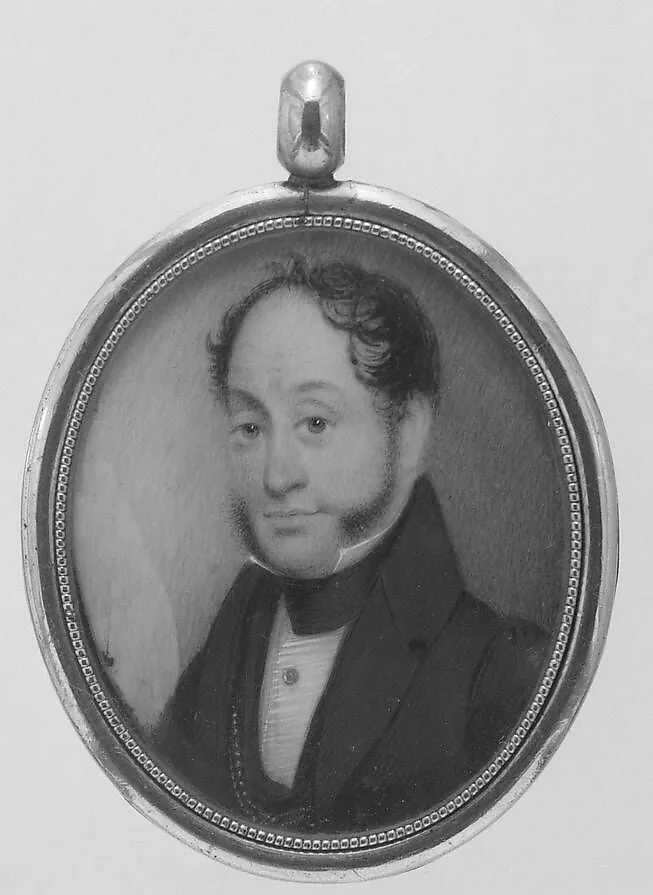
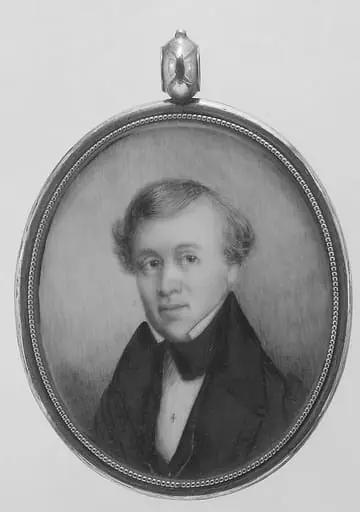
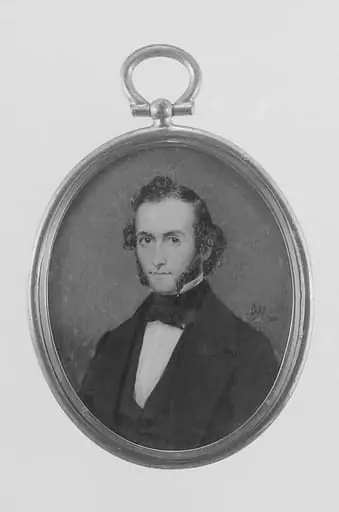
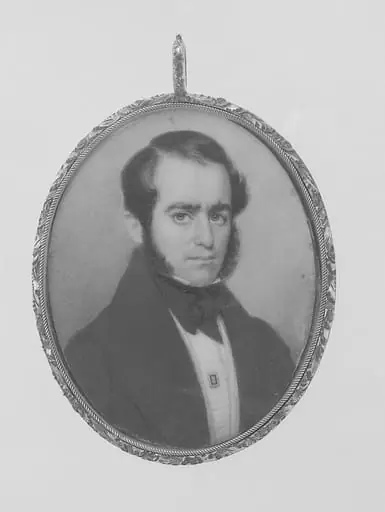
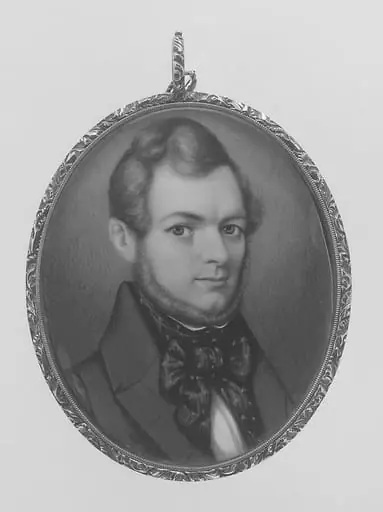
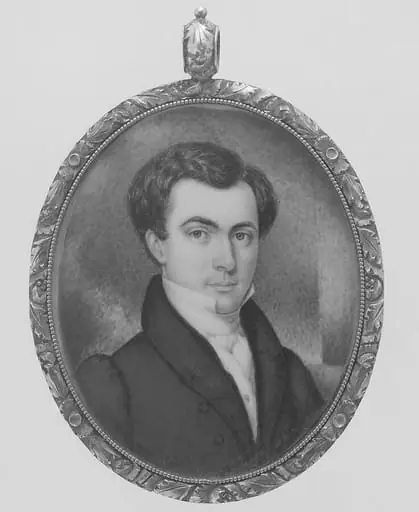
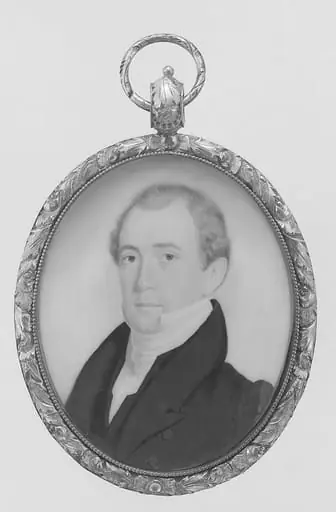
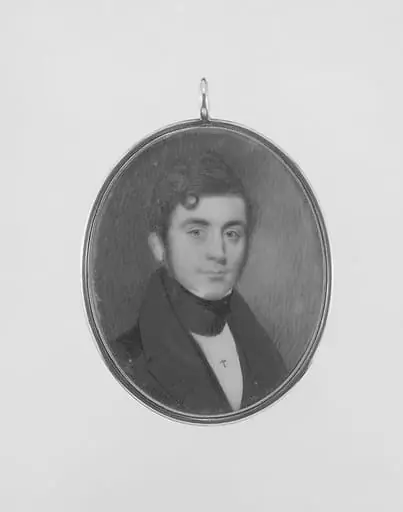
Lazarus M. Goldsmith is a watercolor painting by the American Folk Art artist William Lewis. It dates from 1833 and is held in the collection of the Metropolitan Museum of Art.
- Accession no.
- 2006.235.223
- Credit line
- Fletcher Fund, 2006
About this work
Technique & Style
Goldsmith is a small-scale portrait executed in watercolor on ivory, a miniature format that demands precise, controlled handling.
Lazarus M. Goldsmith is a small-scale portrait executed in watercolor on ivory, a miniature format that demands precise, controlled handling. The support of ivory, prized in the early nineteenth century for its luminous surface, allows the watercolor pigments to be applied in thin, translucent layers, producing the delicate tonal gradations characteristic of the medium. The work measures roughly 4.6 by 3.8 centimeters, an intimate scale typical of portable keepsake portraits intended for close viewing.
Stylistically, the piece adheres to the conventions of American portrait miniatures of the 1830s, with the sitter rendered in a straightforward, naturalistic manner. No condition issues are documented in the available records.
History & Provenance
The portrait Lazarus M. Goldsmith was created by the American artist William Lewis in 1833 as a watercolor on ivory. It depicts Lazarus M. Goldsmith and is held in the Metropolitan Museum of Art, where it is catalogued within the American Wing. While earlier ownership or commission details are not recorded in the available sources, the work is classified as a portrait. No specific accession number or exhibition history is documented in the records consulted.
Overview
William Lewis's 1833 watercolor portrait, "Lazarus M. Goldsmith," captures its subject on a small ivory support. This intimate depiction, measuring approximately three inches, was crafted with the precision characteristic of miniature painting. It presents a direct gaze from Goldsmith, rendered with delicate brushwork that highlights the texture of his attire and the subtle play of light on his features.
Context
Miniature portraits like "Lazarus M. Goldsmith" were often designed for personal adornment or private viewing. Their small scale, typically around three inches, made them suitable for incorporation into jewelry such as brooches or lockets. These intimate objects served as cherished mementos, allowing individuals to carry images of loved ones close to them, reflecting a common practice in the early 19th century.
Artist & collection

Artist
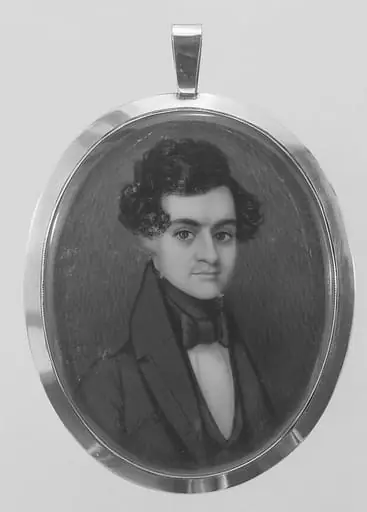
William Lewis painted tiny portraits, each one 3 inches wide on ivory, of people in 1830s America.