Artwork
Charles A. Macy
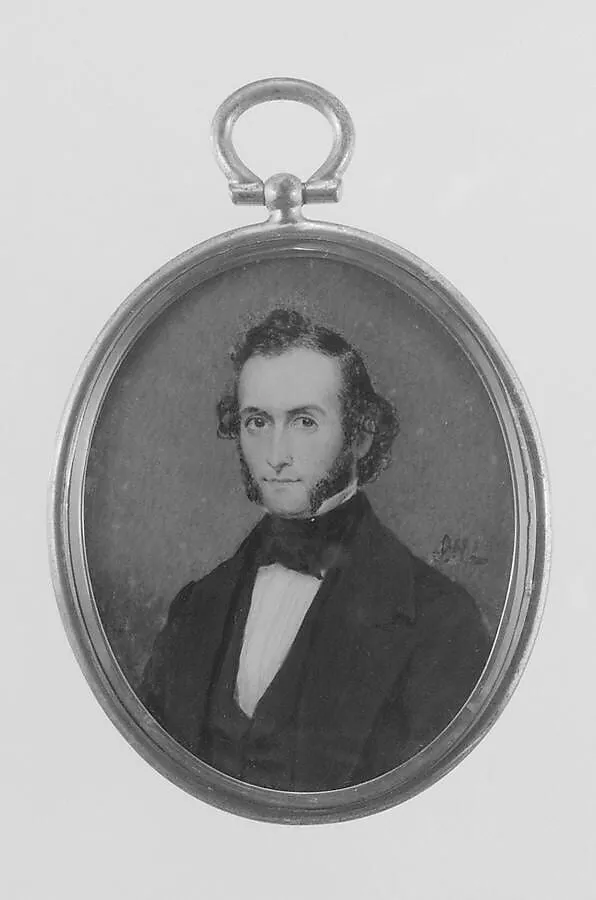
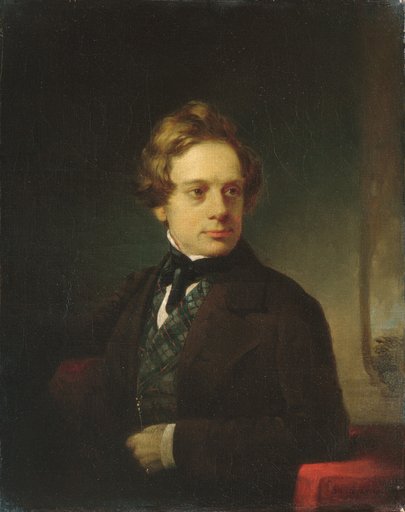
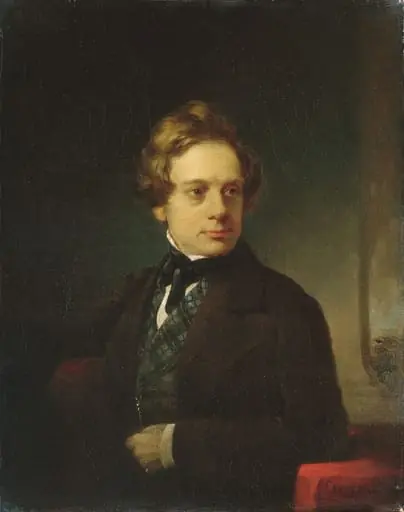
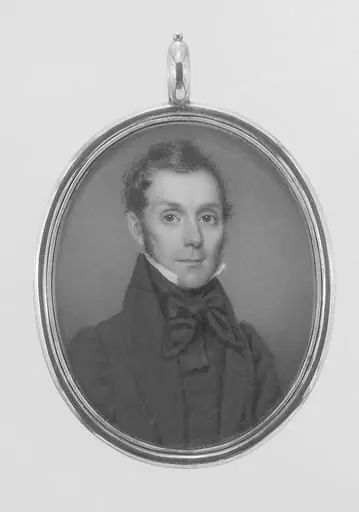
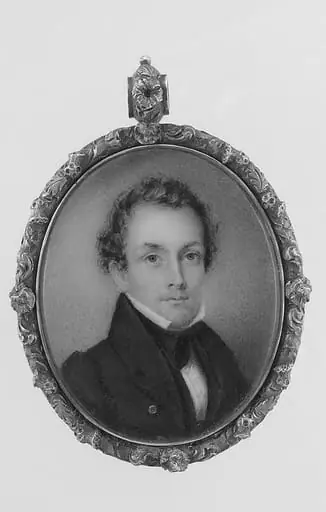
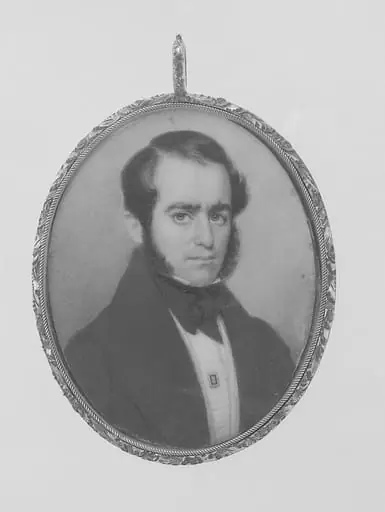
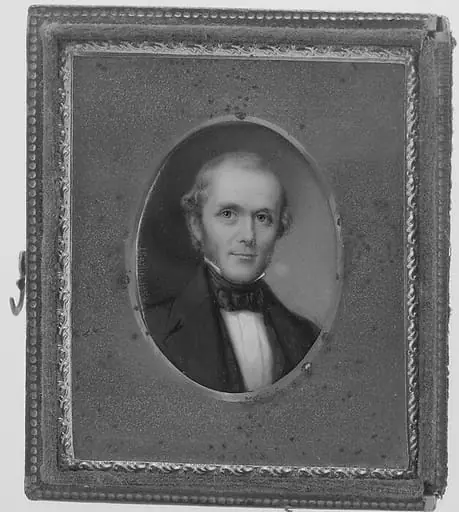
Charles A. Macy is a watercolor painting by the American Folk Art artist Jacob Hart Lazarus. It dates from 1852 and is held in the collection of the Metropolitan Museum of Art. This watercolor on ivory, titled Charles A.
About this work
Subject & Meaning
The sources describe the work simply as a portrait of a man and do not provide any further iconographic attributes, symbolic details, or interpretive meaning.
Charles A. Macy is an 1850 watercolor on ivory portrait that depicts a male sitter. The sources describe the work simply as a portrait of a man and do not provide any further iconographic attributes, symbolic details, or interpretive meaning. Consequently, the section notes that the artwork’s subject is a man portrayed in a conventional portrait format, with no additional symbolism recorded in the references. No specific allegorical elements or contextual symbols are mentioned.
Technique & Style
The miniature portrait of Charles A. Macy is executed in watercolor on ivory, a technique especially favored in mid-nineteenth-century American portraiture for its capacity to render fine detail and luminous flesh tones. The support of ivory, rather than paper or canvas, allowed the artist to achieve a smooth, enamel-like surface through delicate, translucent washes. The work is classified as a portrait within the holdings of the American Wing, and its diminutive scale, recorded as approximately 5.4 by 4.4 units, is consistent with the intimate, handheld format typical of portrait miniatures of the period, designed for private viewing rather than public display.
History & Provenance
Jacob Hart Lazarus created the watercolor portrait Charles A. Macy in 1850, rendering it on ivory with dimensions of roughly 5.4 by 4.4 inches. The work is classified as a portrait that depicts a man and is part of The American Wing collection at the Metropolitan Museum of Art. Its genre is listed as portrait, and it remains in the museum's collection in New York. The painting’s inception date aligns with 1850, matching contemporary records of its creation.
Context
Jacob Hart Lazarus's 1850 watercolor on ivory portrait titled Charles A. Macy exemplifies mid‑nineteenth‑century American portraiture through its restrained composition and delicate rendering of facial detail. The work is classified within The American Wing of the Metropolitan Museum of Art, where it is displayed as part of the museum's permanent collection of early American art. Scholarship on Lazarus frequently cites this piece as a representative example of his contribution to the development of portrait painting in the United States before the Civil War, situating his practice among contemporary artists who blended European techniques with emerging national subjects.
Its dimensions of roughly 5.4 by 4.4 inches and its depiction of a man underscore its function as a formal likeness within the broader trajectory of American portraiture.
Overview
This watercolor on ivory, titled Charles A. Macy, was created by Jacob Hart Lazarus in 1852. It presents a portrait of a man, rendered with a delicate touch characteristic of the era's miniature painting. These intimate works were often designed for personal display, small enough to be carried close to the owner.
Artist & collection