Artwork
United States Military Academy at West Point, Looking South
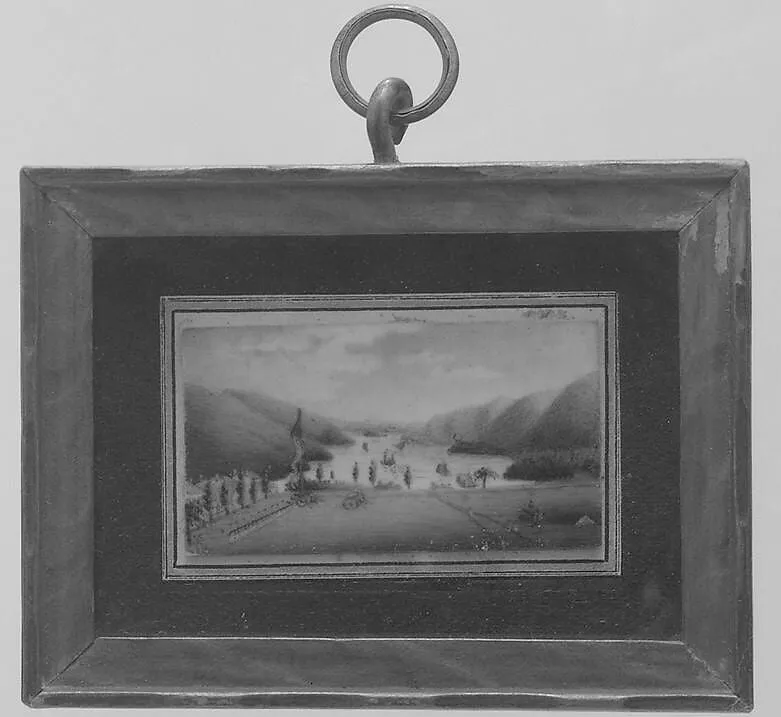
United States Military Academy at West Point, Looking South is a watercolor painting by the Romanticist artist George Catlin. It dates from 1828 and is held in the collection of the Metropolitan Museum of Art.
About this work
Technique & Style
The small dimensions suggest it was intended for close viewing, highlighting the delicate handling required for such a medium.
Created in 1828, this landscape work by George Catlin utilizes watercolor applied to an ivory support. The piece is characterized by its miniature scale, measuring 2.3 cm in height and 3.8 cm in width. As a watercolor on ivory, the artwork represents a specific technical approach to landscape painting typical of the period, combining the translucency of the pigment with the smooth, luminous surface of the ivory base.
The small dimensions suggest it was intended for close viewing, highlighting the delicate handling required for such a medium.
History & Provenance
The watercolor on ivory titled United States Military Academy at West Point, Looking South is attributed to George Catlin and dates to 1828. The work depicts a landscape view of the academy and is classified within the American landscape genre. It is currently held in the collection of the Metropolitan Museum of Art, where it resides in The American Wing.
The painting measures 2.3 centimeters in height and 3.8 centimeters in width. No specific details regarding the original commission, the patron, the chain of ownership prior to the museum, an accession number, or exhibition history are provided in the available records.
Context
George Catlin painted United States Military Academy at West Point, Looking South in 1828, a watercolor on ivory that belongs to The American Wing at the Metropolitan Museum of Art. The work belongs to the landscape genre. Catlin is best known for his documentary depictions of Native American peoples, and this early topographical view reflects his broader engagement with American landscape and frontier subjects in the early nineteenth century.
Overview
George Catlin's United States Military Academy at West Point, Looking South is a watercolor on ivory from approximately 1828. This small landscape depicts the iconic military academy and the surrounding Hudson River valley. It represents an early phase in Catlin's career, before he became widely recognized for his extensive documentation of Native American cultures and the American frontier. The work captures a notable site in the northeastern United States with delicate detail.
Subject & Meaning
This miniature painting presents a southward view of the United States Military Academy at West Point, nestled within the scenic Hudson River valley. Catlin rendered the green hills, winding river, and the academy's gray stone buildings with precision. During this period, Catlin focused on capturing significant American landmarks and natural beauty, a precursor to his later, more expansive projects documenting the American West and its indigenous populations.
Artist & collection

Artist
George Catlin ( KAT-lin; July 26, 1796 – December 23, 1872) was an American lawyer, painter, author, and traveler, who specialized in portraits of Native Americans in the American frontier.

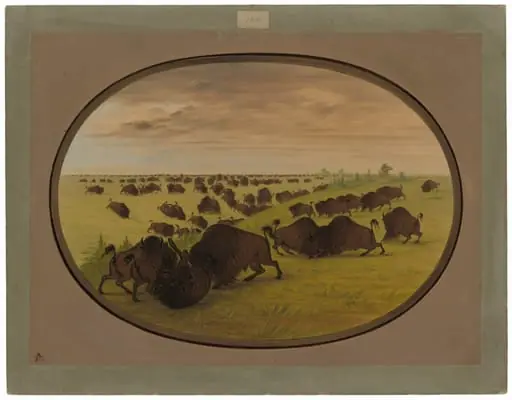 Bulls Fighting
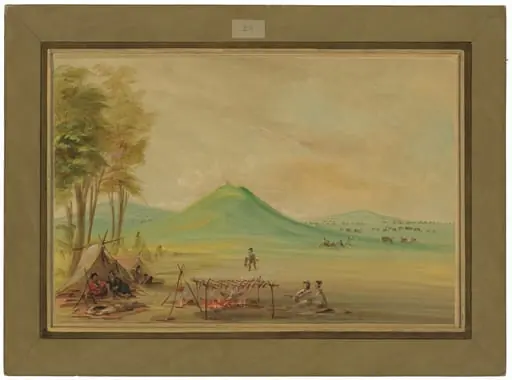 Expedition Encamped on a Texas Prairie. April 1686
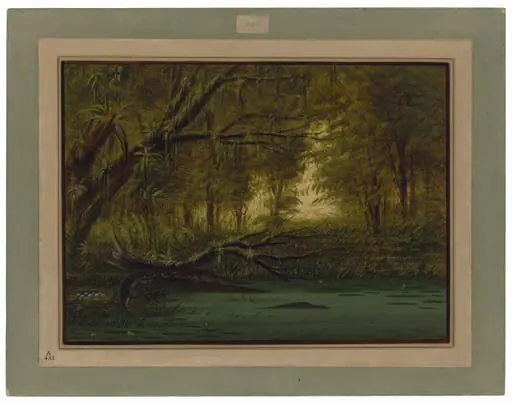 An Alligator's Nest
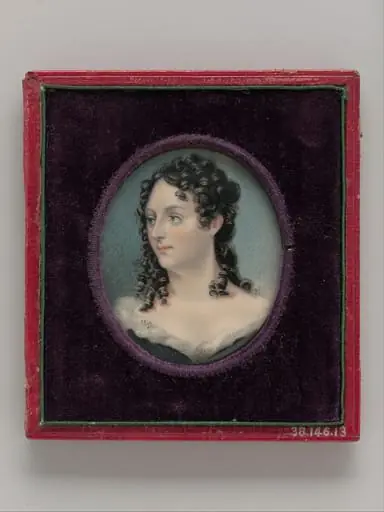 Mrs. George Catlin (Clara Bartlet Gregory)
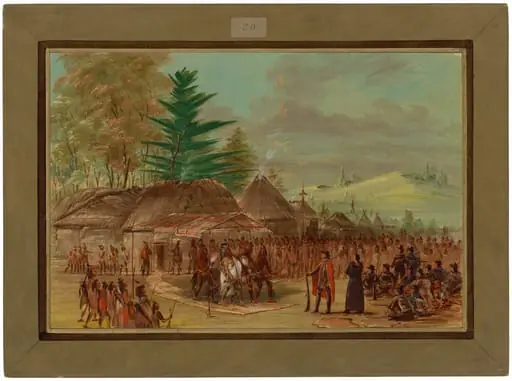 Chief of the Taensa Indians Receiving La Salle. March 20, 1682
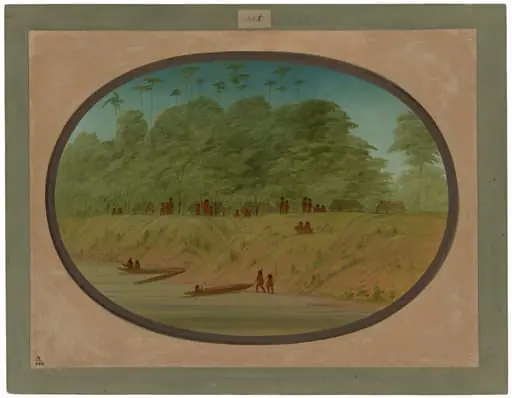 A Small Village - Payaguas Indians
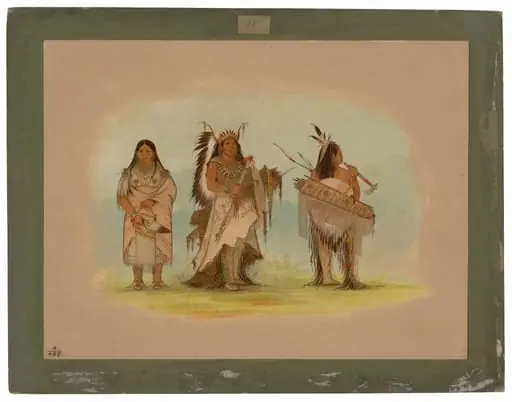 Omaha Chief, His Wife, and a Warrior
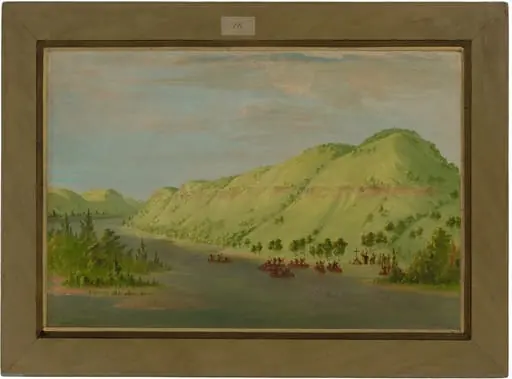 Father Hennepin Leaving the Mississippi to Join La Salle. May 8, 1680
 Mountain landscape with forest road
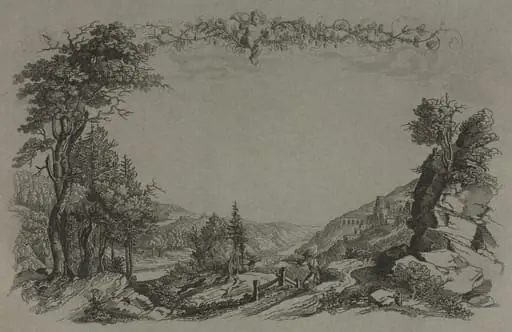 Six Views of Heidelberg Castle
 Six Views of Heidelberg Castle: Cover, Hunting Scene
 Mondscheinlandschaft
 A figure on a path between rocks and trees
 Belpaese
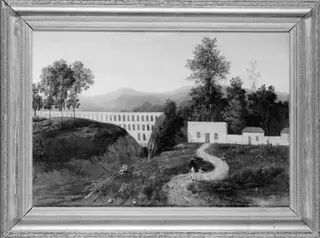 Landscape Showing the Aqueduct of "El Sitio"
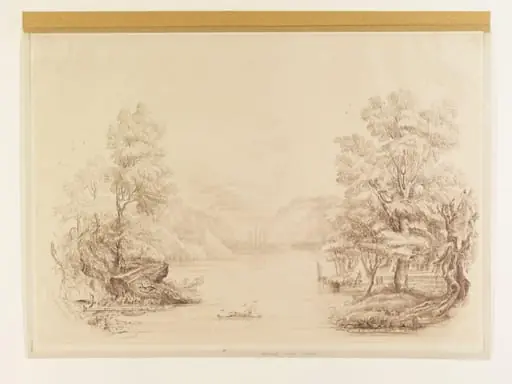 The Xanthus River
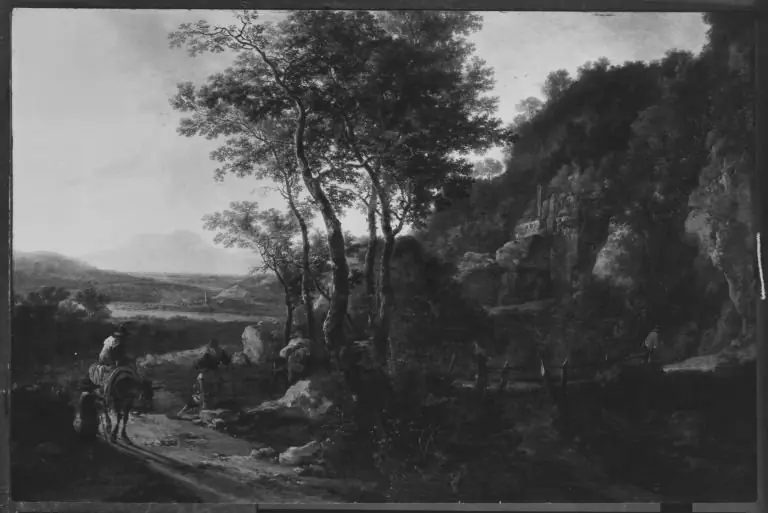 Italianate Landscape with Wooden Bridge
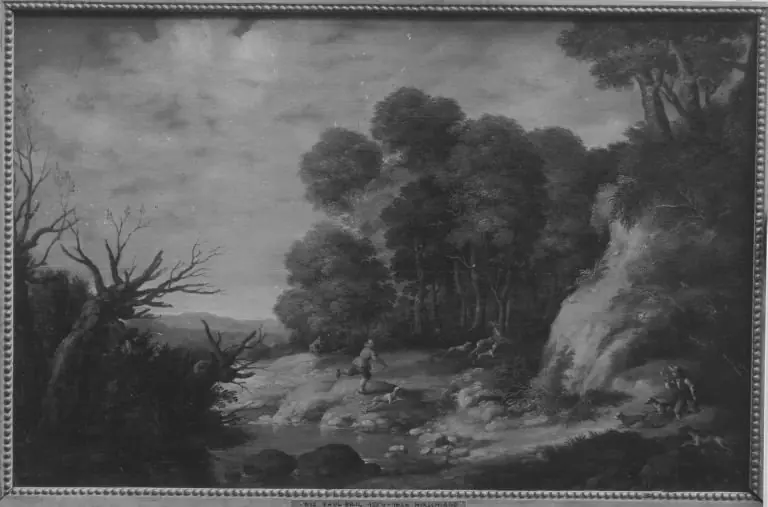 Waldlandschaft mit Hirschjagd
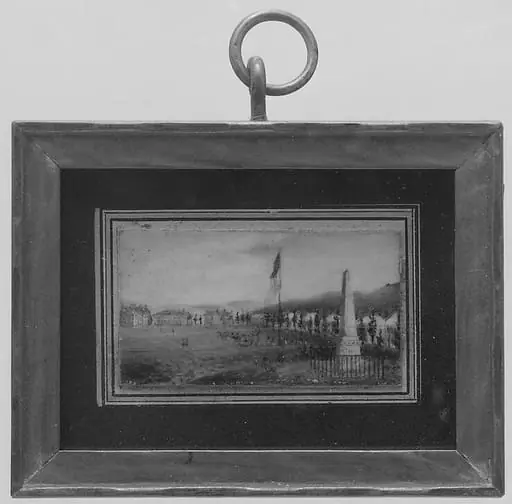
- United States Military Academy at West Point, Looking North
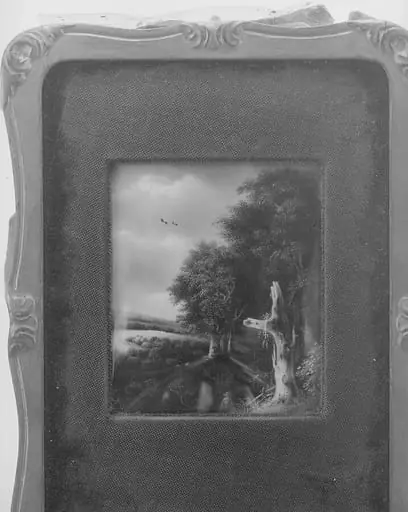 The Stump (after Ruisdael)