Artwork
Capri
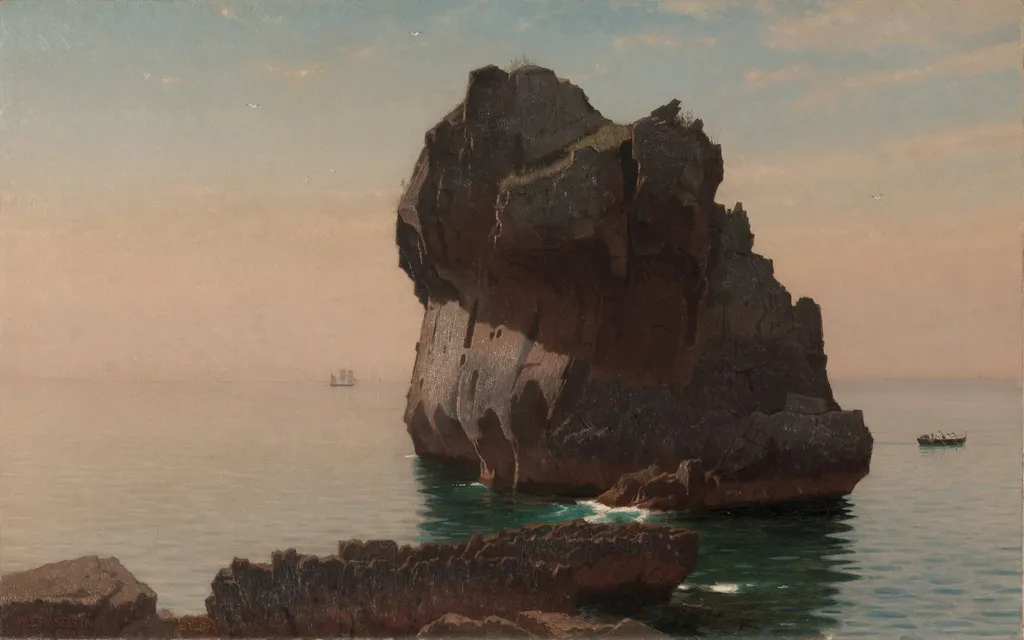
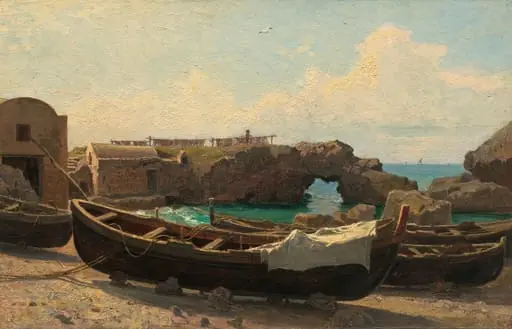
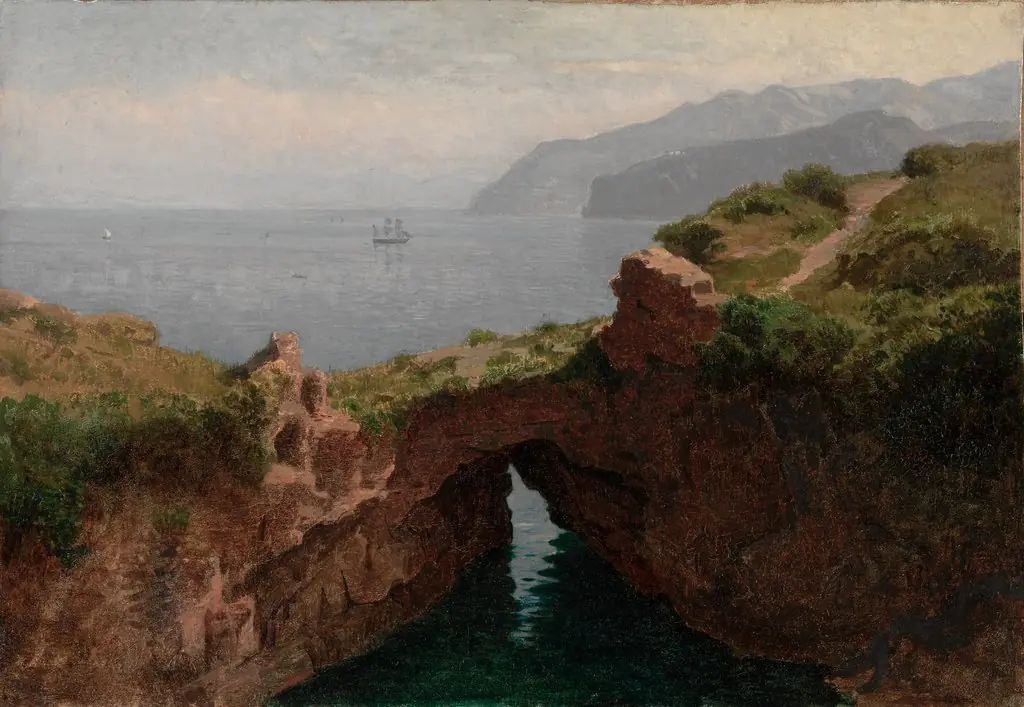
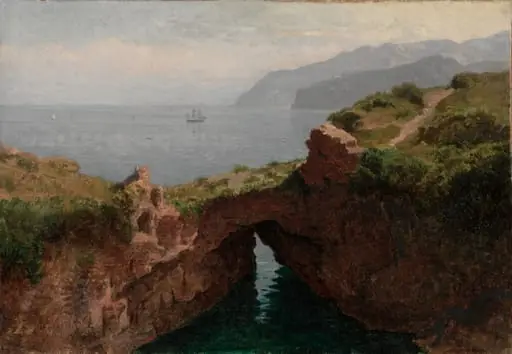
Capri is an oil painting by the American Impressionist artist William Stanley Haseltine. It dates from 1869 and is held in the collection of the Cleveland Museum of Art.
About this work
Technique & Style
William Stanley Haseltine's Capri is an oil painting executed on canvas. Created in 1869, the work measures 50 cm in height and 80 cm in width. Classified as a painting, the piece utilizes oil paint as its primary medium applied to a canvas support. The dimensions and materials are consistent with the artist's practice during this period.
History & Provenance
The painting was created in 1869 by William Stanley Haseltine, as indicated by the artist’s inscription and the work’s medium of oil on canvas.
The painting was created in 1869 by William Stanley Haseltine, as indicated by the artist’s inscription and the work’s medium of oil on canvas.
It entered the Cleveland Museum of Art as accession number 1975.4, where it remains in the museum’s holdings. The painting’s dimensions are recorded as 50.0 cm in height and 80.0 cm in width.
The work Capri by William Stanley Haseltine is held at the Cleveland Museum of Art, where it is cataloged under inventory number 1975.4. It was created in 1869 as an oil paint on canvas and has remained in the institution's collection since its acquisition.
Context
William Stanley Haseltine's 1869 oil painting Capri, depicting a tranquil Mediterranean landscape, was created during a period when American artists increasingly traveled to Europe to study classical antiquity and natural scenery. The work reflects the broader context of 19th-century American landscape painting, which often blended scientific observation with romanticized depictions of foreign terrain. Haseltine's precise rendering of light and geological detail aligns with the Hudson River School's emphasis on detailed naturalism, while his Italian subjects mark a shift toward more immediate engagement with European environments.
The painting is held in the Cleveland Museum of Art's collection, where it is recognized as part of the institution's significant holdings of 19th-century American art.
Overview
William Stanley Haseltine’s 1869 oil on canvas, titled “Capri,” is part of the collection at the Cleveland Museum of Art. The work depicts a stark limestone formation jutting into a tranquil sea, under a muted sky. Two vessels, one near the shore and a larger one farther out, navigate the calm waters, providing a sense of scale and human presence.
Subject & Meaning
The central focus is a rugged outcrop that dominates the composition, suggesting the dramatic coastline of the island of Capri. The juxtaposition of the solid rock against the gentle horizon evokes a contrast between permanence and the fleeting nature of the sea and sky, while the distant boats hint at travel and observation.
Own this work as a print
Artist & collection
Artist
William Stanley Haseltine was born on June 11, 1835, in Philadelphia to John Haseltine, a successful businessman, and Elizabeth Shinn Haseltine, an amateur landscape painter.