Artwork
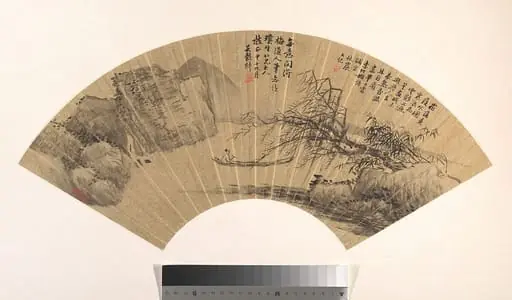
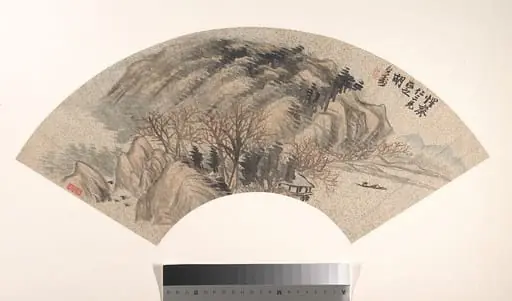
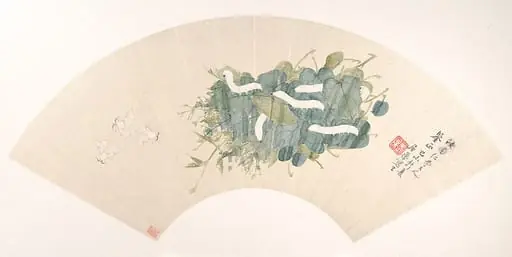
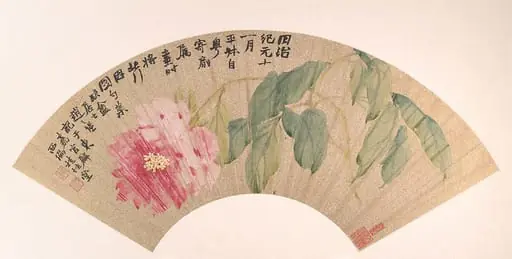
清 吳熙載 蟬柳 扇面|Cicada
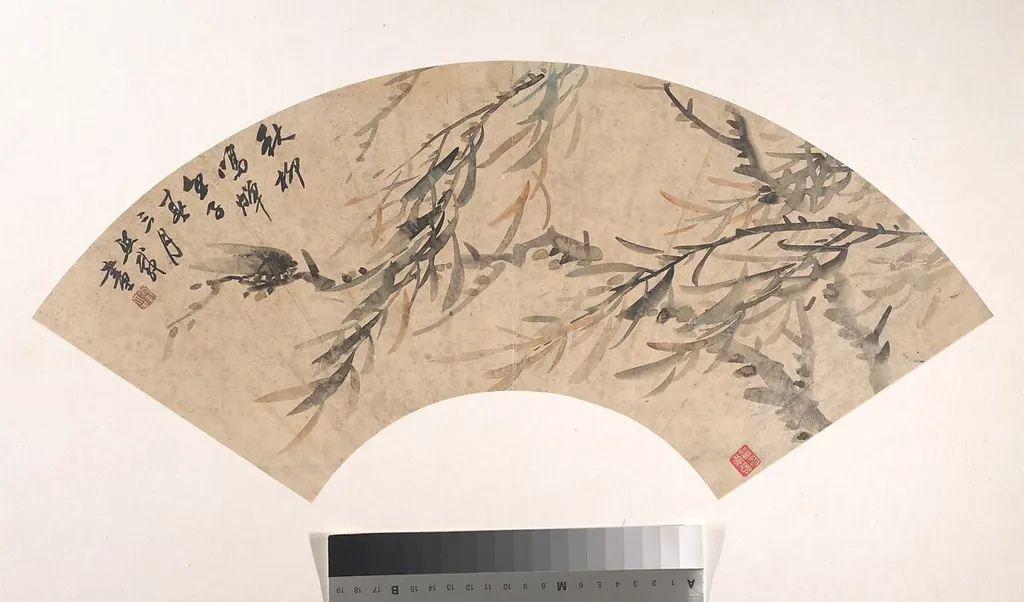
清 吳熙載 蟬柳 扇面|Cicada is an ink painting by the Impressionist artist Wu Xizai. It dates from 1852 and is held in the collection of the Metropolitan Museum of Art.
- Accession no.
- 1986.267.21
About this work
A thin branch bends under the weight of a single cicada. Leaves curl at the edges, and the insect’s wings catch the light like glass.
Wu Xizai painted this on a folding fan in 1852. The cicada isn’t just decoration, it was a symbol of rebirth in Chinese art. The fan would have been carried, then folded away, making the fragile scene feel private.
Look up other works in the subject: insects.
Subject & Meaning
The willow (柳, liǔ) additionally evokes themes of parting and remembrance through homophonic resonance with "to stay" (留, liú).
The painting depicts a cicada perched on a willow branch, combining two principal motifs: an tree and an insect. In Chinese art, the cicada carries rich symbolic associations, including rebirth, immortality, and purity, derived from its life cycle and emergence from the earth. The willow (柳, liǔ) additionally evokes themes of parting and remembrance through homophonic resonance with "to stay" (留, liú).
Together, these elements create a layered symbolic field typical of Qing-dynasty literati painting, where natural subjects encode philosophical and emotional meanings beyond their literal appearance.
Technique & Style
Created in 1852, this work is executed in ink and color on alum paper. The support consists of a folding fan that has been remounted as an album leaf, a format measuring approximately 18.1 cm in height and 51.8 cm in width. Stylistically, the piece falls within the still-life genre, depicting a cicada perched among willow branches.
The use of alum paper suggests a technique designed to control ink absorption, allowing for precise rendering of the insect and foliage characteristic of the artist's hand.
History & Provenance
Created in 1852 by the Chinese artist Wu Xizai, this work depicts a cicada resting on a willow branch. The piece was executed using ink and color on alum paper, originally formatted as a folding fan before being mounted as an album leaf. While the specific circumstances of its commission and its ownership history prior to entering its current institution are not detailed in the available records, the work is presently held in the collection of the Metropolitan Museum of Art. The artwork measures 18.1 cm in height and 51.8 cm in width.
The work, titled Cicada, is held in the collection of the Metropolitan Museum of Art. Created in 1852 by Wu Xizai (also known as Wu Rangzhi), this folding fan mounted as an album leaf depicts an insect and a tree. The specific inventory or accession number for this piece is not provided in the available sources. No exhibition history is documented in the provided materials.
Overview
Wu Xizai's "Cicada," created in 1852, is a delicate painting rendered with ink and color on alum paper. Originally adorning a folding fan, this work now exists as an album leaf. It presents a focused depiction of a solitary cicada resting upon a slender willow branch, capturing a moment of quiet observation from the natural world. The composition emphasizes the insect's presence and its subtle interaction with the plant.
Context
This painting's original format as a folding fan suggests its intended use as a personal accessory. Such fans were commonly carried and unfurled in social settings, offering a fleeting glimpse of the artwork before being discreetly folded away. This intimate interaction between viewer and object would have lent a private quality to the fragile scene, transforming the public act of fanning into a moment of personal contemplation of the delicate imagery.
Artist & collection