Artwork
清 趙之謙 芍藥 扇面|Peony
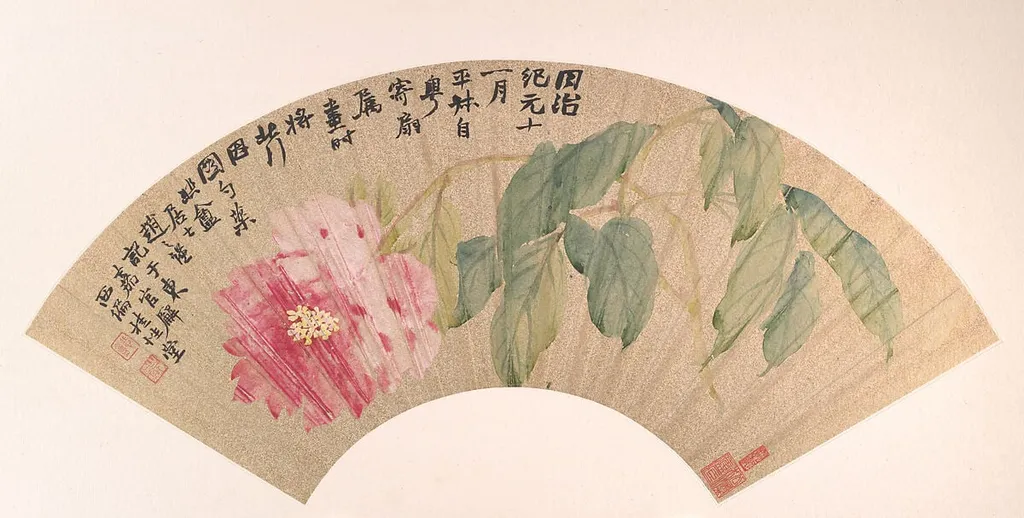
清 趙之謙 芍藥 扇面|Peony is an ink painting by the Impressionist artist Zhao Zhiqian. It dates from 1862 and is held in the collection of the Metropolitan Museum of Art.
About this work
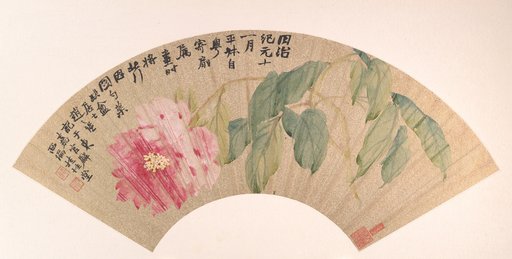
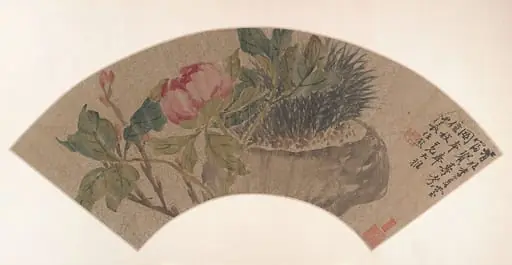
The gold flecks catch light like morning dew, but the brushwork stays simple, no extra details, just the flower and a few leaves.
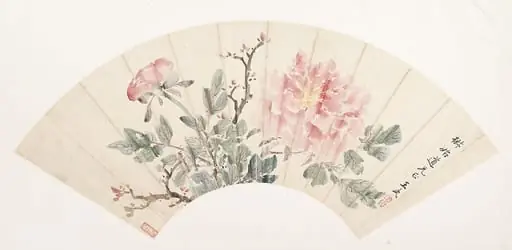
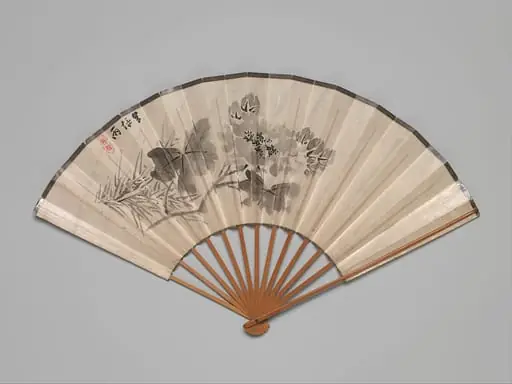
A single peony blooms on a gold-flecked fan, its petals soft pink, leaves a deep green. The artist used ink and light color, so the flower feels alive but quiet.
Zhao Zhiqian painted this in 1862, when fans were small, portable art. The gold flecks catch light like morning dew, but the brushwork stays simple, no extra details, just the flower and a few leaves.
If you like how ink can feel light and bold at once, look up cross-hatching.
Technique & Style
The work 清 趙之謙 芍藥 扇面|Peony is a folding fan that Zhao Zhiqian transformed into an album leaf, employing ink and polychrome pigments on gold‑flecked paper. Executed in 1862 in China, the piece measures 17.8 × 52.7 cm and belongs to the still‑life genre, depicting the peony (Paeonia). Brushwork combines delicate outlines with layered washes of color, while the gold‑flecked support adds a subtle luminous background.
As a fan‑derived format, the artwork was originally intended for handheld use, suggesting a portable handling context. The Metropolitan Museum of Art now preserves the painting, which is classified as a painting within the collection of Chinese art.
History & Provenance
The work titled 清 趙之謙 芍藥 扇面|Peony was produced in 1862 in China by the Qing‑era painter Zhao Zhiqian. It was originally executed as a folding fan and later mounted as an album leaf, employing ink, color and gold‑flecked paper typical of the period. The subject is the peony (Paeonia), a motif frequently associated with prosperity.
According to the Metropolitan Museum of Art’s catalogue, the piece entered the museum’s collection shortly after its creation and has been displayed as part of their Chinese painting holdings. No surviving documentation indicates a specific commission; dating relies on the artist’s inscription and stylistic comparison.
The folding fan titled Peony, painted by Zhao Zhiqian in 1862, is housed in the collection of the Metropolitan Museum of Art in New York. The work is recorded as a painting in the museum’s catalogue, though no specific accession or inventory number is published in the available documentation. Its dimensions are 17.8 cm × 52.7 cm, as noted in the collection record.
Neither source mentions participation in public exhibitions, indicating that its exhibition history remains unrecorded in the cited references.
Context
Zhao Zhiqian's 1862 folding‑fan painting Peony (清 趙之謙 芍藥 扇面|Peony) exemplifies his mature specialization in botanical subjects within Qing dynasty art. The work, recorded in both the internal catalogue and the Metropolitan Museum of Art’s Wikidata entry, is classified as a still‑life painting that depicts the peony (Paeonia) and is executed in ink with color on gold‑flecked paper. Its inclusion in a major museum collection has enabled scholars to position it as a representative example of 19th‑century Chinese flower painting, reflecting broader scholarly interest in Zhao’s role in revitalizing traditional motifs.
The piece is frequently cited in art‑historical literature as illustrating the intersection of courtly patronage and personal expression in late Qing visual culture.
Overview
Zhao Zhiqian's Peony, created in 1862, is a still life rendered on a folding fan, now presented as an album leaf. This painting utilizes ink and color on gold-flecked paper to depict a single peony blossom. The work exemplifies the artist's approach to botanical subjects, capturing the flower's essence with a delicate balance of vibrant color and understated brushwork.
Subject & Meaning
The artwork centers on a solitary peony, its petals rendered in soft pink hues, complemented by deep green leaves. The peony holds cultural significance in China, often symbolizing prosperity, honor, and beauty. Zhao Zhiqian's depiction emphasizes the flower's natural elegance, presenting it in a quiet, contemplative manner that allows its inherent grace to emerge without elaborate embellishment.
Artist & collection