Artwork
清 居巢 蠶蛾 扇面|Silkworm
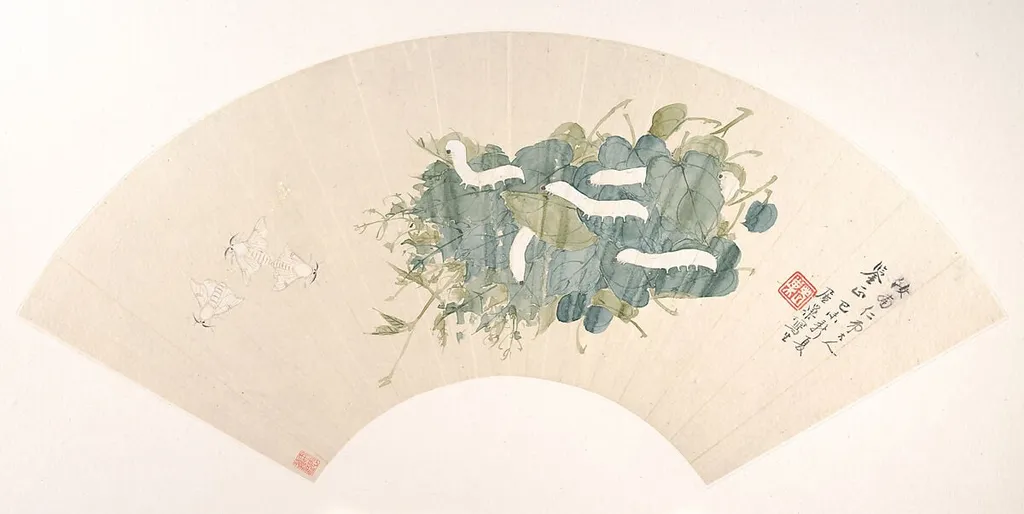
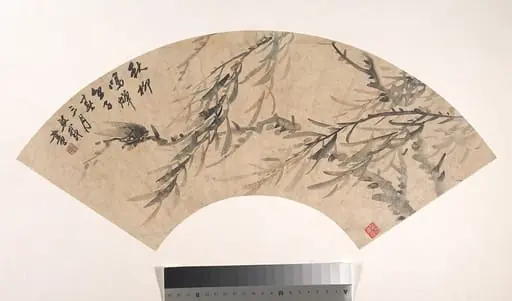
清 居巢 蠶蛾 扇面|Silkworm is an ink painting by the Impressionist artist Ju Chao. It dates from 1859 and is held in the collection of the Metropolitan Museum of Art.
About this work
The moth’s wings are so thin you can see light through them, ink washes let the paper show through, making the wings look almost real.
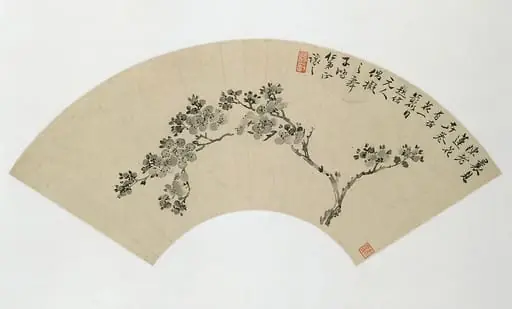
A pale moth clings to a twig, wings spread like crumpled paper, while two fat silkworms munch mulberry leaves beside it. The fan is small enough to hold in one hand.
Ju Chao painted this in 1859, when Chinese artists often gave fans as gifts. The moth’s wings are so thin you can see light through them, ink washes let the paper show through, making the wings look almost real.
If you like quiet insect studies, look up the subject: insects.
Subject & Meaning
The fan painting by Ju Chao depicts a silkworm, rendered in ink and color on alum paper as a still life study of the insect. Silkworms held a long-standing place in Chinese visual culture as emblems of diligence and productive labor, since their cultivation supplied the raw silk central to textile production and to China's economy for centuries. By isolating the silkworm as the sole subject on the fan, Ju Chao focused attention on the creature itself, presenting it as a small but meaningful emblem of industry and quiet usefulness rather than as part of a broader landscape or narrative scene.
The choice of a folding fan as the format suited such a contemplative subject, inviting close viewing of the insect's form and reinforcing the meditative character typical of late Qing still-life painting.
Technique & Style
The work is executed in ink and color on alum paper, presented as a folding fan mounted as an album leaf. The composition measures 18.4 cm in height and 53.3 cm in width, a horizontal format typical of fan paintings that accommodates a panoramic still-life arrangement. As a Qing-dynasty flower-and-bird subject rendered in 1859, the painting depicts an silkworm moth with the precise naturalistic observation for which Ju Chao is known.
The use of alum paper, prepared to resist ink absorption, would have allowed for controlled brushwork and subtle color gradations. The album-leaf mounting preserves the fan's original shape while converting it to a format suitable for album collection.
History & Provenance
The folding fan, later mounted as an album leaf, was created by Ju Chao in 1859. Executed in ink and color on alum paper, the work depicts insects and originates from China. It is currently held in the collection of the Metropolitan Museum of Art.
The specific commission details and the full chain of ownership prior to its museum acquisition are not provided in the available records.
The work, titled Silkworm and created by Ju Chao in 1859, is held in the collection of the Metropolitan Museum of Art. The painting is classified within the museum's holdings as a folding fan mounted as an album leaf, executed in ink and color on alum paper. While the source material confirms the artwork's presence in this specific institution and its creation date, it does not provide a specific inventory or accession number, nor does it list any exhibition history for the piece.
Overview
Created in 1859, this hand‑held folding fan presents a quiet still‑life scene of insects rendered on alum‑paper with ink and color. The composition centers on a pale moth perched on a twig, its delicate wings rendered so translucently that the paper beneath can be seen, while two plump silkworms feed on mulberry leaves nearby.
Context
In the late Qing dynasty, artists often turned to natural subjects, especially insects, as a means of showcasing technical skill and scholarly erudition. This piece fits within that tradition, combining precise observation with a modest, intimate format that was popular among literati circles.
Artist & collection