Artwork
清 吳熙載 山水 軸|Landscape
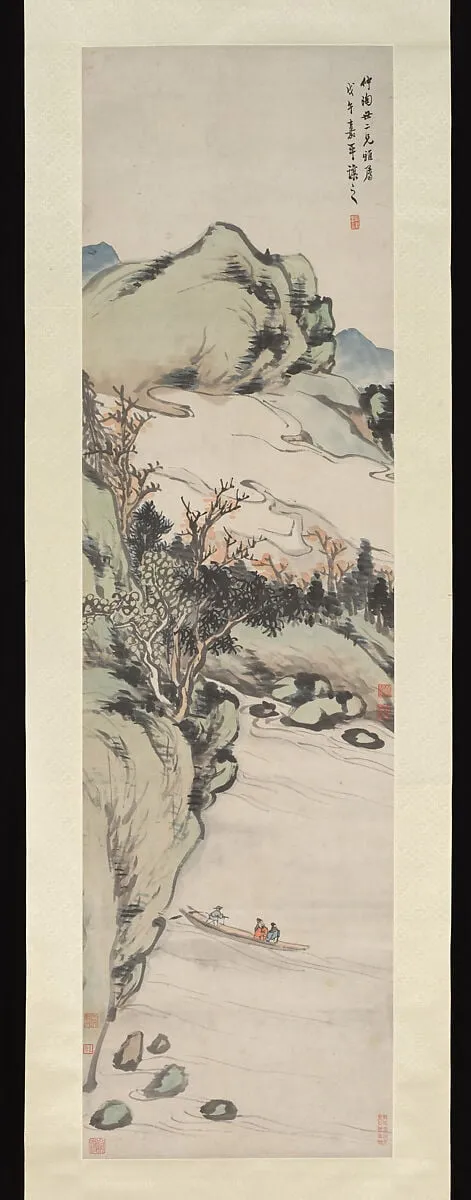
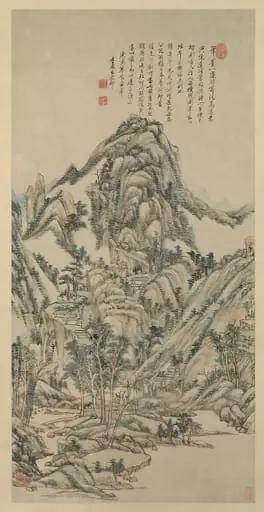
清 吳熙載 山水 軸|Landscape is an ink painting by the Impressionist artist Wu Xizai. It dates from 1858 and is held in the collection of the Metropolitan Museum of Art.
- Accession no.
- 1986.267.24
About this work
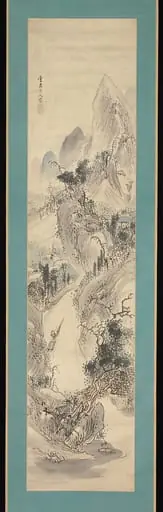
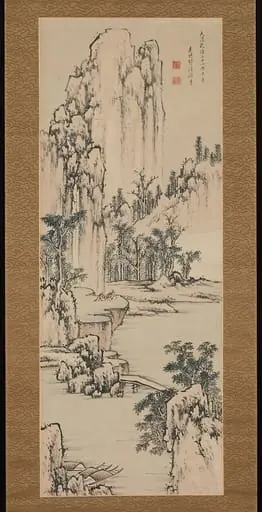
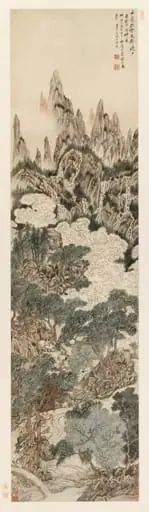
A tall scroll in ink: misty mountains, a river, a few tiny boats, and a single pavilion clinging to the rocks. Wu Xizai painted it in 1858, late in the Qing dynasty, using dry strokes that fall like raindrops, each barely touching the paper before the next. The effect is light, almost weightless.
Technique & Style
Boats are rendered with abbreviated outlines and minimal detail, anchoring the composition without competing with the towering, textured mountains.
The work is executed in ink and light color on paper, mounted as a hanging scroll. Wu Xizai's handling combines fine, controlled brush lines with diluted washes to articulate rocky outcrops and mist-laden slopes, while softer tonal modulations suggest recession. Boats are rendered with abbreviated outlines and minimal detail, anchoring the composition without competing with the towering, textured mountains. The scroll's vertical format and restrained palette emphasize clarity and spatial layering, aligning with mid-Qing literati practice.
History & Provenance
The hanging scroll titled Landscape was created by Wu Xizai (also known as Wu Rangzhi) in 1858 in China. Executed in ink and color on paper, it measures 155.6 cm in height by 43.7 cm in width and depicts a mountainous landscape with a boat, consistent with the artist's work during the Qing dynasty. The painting is held in the collection of the Metropolitan Museum of Art.
The available sources do not record commission details, an earlier ownership chain, a specific accession number, or any exhibition history.
Overview
Painted in 1858 during the late Qing dynasty, this hanging scroll by Wu Xizai depicts a misty mountain landscape rendered in ink and light color on paper. The composition features towering peaks shrouded in atmospheric haze, a winding river populated by diminutive boats, and a solitary pavilion perched precariously against rocky outcrops. Wu employs a distinctive dry-brush technique, applying strokes that resemble raindrops; each mark barely touches the surface before the next begins, creating a textured, rhythmic quality across the mountainsides.
This approach reflects his mastery of calligraphic brushwork, a hallmark of the Xiling School to which he belonged, where painting and seal carving were deeply intertwined. The work exemplifies Wu's mature style, balancing the structural rigor of traditional literati landscape with a personal, expressive touch. Created when the artist was in his late sixties, the piece demonstrates his ability to evoke a sense of quiet solitude and natural grandeur through minimal means.
The vertical format of the hanging scroll enhances the viewer's perception of the mountains' height and the depth of the valley below, guiding the eye from the foreground pavilion up through the mist to the distant summits.
Subject & Meaning
The composition centers on a majestic mountain range enveloped in mist, suggesting depth and atmosphere. A river flows through the scene, upon which a few small boats navigate, hinting at human presence within the vastness of nature. A single pavilion, precariously positioned on the rocks, further emphasizes the scale of the landscape and offers a point of contemplation for the viewer, inviting a sense of quietude.
Context
Created in 1858, this Landscape dates to the latter period of China's Qing dynasty. During this era, traditional ink wash landscape painting continued to be a significant artistic practice, often reflecting established aesthetic principles while allowing for individual stylistic interpretations. Wu Xizai's work exemplifies the enduring appeal of natural scenery as a subject for contemplation and artistic expression within the cultural context of his time.
Artist & collection