Artwork
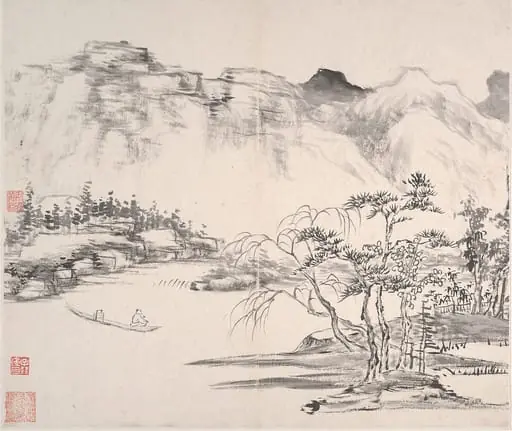
Landscapes for Liu Songfu
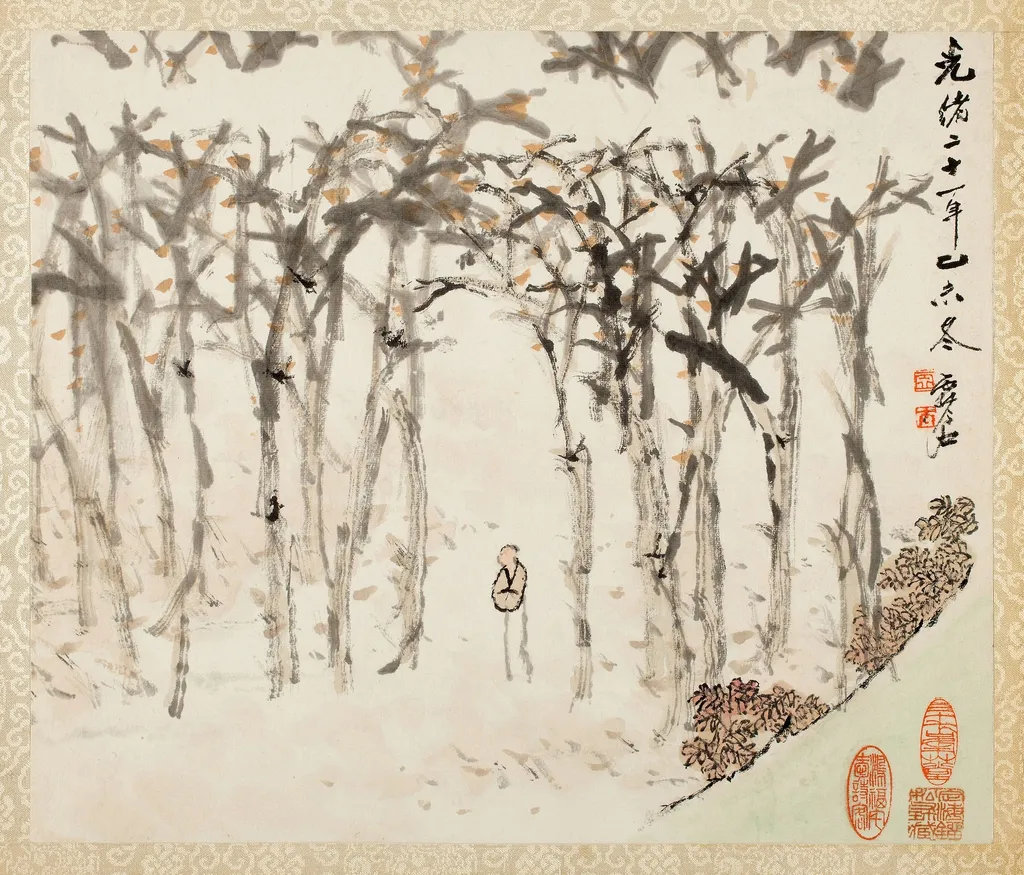
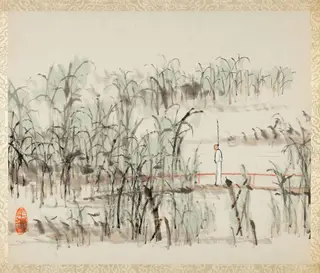
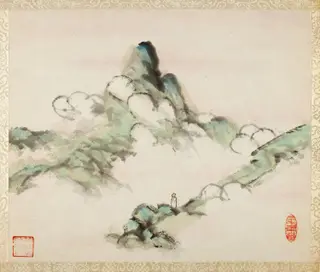
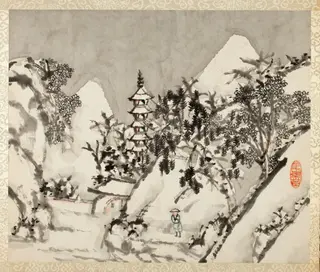
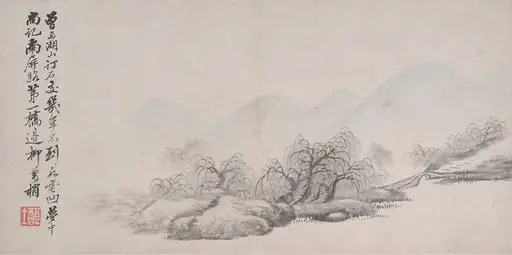
Landscapes for Liu Songfu is an unspecified painting by the Chinese Orthodox School artist Xu Gu. It is held in the collection of the Art Institute of Chicago.
About this work
Overview
Created in 1898, this ink painting by Qing‑dynasty artist Xu Gu depicts a sparse, windswept landscape. Tall, leafless trees with contorted trunks dominate the composition, set against a muted sky where a few birds glide. A solitary, diminutive figure stands centrally, gazing upward, while the ground is rendered with minimal suggestion of grass or stone.
Subject & Meaning
The work juxtaposes the vastness of nature with human modesty, a common motif in literati painting that invites contemplation of humanity’s place within the natural world. The lone figure, positioned amid the stark trees, may symbolize introspection or the scholar‑artist’s ideal of solitary reflection.
Technique & Style
Xu Gu employs swift, expressive brushstrokes that convey the trees’ movement, allowing the ink’s darkness to vary in intensity. Areas of the wash are left thin, permitting the paper’s natural tone to emerge, while occasional color washes break through the monochrome, adding subtle depth.
History & Provenance
The painting was executed toward the end of the 19th century, a period when Xu Gu was active within the Chinese Orthodox School, integrating poetry and painting. It entered the Art Institute of Chicago’s collection in the early 20th century, where it remains part of the museum’s Asian art holdings.
Context
During the late Qing era, literati artists like Xu Gu emphasized personal expression over formal realism, often inscribing poems on their works. This piece reflects that tradition through its minimalist composition, poetic atmosphere, and the integration of visual and textual elements typical of the period.
Own this work as a print
Artist & collection
Artist
Xū Gǔ (Hsü Ku, simplified Chinese: 虚谷; traditional Chinese: 虛谷; pinyin: Xū Gǔ); (c. 1824–1896) was a Chinese painter and poet during the Qing Dynasty (1644–1912).

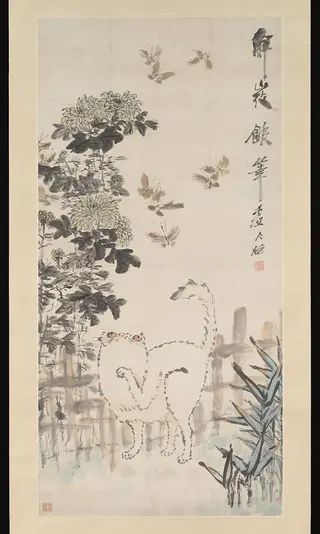 清 虛谷 蝶貓圖 軸|Cat and Butterfly
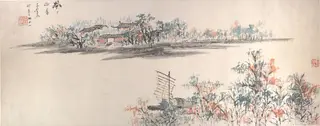 清 虛谷 秋帆圖 冊頁|Sailing in Autumn
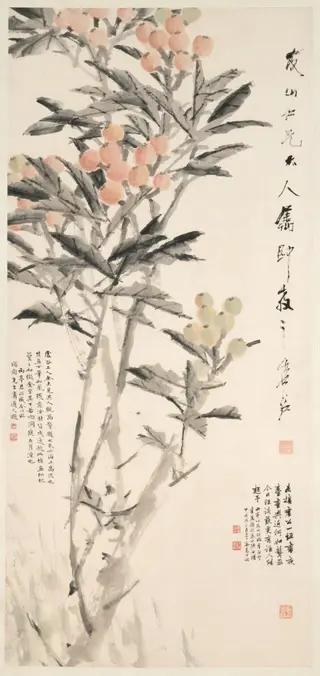 Pipa (Loquats)
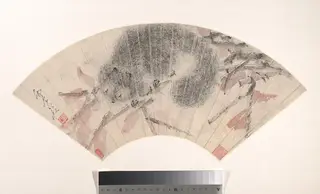 清 虛谷 松鼠 扇面|Squirrel on an Autumn Branch
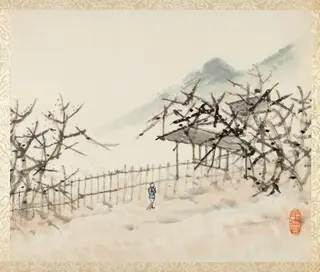 Landscapes for Liu Songfu
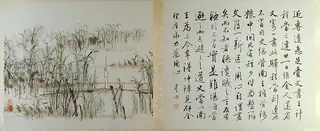 Bridge on a Reed Pond, from an album of Landscapes and Calligraphy for Liu Songfu
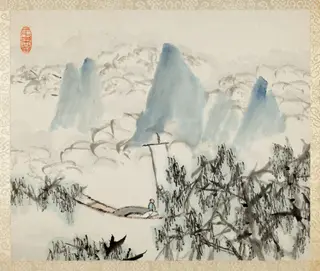 Landscape with Figure, from an album of Landscapes and Calligraphy for Liu Songfu
- Landscape and Figure, from an album of Landscapes and Calligraphy for Liu Songfu