Artwork
Title slip

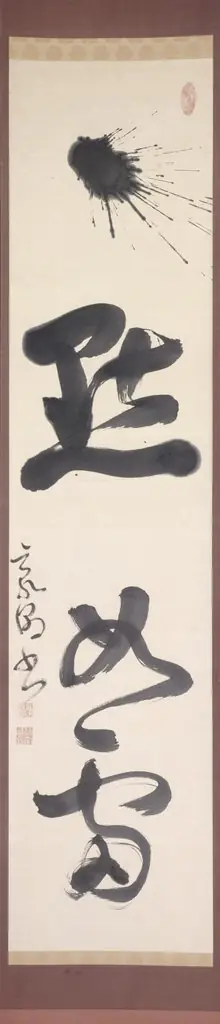
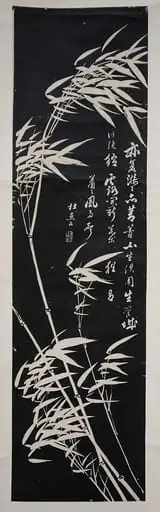
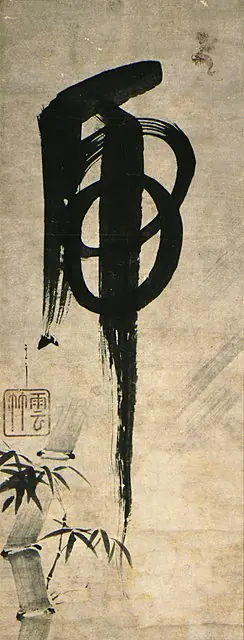
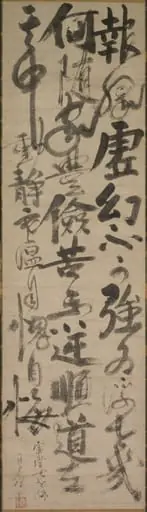
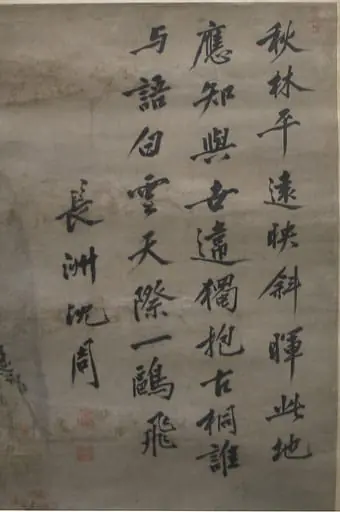
Title slip is an unspecified painting by the Impressionist artist Xu Gu. It is held in the collection of the Art Institute of Chicago.
About this work
Overview
Though sometimes associated with broader artistic trends, it belongs firmly to the Chinese tradition of ink writing rather than Western impressionism.
Created in 1898 by the Qing Dynasty artist and poet Xu Gu, this work is a vertical calligraphic composition on aged brown paper. Though sometimes associated with broader artistic trends, it belongs firmly to the Chinese tradition of ink writing rather than Western impressionism. The piece is part of the Art Institute of Chicago’s collection, preserved as an example of late imperial Chinese literati expression.
Subject & Meaning
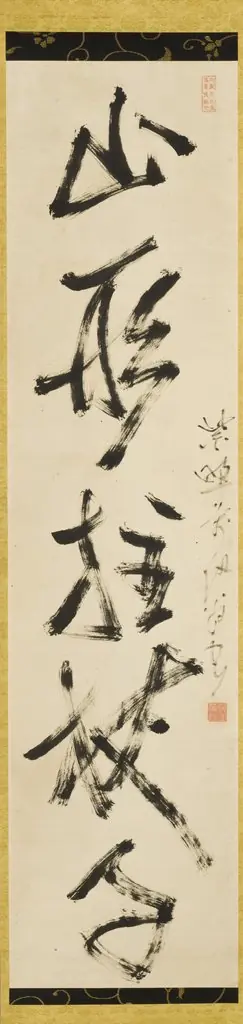
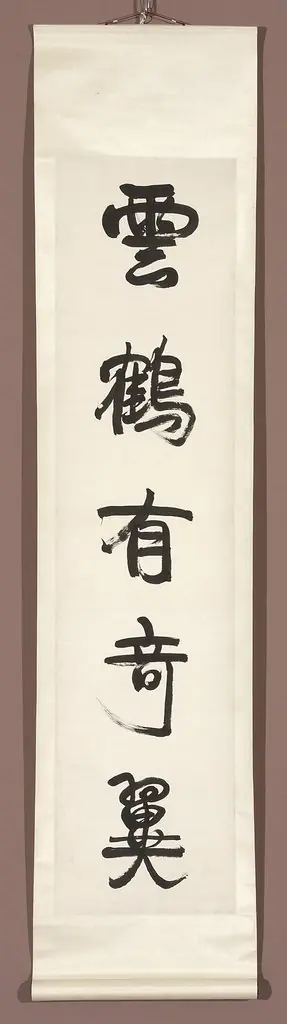
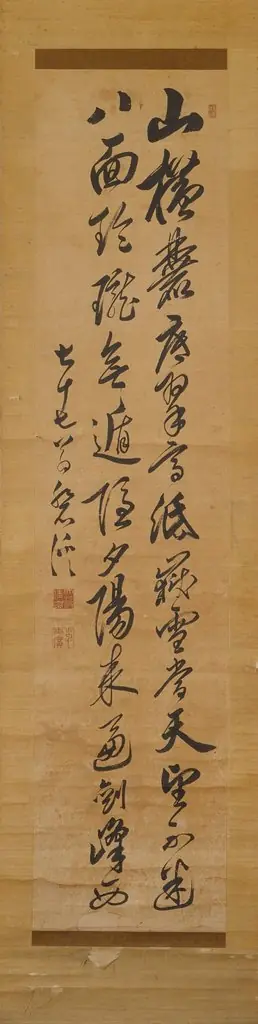
The work consists of Chinese characters inscribed in a single vertical column, their forms fluid and interconnected. The script suggests poetic or philosophical content, typical of literati culture, where writing conveyed inner thought as much as literal meaning. The irregular placement and partial cropping of characters imply spontaneity, aligning with the scholar-artist ideal of unforced expression.
Technique & Style
Executed in bold, dark ink, the strokes vary in pressure and moisture, creating tonal contrasts between dense and faded areas. The paper’s rough texture, tears, and creases are not flaws but integral to the work’s aesthetic, reflecting the natural aging process and the artist’s acceptance of imperfection. The flowing, overlapping characters exemplify cursive script, valued for its rhythmic energy and personal inflection.
History & Provenance
The painting was produced by Xu Gu in the final years of the Qing Dynasty, a period of cultural transition. It entered the Art Institute of Chicago’s collection through documented acquisition, likely during the early 20th century as Western institutions began systematically collecting East Asian art. Its survival with visible wear suggests it was handled and displayed as a personal artifact, not merely an object of display.
Context
Xu Gu worked within the literati tradition, where calligraphy was inseparable from poetry and personal cultivation. Unlike professional artisans, scholar-artists valued spontaneity and emotional authenticity over technical perfection. This piece reflects the late 19th-century continuation of that ethos, even as imperial structures weakened. Its vertical format and material choices align with centuries-old practices of ink-on-paper composition.
Legacy
This work remains a quiet testament to the enduring value of calligraphy as a meditative art form. It exemplifies how brushwork could convey individual spirit without reliance on figuration. In modern collections, such pieces serve as touchstones for understanding the philosophical underpinnings of East Asian aesthetics, emphasizing restraint, impermanence, and the beauty of the handmade.

Artist & collection
Artist
Xū Gǔ (Hsü Ku, simplified Chinese: 虚谷; traditional Chinese: 虛谷; pinyin: Xū Gǔ); (c. 1824–1896) was a Chinese painter and poet during the Qing Dynasty (1644–1912).

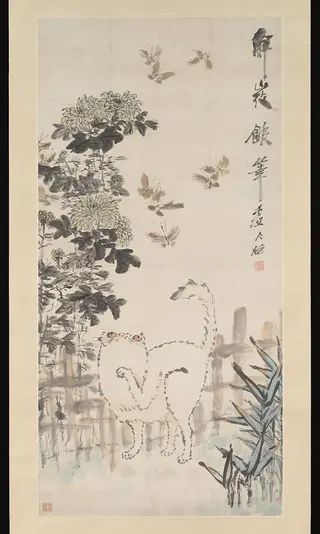 清 虛谷 蝶貓圖 軸|Cat and Butterfly
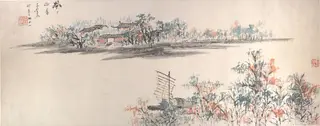 清 虛谷 秋帆圖 冊頁|Sailing in Autumn
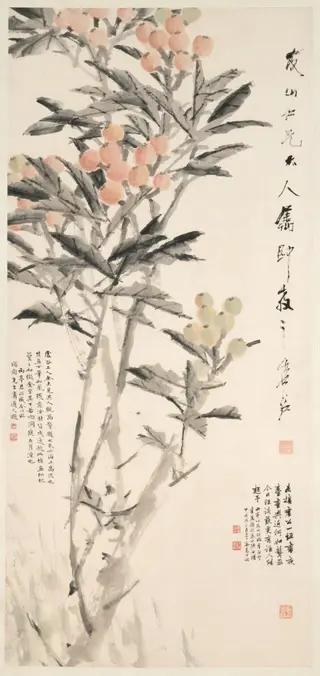 Pipa (Loquats)
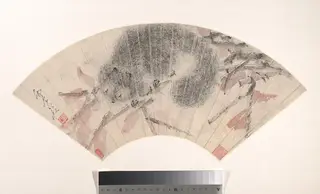 清 虛谷 松鼠 扇面|Squirrel on an Autumn Branch
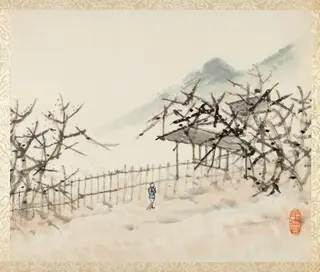 Landscapes for Liu Songfu
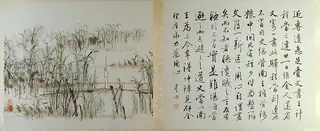 Bridge on a Reed Pond, from an album of Landscapes and Calligraphy for Liu Songfu
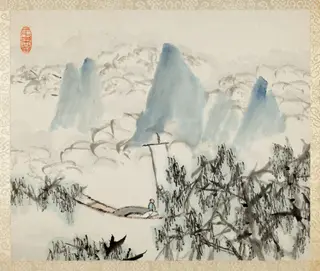 Landscape with Figure, from an album of Landscapes and Calligraphy for Liu Songfu
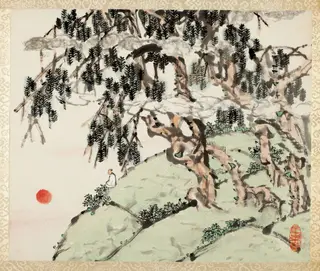 Landscape and Figure, from an album of Landscapes and Calligraphy for Liu Songfu