Artwork
清 楊晉 滄洲牧牛圖 軸|Landscape with Figures
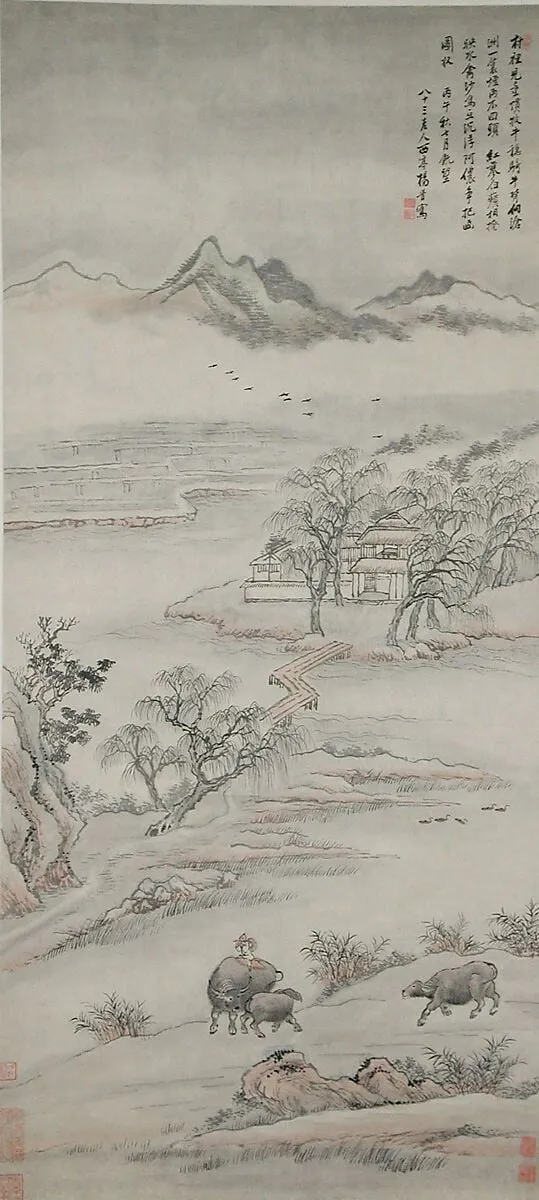
清 楊晉 滄洲牧牛圖 軸|Landscape with Figures is an ink painting by the Baroque artist Yang Jin. It dates from 1726 and is held in the collection of the Metropolitan Museum of Art.
About this work
A tall scroll in ink and soft color: two water buffalo rest under a gnarled pine while a boy naps on one's back, framed by misty mountains. Yang Jin painted it in 1726, when Chinese artists often used animals to suggest harmony between people and nature. The curved horns and easy pose feel like a lazy afternoon.
Overview
Yang Jin's "Landscape with Figures," created in 1726, is a hanging scroll rendered in ink and subtle colors on paper. This artwork depicts a serene pastoral scene where two water buffalo rest beneath a twisted pine tree. A young boy peacefully naps on the back of one animal, while distant, hazy mountains frame the composition, contributing to the overall tranquil atmosphere.
Subject & Meaning
The relaxed posture of the boy, asleep on the water buffalo's back, and the gentle curves of the animals' horns evoke a quiet, lazy afternoon.
The painting conveys a sense of profound tranquility and the harmonious relationship between humanity and the natural world. The relaxed posture of the boy, asleep on the water buffalo's back, and the gentle curves of the animals' horns evoke a quiet, lazy afternoon. This portrayal aligns with a common artistic tradition in 18th-century China, where animal subjects often symbolized an idealized coexistence between people and their environment.
Technique & Style
Executed as a tall hanging scroll, the artwork employs a delicate palette of ink and soft colors. Yang Jin skillfully renders the gnarled texture of the pine tree and the substantial forms of the water buffalo, contrasting them with the ethereal quality of the misty mountains in the background. This interplay of detailed foreground elements and atmospheric distant scenery contributes to the painting's depth and its overall serene aesthetic.
Artist & collection


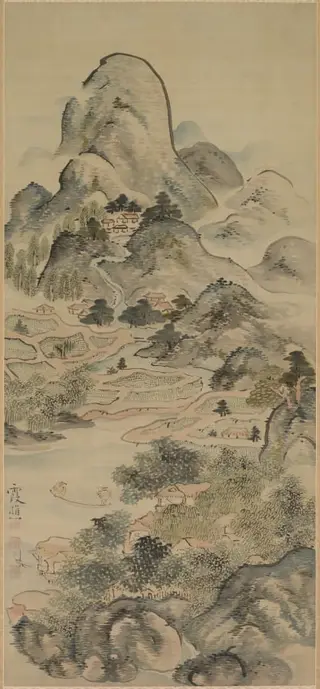 Fishing in Springtime
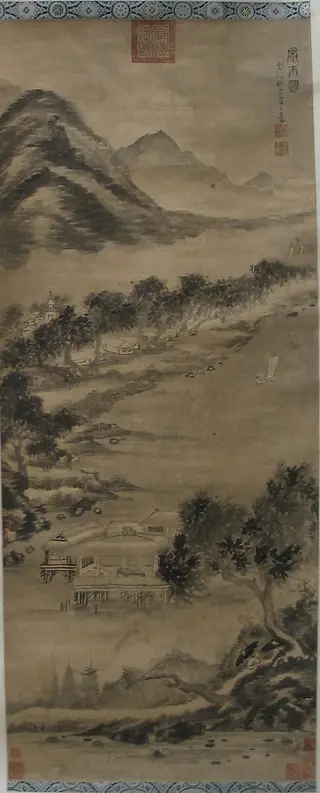 明/清 佚名 舊傳方從義 風雨圖 軸|Wind and Water: Landscape in the Style of Mi Fu
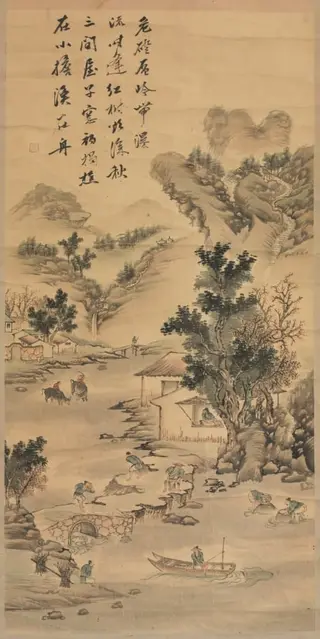 Landscape
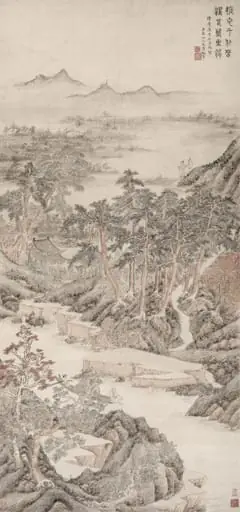 Washing the Feet (from the Dusty World)
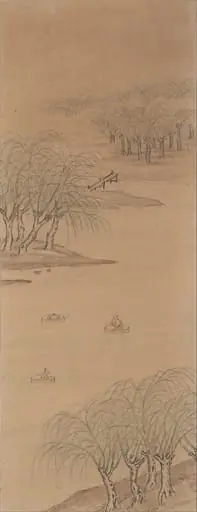 Untitled
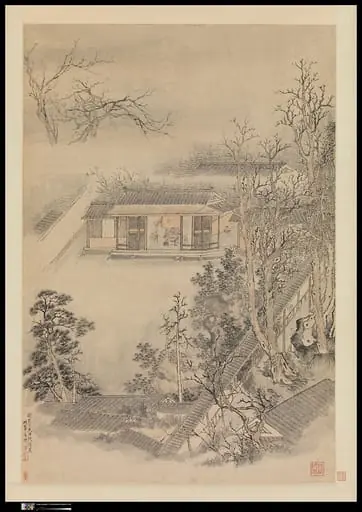 清 羅聘 篠園飲酒圖 軸|Drinking in the Bamboo Garden on the Lantern Festival
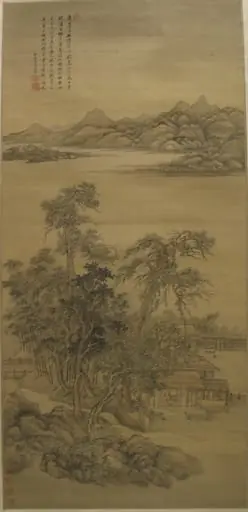 清 佚名 倣王翬 倣李公麟草堂圖 軸|Landscape in the Style of Li Gonglin
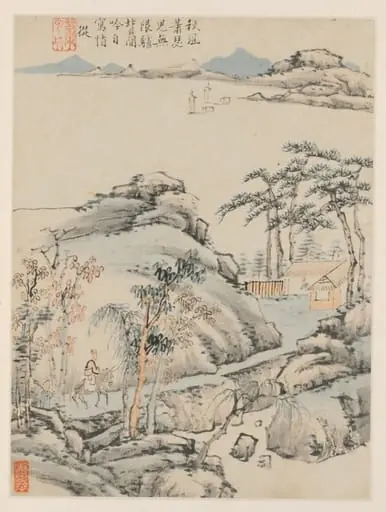 Album of Seasonal Landscapes, Leaf F (previous leaf 5)
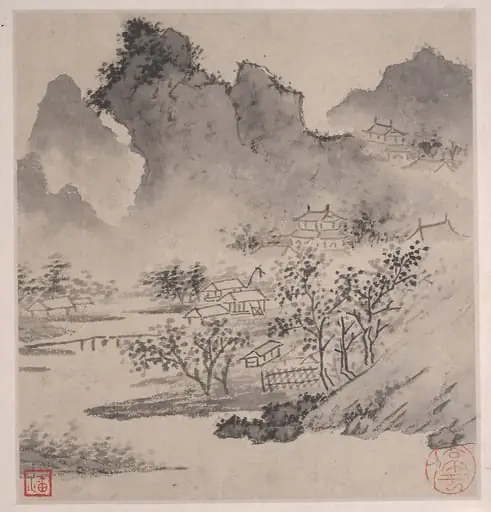 Untitled