Artwork
清 張熊 山水 冊頁|Landscape
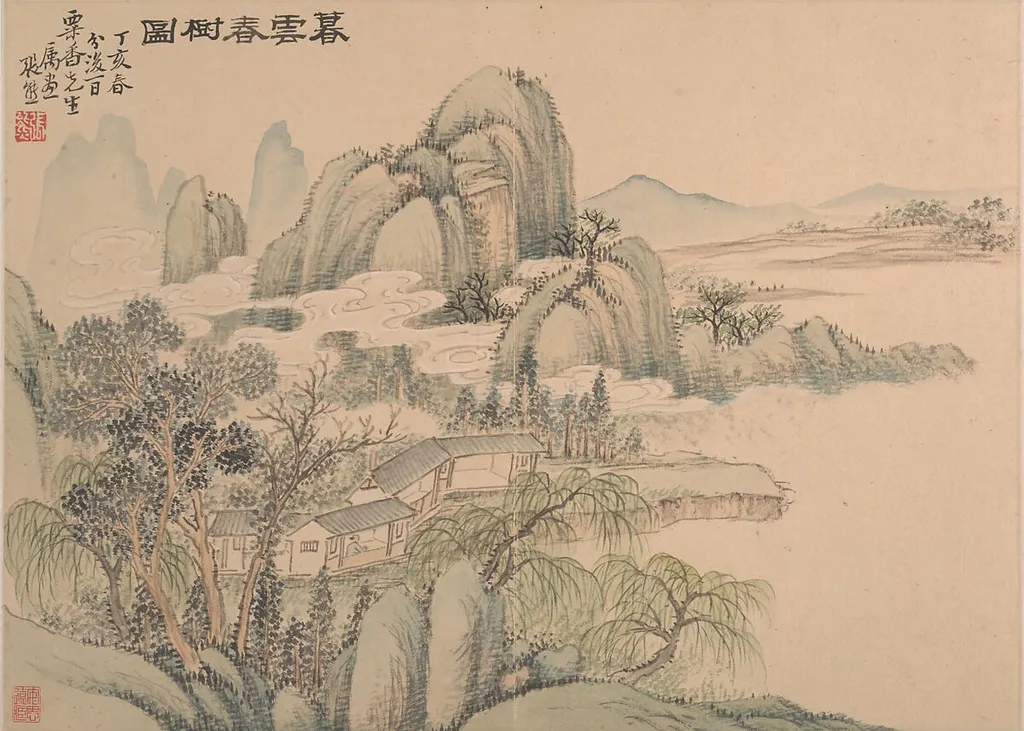
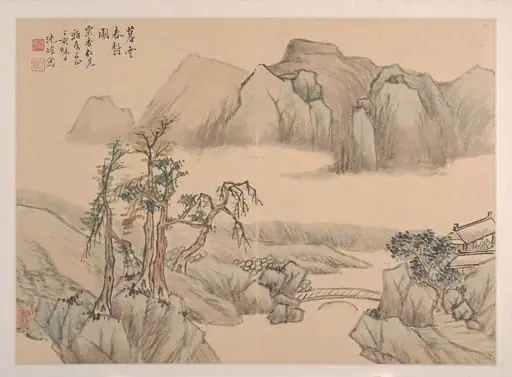
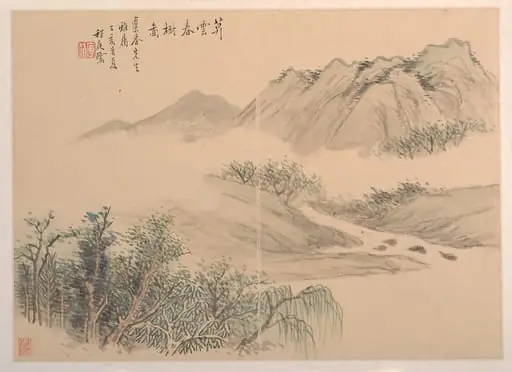
清 張熊 山水 冊頁|Landscape is an ink painting by the Qing dynasty painting artist Zhang Xiong. It dates from 1827 and is held in the collection of the Metropolitan Museum of Art.
About this work
You see a quiet mountain scene: a small pavilion perched on a rocky ledge, mist curling around pine trees, and a winding path leading up from the bottom.
You see a quiet mountain scene: a small pavilion perched on a rocky ledge, mist curling around pine trees, and a winding path leading up from the bottom.
This album leaf is tiny, about the size of a postcard, but it holds a whole world. Zhang Xiong painted it in 1827, using fine brushstrokes to suggest distance and depth without heavy outlines. The ink is soft, almost like watercolor, letting the paper breathe through the trees.
If you like this, look up more landscapes.
Subject & Meaning
Created in 1827 by the Qing dynasty artist Zhang Xiong, this album leaf presents a traditional landscape scene. The primary subject depicted within the composition is a pavilion, situated amidst a natural setting rendered in ink and color on paper. As a work of the landscape genre, the painting focuses on the representation of this architectural element within its environment.
The available records identify the pavilion as the specific object portrayed, serving as the central iconographic feature of the piece. While the work functions as a depiction of scenery, the specific symbolic meanings or deeper representational intentions behind the inclusion of the pavilion are not detailed in the current documentation, which primarily catalogs the physical attributes and subject matter of the painting held by the Metropolitan Museum of Art.
Technique & Style
Created in 1827 by Zhang Xiong, this landscape work is executed as an album leaf. The artist employed ink and color applied directly onto a paper support. Stylistically, the piece functions within the landscape genre and features a pavilion as a central depicted element.
The physical dimensions of the sheet measure 24.8 cm in height and 34.3 cm in width. Produced in China, the work exemplifies the format of small-scale, intimate painting typical of album leaves, combining monochromatic ink washes with pigmented details to render the architectural and natural subjects.
History & Provenance
Created in 1827 by the Chinese artist Zhang Xiong, this landscape album leaf was executed in ink and color on paper. The work, which depicts a pavilion within a natural setting, originated in China during the Qing dynasty. While specific details regarding its original commission or intermediate ownership history are not provided in the available records, the piece eventually entered the collection of the Metropolitan Museum of Art.
It is currently held by this institution, where it is classified as a painting and cataloged under the accession number 1986.267.40. The physical dimensions of the leaf are recorded as 24.8 cm in height and 34.3 cm in width.
The album leaf titled Landscape by Zhang Xiong is held in the collection of the Metropolitan Museum of Art in New York. Its accession number is 1986.267.40, identifying it as part of the museum's holdings of Chinese paintings. Created in 1827, the work measures 24.8 cm in height and 34.3 cm in width, executed in ink and color on paper.
The painting depicts a pavilion within a landscape setting and was made in China. While the sources confirm its current location and cataloging details, no specific exhibition history or prior provenance records are provided in the available documentation.
Context
The album leaf dated 1827, executed in ink and color on paper, is classified as a landscape painting that depicts a pavilion; it originates from China and is housed in the Metropolitan Museum of Art. As a Qing‑era work by Zhang Xiong, it exemplifies the architectural subjects frequently explored in early nineteenth‑century Chinese landscape art, providing a concrete example for studies of the period’s stylistic development. Its inclusion in a major museum collection underscores its relevance to scholarly examinations of Zhang Xiong’s oeuvre and the broader trajectory of Qing landscape painting.
Legacy
The album leaf by Zhang Xiong, dated 1827, is recognized as a representative example of 19th‑century Chinese landscape painting, noted for its depiction of a pavilion. Its inclusion in the Metropolitan Museum of Art’s collection has positioned it within scholarly discourse on the period, contributing to the broader appreciation of Zhang Xiong’s artistic output and influencing subsequent studies of landscape works in museum contexts.
Overview
This album leaf, titled Landscape, was created by Zhang Xiong in 1827. Executed with ink and color on paper, this painting presents a serene mountain vista. Despite its diminutive scale, comparable to a postcard, the work encapsulates a detailed natural environment, characteristic of traditional Chinese landscape painting.
Artist & collection