Artwork
明/清 佚名 舊傳方從義 風雨圖 軸|Wind and Water: Landscape in the Style of Mi Fu
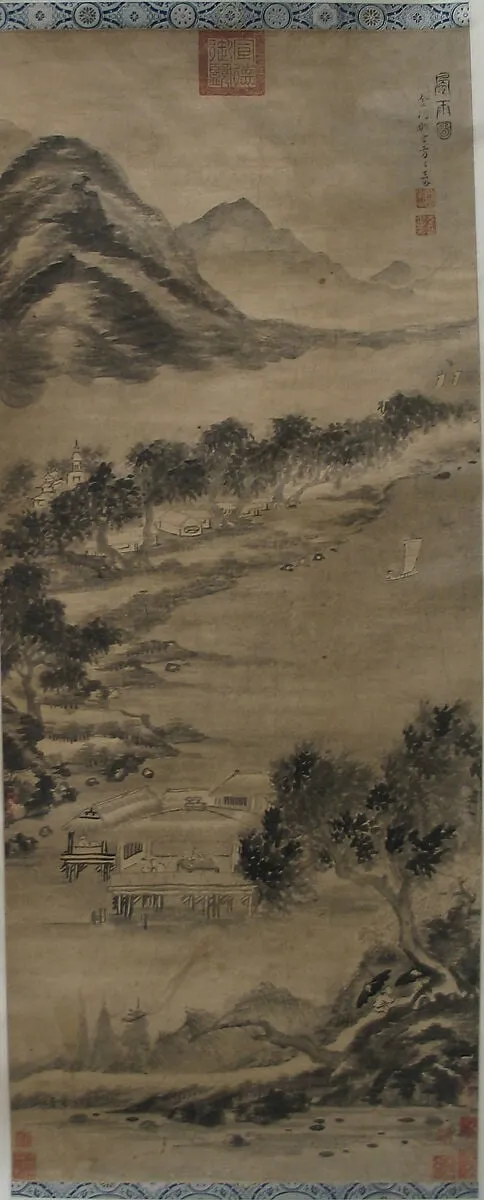
明/清 佚名 舊傳方從義 風雨圖 軸|Wind and Water: Landscape in the Style of Mi Fu is an ink painting by the Ming dynasty painting artist Fang Congyi. It is held in the collection of the Metropolitan Museum of Art. Wind and Water: Landscape in the Style of Mi Fu is an ink on paper hanging scroll from the Ming or Qing dynasty.
About this work
Subject & Meaning
The painting depicts a mountain landscape and is classified within the landscape genre. Sources identify the depicted subject as a mountain. While the sources confirm the mountainous scenery, they do not elaborate on specific iconographic motifs, symbolic readings, or intended meaning beyond the general landscape representation.
Technique & Style
The work is a hanging scroll executed in ink on paper, a traditional support for Chinese literati painting.
The work is a hanging scroll executed in ink on paper, a traditional support for Chinese literati painting. The medium is monochrome ink applied with brushwork typical of ink landscape painting. The composition presents a mountain landscape, consistent with the genre classification.
While the sources confirm the hanging‑scroll format, ink medium, paper support, and 1639 date, they do not provide details on the painting’s current condition or conservation history.
History & Provenance
Created in 1639 in China, this hanging scroll executed in ink on paper was historically attributed to the artist Fang Congyi. However, contemporary scholarship identifies the creator as an anonymous painter working during the Ming or Qing dynasties. The work, titled 'Wind and Water: Landscape in the Style of Mi Fu,' depicts a mountainous landscape.
While specific details regarding its original commission or intermediate ownership history are not provided in the available records, the piece is currently held in the collection of the Metropolitan Museum of Art. The dating of the inception to 1639 remains a consistent factual element across descriptions of the object's history.
The hanging scroll titled Wind and Water: Landscape in the Style of Mi Fu, painted by the anonymous follower Fang Congyi in 1639, is part of the Metropolitan Museum of Art’s collection and is housed in New York. The work is catalogued as a landscape painting depicting a mountain, consistent with its classification in the museum’s records. No accession number is provided in the available documentation, and the sources do not mention any public exhibitions or loan history for this piece.
Legacy
The hanging scroll dated 1639, attributed to an anonymous painter and classified as a landscape in the manner of Mi Fu, entered the Metropolitan Museum of Art collection, establishing its scholarly visibility. As an anonymous work that exemplifies the compositional techniques of the Mi school, it has been referenced in art‑historical studies of Qing‑era landscape painting, shaping contemporary understanding of stylistic transmission after the Ming period. Its inclusion in a major public collection has reinforced the reputation of anonymous Chinese masters as contributors to the evolution of Chinese landscape art, and it continues to inform exhibitions and publications on early modern Chinese painting.
Overview
Wind and Water: Landscape in the Style of Mi Fu is an ink on paper hanging scroll from the Ming or Qing dynasty. This painting presents a misty mountain landscape, where soft gray forms emerge from and recede into atmospheric fog. While its precise authorship is unknown, the work was historically attributed to the artist Fang Congyi. It exemplifies a particular stylistic approach to landscape painting, drawing inspiration from earlier traditions.
Context
The artwork's title explicitly references the "Style of Mi Fu," indicating its adherence to a tradition originating with the Song dynasty painter Mi Fu, known for his innovative use of ink washes and dots. Although the artist of this particular scroll is anonymous, its former attribution to Fang Congyi places it within a lineage of literati painters who explored and refined this expressive, atmospheric approach to landscape.
Artist & collection


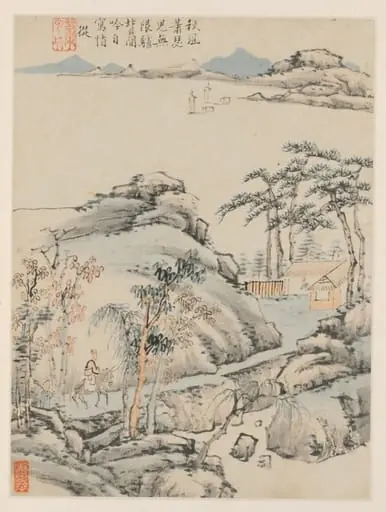 Album of Seasonal Landscapes, Leaf F (previous leaf 5)
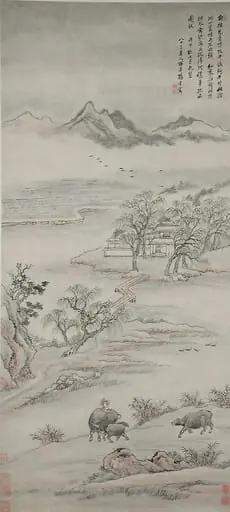 清 楊晉 滄洲牧牛圖 軸|Landscape with Figures
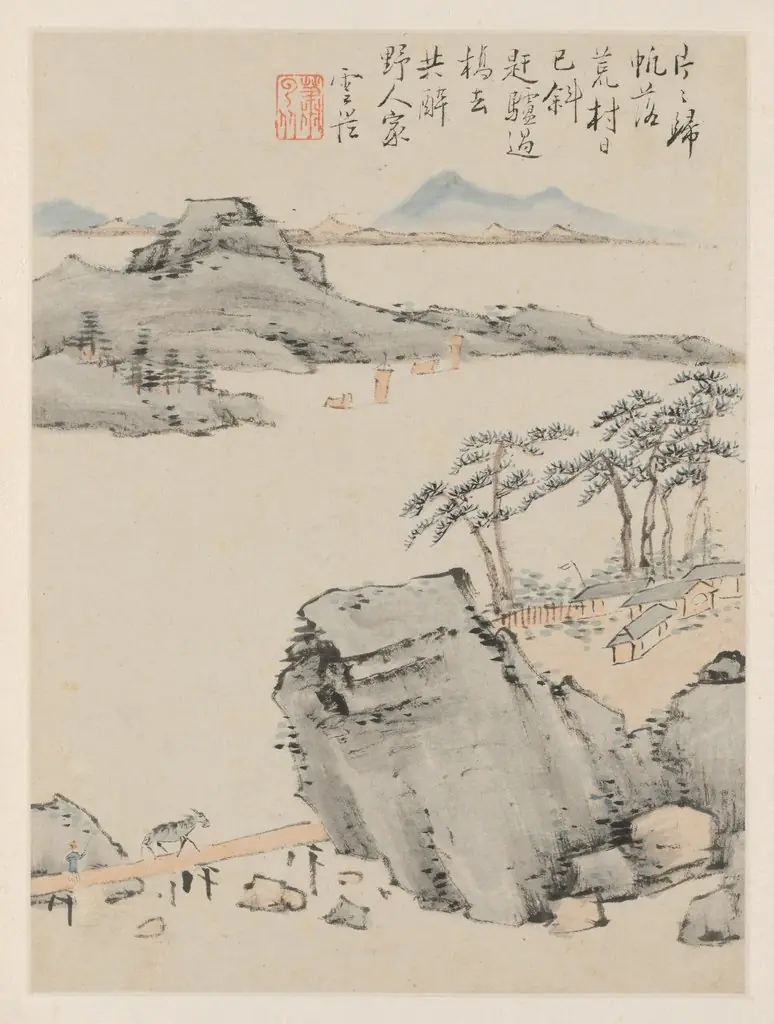 Album of Seasonal Landscapes, Leaf C (previous leaf 6)
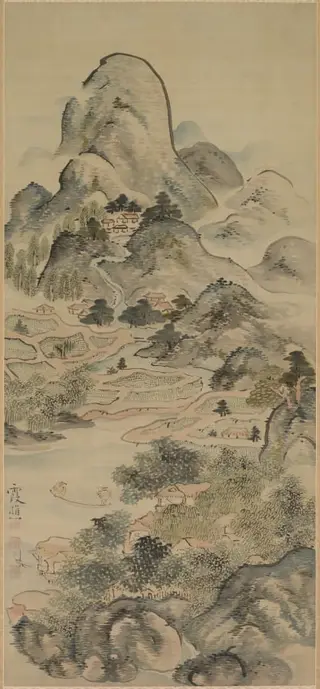 Fishing in Springtime
 Untitled
 Landscape after Guo Zhongshu
 Album of Seasonal Landscapes, Leaf C (previous leaf 6)
 Untitled
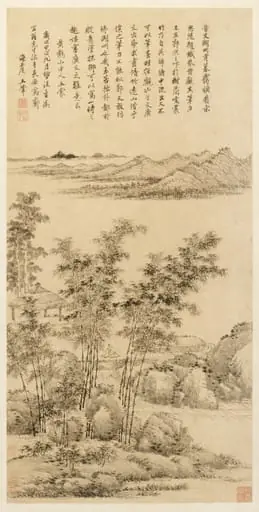 Tall Bamboo and Distant Mountains, after Wang Meng
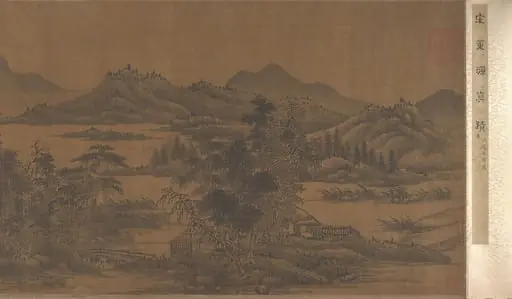 明/清 佚名 舊傳董源 山水圖 卷|Landscape