Artwork
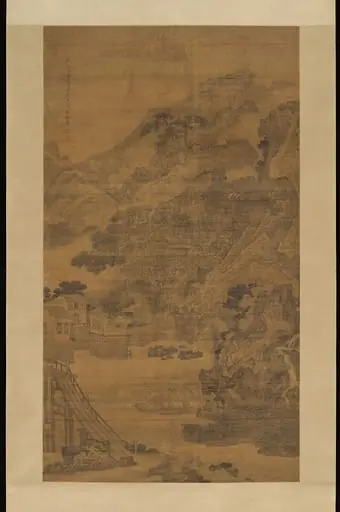
清 佚名 倣王翬 倣李公麟草堂圖 軸|Landscape in the Style of Li Gonglin
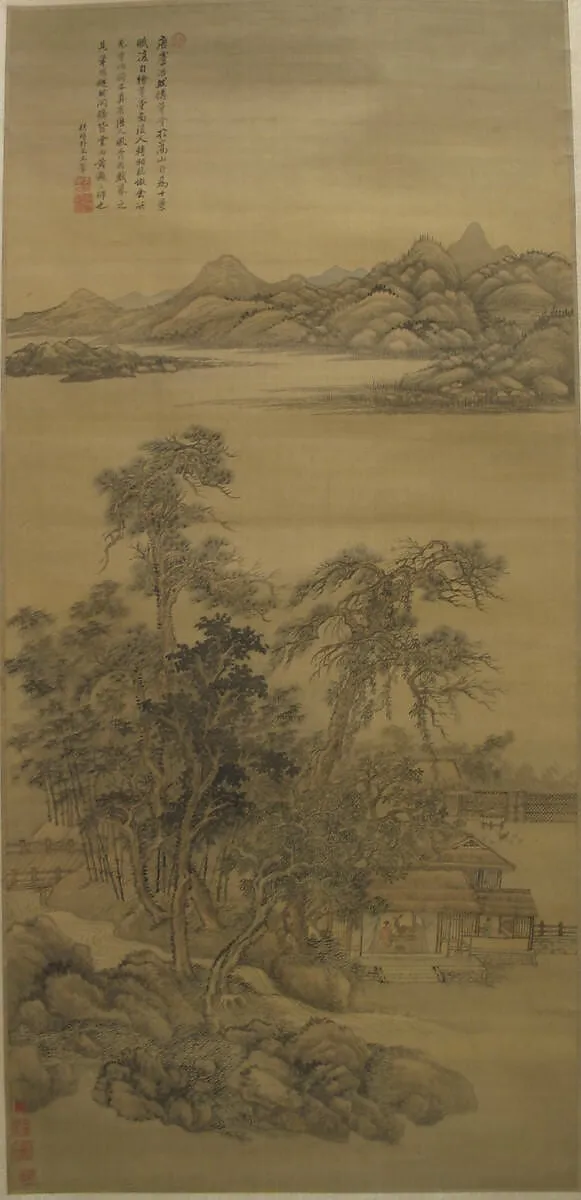
清 佚名 倣王翬 倣李公麟草堂圖 軸|Landscape in the Style of Li Gonglin is an ink painting by the Baroque artist Wang Hui. It dates from 1702 and is held in the collection of the Metropolitan Museum of Art. This hanging scroll, rendered in ink and color on silk, exemplifies a long-standing tradition of artistic emulation in Chinese painting.
About this work
Subject & Meaning
Specifically, the work is an imitation of Wang Hui's style, who in turn was imitating the approach of the earlier master Li Gonglin.
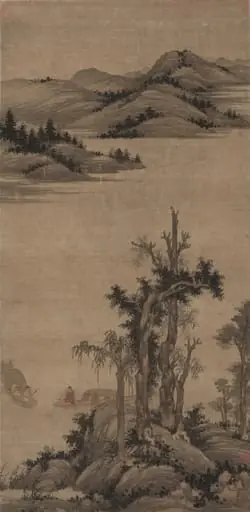
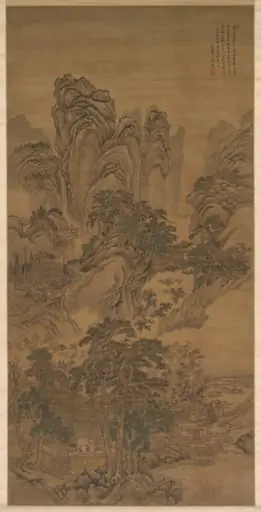
The artwork depicts a landscape featuring a hill within the broader tradition of Chinese landscape painting. As indicated by its title, the piece operates on a dual level of representation: it is a visual rendition of a natural terrain centered on a hill, while simultaneously representing an artistic homage. Specifically, the work is an imitation of Wang Hui's style, who in turn was imitating the approach of the earlier master Li Gonglin.
The title's reference to a 'thatched cottage' (草堂) further suggests the inclusion of a rustic dwelling within the landscape, a common motif in Chinese painting symbolizing scholarly retreat, reclusion, and a philosophical communion with nature.
Technique & Style
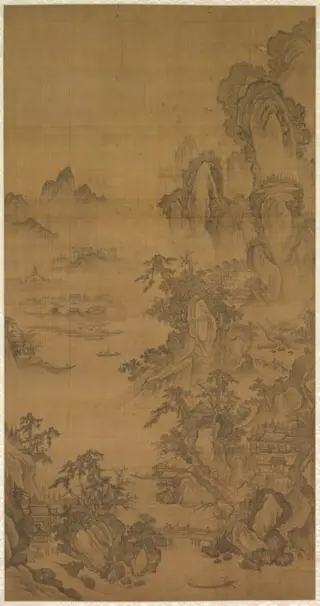
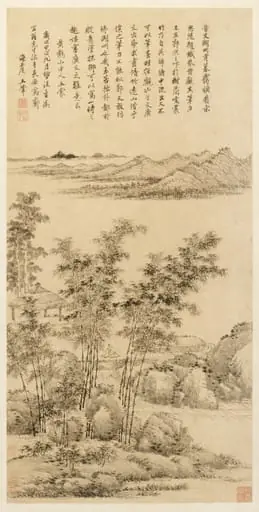
Created in 1702, this hanging scroll is executed in ink and color on a silk support. The work exemplifies a landscape genre that pays homage to earlier masters, specifically adopting the stylistic manner of Li Gonglin as interpreted through the lens of Wang Hui. The visual composition depicts rolling hills and natural scenery, rendered with delicate brushwork characteristic of historical imitation.
As a hanging scroll, the piece is designed for vertical display, integrating the silk medium to facilitate the fluid application of ink and pigment. The formal qualities reflect a deliberate engagement with traditional Chinese painting techniques, focusing on the structural and atmospheric representation of the landscape within a scroll format.
History & Provenance
The hanging scroll, ink and color on silk, was produced in 1702 in China by an anonymous Qing painter working in the manner of Wang Hui, who himself drew on the earlier master Li Gonglin. The work, titled Landscape in the Style of Li Gonglin, exemplifies the genre of landscape painting and depicts a stylized hill. It entered the collection of the Metropolitan Museum of Art, where it remains.
The hanging scroll titled 清 佚名 倣王翬 倣李公麟草堂圖 軸, dated 1702, is housed in the Metropolitan Museum of Art in New York. The museum lists the work as part of its Paintings collection, classified as a landscape painting and created in China during the early 18th century. No specific accession or inventory number is recorded in the available documentation, and the sources do not detail any exhibition history for this piece.
Overview
This hanging scroll, rendered in ink and color on silk, exemplifies a long-standing tradition of artistic emulation in Chinese painting. Created by an anonymous artist during the Qing Dynasty, it is presented as an imitation of a work by Wang Hui, who himself drew inspiration from the Northern Song master Li Gonglin. This layered approach reflects a deep engagement with historical styles rather than a pursuit of strict originality.
Context
This artwork is a testament to the practice of fang (imitation) in Chinese art, where artists engaged with the past not merely to copy, but to interpret and learn from revered predecessors. By emulating Wang Hui, who in turn referenced Li Gonglin from approximately 900 years prior, the anonymous painter participates in a continuous dialogue across generations, akin to a musician reinterpreting a classic melody.
Artist & collection


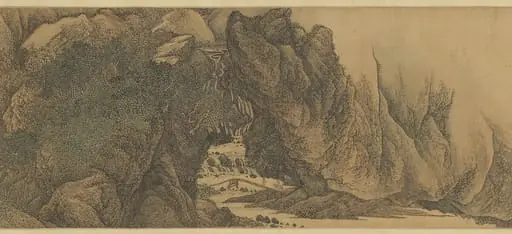
 清 王翬 倣巨然燕文貴山水圖 卷|Landscape in the Style of Juran and Yan Wengui
 清 王翬 太行山色圖 卷|The Colors of Mount Taihang
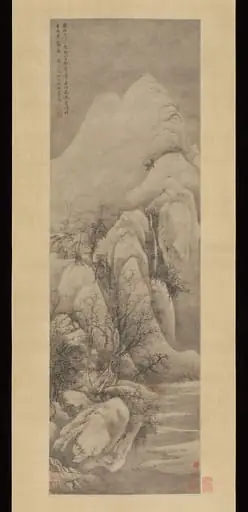 清 王翬 倣李成雪霽圖 軸|Snow Clearing: Landscape after Li Cheng
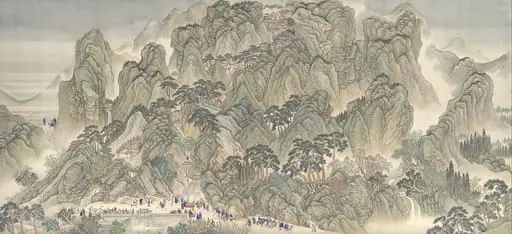 清 王翬等 康熙南巡圖 (卷三: 濟南至泰山) 卷|The Kangxi Emperor's Southern Inspection Tour, Scroll Three: Ji'nan to Mount Tai
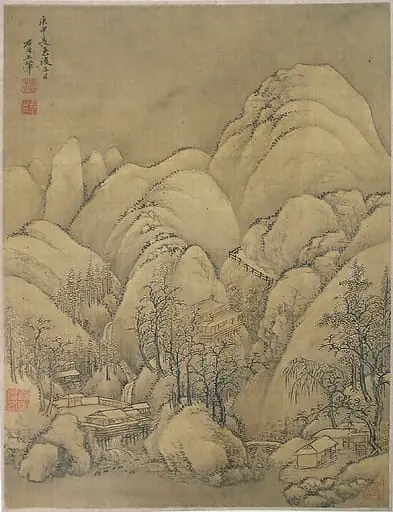 清 佚名 倣王翬 倣李成山水圖 軸|Landscape after Li Cheng
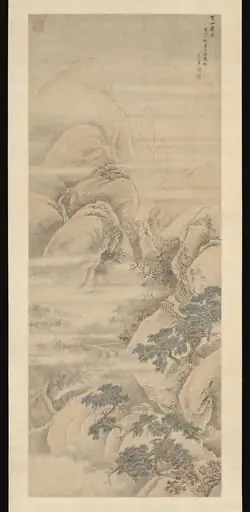 清 (傳)王翬 雪景山水圖 軸|Snowscape
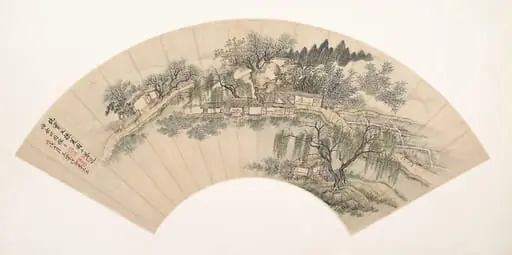 清 佚名 倣王翬 倣仇實父採菱圖 扇|Gathering Water Chestnuts
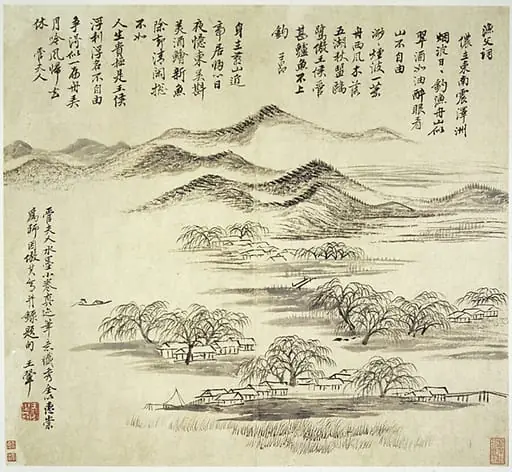 王翬、楊晉、顧昉、王雲、徐玫 仿古山水圖 冊 紙本|Landscapes after old masters