Artwork
清 張熊 蟾蜍 團扇|Flower and Toad
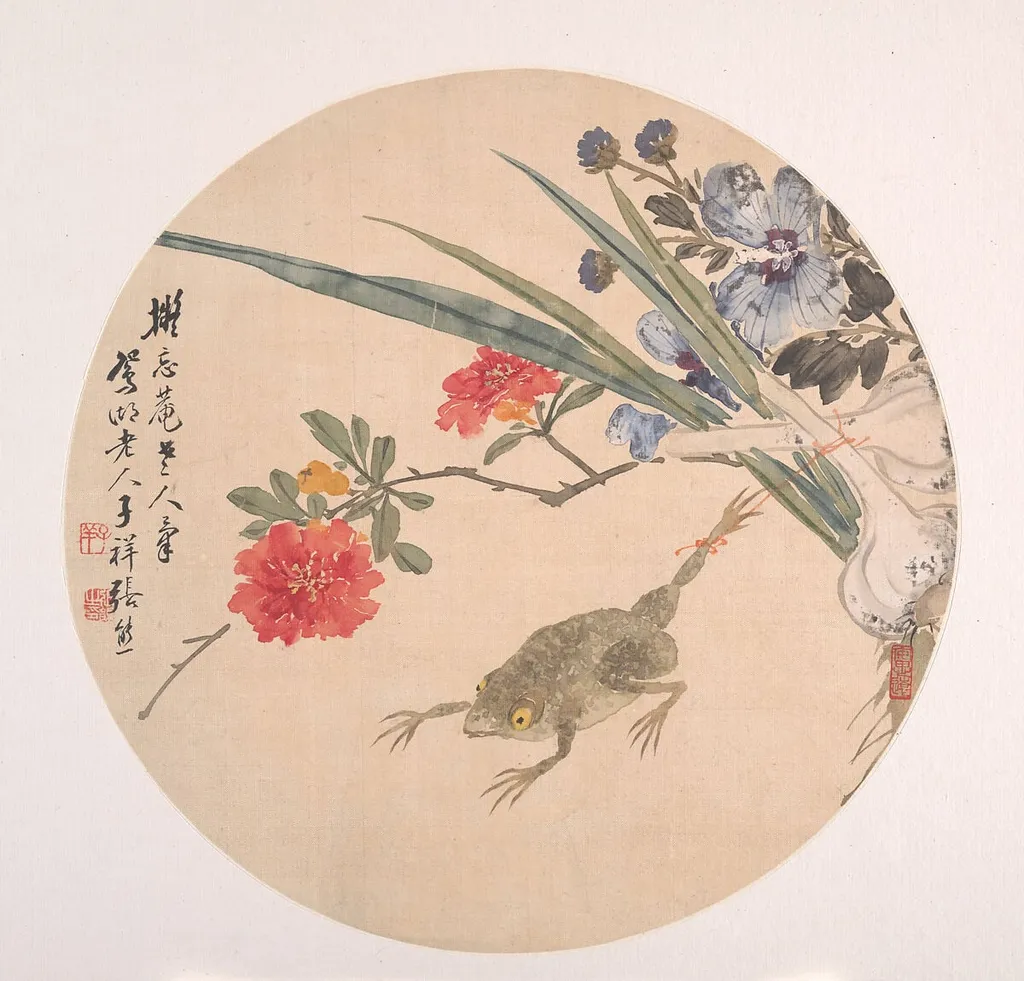
清 張熊 蟾蜍 團扇|Flower and Toad is an ink painting by the Qing dynasty painting artist Zhang Xiong. It dates from 1844 and is held in the collection of the Metropolitan Museum of Art.
- Accession no.
- 1986.267.39
About this work
Technique & Style
Flower and Toad is a circular fan-shaped album leaf executed in ink and color on silk, a format and medium characteristic of traditional Chinese painting.
Flower and Toad is a circular fan-shaped album leaf executed in ink and color on silk, a format and medium characteristic of traditional Chinese painting. The work is classified as a still life depicting a flower and a toad, rendered in the album-leaf format suited to intimate viewing. The painting belongs to the holdings of the Metropolitan Museum of Art and was created in 1844 by Zhang Xiong, a nineteenth-century Chinese artist working in a refined literati tradition.
History & Provenance
The fan painting was created in 1844 by Zhang Xiong, as indicated by the artist's inscription on the work. The painting depicts a still-life arrangement of flowers alongside a toad, rendered in ink and color on silk in a circular fan format typical of Chinese album leaves from the Qing period. The Metropolitan Museum of Art holds the work in its collection, where it is catalogued as a Qing dynasty painting by Zhang Xiong.
Overview
Zhang Xiong's Flower and Toad, created in 1844, is an ink and color painting on silk, presented as a circular fan-shaped album leaf. This still life composition features a prominent toad alongside floral elements, characteristic of the artist's detailed approach. The artwork offers a glimpse into 19th-century Chinese painting, combining natural observation with potential symbolic depth.
Subject & Meaning
The artwork centers on a plump toad, depicted resting serenely on a rock, surrounded by delicate pink and white blossoms with curling leaves that frame the scene. In Chinese art, animals frequently embody human characteristics or convey auspicious meanings. The toad's composed, almost self-satisfied expression might subtly allude to virtues like patience or good fortune, inviting contemplation from the viewer.
Context
Created in the mid-19th century, Flower and Toad aligns with a long-standing tradition in Chinese painting where animal subjects frequently carried symbolic weight. During this period, artists often imbued creatures with human qualities or used them as metaphors for moral lessons, prosperity, or other cultural concepts. Zhang Xiong's work participates in this rich visual language, extending its narrative beyond mere depiction.
Artist & collection