Art Glossary
Capriccio /kah-PREE-choh/
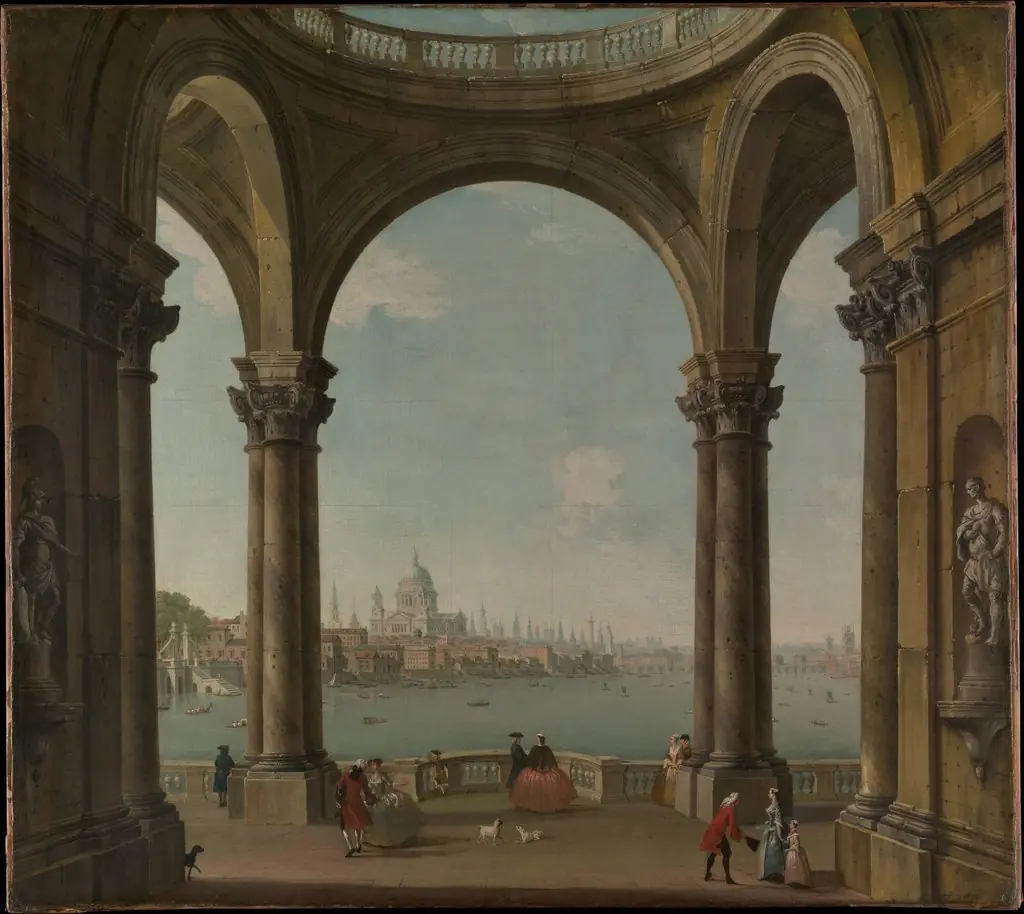
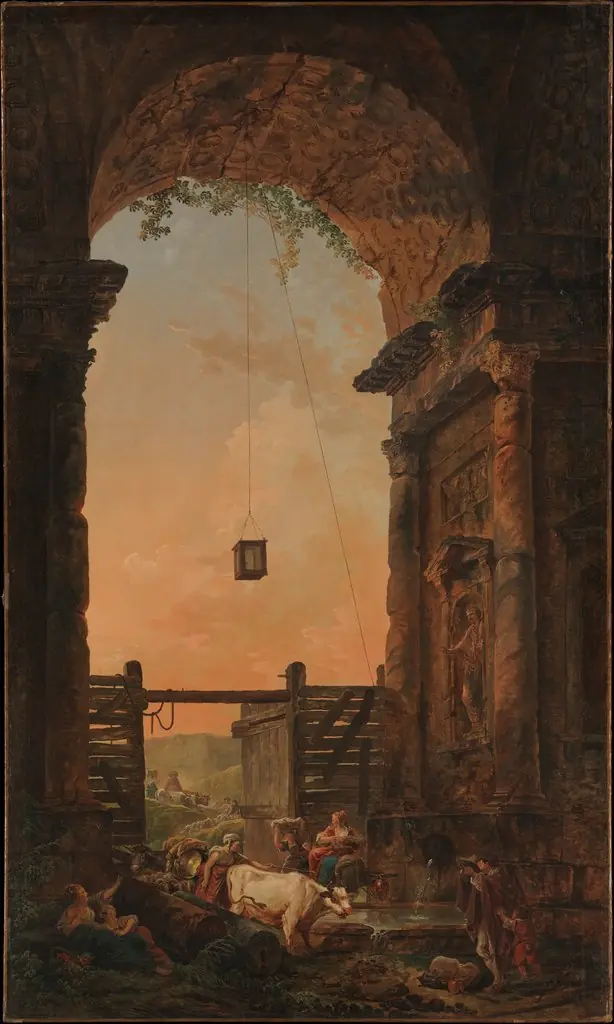
A capriccio is an architectural fantasy that combines real and imaginary buildings, ruins and ornaments into a single invented but plausible composition.
From the Italian for 'caprice' or 'whim', the capriccio is the imaginative counterpart of the topographically faithful veduta. Rather than recording a real place, the painter assembles a fictional scene out of architectural elements — a Roman ruin here, a Renaissance palace there, an invented bridge, a fragment of a triumphal arch — recombined for picturesque or evocative effect. The result is a place that never existed but could believably have done.
The genre flourished in the eighteenth century alongside the cult of antiquity and the taste for ruins. Giovanni Paolo Panini specialised in grand capricci crowding together the monuments of ancient Rome; Canaletto and Francesco Guardi produced architectural fantasies beside their real views; and Hubert Robert built an entire reputation on imagined ruins. The capriccio gave painters and their patrons a way to enjoy the romance of decay and grandeur without the constraints of a real site.
The capriccio shades into the related theme of ruins and reverie, since fragments of broken architecture are among its favourite materials, and it carries the same melancholy meditation on time and the fall of empires. But its defining quality is invention: the pleasure of a scene composed for the eye, freed from the obligation to be true to any single view.
To recognise a capriccio, look for famous monuments improbably gathered together, or for ruins and buildings whose arrangement is too perfect, too conveniently composed, to be a record of a real place.
In the collection
Frequently asked
What is a capriccio in painting?
A capriccio is an architectural fantasy that combines real and imaginary buildings and ruins into an invented but plausible composition.
How is a capriccio different from a veduta?
A veduta faithfully depicts a real, recognisable place, while a capriccio freely invents and recombines architecture into an imaginary scene.