Movement
Andean Colonial
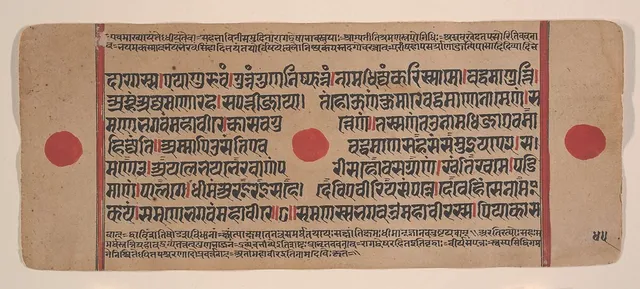
Andean Colonial is an art movement dating from 1550. The gallery holds 6 works in this movement. Browse Andean Colonial paintings, portraits, pictures and artworks from the world's public-domain museum collections.
The Andean Colonial style, known above all through the Cusco School (Escuela Cusqueña), arose in the former Inca capital of Cusco in the wake of the Spanish conquest of Peru in the 1530s. As the Catholic Church set about converting the defeated Andean population, European-trained painters introduced oil-on-canvas religious imagery to Indigenous and mestizo artists who had previously worked in the geometric idioms of Inca ceramics and murals. Over the seventeenth and eighteenth centuries this encounter produced the most distinctive painting tradition of Spain's American colonies, radiating from Cusco across the southern Andes into present-day Bolivia and Ecuador.
Cusqueña painting is recognizable for its brilliant, saturated color, a flattened and frontal space that largely ignores European perspective, and a densely decorative surface. Its signature technique is brocateado de oro—patterns of applied gold leaf stamped and tooled over robes, haloes, and backgrounds, lending images an iconic, devotional shimmer descended from late-medieval and Flemish models. Andean detail entered the iconography directly through local birds and flowers, highland scenery, and native feast foods, while Marian images were often assimilated to the sacred mountain, the Virgin's triangular robe echoing the venerated apu of pre-Hispanic worship.
The school's founding master was Diego Quispe Tito (b. 1611), whose Zodiac series for Cusco Cathedral (c. 1680) and Saint John the Baptist cycle in his native San Sebastián fused Italian Mannerism and Flemish print sources with bird-filled local landscapes. Basilio Santa Cruz Pumacallao (1635–1710), favored by the influential patron Bishop Manuel de Mollinedo y Angulo, painted a Life of Saint Francis cycle (1667) and a Virgin of Bethlehem incorporating the bishop's own portrait. In the eighteenth century Marcos Zapata (c. 1710–1773) ran the largest workshop, producing more than 200 canvases—including the fifty that line the cathedral's high arches; his Last Supper (c. 1753) famously sets a roasted cuy (guinea pig) before Christ and the apostles.
A defining rupture came in 1688, when Indigenous painters broke from the Cusco guild after bitter disputes with its Spanish and mestizo members. The split freed native workshops to mass-produce devotional canvases for export throughout the viceroyalty, and production grew increasingly anonymous—which is why so many surviving pictures, including several held in this collection, are unsigned. Kin to the contemporaneous schools of Quito and Potosí within the broader Spanish-American Baroque, the Cusco style's gilded, flattened, frankly hybrid language remains a touchstone of Andean identity and a living craft tradition in the city today.
Works
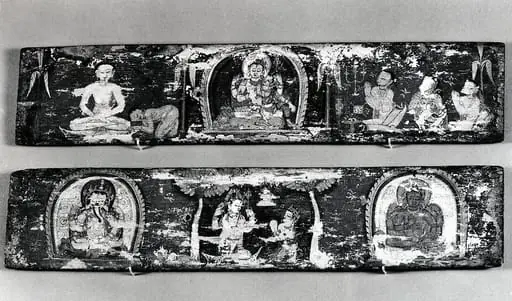
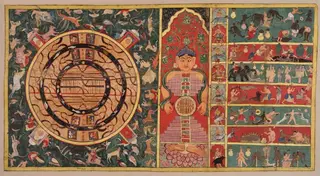
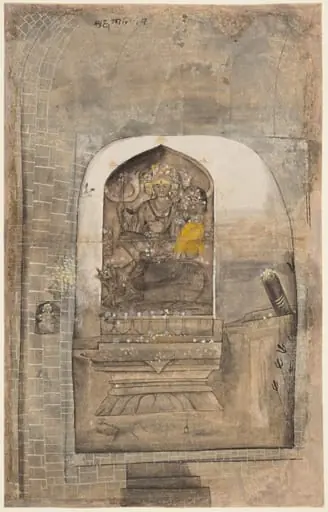
Frequently asked questions
What is Andean Colonial?
Andean Colonial is an art movement. Religious painting of Spanish colonial South America, centered on the Cusco School in Peru.
When did Andean Colonial take place?
Andean Colonial dates from around 1550.
Where can I see Andean Colonial works?
Andean Colonial works in the collection are held by Metropolitan Museum of Art and Cleveland Museum of Art.