Movement
Traditionalist School
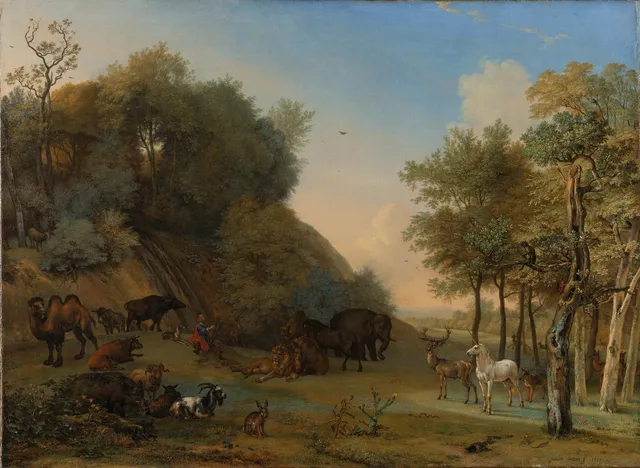
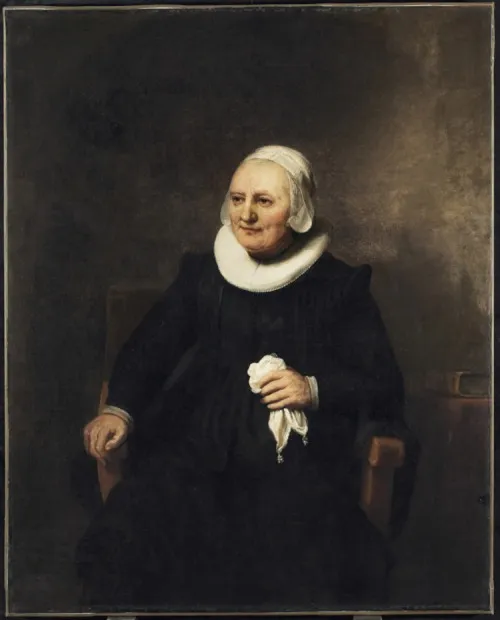
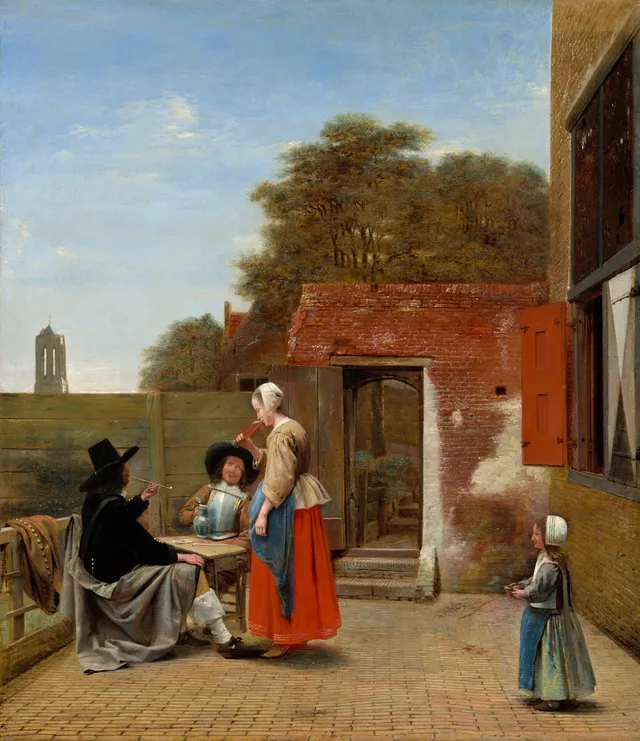
Traditionalist School is an art movement of the 1900–1940 period. The gallery holds 3 works in this movement. Browse Traditionalist School paintings, portraits, pictures and artworks from the world's public-domain museum collections.
The Traditionalist School was a current in early twentieth-century European architecture, strongest in the Netherlands but with parallels in Scandinavia and Germany, that emerged in the years around the First World War. It was less a fixed style than a shared conviction: that building should grow out of regional craft, climate and custom rather than from revivalist ornament or the machine. Its proponents reacted against the eclectic historicism of the nineteenth century—Pierre Cuypers's Neo-Gothic Rijksmuseum (1885) being the great Dutch example—and equally against the sculptural Expressionism of the Amsterdam School and the abstract Functionalism of the emerging Modern Movement. In this they extended the sober brick Rationalism of Hendrik Petrus Berlage, whose Beurs van Berlage in Amsterdam (completed 1903) is often cited as the school's founding monument.
Visually the school is defined by restraint and material honesty. Walls of tidy, load-bearing brick are left frankly visible; roofs are steeply pitched and tiled; decoration is minimal and structural rather than applied. Architects favoured "honest" natural materials—brick, timber, stone and slate—and a sober, almost monastic monumentality drawn from rural and vernacular building traditions. The result is an architecture of quiet dignity: symmetrical, earthbound and rooted in a sense of national continuity.
Its intellectual centre was the Delft School, named for the Technical University where Marinus Jan Granpré Molière (1883–1972) taught from 1924 until 1953 and shaped a generation; associated architects included Cornelis Hubertus de Bever, Gijsbert Friedhoff and Bernardus Koldewey. From it grew the more austere, mathematically governed Bossche School around Dom Hans van der Laan (1904–1991), whose theory of the "plastic number" produced works of stripped Benedictine calm such as the abbey church at Sint-Benedictusberg. Abroad, kindred sensibilities produced Ragnar Östberg's Stockholm City Hall (1923) and Eliel Saarinen's Helsinki Central Station (1919).
After 1945 the school proved especially influential in church design and in the reconstruction of bombed Dutch towns, running for decades as a deliberate counter-current to the International Style. Its veneration of honest brick and the orderly Dutch domestic world had deep native roots: the very courtyards and sunlit interiors that Delft's seventeenth-century painters immortalised—Pieter de Hooch's A Dutch Courtyard (c. 1658–1660) chief among them—offered an idealised image of plain, well-made Dutch building that the Traditionalists, three centuries later, sought to renew in stone and brick.
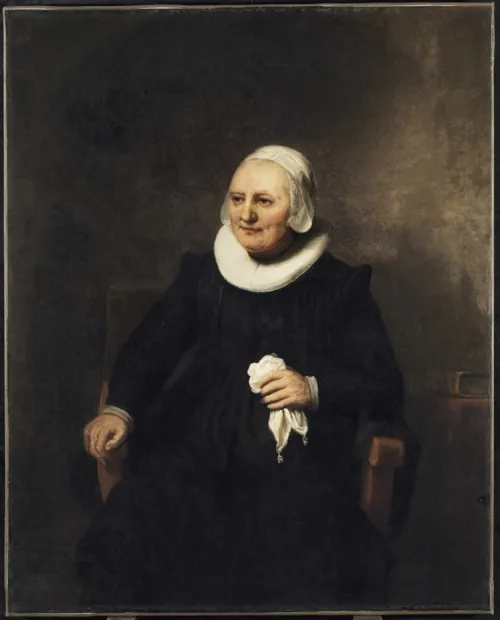
Works
Frequently asked questions
What is Traditionalist School?
Traditionalist School is an art movement. A mid-20th-century Dutch architectural and urban-planning tradition rooted in Delft's technical university, prioritizing contextualism and craftsmanship.
When did Traditionalist School take place?
Traditionalist School dates from 1900–1940.
Where can I see Traditionalist School works?
Traditionalist School works in the collection are held by Art Gallery of Ontario, Andrew W. Mellon collection and Rijksmuseum.