Movement
Ottoman Miniature
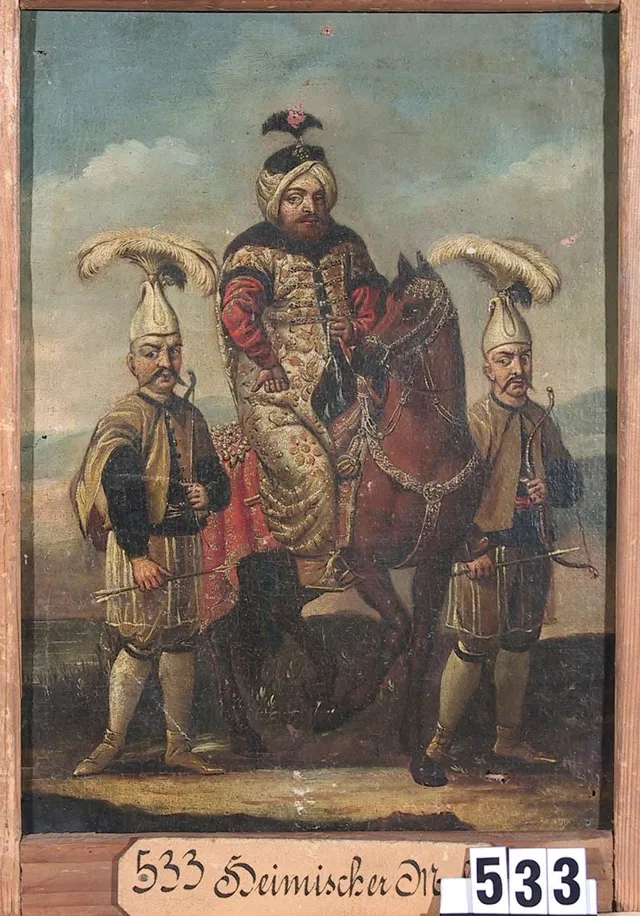
Ottoman Miniature is an art movement. The gallery holds 14 works in this movement, including works by Bilal Habshi and Imad al-Husaini. Browse Ottoman Miniature paintings, portraits, pictures and artworks from the world's public-domain museum collections.
Ottoman miniature painting was the court manuscript art of the Ottoman Empire, produced chiefly in the imperial design studio, the nakkaşhane, attached to Topkapı Palace in Istanbul. Though Turkish manuscript illustration traced roots to the Seljuks, a distinctly Ottoman idiom crystallized in the fifteenth century under Mehmed II (the Conqueror), who drew in foreign talent—including the Venetian Gentile Bellini—alongside an established Perso-Timurid heritage. The tradition deepened under Bayezid II and especially after Selim I's eastern campaigns (1512–1520), when painters from Tabriz, then the foremost workshop in the Islamic world, were resettled in the capital. Its golden age came under Süleyman the Magnificent in the sixteenth century, when the nakkaşhane became a collaborative hub of painters, calligraphers, gilders, and binders serving the sultan's illustrated chronicles.
Visually, Ottoman miniatures are flat and brightly coloured, eschewing Western single-point perspective in favour of stacked registers and clear, legible arrangement. Their hallmark is documentary intent: rather than the lyrical, decorative idealism of Persian models, Ottoman painters recorded military campaigns, court ceremonies, festivals, and topography with reportorial precision. Matrakçı Nasuh, active under Selim I and Süleyman, even invented a topographic mode—mapping cities, ports, and fortresses, often without human figures, by combining multiple viewpoints in one image.
The defining master was Nakkaş Osman, chief painter under Murad III (1574–1595), celebrated for crowded historical scenes and for codifying the standard series of sultan portraits. His workshop illustrated the great Lokman chronicles—the Şehinşahname (covering 1581–1588), the two-volume Hünername (1584–1588, with its 89 double-page miniatures), and the Surnâme-i Hümâyûn, whose roughly 427 paintings chronicle a 1582 imperial circumcision festival. The tradition's last great flowering came with Levni (Abdülcelil Çelebi, d. 1732) and Abdullah Buhari in the early eighteenth century.
Rooted in Persian and Timurid practice and touched by Byzantine and Mongol elements, Ottoman painting nonetheless diverged sharply from Safavid art, trading poetic abstraction for chronicle and observation. As a sister tradition to Safavid and Mughal manuscript painting, it remains one of the central achievements of Islamic art and a vivid pictorial record of Ottoman statecraft and daily life.
Key artists
Artist
Works
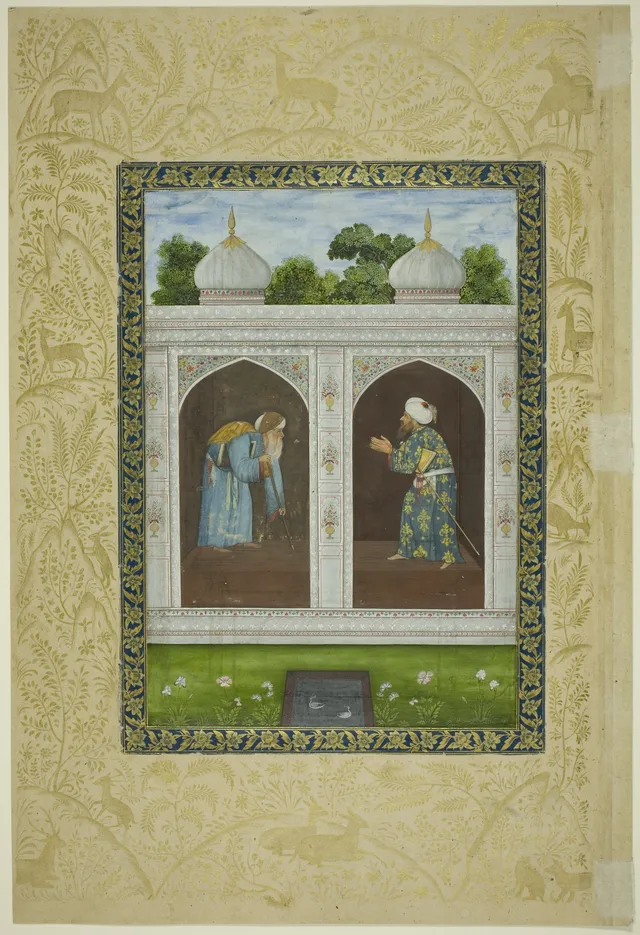
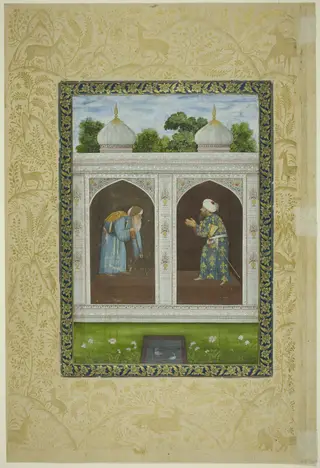 Album Page with Two Sheikhs and Calligraphic Specimens
 Sultan însoțit de arcași (în registrul inventar: Pașă turc)
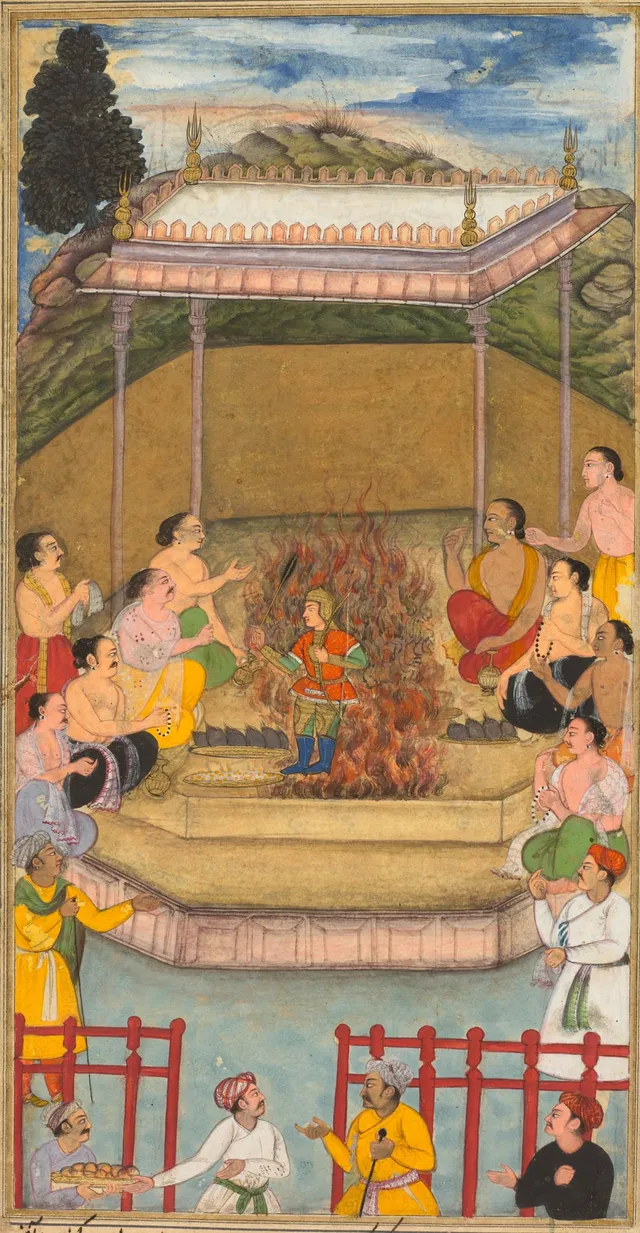
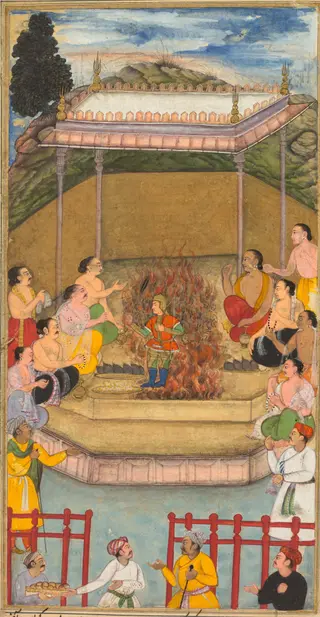 Yaja and Upayaja perform a sacrifice for the emergence of Dhrishtadyumna from the fire, from Adi-parva (volume one) of the Razm-nama (Book of Wars) adapted and translated into Persian by Mir Ghiyath al-Din Ali Qazvini, known as Naqib Khan (Persian, d. 1614) from the Sanskrit Mahabharata
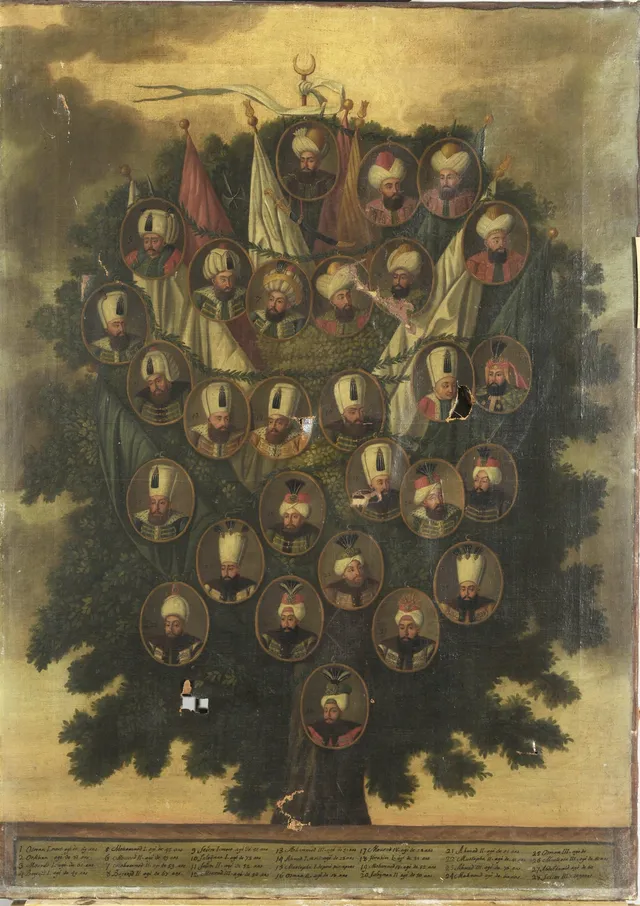
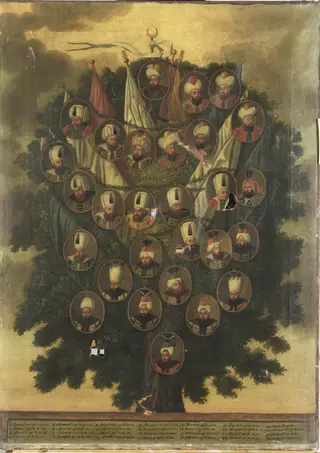 Οι 28 πρώτοι σουλτάνοι της Οθωμανικής Αυτοκρατορίας
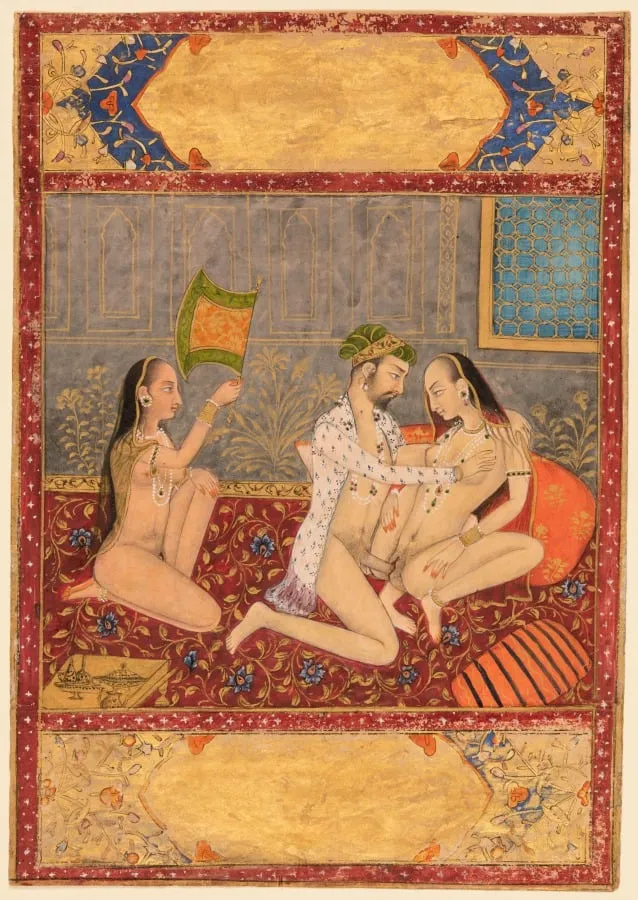
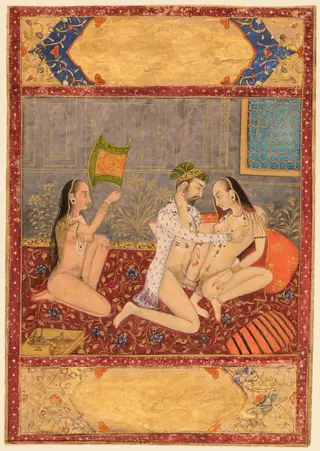 A King Making Love in the Harem
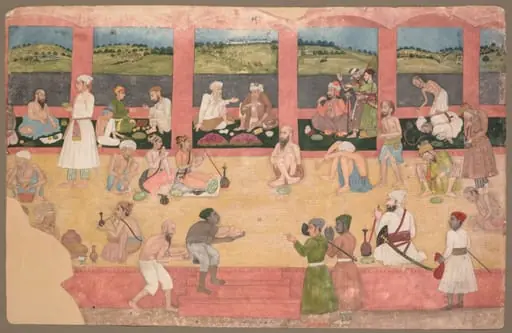 Opium Smokers Served Fruit and Bread
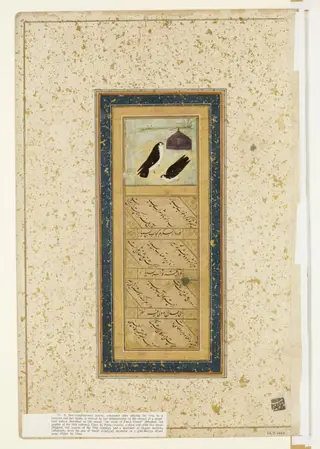 Untitled
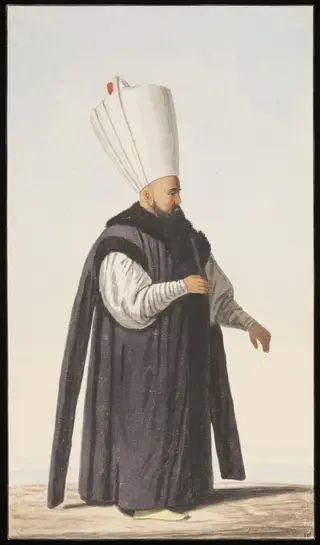 An unidentified Ottoman official
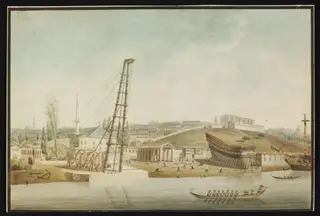 Kasim Pasa, the former Ottoman Naval Arsenal, showing a crane and a ship under construction
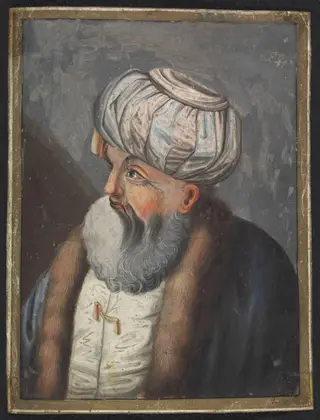 Portrait, head and shoulders, facing left, possibly of an Ottoman Pasha
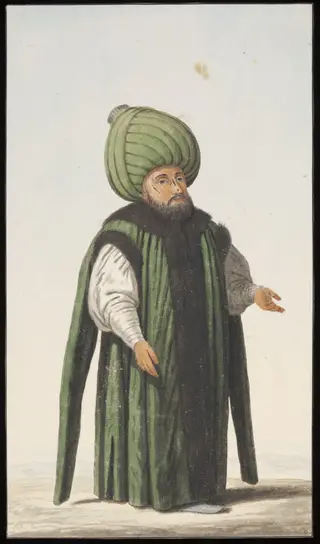 A senior Ottoman official
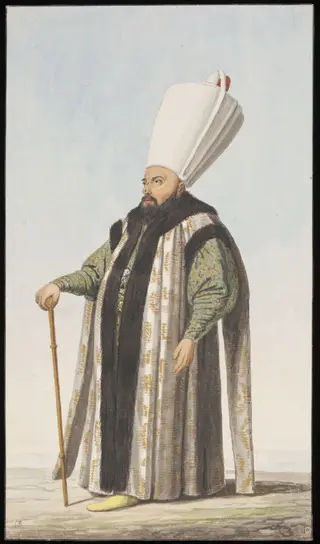 An Ottoman official, possibly a Miri Alem, or leader of troops
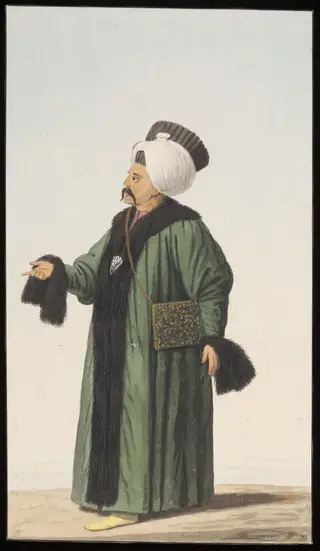 An Ottoman Official, perhaps the Sultan's private secretary,
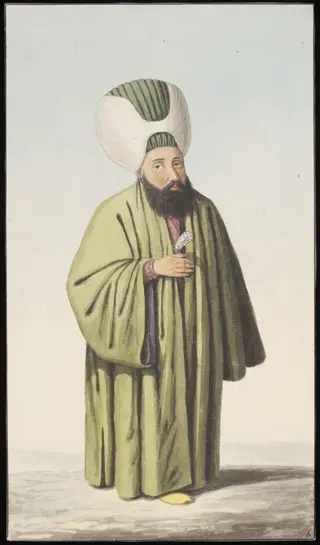 An Ottoman Military officer, possibly the Yeniçeriagasi, or Commander-in-chief of the Janissaries
Frequently asked questions
What is Ottoman Miniature?
Ottoman Miniature is an art movement. Court manuscript painting of the Ottoman Empire, distinct from Persian models in its documentary flavor.
How many Ottoman Miniature works does Artifact World Gallery have?
Artifact World Gallery holds 14 public-domain Ottoman Miniature works, all free to view and download.
Who are the key Ottoman Miniature artists?
Key Ottoman Miniature artists in the collection include Bilal Habshi and Imad al-Husaini.
Where can I see Ottoman Miniature works?
Ottoman Miniature works in the collection are held by Victoria and Albert Museum, Cleveland Museum of Art and Brukenthal National Museum.