Color & Light
From the glowing haze of Luminism to the fractured beams of Pointillism, trace how painters dissolved the world into light.
What you'll explore
- Artist Frederic Edwin Church
- Artist Georges Seurat
- Movement Divisionism
- Movement Fauvism
- Moment First Impressionist Exhibition
- Subject Fog
- Artist George Inness
- Movement Impressionism
- Movement Luminism
- Subject Moonlight
- Movement Neo-Impressionism
- Artist Paul Signac
- Movement Pointillism
- Movement Romanticism
- Moment Salon d'Automne 1905 — the Cage aux Fauves
- Subject Sunset
- Movement Symbolism
- Artist Thomas Cole
- Movement Tonalism
The lessons
-
The Glassy Silence of Luminism
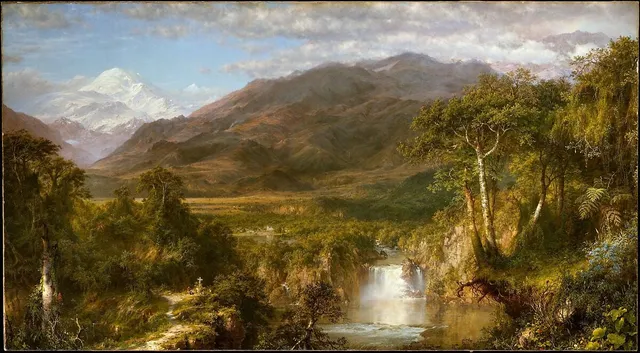
Heart of the Andes Frederic Edwin Church 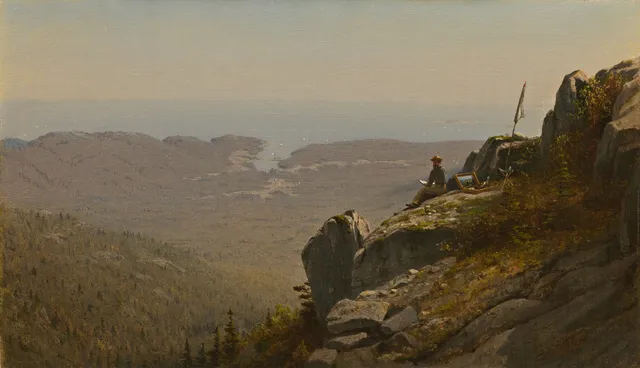 The Artist Sketching at Mount Desert, Maine Sanford Robinson Gifford
 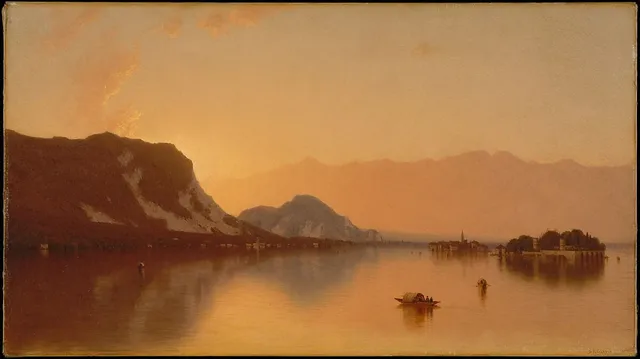 Isola Bella in Lago Maggiore Sanford Robinson Gifford
 From the in-app quiz
-
Which visual quality defines the Luminist approach to light in these works?
- Sharp, dark outlines that separate every object
- A unified, glowing haze that softens edges and unifies the scene Answer
- Chaotic brushstrokes that hide the subject entirely
You are correct. Luminist painters like Church and Gifford sought to create a seamless atmosphere where light seems to emanate from within the canvas, softening edges to unify the landscape.
-
Identify the painting that features a calm harbor scene with a distinct, glassy reflection.
That is right. The Artist Sketching at Mount Desert, Maine by Sanford Robinson Gifford is famous for its mirror-like water and the quiet, glassy stillness of the harbor.
-
-
Romantic Haze and the Sublime Storm
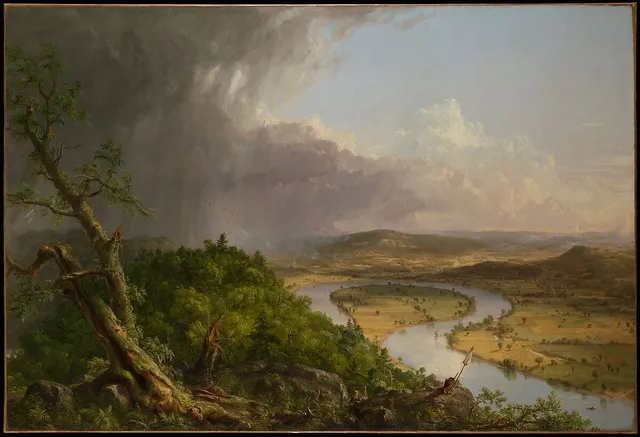 View from Mount Holyoke, Northampton, Massachusetts, after a Thunderstorm—The Oxbow Thomas Cole
 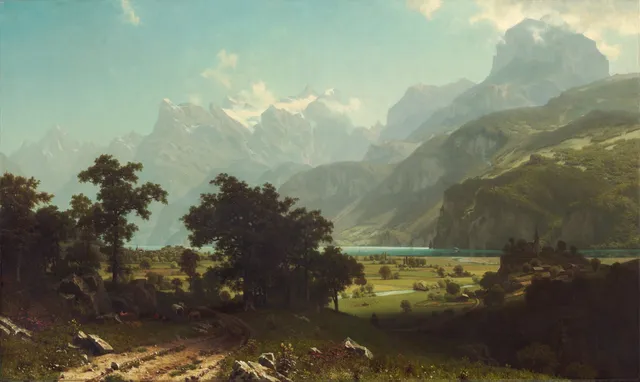 Lake Lucerne Albert Bierstadt
 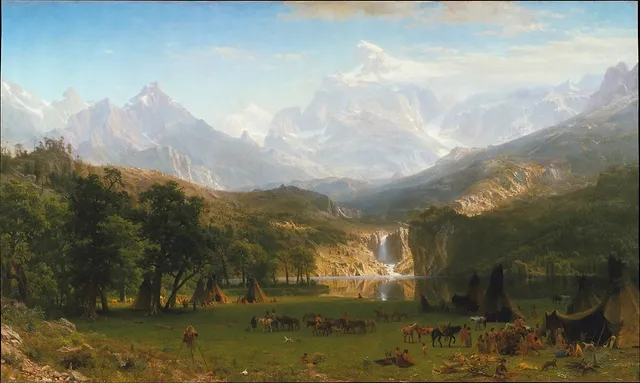 The Rocky Mountains, Lander's Peak Albert Bierstadt
 From the in-app quiz
-
How does the treatment of the sky in this Romantic landscape differ from the serene clarity of Luminist works?
- It remains uniformly clear and cloudless to show eternal peace
- It features dramatic, churning clouds that contrast storm with calm Answer
- It is painted with tiny dots of pure color to blur the horizon
Romanticism embraces the drama of nature, using turbulent skies and shifting light to evoke powerful emotions, unlike the steady, glassy calm found in Luminism.
-
Which painting depicts a storm clearing over a river bend, showcasing the drama of light and shadow?
Thomas Cole's 'View from Mount Holyoke' is famous for its split composition, showing a thunderstorm clearing over the Connecticut River's oxbow bend.
-
-
Chasing the Hour: Impressionism
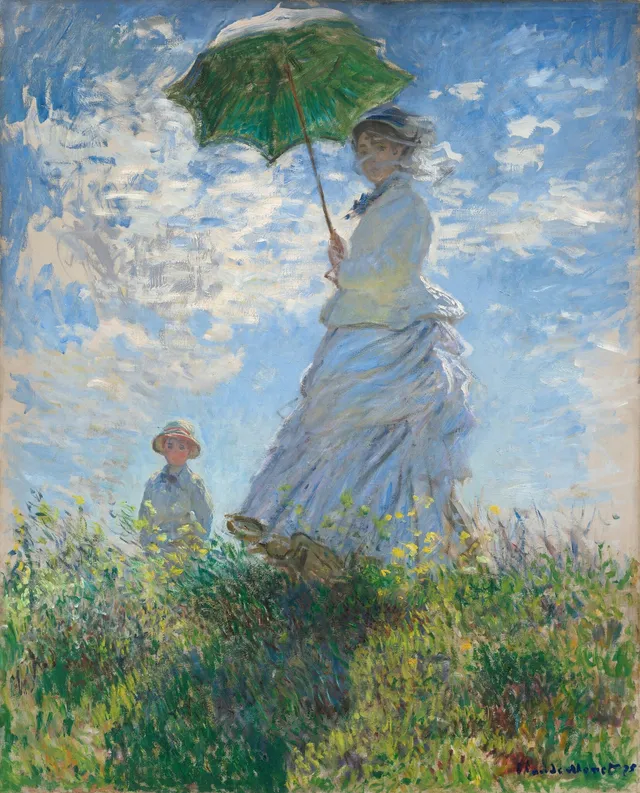 Woman with a Parasol - Madame Monet and Her Son Claude Monet
 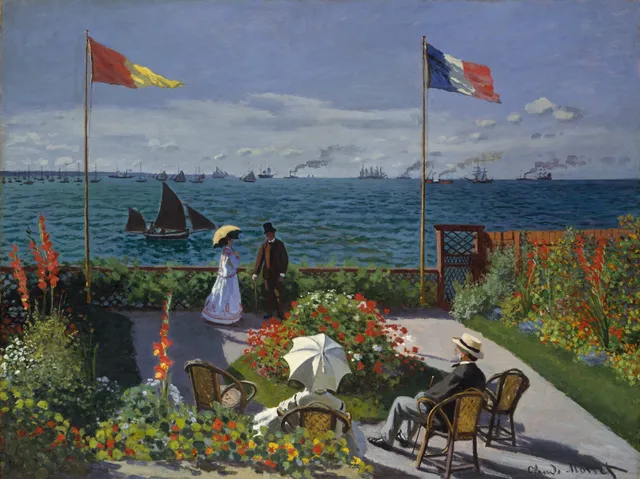 Garden at Sainte-Adresse Claude Monet
 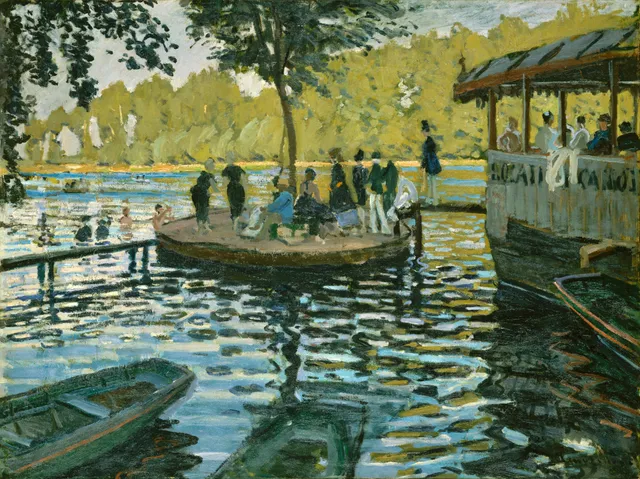 La Grenouillère Claude Monet
 From the in-app quiz
-
Which historical event marked the public debut of this revolutionary approach to light?
- The Salon of 1863
- The First Impressionist Exhibition Answer
- The World's Fair of 1889
- The opening of the Louvre
The First Impressionist Exhibition in 1874 was the pivotal moment when Monet and his colleagues first showed their works to the public, introducing a new way of seeing light.
-
Identify the work that captures a woman and child walking in bright, dappled sunlight.
You have correctly identified 'Woman with a Parasol - Madame Monet and Her Son,' where the figures are caught in a moment of bright, wind-swept light.
-
-
The Science of Light: Divisionism and Pointillism
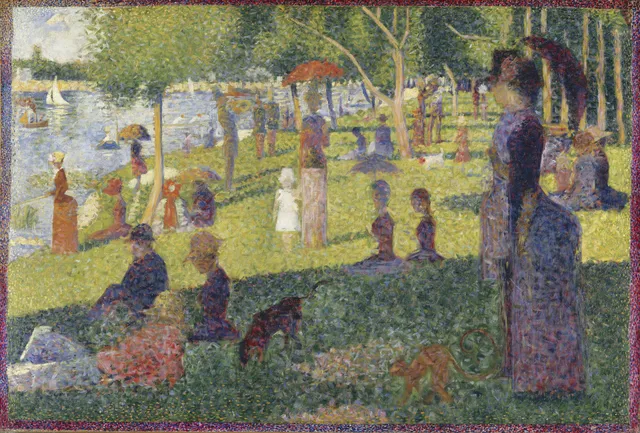 Final study for "La Grande Jatte" Georges Seurat
 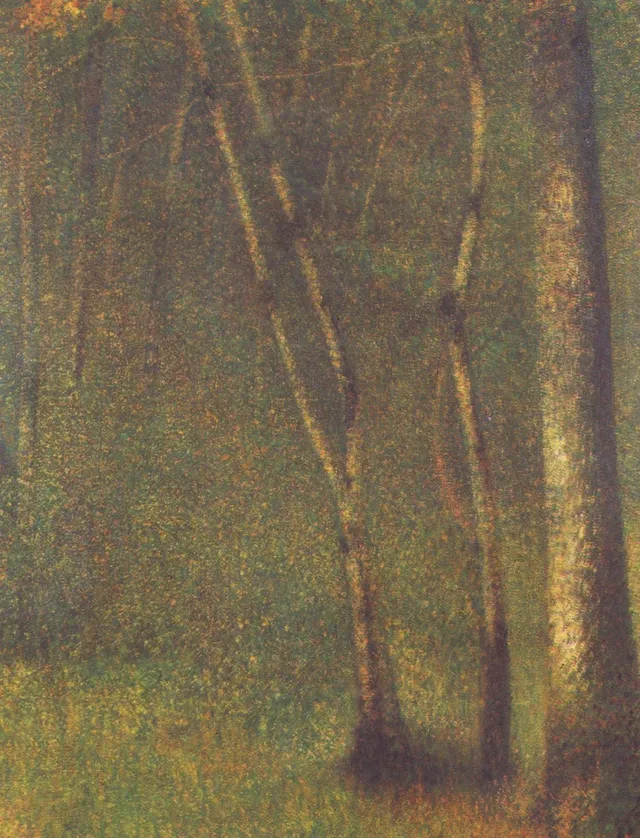 The Forest at Pontaubert Georges Seurat
 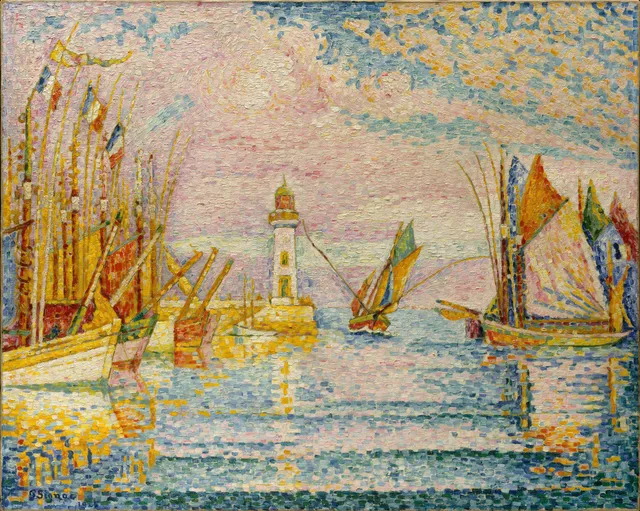 Lighthouse at Groix Paul Signac
 From the in-app quiz
-
Which movement is defined by using distinct dots of pure color so the eye mixes them into an image?
- Divisionism
- Pointillism Answer
- Luminism
- Tonalism
Pointillism is the technique of applying distinct dots of color that blend optically when viewed from a distance. Divisionism uses similar logic but typically employs longer, brushstroke-like marks.
-
Identify the painting that serves as the final study for a massive scene of a Sunday afternoon.
The Final study for "La Grande Jatte" is the preparatory work Georges Seurat created for his famous large-scale painting of a Sunday afternoon by the river.
-
-
Nocturnes and Tonal Moods
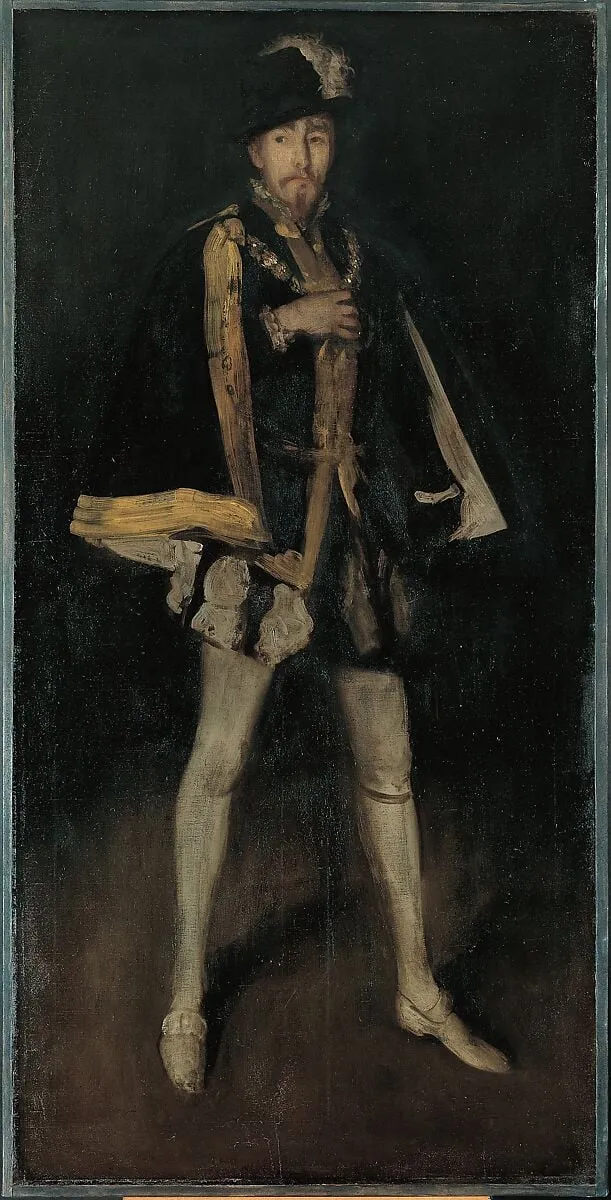 Arrangement in Black, No. 3: Sir Henry Irving as Philip II of Spain James McNeill Whistler
 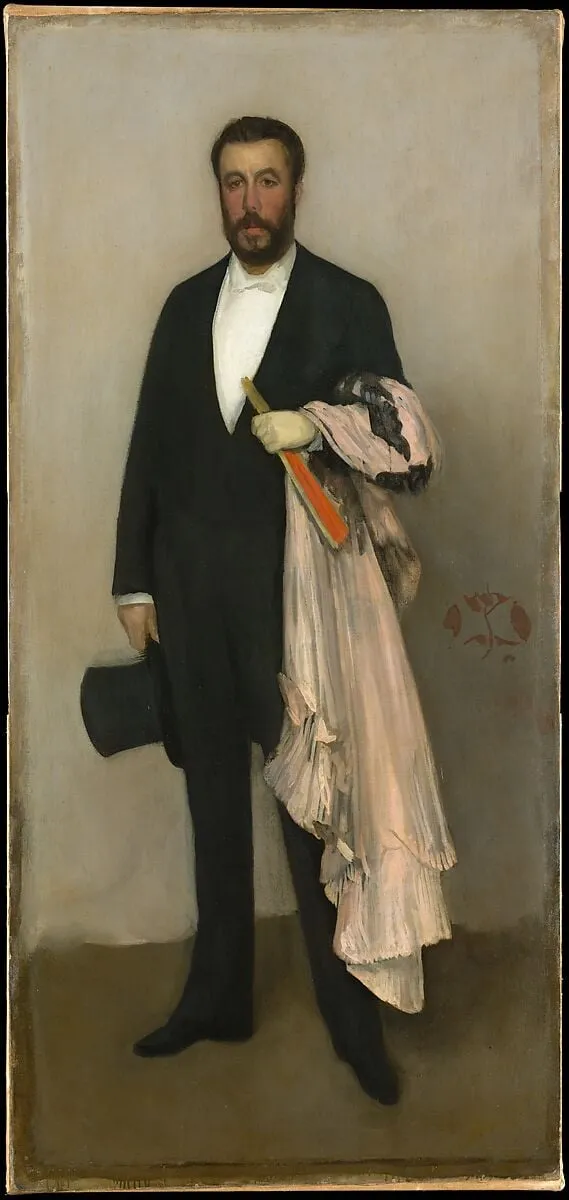 Arrangement in Flesh Colour and Black: Portrait of Theodore Duret James McNeill Whistler
 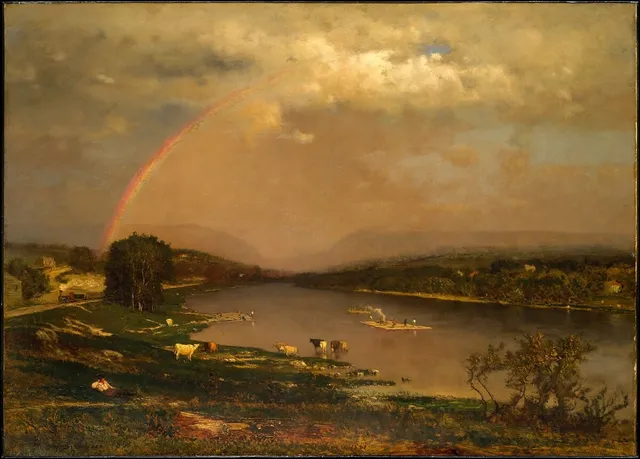 Delaware Water Gap George Inness
 From the in-app quiz
-
What emotional quality do Tonalist artists primarily cultivate through their muted, low-key palettes?
- Chaotic energy and frantic movement
- Quiet mystery & contemplative silence Answer
- Bright, scientific clarity
- Loud historical drama
Tonalist artists like Whistler and Inness used muted palettes to evoke a sense of quiet mystery and contemplative silence, prioritizing mood over narrative detail.
-
Which painting is titled 'Arrangement in Black' and features a figure in a dark, atmospheric setting?
The correct work is "Arrangement in Black, No. 3: Sir Henry Irving as Philip II of Spain" by James McNeill Whistler, a masterpiece of tonal atmosphere.
-
-
The Modern World: From Symbolism to Fauvism
From the in-app quiz
-
Which 1905 exhibition event gave the Fauvist movement its name as critics compared the artists to wild beasts?
- The Salon des Indépendants
- The Salon d'Automne 1905 — the Cage aux Fauves Answer
- The World's Fair in Paris
- The First Impressionist Exhibition
At the 1905 Salon d'Automne, critics saw the vibrant, unblended colors and named the artists 'wild beasts' (Fauves) because their work seemed so untamed.
-
Identify the painting that depicts a dreamlike figure emerging from a dark, symbolic background.
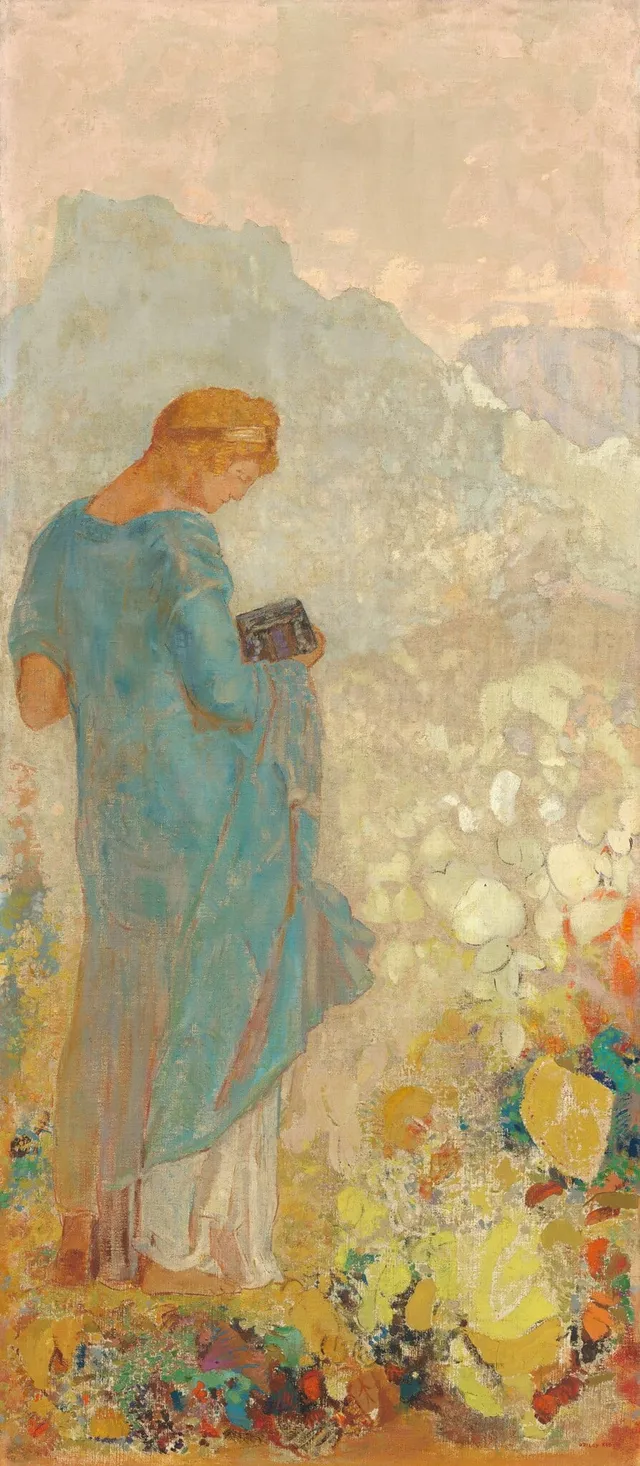 Pandora Odilon Redon Answer
 Odilon Redon's 'Pandora' is the work where a glowing figure rises from the shadows, capturing the mysterious, inner world of Symbolism.
-
-
Where the Light Lives: A Curator's Guide
From the in-app quiz
-
Which artist's work in this unit is recommended for a deep dive into the intersection of science and light?
- Georges Seurat Answer
- James McNeill Whistler
- Frederic Edwin Church
Seurat's technique, known as Pointillism, was deeply rooted in contemporary color theory and scientific study of optics. He applied paint in small dots to create a luminous effect through optical mixing.
-
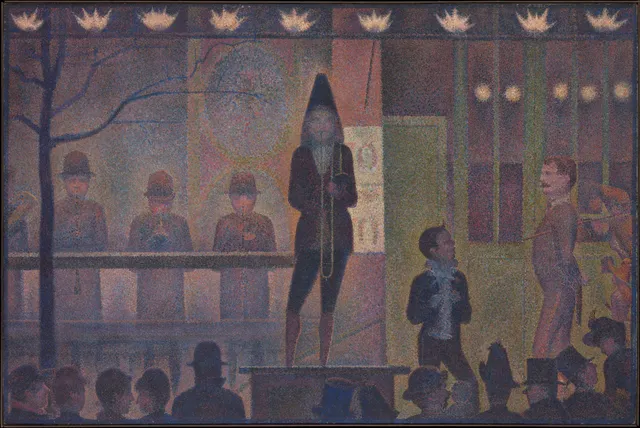
Identify the painting that features a vibrant, dot-filled circus parade.
This is Georges Seurat's 'The Circus Parade,' a late work where the figures are constructed from distinct dots of color to capture the energy of the performance.
-