Movement
Troubadour style painting
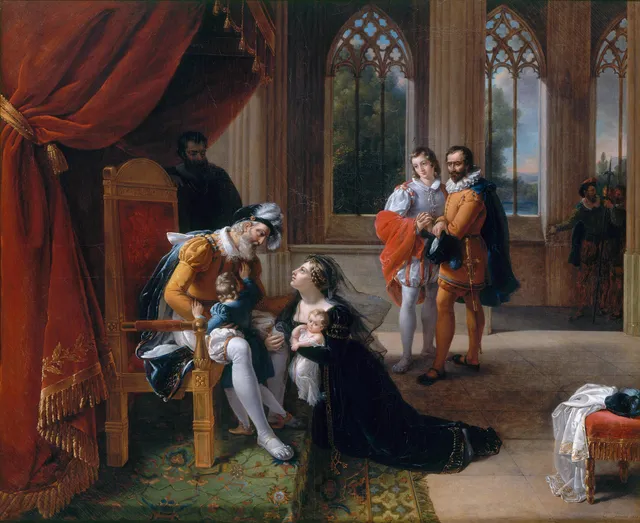
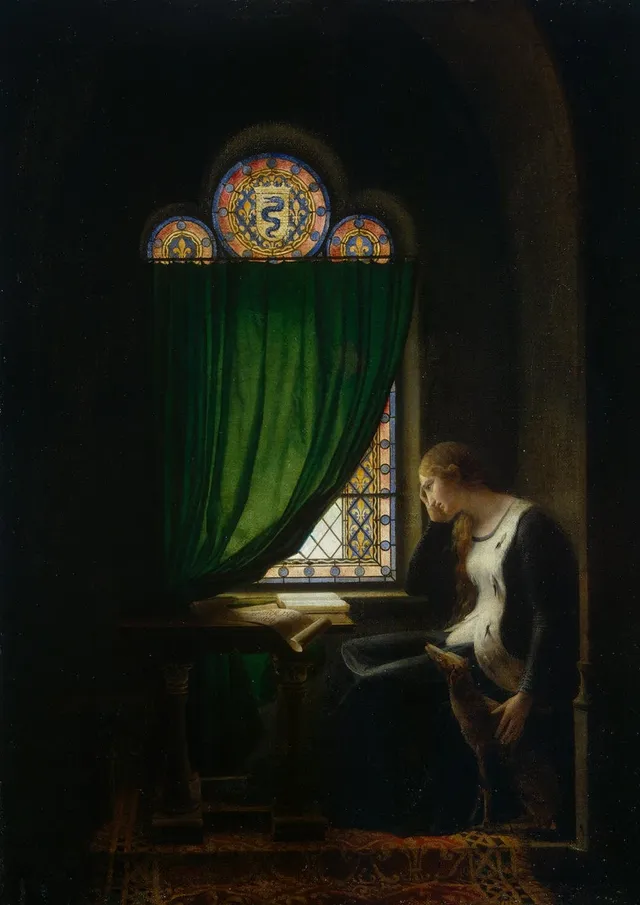
Troubadour style painting is an art movement. The gallery holds 7 works in this movement, including works by Francesco Hayez, Eugénie Servières and François Fleury-Richard. Browse Troubadour style painting paintings, portraits, pictures and artworks from the world's public-domain museum collections.
Troubadour style (*style troubadour*) was a current of French historical painting that flourished from around 1802 to the middle of the nineteenth century, devoted to small, intimate, idealised scenes drawn from the Middle Ages and the Renaissance. The label — taken from the medieval troubadours — was originally faintly derisive, applied by critics to pictures that prized anecdote and sentiment over the grand manner. The style arose as the neo-antique rationalism of the Revolution and Empire began to wane: artists and writers turned away from Greco-Roman exempla toward a perceived glorious national and Christian past. It is best understood as an early, domestic-scaled facet of Romanticism and a reaction against Neoclassicism, and it found influential patrons in the Empress Joséphine, who hung such works at Malmaison, and later in Caroline, duchesse de Berry.
Visually the style is defined by cabinet-sized canvases, a meticulous, enamel-smooth finish indebted to seventeenth-century Dutch and Flemish painting, and a love of antiquarian precision. Painters rendered armour, costume, stained glass, and Gothic furnishings with jewel-like exactitude, often setting their figures in enclosed churches, cloisters, crypts, and castle interiors lit for quiet emotional effect. Subjects favoured tender or melancholy episodes from chronicle and legend rather than heroic action.
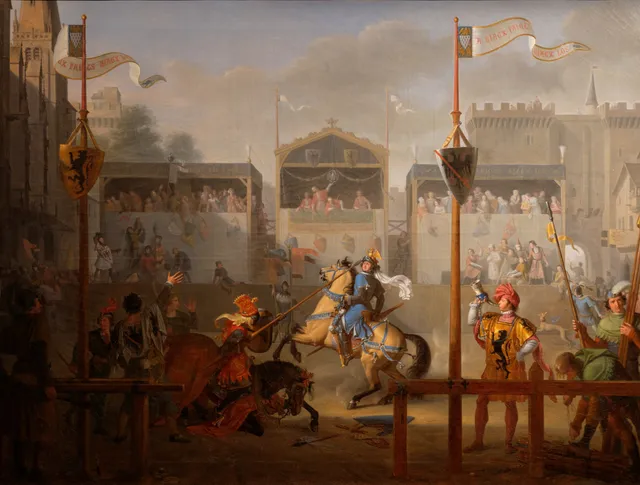
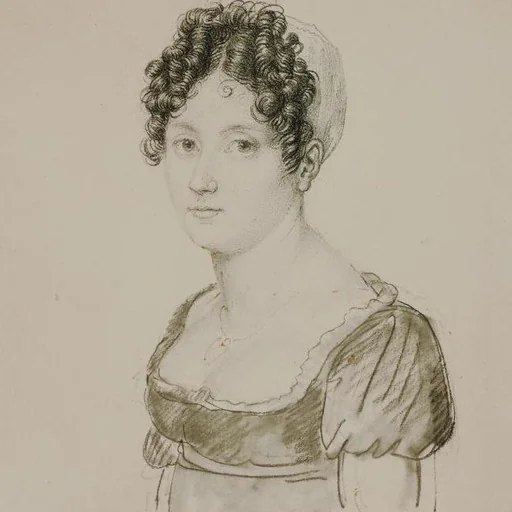
The acknowledged pioneers were two friends from Lyon, Fleury-François Richard (1777–1852) and Pierre Révoil (1776–1842), both trained under Alexis Grognard and then in the Paris studio of Jacques-Louis David. Richard's *Valentine of Milan Mourning her Husband* caused a sensation at the Salon of 1802 and made him Joséphine's favourite painter; Révoil, an avid collector of medieval objects, produced richly furnished scenes such as *The Tournament*. Jean-Auguste-Dominique Ingres painted several works in the idiom, and a wider circle — Alexandre-Évariste Fragonard, Eugénie Servières, Alexandre Menjaud, and Claudius Jacquand — extended its repertoire.
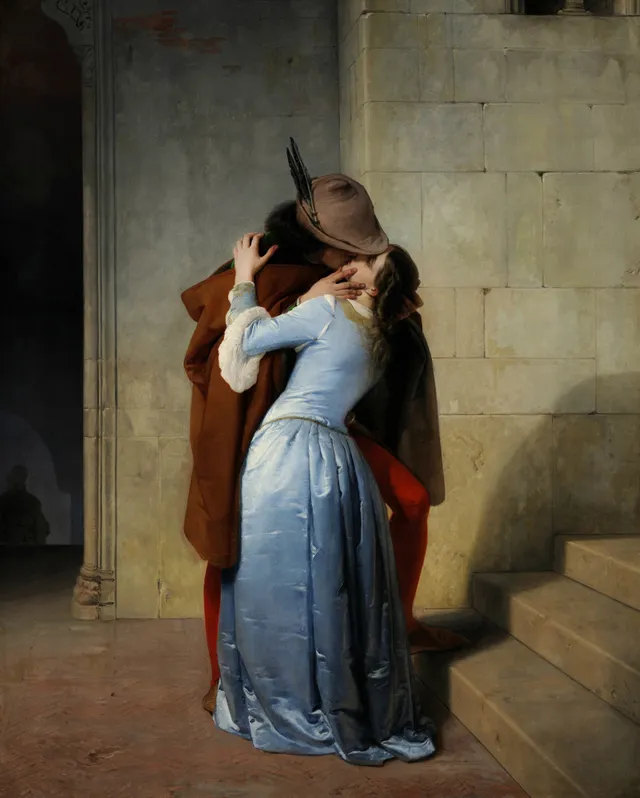
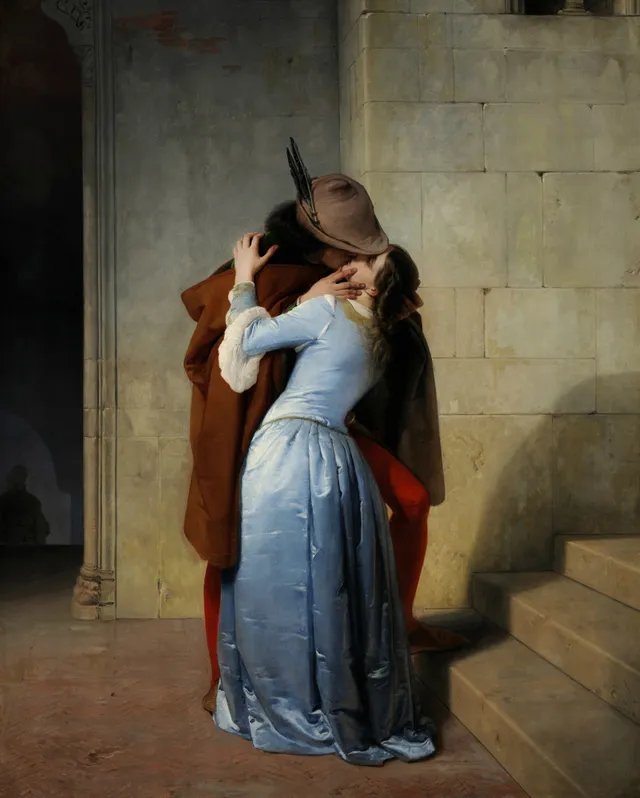
Fashionable above all in the 1820s, the style faded after the 1848 Revolution and the rise of Realism, but its medievalism fed directly into Romantic history painting and the broader Gothic Revival. Its Italian echo is vivid in Francesco Hayez, whose celebrated *The Kiss* (1859) sets Risorgimento feeling in a medieval interior squarely in the troubadour manner.
Key artists
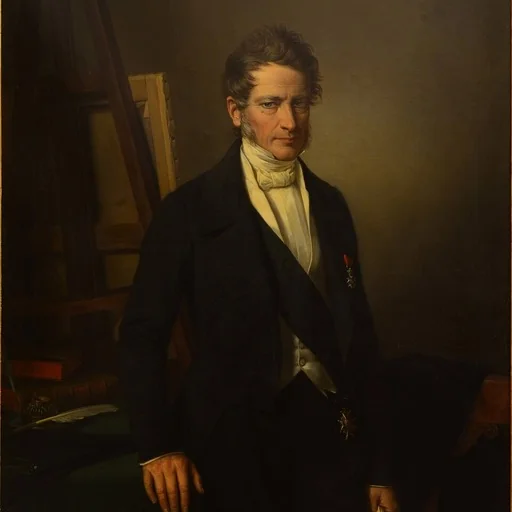
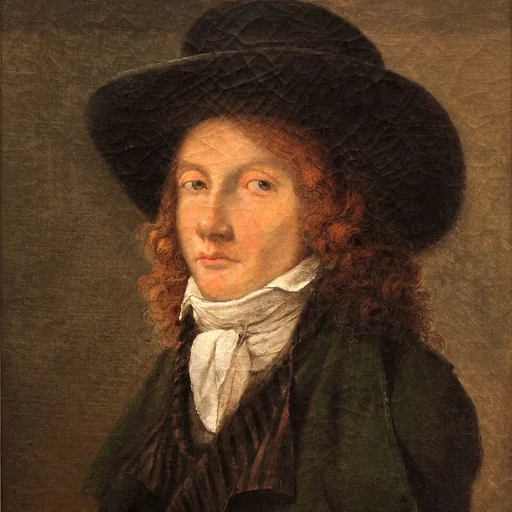
Works
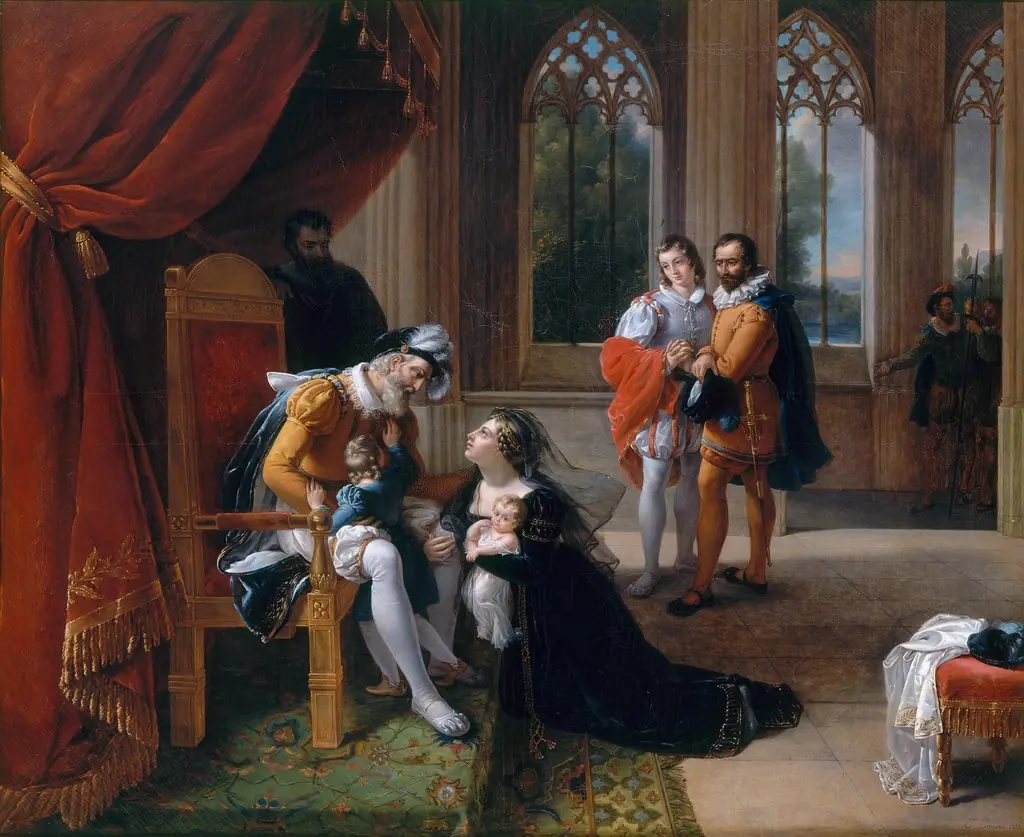 Inès de Castro and Her Children Throwing Themselves at the Feet of King Alphonso IV of Portugal
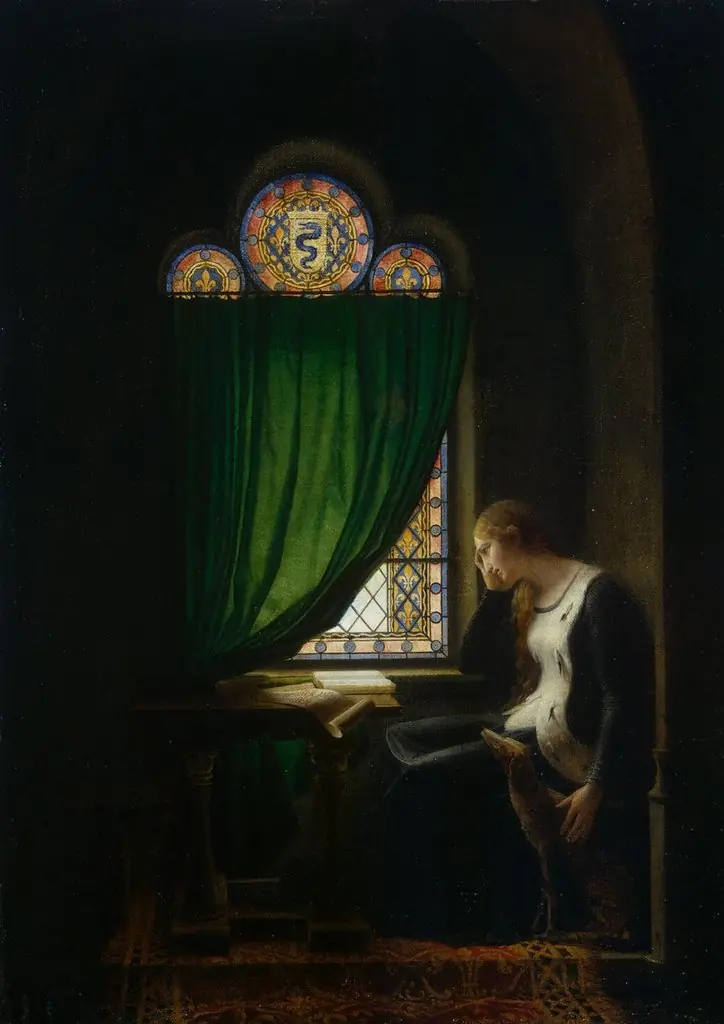 Valentine of Milan Mourning her Husband, the Duke of Orléans
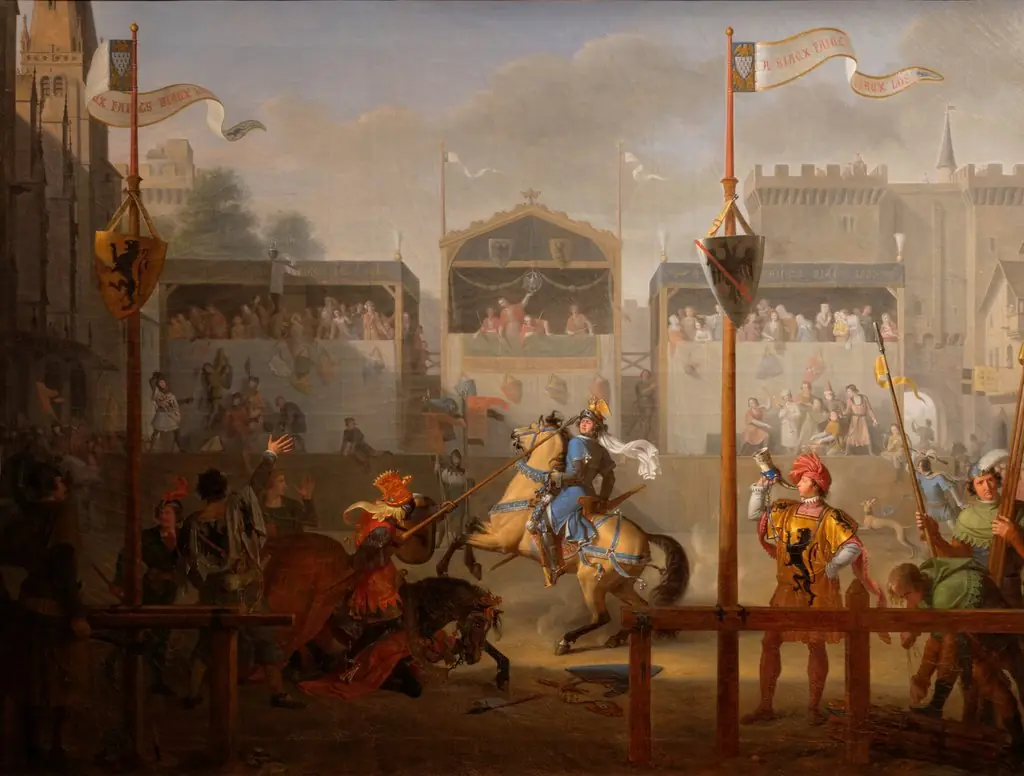 The Tournament
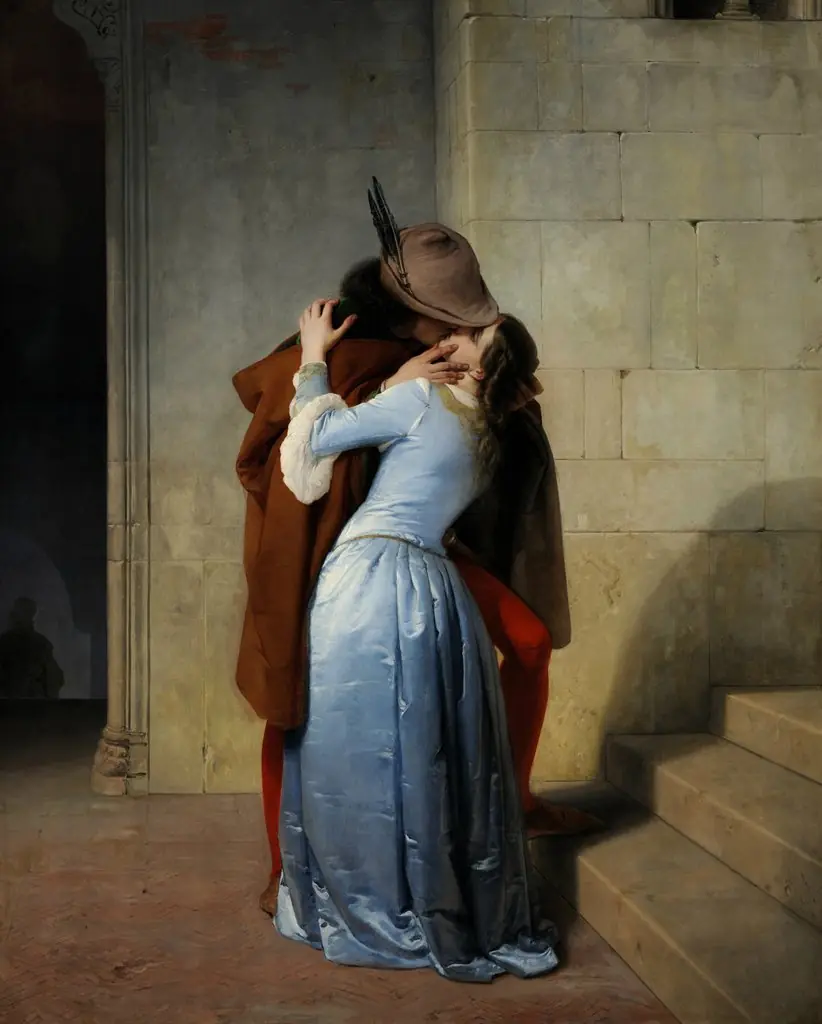 The Kiss
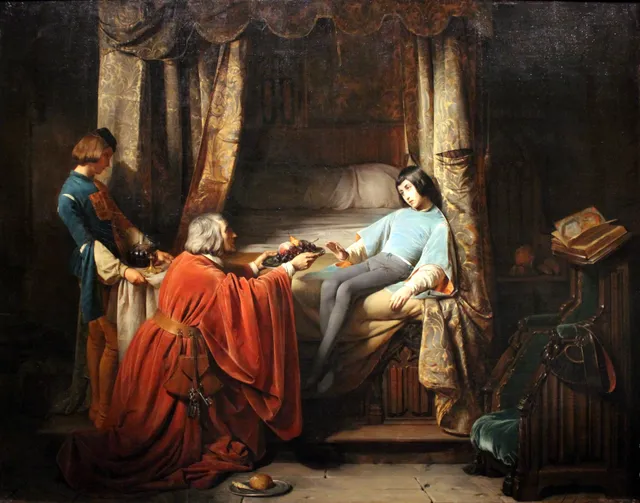
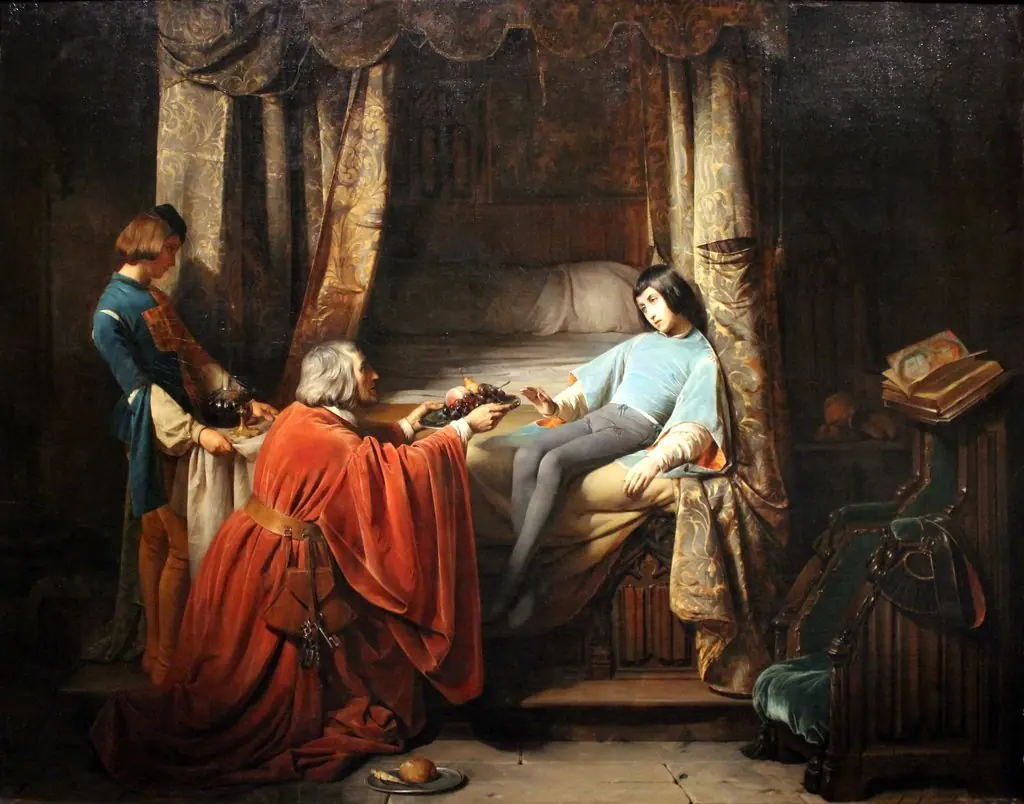 Le Jeune Gaston, dit l'ange de Foix
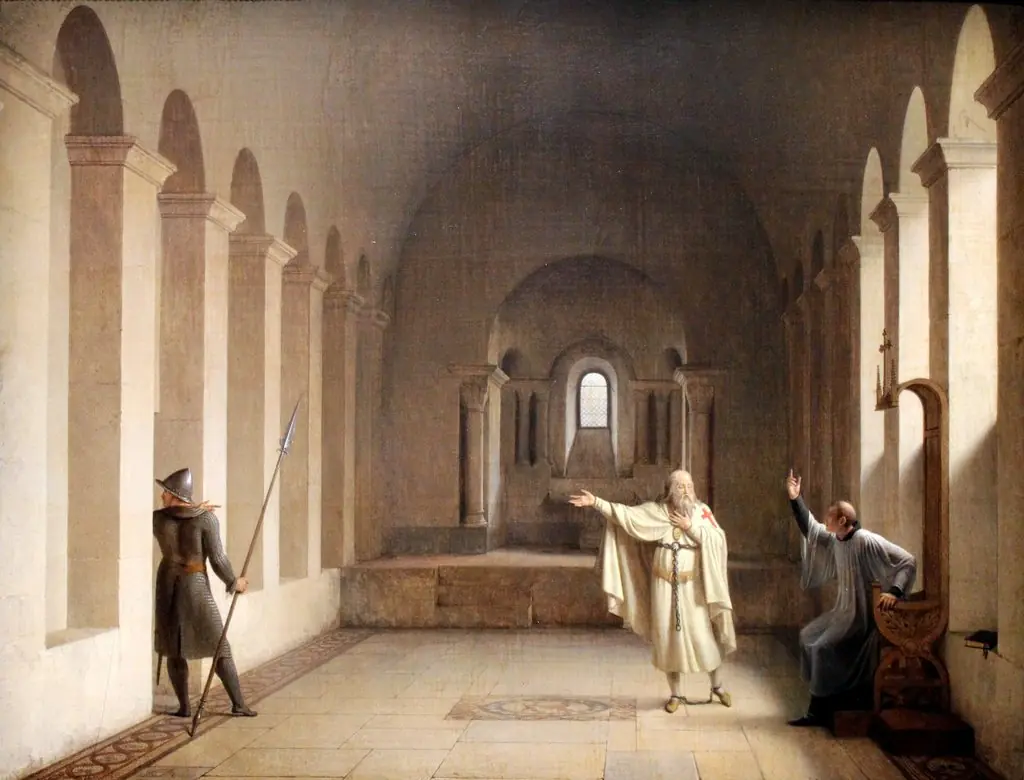 Jacques de Molay, grand maître des Templiers by Fleury-François Richard
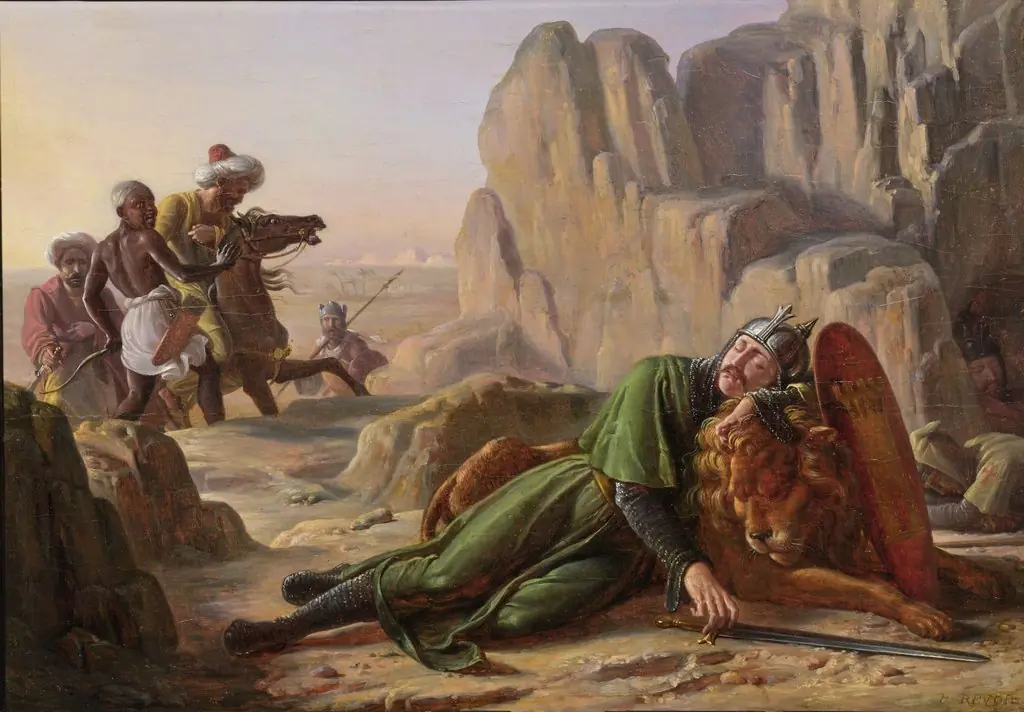 Geoffroy de La Tour
Frequently asked questions
What is Troubadour style painting?
Troubadour style painting is an art movement. A French early-19th-century genre of intimate historical paintings depicting idealized medieval and Renaissance scenes — troubadours, crusaders, and Renaissance scholars — with sentimental detail.
Who are the key Troubadour style painting artists?
Key Troubadour style painting artists in the collection include Francesco Hayez, Eugénie Servières and François Fleury-Richard.
Where can I see Troubadour style painting works?
Troubadour style painting works in the collection are held by Museum of Fine Arts of Lyon, Department of Paintings of the Louvre and Palace of Versailles.