Artwork
Inès de Castro and Her Children Throwing Themselves at the Feet of King Alphonso IV of Portugal
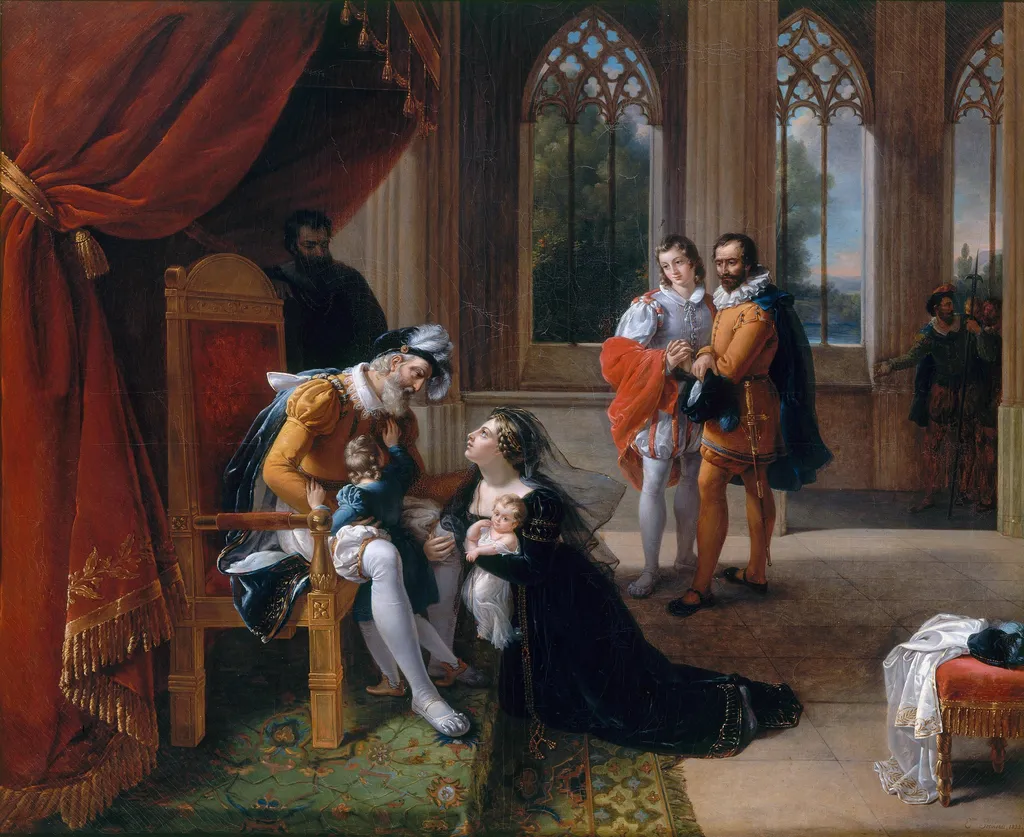
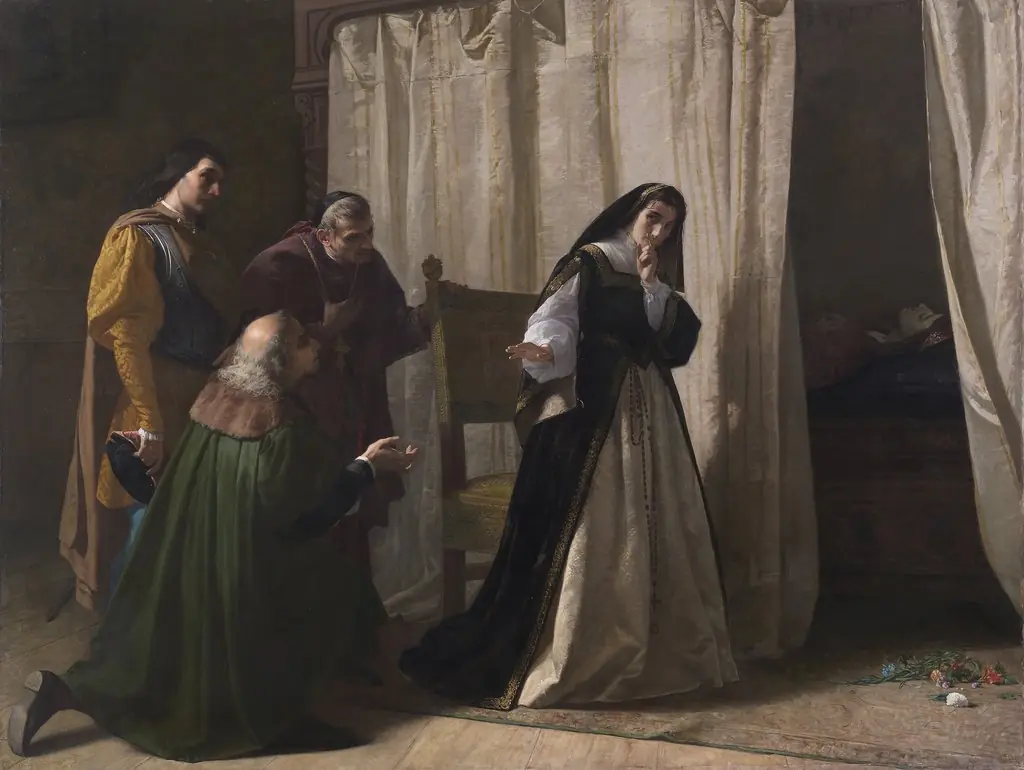
Inès de Castro and Her Children Throwing Themselves at the Feet of King Alphonso IV of Portugal is an oil painting by Eugénie Servières. It dates from 1822 and is held in the collection of the Palace of Versailles.
About this work
Subject & Meaning
The painting depicts a specific historical supplication from 1335 involving Inês de Castro and her children kneeling before King Alphonso IV of Portugal.
The painting depicts a specific historical supplication from 1335 involving Inês de Castro and her children kneeling before King Alphonso IV of Portugal. The central action shows the family throwing themselves at the monarch's feet, likely near his throne, to plead for mercy on behalf of Castro's husband, Don Pedro. This scene of intercession captures a moment of intense emotional drama characteristic of the Troubadour style, emphasizing themes of familial devotion and royal authority.
The iconography focuses on the gesture of kneeling infants and their mother as symbols of vulnerability seeking clemency from the seated ruler.
Technique & Style
The work is executed in oil paint on canvas, characteristic of the Troubadour style's emphasis on dramatic historical narratives. The composition captures a moment of supplication, with figures arranged around a throne, reflecting formal conventions of 19th-century French history painting. The surface handling indicates careful application of oil to achieve depth in drapery and gesture, while the stylistic qualities align with early Romantic tendencies in mood and emotional intensity.
History & Provenance
The painting is held in the collection of the Palace of Versailles, where it carries the inventory number MV 7250 (also cited as INV 7931 and C 39).
It was shown at the Salon of 1822 in Paris, as recorded in the exhibition history associated with the work.
Legacy
The painting influenced 19th-century historical painting in France through its dramatic composition and emotional intensity characteristic of the Troubadour style, as noted in art historical surveys of the period. It was exhibited at the 1822 Salon alongside works by Lethières, contributing to contemporary discourse on Portuguese royal narratives in European art. The work remains part of the Palace of Versailles collection, preserving its legacy within the institutional context of French royal heritage.
Overview
Eugénie Servières’ 1822 oil painting, Inès de Castro and Her Children Throwing Themselves at the Feet of King Alphonso IV of Portugal, presents a dramatic historical tableau. Executed in the French Troubador manner, the work belongs to the collection of the Palace of Versailles and exemplifies early‑nineteenth‑century interest in medieval Portuguese legend.
Context
The scene draws on the well‑known legend of Inês de Castro, whose tragic love affair with Afonso IV culminated in her posthumous coronation. By the 1820s, such medieval stories were popular in French art, providing moral exempla and a nostalgic counterpoint to contemporary political upheavals.
Own this work as a print
Artist & collection
Artist
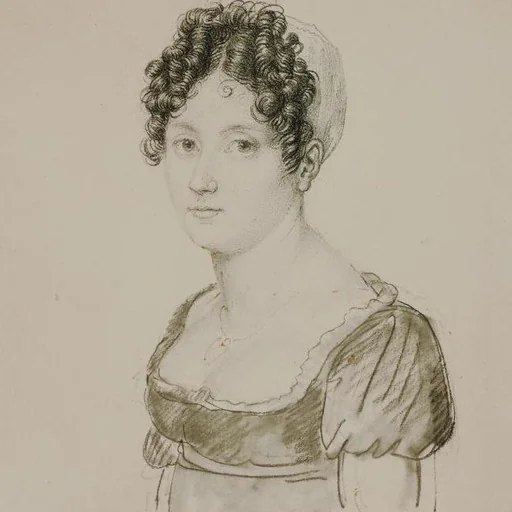
Eugénie Honorée Marguerite Servières, née Charen (1786 – 20 March 1855) was a French painter in the Troubadour style. She specialized in genre period paintings.

 Der Doge Francesco Foscari schickt seinen Sohn Giacomo in die Verbannung ("I due Foscari")
 Tasso Reading Before the Duke of Ferrara
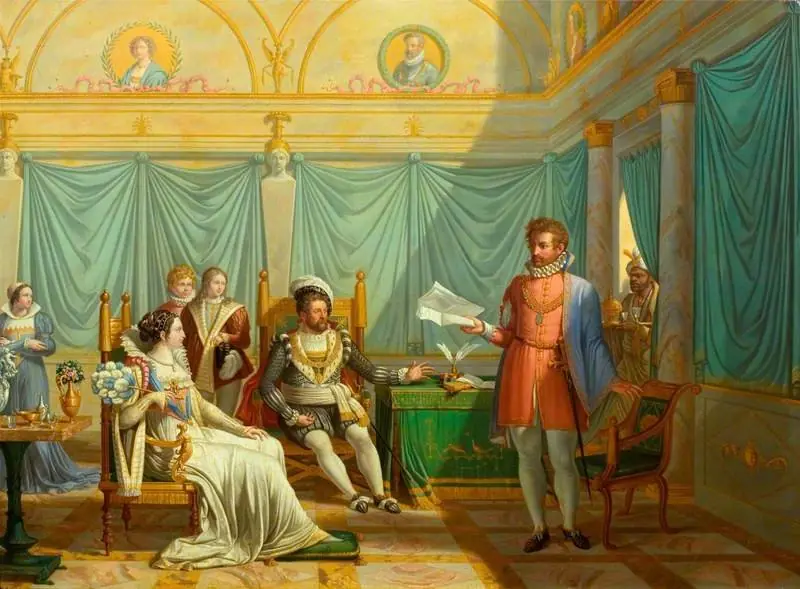 Tasso Reading before the Duke of Ferrara
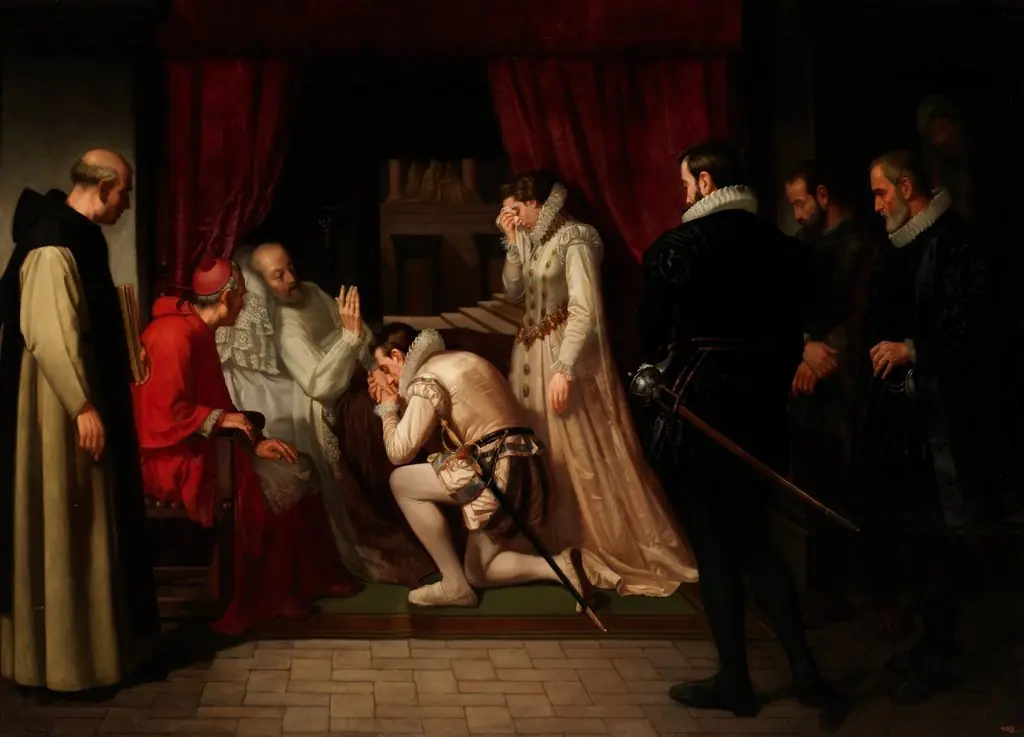 Últimos momentos de Felipe II
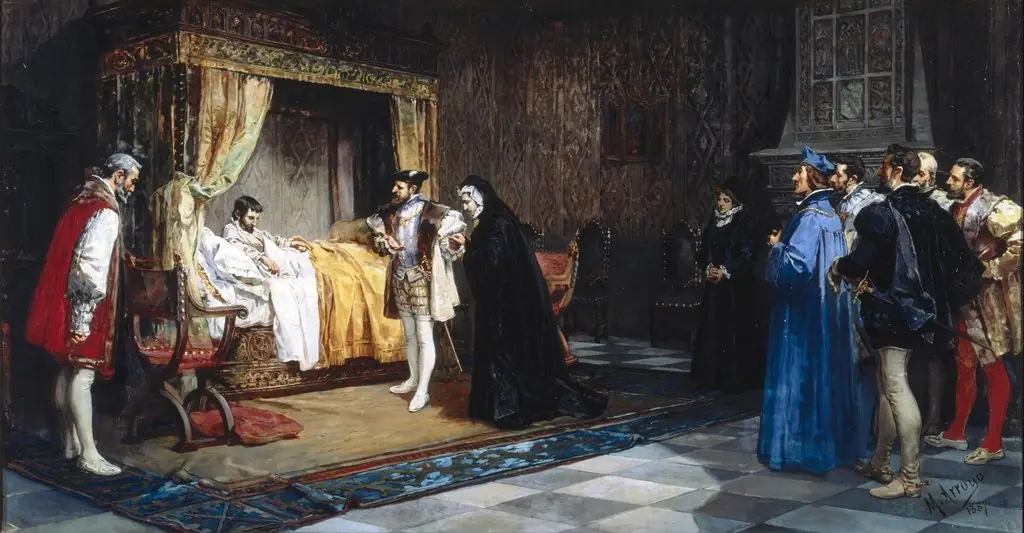 La duquesa de Alençon presentada a su hermano el rey de Francia Francisco I por el emperador Carlos V
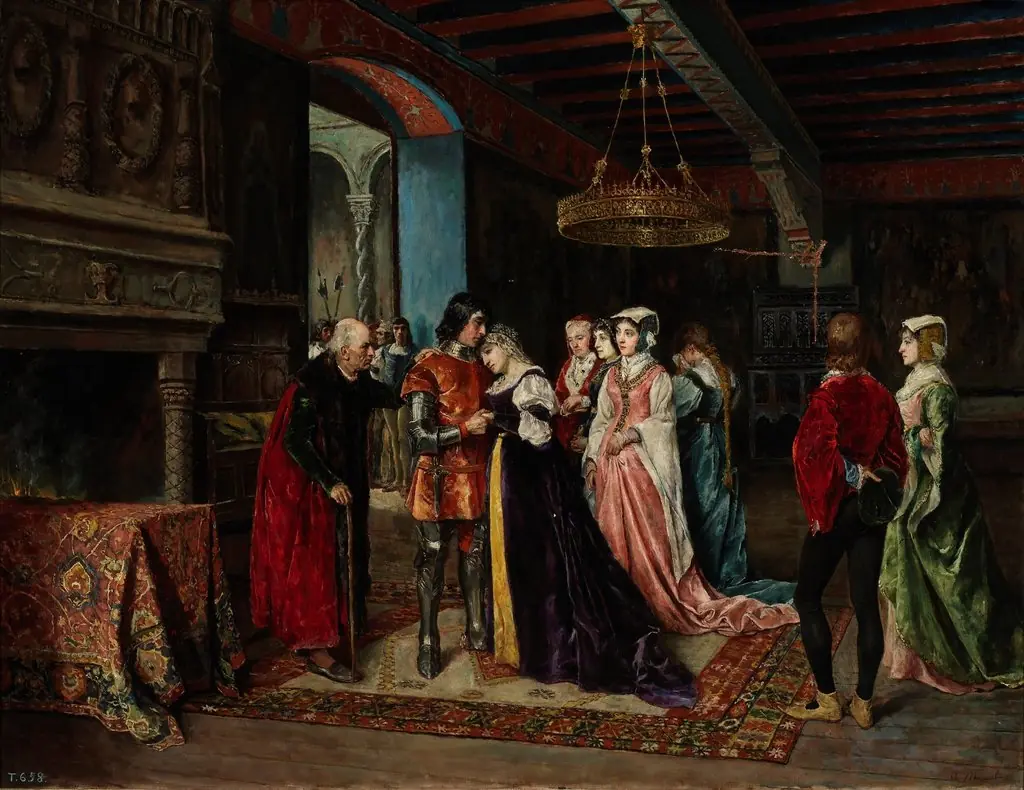 La despedida
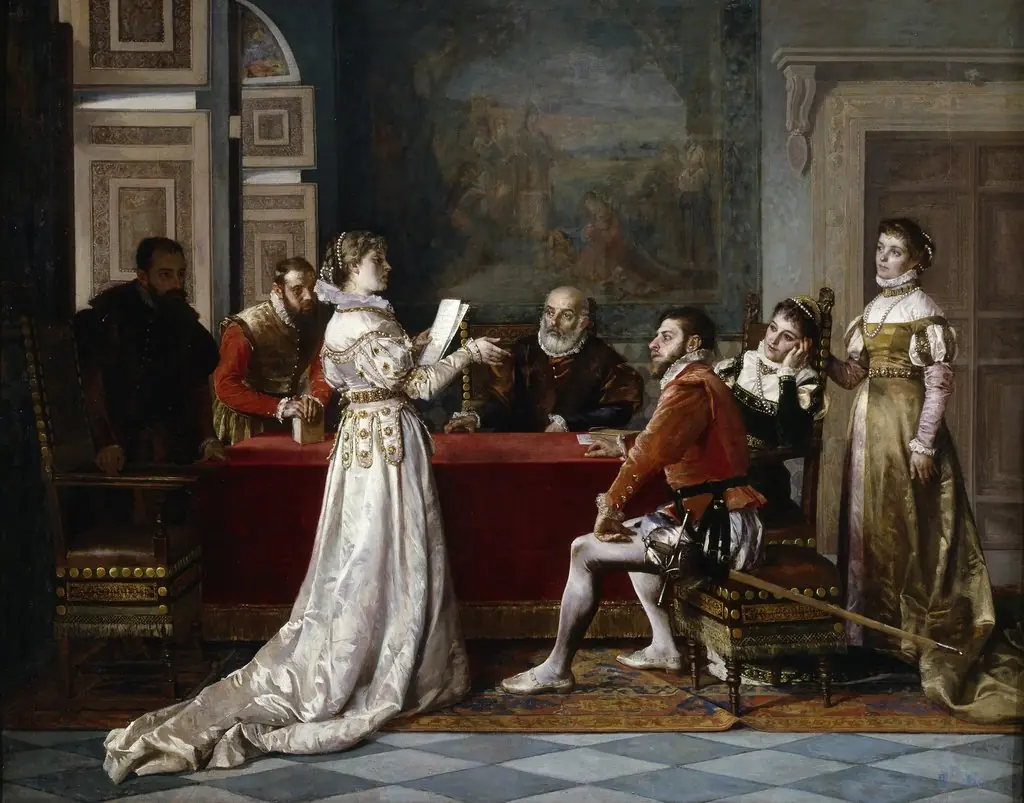 La poetisa
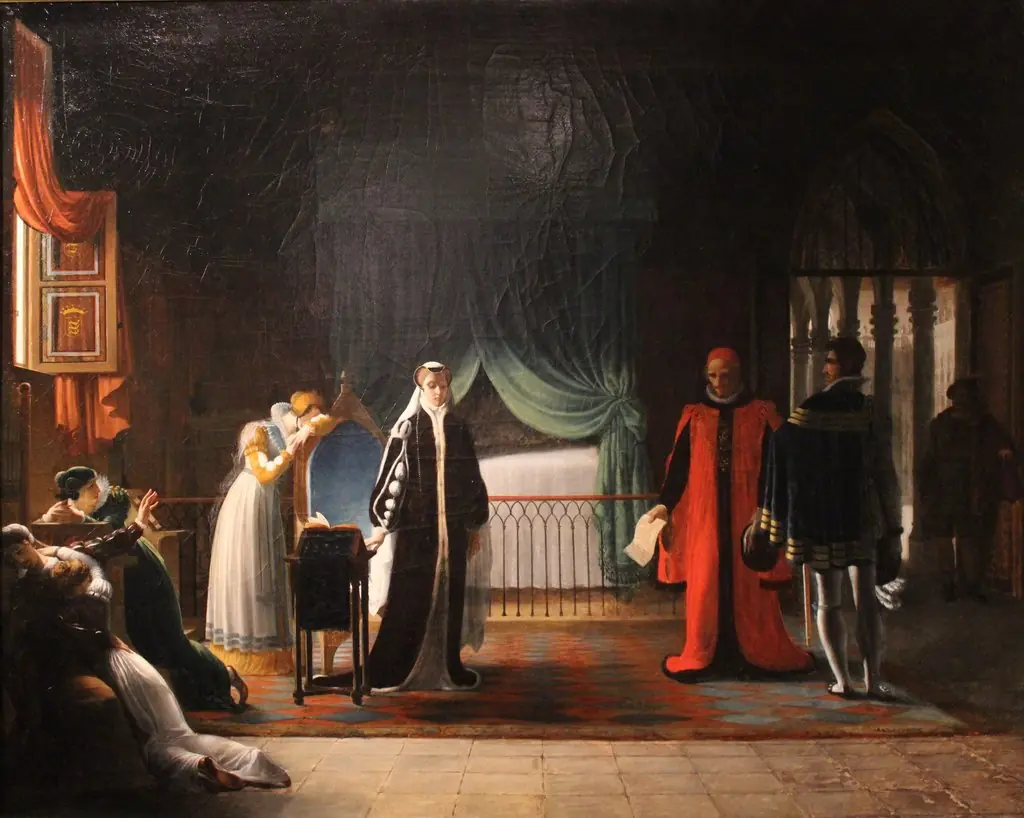 Marie Stuart, reine d'Écosse, recevant sa sentence de mort que vient de ratifier le Parlement by Jean-Baptiste Vermay
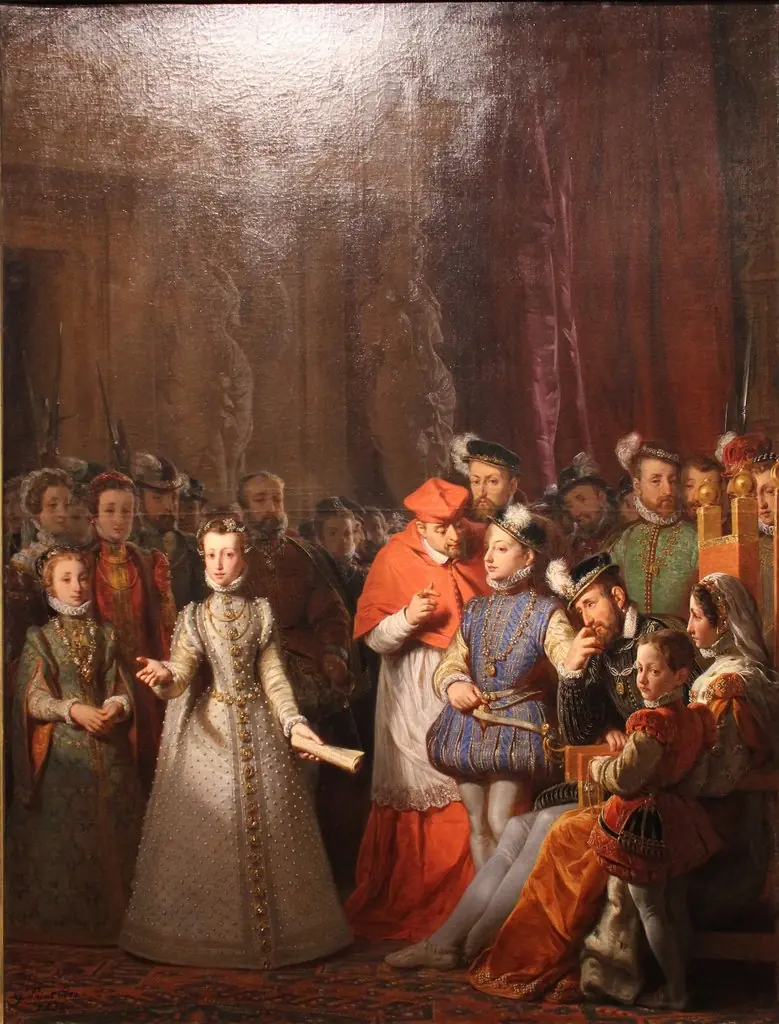 L’Éducation de Marie Stuart à la cour de François II by Gillot Saint-Evre
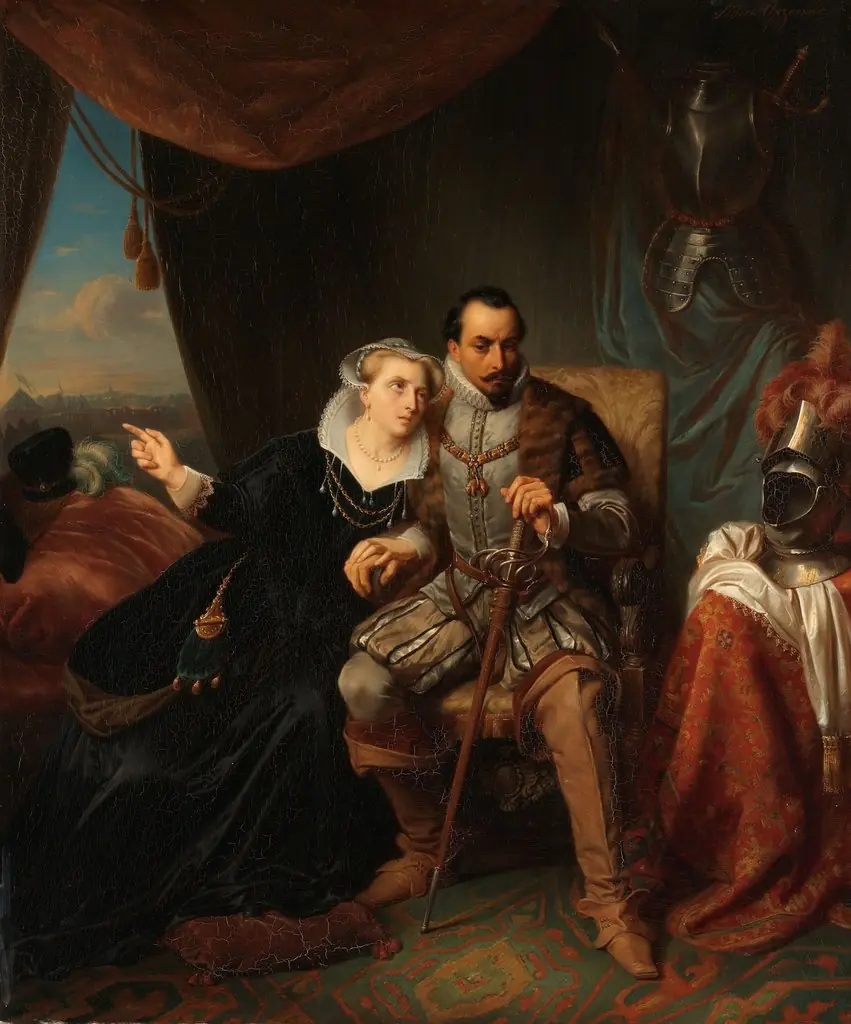 Magdalena Moons begs her fiancé Francisco Valdez to delay the siege of Leiden one more day
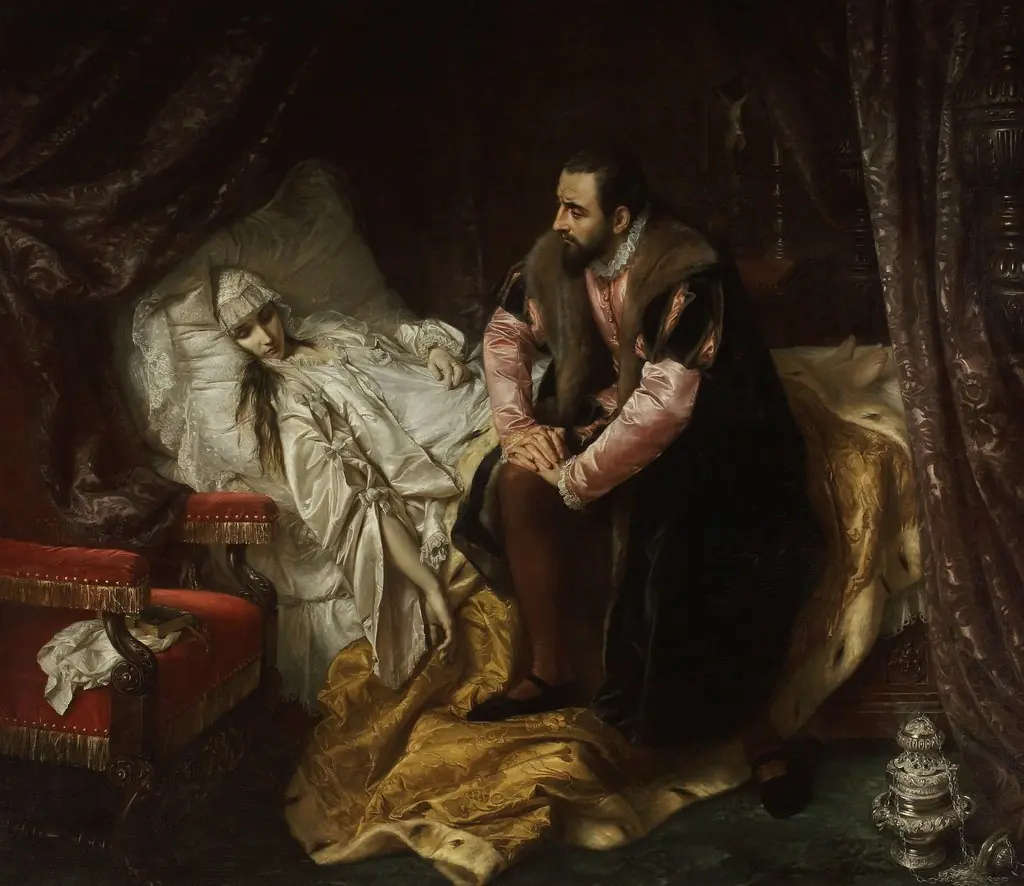 Death of Barbara Radziwiłł
- The madness of Joanna of Castile