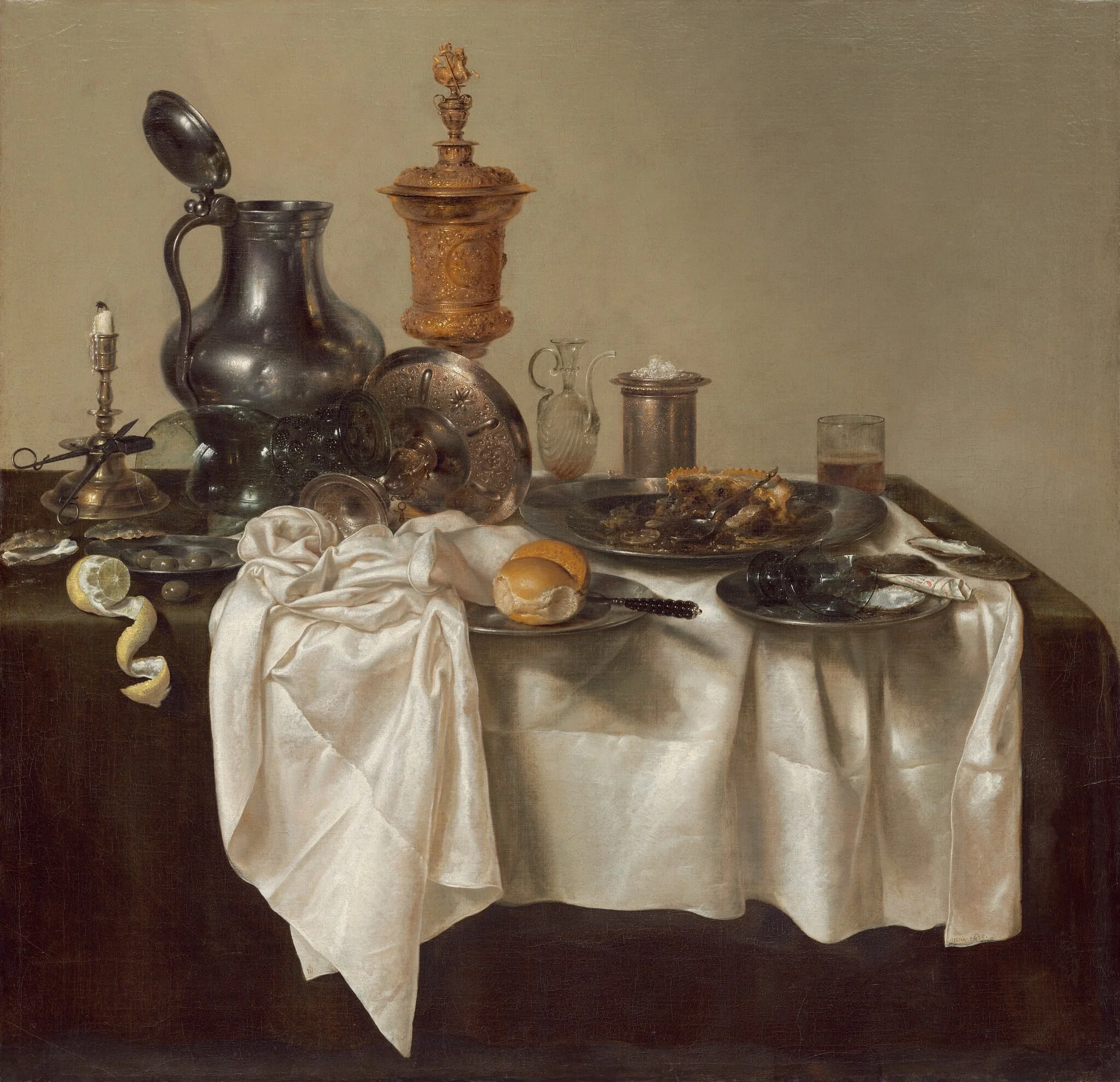
The Dutch Republic of the seventeenth century was a small, wet, sea-trading nation that became, briefly, the richest place in Europe. It had no king and little appetite for the grand religious painting that filled Catholic Italy. What it wanted instead was the world it actually lived in, rendered with patience: a table after a meal, a vase of flowers, a window’s light on pewter and glass. From that modest ambition the Dutch made the still life into one of the most searching forms in Western art.
The laid table
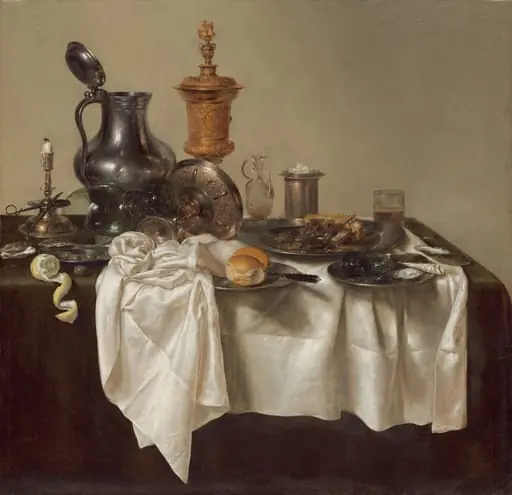
The signature Dutch still life is the banketje, the banquet piece. Willem Claesz Heda’s Banquet Piece with Mince Pie is among the finest. A meal has been interrupted: a glass overturned, a lemon half-peeled, a pewter plate pushed to the table’s edge. Heda paints the gleam of metal and the cold shine of glass with such control that the surfaces seem to hold the room’s grey daylight inside them. The palette is narrow — silver, ochre, the green-black of olives — and the restraint is the point. This is wealth depicted as a quiet fact, not a boast.
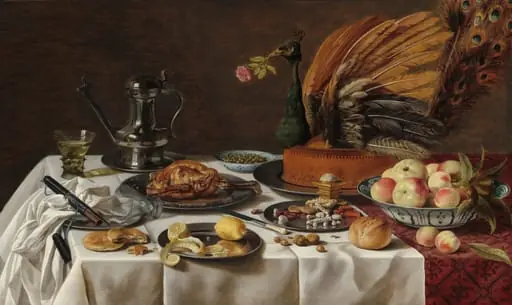
Pieter Claesz, working in the same Haarlem tradition, brings a similar discipline to his Still Life with Peacock Pie. The objects are arranged with apparent casualness, but every reflection and cast shadow is studied. These painters were not recording dinners. They were demonstrating, object by object, how completely paint could imitate the look of the world.
Flowers and time
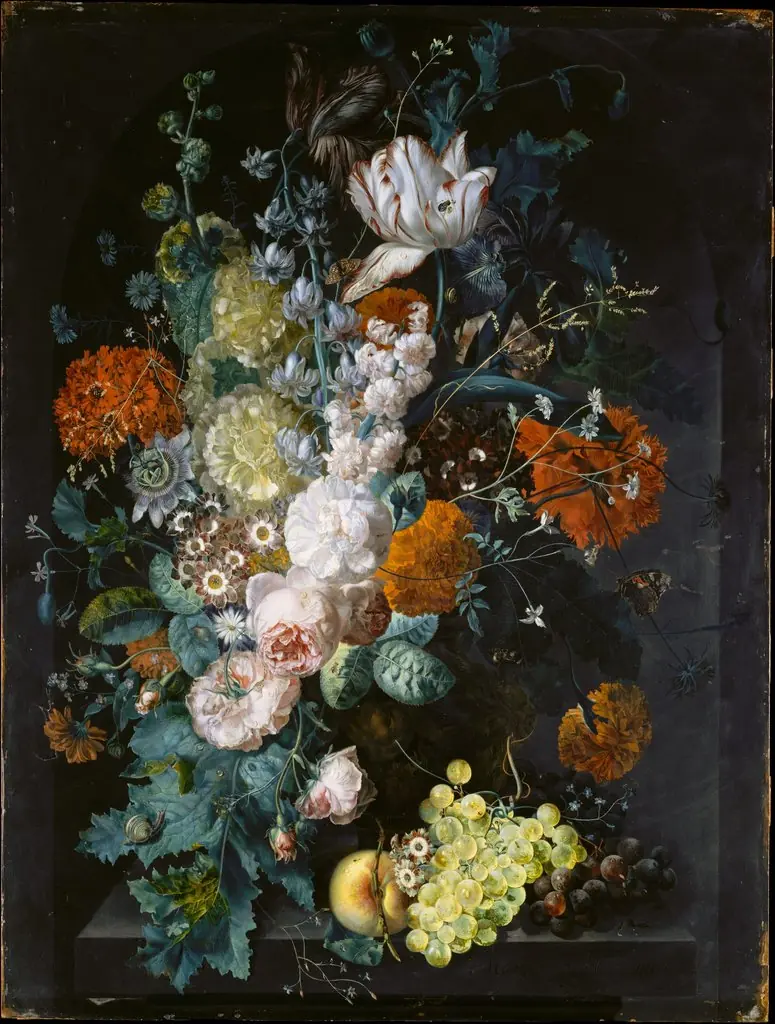
The flower piece carried its own logic. Margaretha Haverman’s A Vase of Flowers gathers blooms that could never have shared a single season, painted from studies made across months. The bouquet is an impossible thing, an anthology of the year compressed into one vase. Look closely and the metaphor surfaces: a petal beginning to curl, an insect on a leaf, a stem already past its best. The Dutch flower painters loved their subjects and never let the viewer forget that the subjects were dying.
This was the vanitas impulse that runs through the whole tradition. A laid table, a full vase, a heaped plate — abundance, always shadowed by the knowledge that it would not last. The half-peeled lemon is beautiful and bitter; the overturned glass is both elegance and waste. The Dutch still life lets the viewer enjoy the surface and then, on a second look, reckon with what the surface implies.
The quiet interior
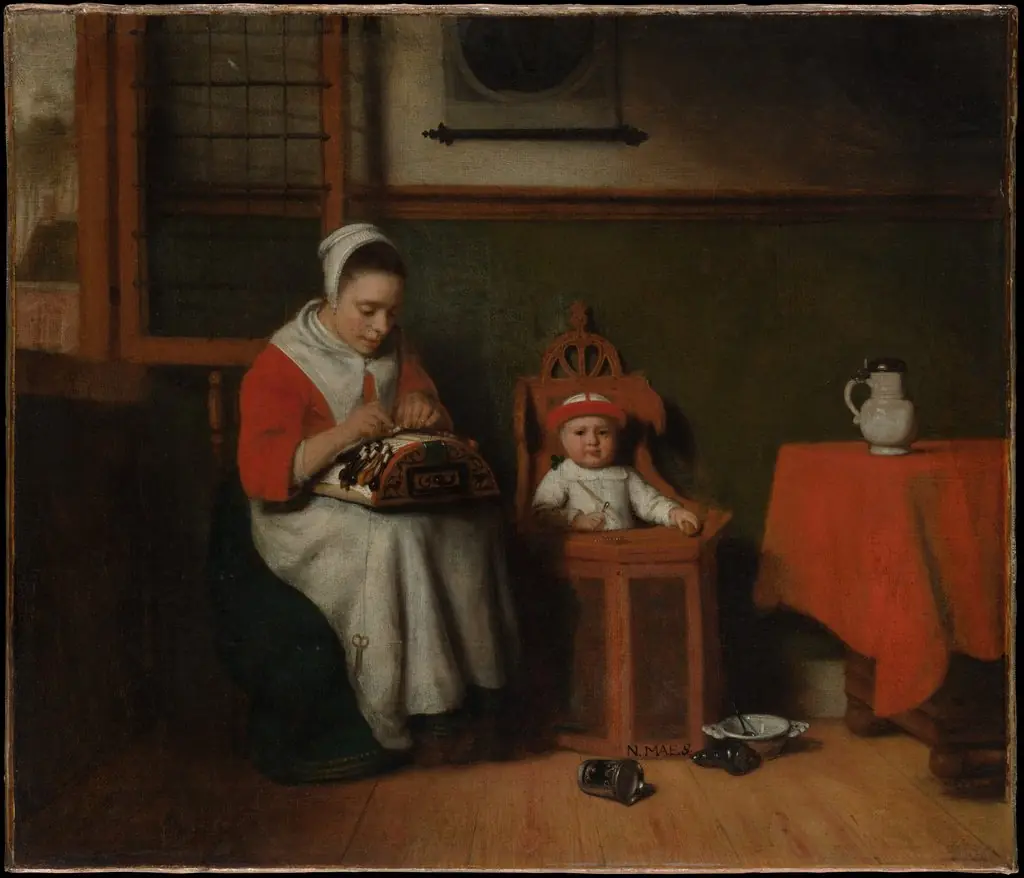
The same attention extended from the table to the room. Nicolaes Maes trained with Rembrandt before turning to domestic scenes; his The Lacemaker sets a single woman at her work in a still, even light. It is not strictly a still life, but it shares the genre’s values: ordinary life observed without drama, surfaces rendered with love, time held for a moment in a quiet interior.
That is the through-line of the Dutch Golden Age. A republic of merchants and craftsmen asked its painters to look hard at the world it had made — its goods, its rooms, its passing seasons — and to find meaning in close attention rather than in grand subjects. The reward for the modern viewer is the same one the original buyers wanted: a surface worth the slow look, and a quiet reckoning underneath it.
For the full range, see the Dutch Golden Age movement page and the Still Life genre.