Artist
Benedetto Rusconi
Italian, 1460–1525
Benedetto Rusconi was an Italian Early Renaissance artist. 4 works are cataloged here, principally at Gemäldegalerie Berlin. Benedetto Rusconi was born in Venice.
Benedetto Rusconi, nicknamed the Diana, (c. 1460 – 1525) was an Italian Renaissance painter, a companion of Vittore Carpaccio and Giovanni di Niccolò Mansueti, who lived in the latter part of the 15th and early part of the 16th centuries. He may have been a pupil of Lazzaro Bastiani. He worked both in tempera and oils.
A number of his paintings are in Venice. He painted The Brethren distributing Alms, in San Giovanni Evangelista, Venice, and he assisted Lazzaro Bastiani in painting the standards on the Piazza of San Marco. In the Accademia Gallery are included his Virgin and Child, formerly in Santa Lucia at Padua, and a Transfiguration.
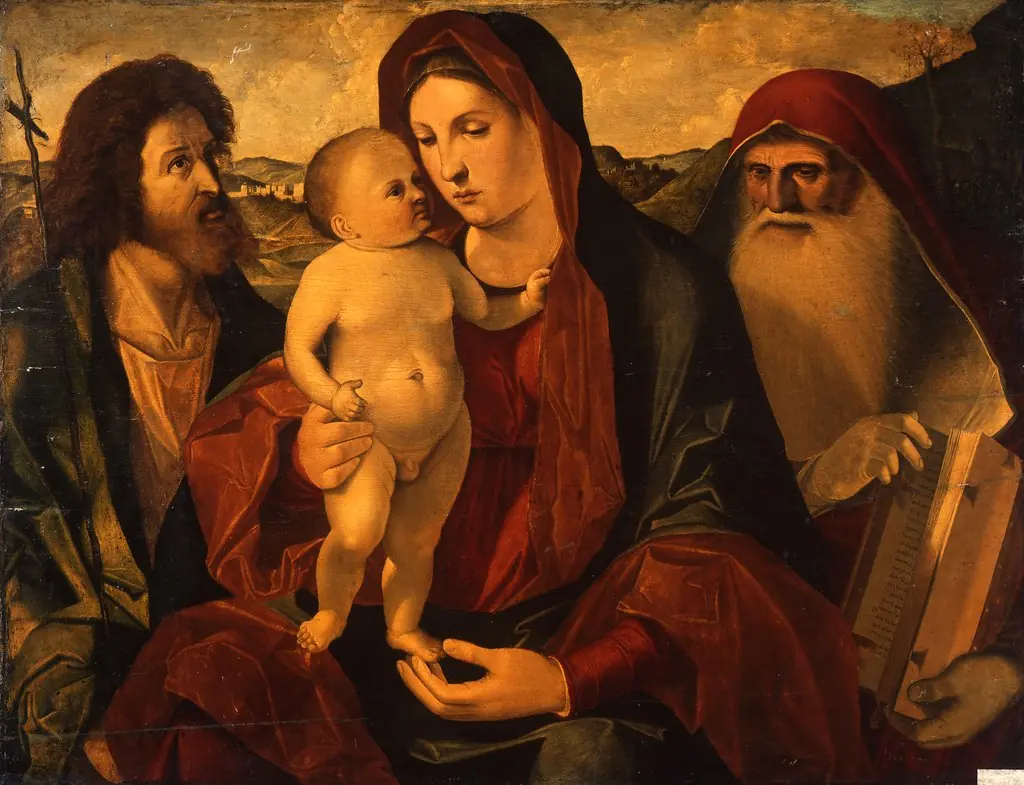
The church of Santa Maria della Croce in Crema has an altarpiece depicting the Gift of the Miraculous Girdle to St Thomas. A Madonna and Child With St Jerome is on display at the Lowe Art Museum in Coral Gables, Florida. The art historian Francis L. Richardson describes Rusconi's style as possessing a "formidable individuality" characterized by an emphasis on geometric forms and a "quirkiness of detail that allies with such artists as Jacopo de’ Barbari and Lorenzo Lotto."
Overview
Benedetto Rusconi, known as Benedetto Diana (Venice, c. 1460, Venice, 9 February 1525), was an Italian Renaissance painter active in Venice during the late fifteenth and early sixteenth centuries. A figure of the Venetian school, he is recognized for his religious paintings, particularly Madonnas and altarpieces, which display a distinctive combination of coloristic refinement and geometric compositional structure. Though ranked among secondary Venetian masters, Diana achieved professional prominence within his lifetime, serving in leadership roles within the painters' guild and producing works for major Venetian institutions. His paintings are now held in collections including the Gallerie dell'Accademia in Venice, the National Gallery in London, the National Gallery of Art in Washington, and the Rijksmuseum in Amsterdam.
Biography & dates
Born in Venice around 1460, Benedetto Rusconi was the son of the goldbeater Appolonio Rusconi. The reason for his change of surname to Diana at an unknown point remains unexplained. He first appears in documentary records in 1482, when he became a member of the Scuola Grande di Santa Maria della Carità, indicating that he was already an established painter by that date. In January 1486, his wife Frusina Bozza made her will before the birth of their son, revealing his civil name of Benedetto Rusconi and establishing that he had become a father while still young. His earliest attributed and surviving work, a votive painting for the Zecca in Venice, dates to approximately 1486. In 1505, he assisted Lazzaro Bastiani in painting standards for the Piazza San Marco. By 1512, he had risen to the position of Gastaldo, the highest office in the Venetian painters' guild. He died in Venice on 9 February 1525.
Style & movement
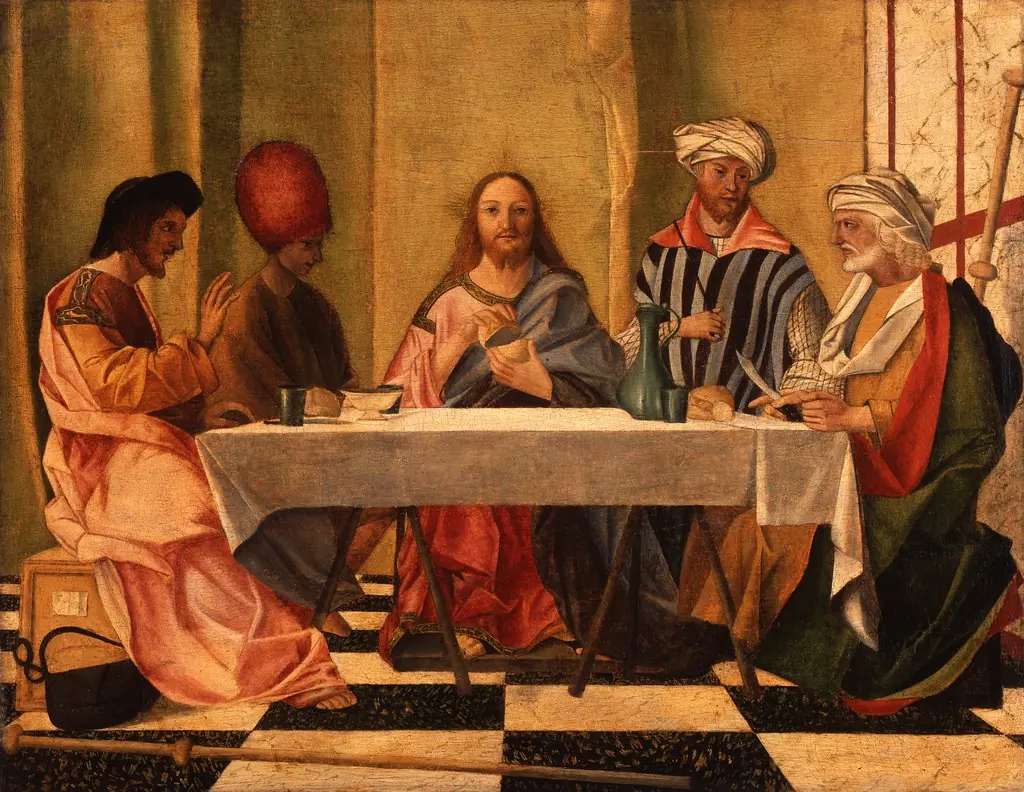
Diana's artistic development reflects the broader evolution of Venetian Renaissance painting. His early style shows the influence of Lazzaro Bastiani and Antonello da Messina, followed by a period of closer alignment with Giovanni Bellini and Vittore Carpaccio. In his mature phase, he absorbed elements from Jacopo Palma il Vecchio and Lorenzo Lotto. Art historian Francis L. Richardson characterized his style as possessing a formidable individuality marked by an emphasis on geometric forms and a quirkiness of detail that allies him with Jacopo de' Barbari and Lorenzo Lotto. Contemporary scholarship notes his fine color sense, elongated figure proportions, and the sculptural relief of his drapery. His compositions demonstrate a distinctive spatial geometry, restrained monumentality, and innovative movement, with particular attention to the fusion of color and plastic substance. hallmark traits include the use of the cartellino in at least one work.
Major works
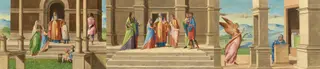
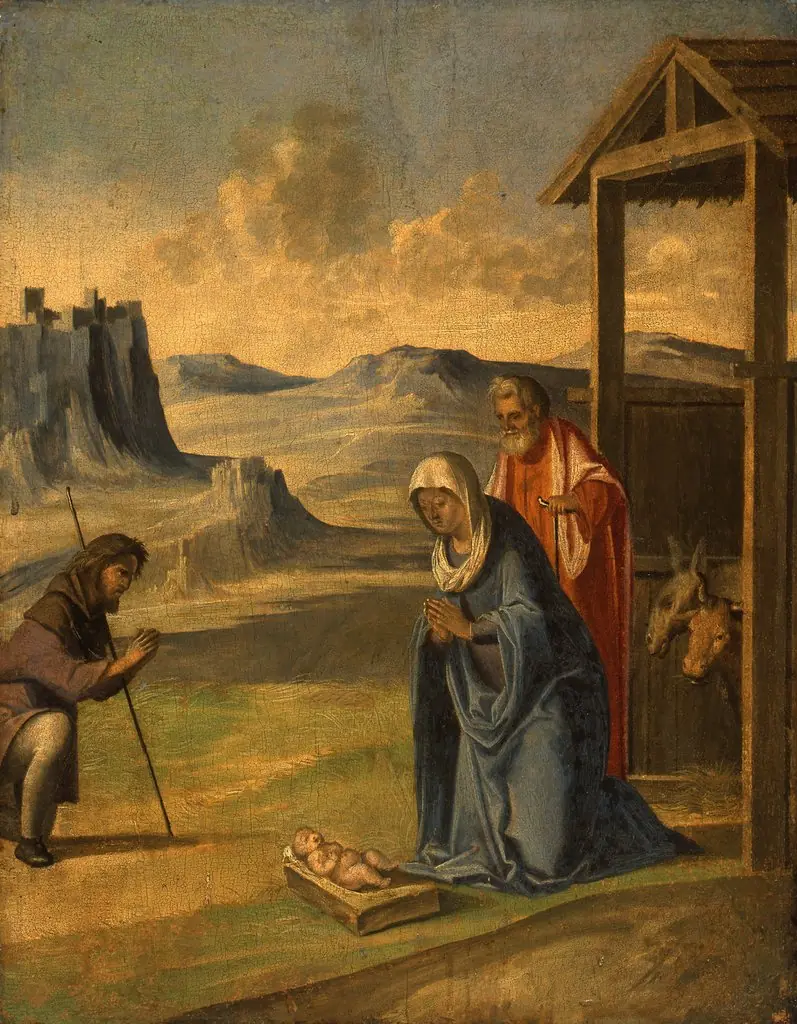
Diana's oeuvre consists primarily of religious paintings, with numerous Madonnas forming the core of his production. His works are distributed across major international collections. The Gallerie dell'Accademia in Venice holds several pieces, including the Madonna and Child with Saints Jerome, Benedict, Mary Magdalene and Justina (c. 1500-10), formerly in Santa Lucia at Padua; the Miracle of the Relic of the True Cross (1505-10), from the Scuola Grande di San Giovanni Evangelista; and another Madonna and Child with Saints Jerome and Francis. The National Gallery in London preserves his Salvator Mundi (c. 1510-20). The National Gallery of Art in Washington holds the Presentation, Marriage of the Virgin and Annunciation (c. 1520-25) from the Kress Collection. The Rijksmuseum in Amsterdam has his Madonna and Child with the Infant John the Baptist, Saint Peter and Saint Anthony (1515). The Lowe Art Museum in Coral Gables, Florida, holds a Madonna and Child with Saint Jerome (c. 1504) and a Christ Blessing (c. 1500), both from the Kress Collection. Other significant works include a Sibyl and Prophet (c. 1480) in the Galleria Palatina, Palazzo Pitti, Florence; a Christ of Sorrows (c. 1510) in the Museo Correr, Venice; and an Assumption at the Sanctuary of Santa Maria della Croce in Crema. He also painted The Brethren Distributing Alms for San Giovanni Evangelista, Venice, and an altarpiece of the Gift of the Miraculous Girdle to Saint Thomas for Santa Maria della Croce in Crema.
Influences & students
Diana's formation involved connections to several significant Venetian painters. He may have been a pupil of Lazzaro Bastiani, with whom he later collaborated on the standards for Piazza San Marco in 1505. Alternative scholarly opinions place him within the circle of Gentile Bellini, or associate him with the circles of Vittore Carpaccio and Giovanni Bellini. He was a companion of Vittore Carpaccio and Giovanni di Niccolò Mansueti, indicating his integration into the professional networks of Venetian painters of his generation. No pupils or followers are documented in the surviving sources.
Legacy
Diana's posthumous reputation has been that of a competent secondary master within the rich context of Venetian Renaissance painting. His works have entered major public collections through various channels, including the Kress Collection in the United States. The scholarly literature on Diana includes contributions by Gustav Ludwig (1905), Detlev von Hadeln (1913), Antonio Morassi (1931), Antonio Paolucci (1966), and Massimo Ferretti (2019), indicating sustained though intermittent academic interest. His paintings continue to be studied for their distinctive stylistic qualities and their position within the broader development of Venetian art from the Bellini generation through the early cinquecento. The appearance of his work at Christie's in London on 11 July 2003 demonstrates continued market presence for his paintings.
Works by Benedetto Rusconi
Collections represented


Artists in a similar vein