Artist
Wilhelm von Kaulbach
Principality of Waldeck
Wilhelm von Kaulbach is a Principality of Waldeck Romanticism artist. 6 works are cataloged here, principally at Victoria and Albert Museum.
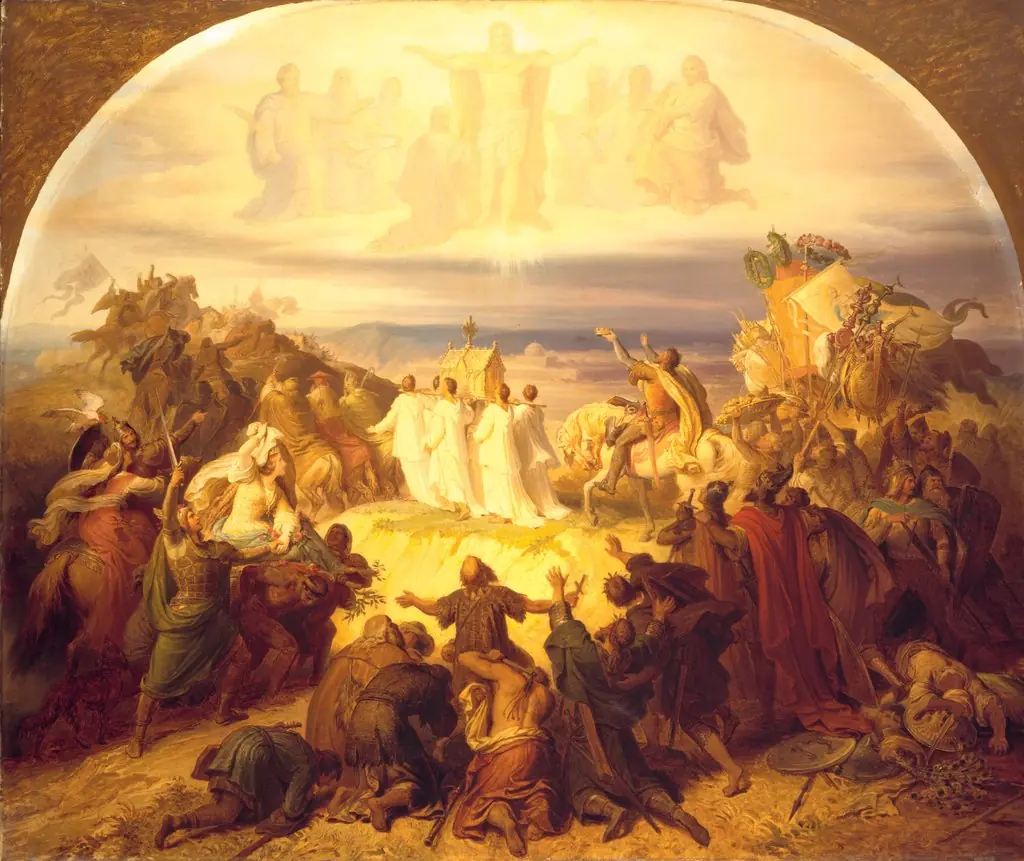
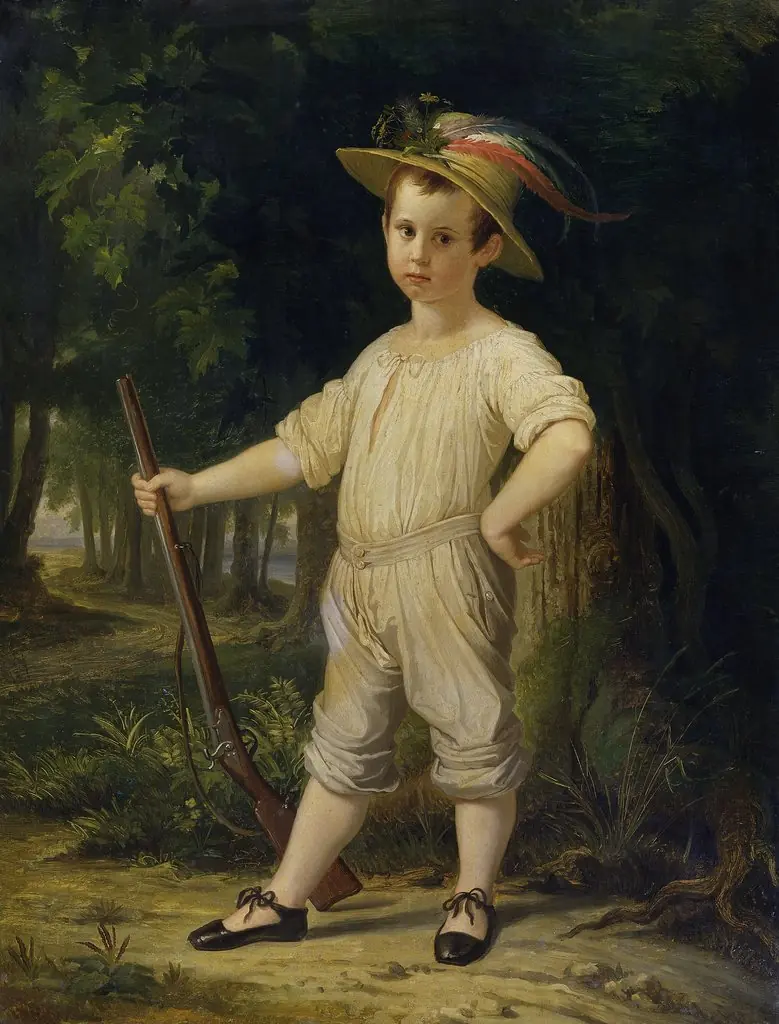
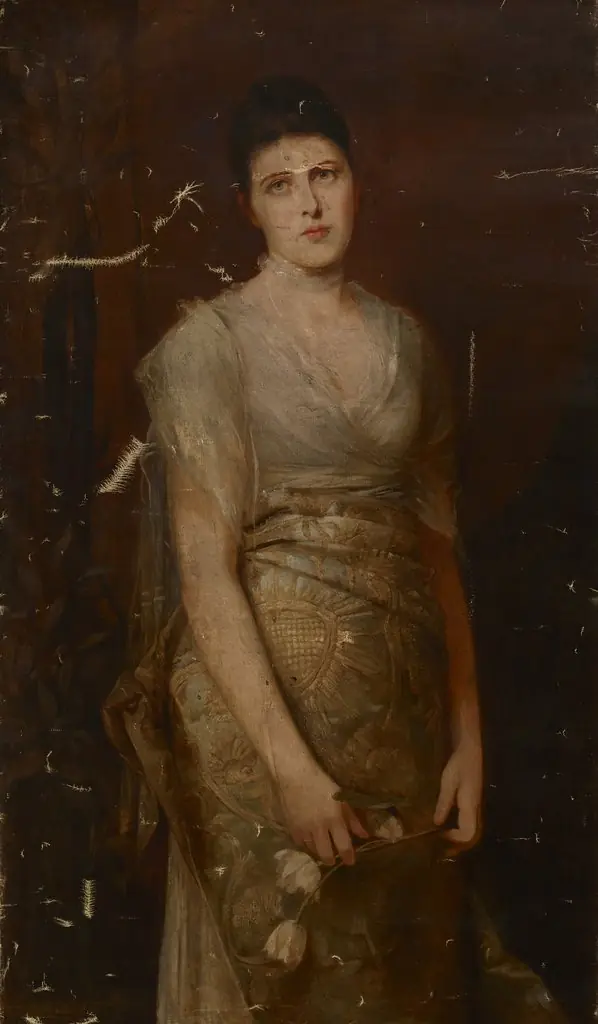
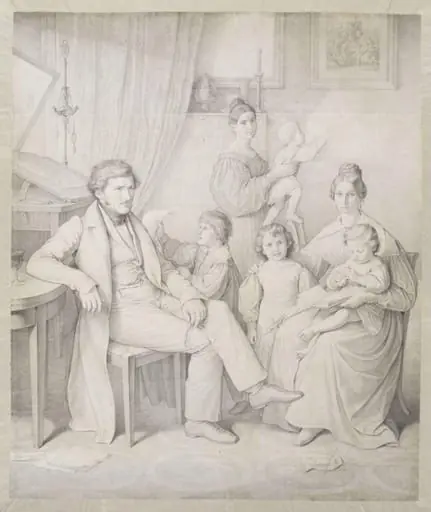
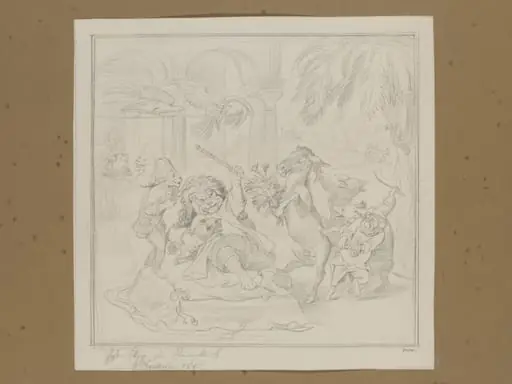
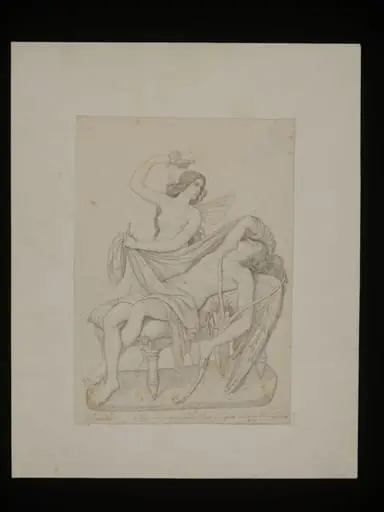
Wilhelm von Kaulbach was a German painter, noted mainly as a muralist, but also as a book illustrator. His murals decorate buildings in Munich. He is associated with the Düsseldorf school of painting.
Overview
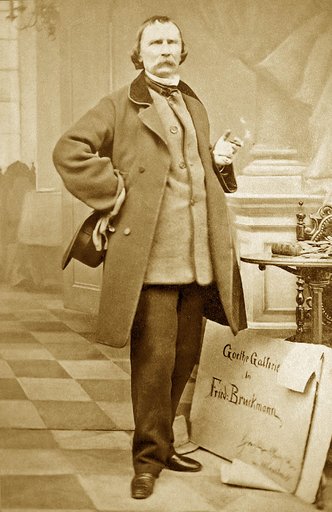
Wilhelm von Kaulbach (15 October 1805-7 April 1874) was a German painter, muralist, and book illustrator who stands as one of the most significant figures in 19th-century German art. Born in Bad Arolsen, Waldeck, he rose from poverty to become the leading practitioner of monumental historical fresco painting in Germany, directing the Munich Academy of Fine Arts for twenty-five years. He is principally known for vast mural cycles in Munich and Berlin that fused painting with architecture, and for illustrations that combined narrative ambition with satirical wit. Associated with the Düsseldorf school of painting and the broader German Romantic movement, Kaulbach shaped the visual culture of Bavaria and Prussia during an era of intense nation-building and cultural investment.
Biography & dates
Kaulbach was born Bernhard Wilhelm Eliodorus Kaulbach in Bad Arolsen, the third of four children of Philipp Karl Friedrich Kaulbach, a goldsmith, engraver, and occasional painter, and his wife Therese Engelbracht. The family endured severe poverty; childhood privations reportedly included exchanging the father's engravings for stale bread from local peasants, an experience said to have inspired his early subject The Fall of Manna in the Wilderness.
He received initial artistic training from his father before entering the Düsseldorf Academy of Fine Arts in 1822, where the sculptor Christian Daniel Rauch had secured his admission. There he studied under Peter von Cornelius, the leading Nazarene painter and director of the academy. Despite material hardships, Kaulbach distinguished himself among the young artists seeking to revive German art. In 1826, following Cornelius to Munich, he became active in the ambitious building program of King Ludwig I of Bavaria, who sought to transform Munich into a German Athens. Kaulbach assisted on frescoes for the Glyptothek, the Odeon, the Hofgarten arcades, and the royal palace.
He married Josefine Sutner in 1831; the couple had four children, including the future painter Hermann Kaulbach. The death of their first daughter in 1835 precipitated his first Italian journey, to Venice. Appointed court painter by Ludwig I in 1837, he traveled to Rome from October 1838 to May 1839. In 1849, upon Cornelius's departure for Berlin, Kaulbach succeeded him as director of the Munich Academy, an office he held until his death.
From 1845 onward he spent considerable time in Berlin, supervising the fresco cycle for the Neues Museum commissioned by King Frederick William IV of Prussia. He acquired a villa on the English Garden in Munich that became a social and artistic center. He was ennobled in 1866, thereafter bearing the title Ritter von Kaulbach. He died of cholera during the great Munich epidemic of 1874 and was buried in the Alter Südfriedhof, where a monumental bronze plaque by Lorenz Gedon marks the family grave.
Style & movement
Kaulbach's art occupies a pivotal position between Nazarene idealism and the more painterly, dramatic tendencies of later 19th-century German historical painting. Under Cornelius, he absorbed the Nazarene commitment to clear drawing, moral purpose, and the revival of fresco as a noble medium. Yet his style evolved considerably: Italian journeys introduced Venetian color and atmospheric effects that tempered the linear austerity of his early manner.
His monumental murals reconjoined painting with architecture in the manner of Renaissance masters, aiming at a synthesis of the arts that would communicate historical and allegorical meaning to a broad public. His compositions are characterized by complex multi-figure arrangements, dramatic narrative clarity, and an idealized vision of history that served nationalist cultural aspirations. At the same time, his work possesses a distinctive satirical edge and relish for character in its broader forms, occasionally verging on the grotesque, as in Narrenhaus and the fresco Kampf gegen die Chimäre der Perückenzeit.
Critics have noted that his prolific output for Ludwig I's building program, while vast in quantity, sometimes suffered from the pressures of speed and scale. His illustrations, particularly the Reineke Fuchs series, reveal a surprisingly modern verve in anthropomorphized animal depiction, influenced by William Hogarth and Grandville.
Major works
Kaulbach's frescoes for Munich, executed between 1825 and 1828 under Cornelius's direction, included Apollo and the Muses for the Odeon ceiling, designs from Klopstock's Battle of Hermann and from Goethe's and Wieland's poems for the royal palace, classical illustrations of Amor and Psyche for the Herzog-Max-Palais (now in the music department of the Bavarian State Library), and allegorical figures for the palace garden arcades. His independent reputation was established by Narrenhaus (1830), a drawing depicting inmates of a Düsseldorf asylum that achieved wide reproduction and notoriety for its empathetic yet unflinching portrayal of mental illness. The Hunnenschlacht (Battle of the Huns, 1834-37), commissioned by Count Raczynski, depicted the legendary aerial combat between the spirits of Huns and Romans; its sepia version brought him definitive fame and inspired Franz Liszt's 1857 symphonic poem of the same title. The Destruction of Jerusalem (1836-46), commissioned by Ludwig I for the Neue Pinakothek, stands among his most celebrated single works, combining dramatic historical narrative with complex allegory. For the same institution he painted an oil cartoon after study in Venice and Rome, completed in 1846. His most extensive project was the History of Mankind cycle for the Neues Museum in Berlin, commissioned by Frederick William IV and executed by his pupils under his supervision, completed in 1860. Six monumental frescoes, each approximately 30 feet long with over one hundred life-size figures, surrounded by more than twenty subsidiary compositions, depicted The Tower of Babel, Homer and the Greeks, The Destruction of Jerusalem, The Battle of the Huns, The Crusaders at the Gates of Jerusalem, and The Age of the Reformation. The cycle assembled allegorical figures of the arts, sciences, and lawgivers from Moses to Frederick the Great around world-historical dramas. Between 1839 and 1847 he produced 36 main illustrations and numerous vignettes for Johann Wolfgang von Goethe's Reineke Fuchs, published by Georg von Cotta, which demonstrated his gifts as a satirical animal illustrator. He also produced portraits of contemporaries including Franz Liszt (1856) and Lola Montez (1847), and Ludwig I as Grand Master of the Order of Saint Hubert (circa 1843), now in the Bavarian State Painting Collections.
Influences & students
Kaulbach's formative influence was Peter von Cornelius, the Nazarene master under whom he studied at Düsseldorf and with whom he collaborated in Munich. Cornelius's emphasis on monumental fresco, historical narrative, and the moral mission of art provided the foundation for Kaulbach's career. The sculptor Christian Daniel Rauch facilitated his admission to the Düsseldorf Academy. Italian art, particularly the Venetian masters encountered in 1835 and Raphael and Michelangelo studied in Rome, substantially modified his palette and compositional approach. His own pedagogical influence was considerable through his twenty-five-year directorship of the Munich Academy. Among his pupils were Gustav Adolf Goldberg and Jacques Alfred van Muyden. The Neues Museum frescoes were executed by his pupils under his supervision, extending his stylistic influence across a generation of German mural painters. His son Hermann Kaulbach (1846-1909) became a painter, continuing the family artistic tradition.
Legacy
Kaulbach's legacy rests on his achievement as the preeminent German muralist of the mid-19th century and his long directorship of the Munich Academy, which shaped generations of German artists. His monumental approach to historical painting, synthesizing Italian Renaissance models with German narrative traditions, set a standard for official art in Bavaria and Prussia. The Hunnenschlacht achieved wider cultural resonance through Liszt's musical adaptation, while his Reineke Fuchs illustrations influenced the development of animal satire in German graphic art.
Contemporary recognition included his 1863 election as foreign member of the Académie des Beaux-Arts and his 1870 election to the American Academy of Arts and Sciences. He held memberships in the academies of Berlin, Dresden, and Brussels, and received Belgian honors including Officer of the Order of Leopold (1845) and Commander (1859).
Posthumous assessment has been mixed: the sheer volume of his output for Ludwig I's building program, while culturally central to its era, has invited criticism of facility and occasional superficiality. Yet his best works, particularly the Narrenhaus drawings and the major history paintings, retain their power. His grave in the Alter Südfriedhof in Munich, marked by Lorenz Gedon's bronze plaque, became the family tomb, also holding his wife Josefine, his son Hermann, and Hermann's wife Sophie Schroll.
Works by Wilhelm von Kaulbach
Collections represented


Artists in a similar vein