Artist
Samuel Finley Breese Morse

United States
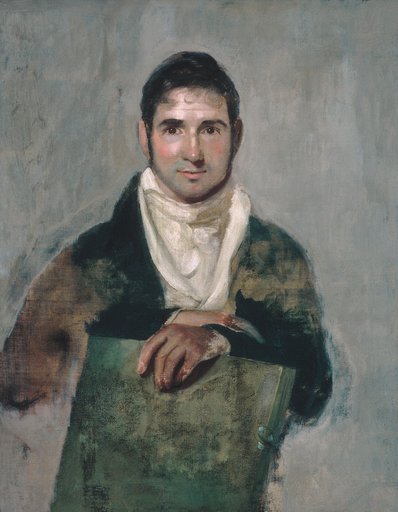
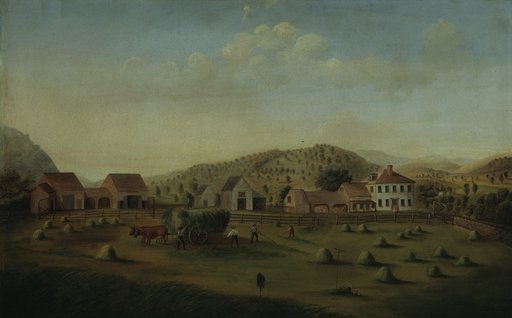
Samuel Finley Breese Morse is an United States American Folk Art artist. 19 works are cataloged here, principally at Museum of Fine Arts Boston.
Samuel Finley Breese Morse (April 27, 1791 – April 2, 1872) was an American inventor and painter. After establishing his reputation as a portrait painter, Morse, in his middle age, contributed to the invention of a single-wire telegraph system based on European telegraphs. He was a co-developer and the namesake of Morse code in 1837 and helped to develop the commercial use of telegraphy.
Overview
Samuel Finley Breese Morse (1791-1872) was an American painter and inventor. Born in Charlestown, Massachusetts, and later a central figure in the New York City art world, Morse initially pursued a career as an artist, producing portraits, historical scenes, and landscapes. He is most widely recognized as the co-developer of Morse code and a single-wire telegraph system, inventions that revolutionized global communication. Before his technological achievements, Morse was a prominent painter and a leading advocate for the fine arts in the United States. He served as the first president of the National Academy of Design and held the first professorship of painting and sculpture in the United States at New York University, striving to elevate American cultural life.
Biography & dates
Morse was born on April 27, 1791, in Charlestown, Massachusetts, to the geographer and Calvinist pastor Jedidiah Morse and Elizabeth Ann Finley Breese. He attended Phillips Academy in Andover and graduated from Yale College in 1810 with Phi Beta Kappa honors, studying religious philosophy, mathematics, and science while painting miniatures to support himself. In 1811, he sailed to England to study art. He returned to the United States in 1815, setting up a studio in Boston before working as an itinerant portraitist in New England and Charleston, South Carolina, eventually settling in New York City in 1823. He married Lucretia Pickering Walker in 1818; her death in 1825, while he was away and unaware until it was too late, became a motivating factor for his work on rapid long-distance communication. In 1826, he founded the National Academy of Design, serving as its president until 1845. He married his second wife, Sarah Elizabeth Griswold, in 1848. Morse died in New York City on April 2, 1872, and is buried in Brooklyn's Green-Wood Cemetery.
Style & movement
Morse worked within the academic and neoclassical traditions, absorbing the influence of the Renaissance and the Royal Academy during his time in England. He considered history painting the most elevated genre, following the academic hierarchy of Sir Joshua Reynolds. Morse sought to modernize history painting for an American audience, fusing grand ideals with a more casual, democratic tone, as seen in his House of Representatives, which depicted contemporary figures in orderly governance rather than a single dramatic historical moment. His early works, such as the Dying Hercules and the Judgment of Jupiter, reflected his Calvinist upbringing and shifting political views, embedding moral and spiritual teachings within neoclassical and mythological frameworks. His portraiture combined technical competence with a bold rendering of his subjects' character and a touch of Romanticism. Later, in works like the Gallery of the Louvre and his Allegorical Landscape of New York University, he sought to fuse old master traditions with an educational agenda tailored to the new American republic.
Major works
Morse's major works span neoclassical subjects, historical scenes, and portraiture. The Dying Hercules (1812-13), a painting preceded by a clay sculptural study that won a gold medal at the Society of the Arts in London, established his early reputation. The Judgment of Jupiter (1814) integrated his Calvinist morals with anti-Federalist political sentiment. His House of Representatives (1822-23) was an ambitious attempt at modern history painting, featuring individual portraits of dozens of government figures, though it failed commercially. His full-length portrait of The Marquis de Lafayette (1825-26) marked the apex of his painting career, earning him significant recognition. The Gallery of the Louvre (1832-33), a large canvas depicting miniature copies of 38 Louvre masterpieces arranged with an art teacher and students, summarized his educational agenda. His later Allegorical Landscape of New York University (1835-36) transposed the NYU building into a classical landscape inspired by Claude Lorrain. The locations of these works include the Yale University Art Gallery, the Corcoran Gallery of Art in Washington, D.C., the Terra Museum of American Art in Evanston, Illinois, and the New-York Historical Society.
Influences & students
Morse's artistic development was profoundly shaped by his teachers. Washington Allston, who noticed Morse's Landing of the Pilgrims, arranged for Morse's study in England and became a lifelong mentor. In London, Morse studied under Benjamin West at the Royal Academy and was also influenced by John Singleton Copley. The anatomical demands and neoclassical style of his work reflect his close study of Michelangelo and Raphael. As an educator, Morse's impact was significant. He was appointed the first professor of painting and sculpture in the United States at New York University in 1832, providing both theoretical and practical instruction to his students. He also delivered the first educational art lectures in America, published as Lectures on the Affinity of Painting with the Other Fine Arts. In the field of photography, he met Louis Daguerre in Paris in 1839 and subsequently introduced daguerreotypie to the United States, training the first American photographers, including Mathew Brady.
Works by Samuel Finley Breese Morse
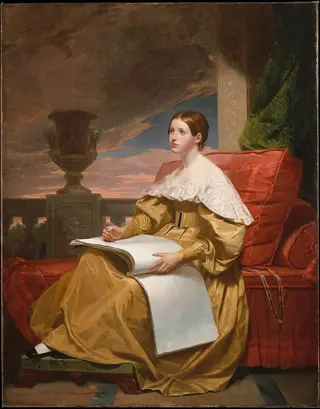 Susan Walker Morse (The Muse)
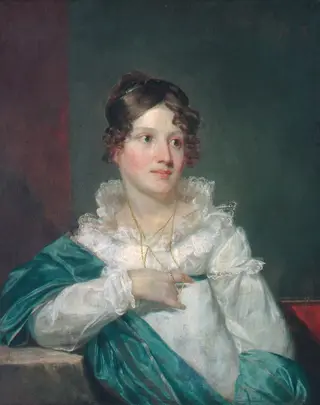 Mrs. Daniel DeSaussure Bacot
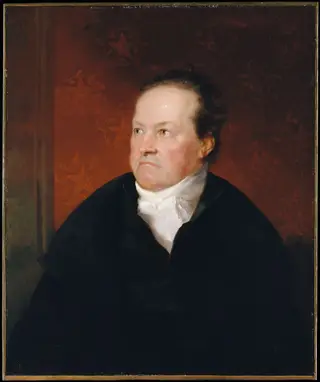 De Witt Clinton
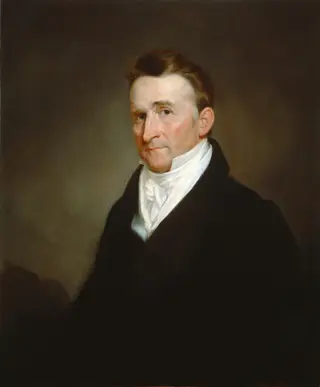 Eliphalet Terry
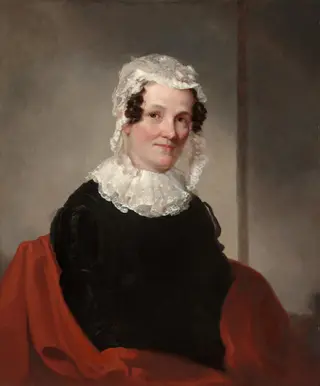 Lydia Coit Terry (Mrs. Eliphalet Terry)
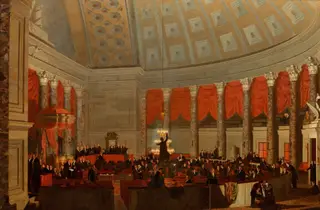 The House of Representatives
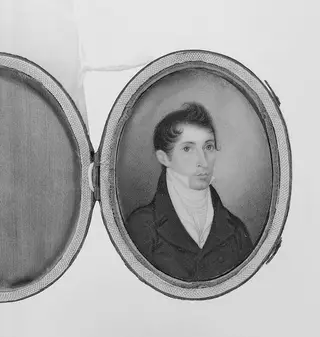 Cyrus Mansfield
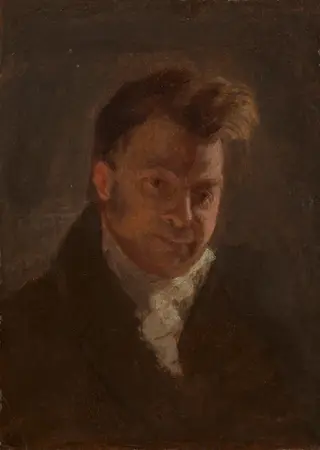 Joseph Gales
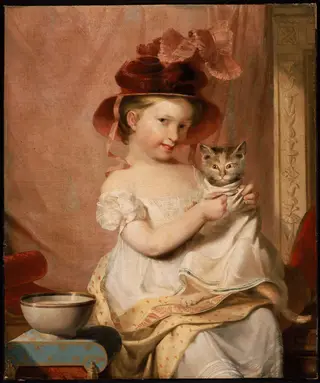 Little Miss Hone
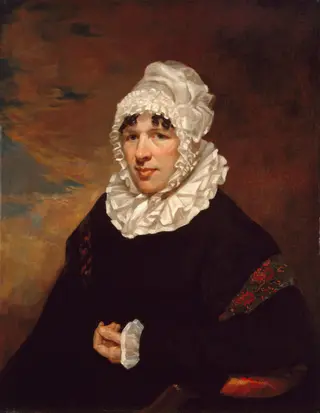 Portrait of Mrs. John Earnest Poyas (Catherine Smith, 1769–1836)
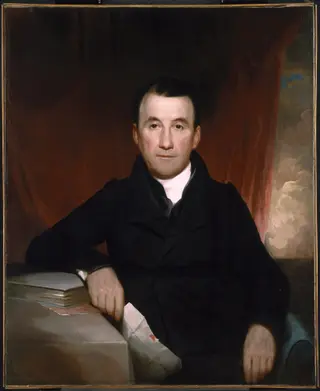 Jonas Platt
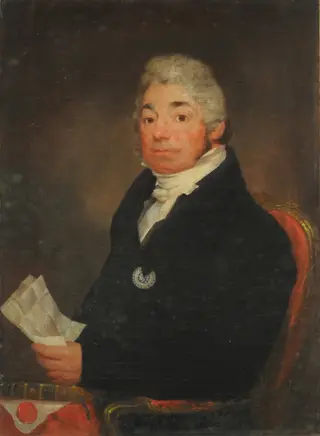 Portrait of David C. de Forest
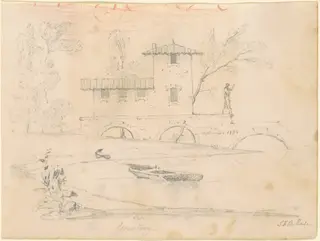 The Pescatory
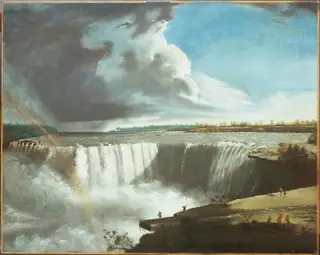 Niagara Falls from Table Rock
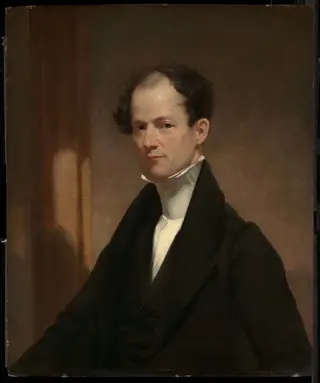 The Reverend Thomas Harvey Skinner
 Dr. Thomas Fuller
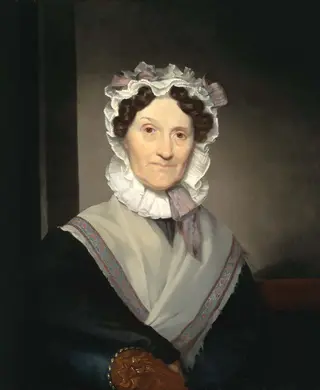 Mrs. Thomas Fuller (Mary Fuller)
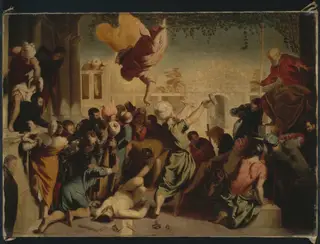 Miracle of Saint Mark
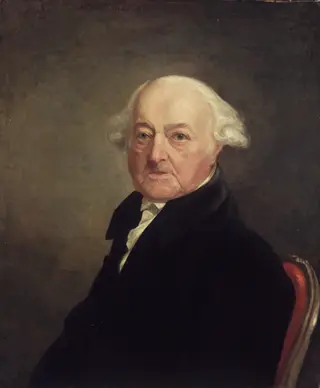 Portrait of John Adams
Collections represented


Artists in a similar vein