Artwork
Lydia Coit Terry (Mrs. Eliphalet Terry)
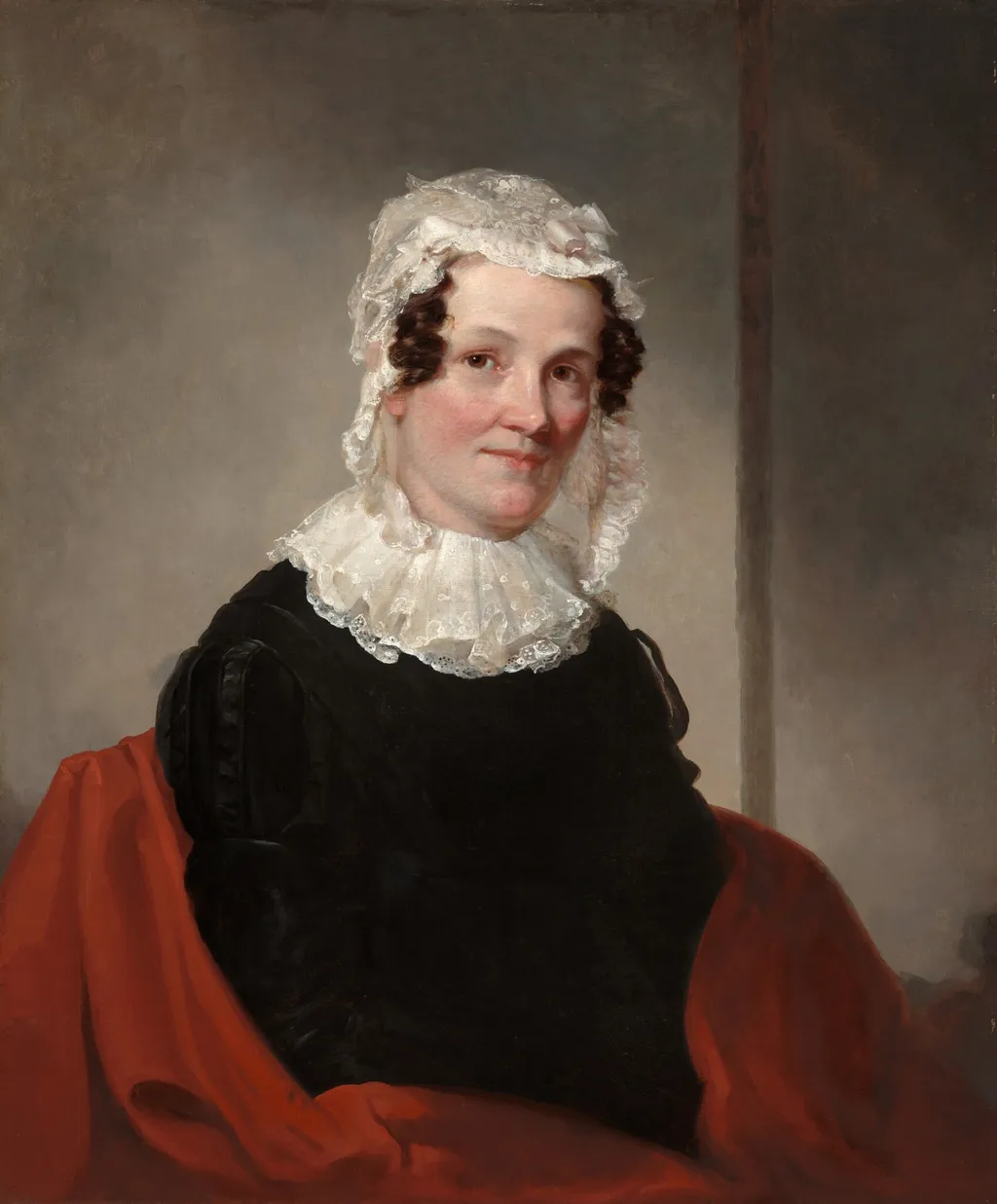
Lydia Coit Terry (Mrs. Eliphalet Terry) is an oil painting by the American Folk Art artist Samuel Finley Breese Morse. It dates from 1824 and is held in the collection of the National Gallery of Art. This oil on canvas painting, titled Lydia Coit Terry (Mrs.
About this work
Lydia Coit Terry sits in a chair, dressed in gown and hat and facing forward. Samuel F. B. Morse worked carefully to catch her likeness, the chief task of a portrait like this. Oil on canvas, 1824.
Subject & Meaning
The work belongs to the portrait genre, depicting a single named individual rather than a narrative or allegorical scene.
The painting is a portrait of Lydia Coit, who later became Mrs. Eliphalet Terry, as indicated by the work's title. The work belongs to the portrait genre, depicting a single named individual rather than a narrative or allegorical scene. No additional iconographic elements, attributes, or symbolic objects are documented in the available sources; the painting's meaning is conveyed through the straightforward representation of the sitter herself.
Technique & Style
The portrait of Lydia Coit Terry is executed in oil on canvas, a medium typical of Samuel F. B. Morse's early-nineteenth-century practice. The handling reflects the period's emphasis on lifelike representation, with smooth, blended brushwork in the modeling of the face and hands, while the drapery and background employ more assertive, visible strokes to articulate form and texture. Stylistically, the composition adheres to the conventions of American Federal portraiture, featuring a three-quarter pose against a neutral ground that directs attention to the sitter's refined features and attire. The figure is rendered with careful chiaroscuro, enhancing three-dimensionality and presence.
History & Provenance
The portrait of Lydia Coit Terry (Mrs. Eliphalet Terry) was painted by Samuel F. B. Morse in 1824. The work descended through the sitter's family: first to her daughter, Mrs. Charles Collins (née Mary Hall Terry), then to her granddaughter, Mrs. William Allen Butler (née Louise Terry Collins). It remained in the family until Dr. Charles Terry Butler of Chappaqua, New York, gave the painting to the National Gallery of Art, Washington, D.C., in 1981. The accession record is not specified in the cited sources.
Overview
This oil on canvas painting, titled Lydia Coit Terry (Mrs. Eliphalet Terry), was created around 1824 by Samuel F. B. Morse. It presents a formal portrait of Lydia Coit Terry, capturing her likeness with a focus on detailed representation. The artwork exemplifies the portraiture style prevalent in the early 19th century, where artists aimed for a faithful depiction of their sitters.

Own this work as a print
Artist & collection

Artist
Samuel Finley Breese Morse (April 27, 1791 – April 2, 1872) was an American inventor and painter.






 Ann Calvert Stuart Robinson (Mrs. William Robinson)
![Mrs. Pearson [possibly Sarah Thompson Pearson], by Pieter Christoffel Wonder](https://artifactworldgallery.com/img/pieter-christoffel-wonder--mrs-pearson-possibly-sarah-thompson-pearson--0006ffde77661f8c-w320.webp) Mrs. Pearson [possibly Sarah Thompson Pearson]
Mrs. Pearson [possibly Sarah Thompson Pearson] Sarah Eliot Scoville
 Mrs. Joseph Warren Revere (Mary Robbins)
 Maria Clarissa Leavitt
 Mrs. Robert Jenkins (Catharine Carmichael)
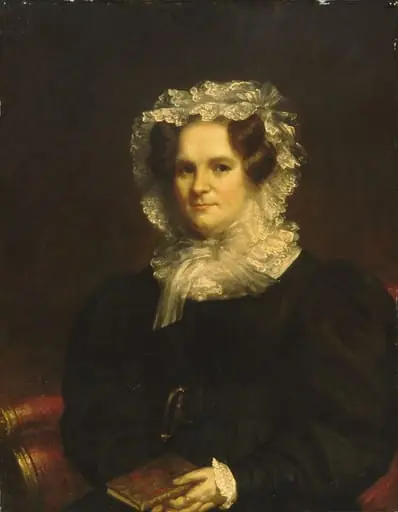 Mrs. Edward Kellogg
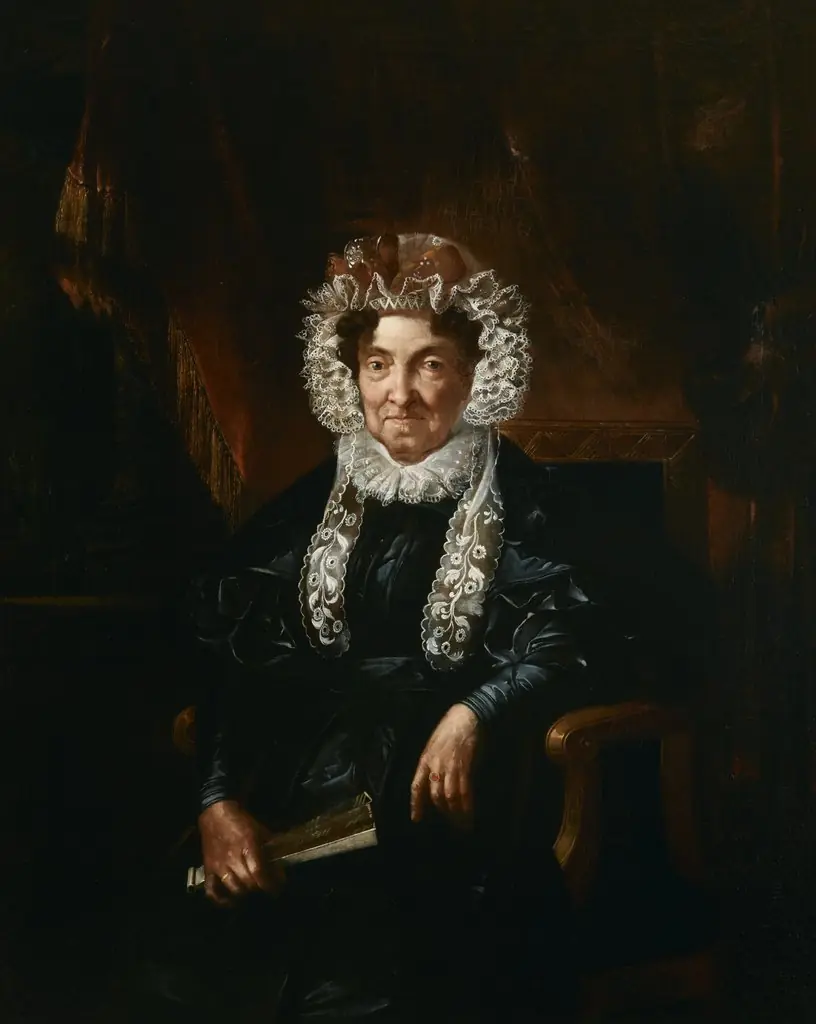 Portrait of Barbara Brodowicz
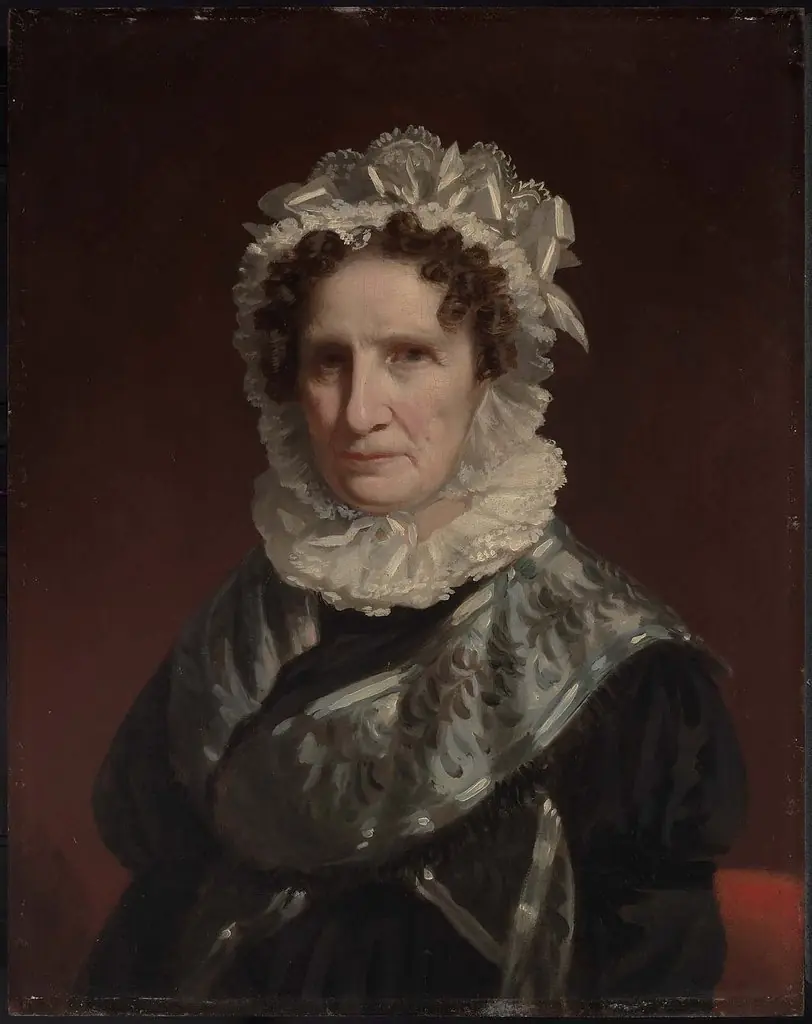 Madam Powel (Elizabeth Willing)
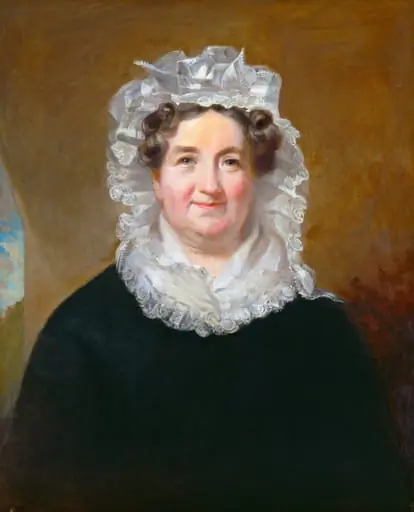 Portrait of a Lady