Artist
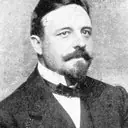
William Langson Lathrop
United States
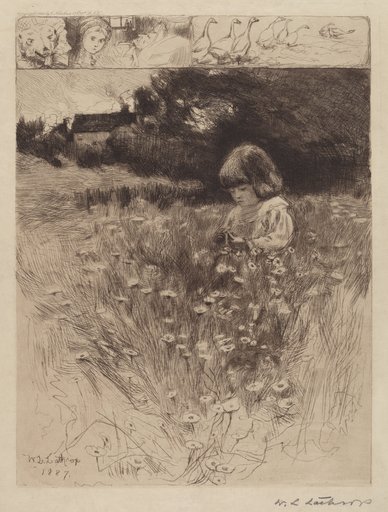
William Langson Lathrop is an United States Impressionism artist. 4 works are cataloged here, principally at National Gallery of Art.
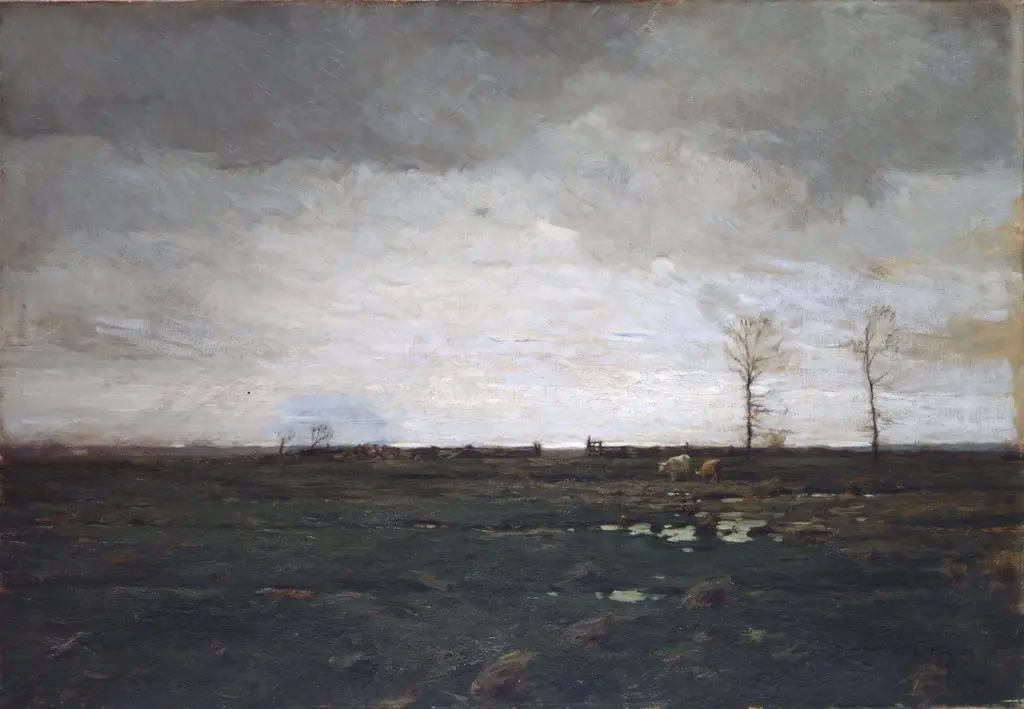
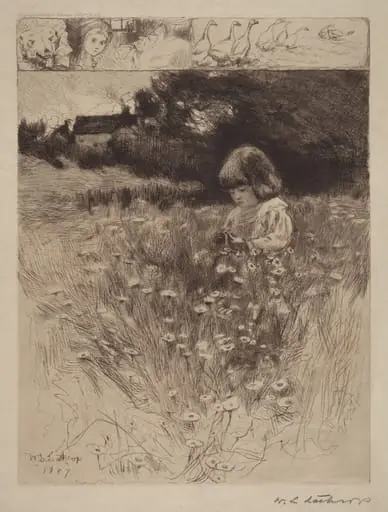
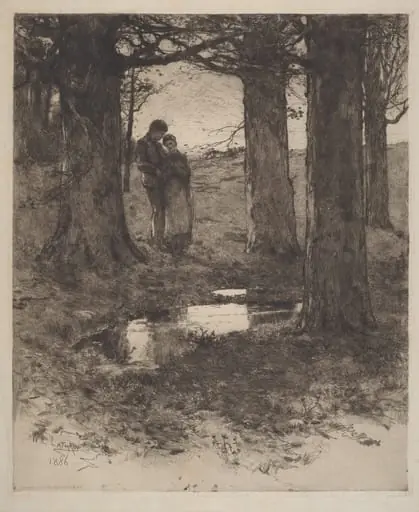
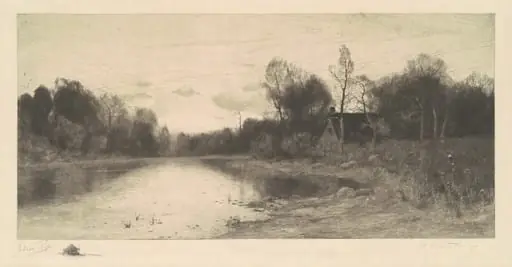
William Langson Lathrop (pronounced "LAY-throp") (March 29, 1859 – September 21, 1938) was an American Impressionist landscape painter and founder of the art colony in New Hope, Pennsylvania, where he was an influential founder of Pennsylvania Impressionism. Lathrop was a member of the National Academy of Design and served on numerous exhibition juries during his career. He received a gold medal at the Panama–Pacific International Exposition (1915) in San Francisco, which showcased works by many of the major American artists of the time. Lathrop's paintings are now on display in multiple museums, including the Metropolitan Museum of Art in New York City and the Smithsonian American Art Museum in Washington, D.C.
Overview
William Langson Lathrop (pronounced "LAY-throp") (March 29, 1859, September 21, 1938) was an American Impressionist landscape painter and a foundational figure in American art history as the founder of the art colony in New Hope, Pennsylvania. He is widely recognized as an influential founder of Pennsylvania Impressionism, a regional movement that brought national attention to the Delaware River Valley. Lathrop's career bridged the transition from Tonalism to Impressionism in American landscape painting, and his work earned institutional recognition including a gold medal at the Panama, Pacific International Exposition in 1915. Today his paintings are held in major American museums including the Metropolitan Museum of Art and the Smithsonian American Art Museum.
Biography & dates
Lathrop was born on March 29, 1859, in Painesville, Ohio, where he spent his childhood on his family's farm along the shores of Lake Erie and learned to sail. He began his art career in New York City in the late 1870s, working as an illustrator and part-time etcher, and briefly attended evening classes at Cooper Union. In 1877 he returned to Painesville, and on the advice of lithographer Charles Parsons, he began painting Ohio landscapes, selling his first painting in 1881. That same year he returned to New York, working for the Photoengraving Company and meeting painter Henry B. Snell. In 1887 he briefly studied at the Art Students League of New York under William Merritt Chase.
Lathrop traveled to Europe in 1888, visiting the Netherlands, England, where he met Annie Burt whom he married that year, and France, where he studied works at the Louvre and observed the Barbizon School painters. Returning to the United States in 1889, he stayed with painter Julian Alden Weir in Connecticut before settling at Greenport, Long Island. Financial difficulties forced him back to Painesville in 1891, but in 1896, following Snell's advice, he returned to New York, joined the American Watercolor Society, and won the William T. Evans Prize. In 1898 he exhibited for the first time at the American Academy of the Fine Arts, and in 1899 won the Webb Prize from the Society of American Artists.
In 1899 Lathrop moved with his family to New Hope, Pennsylvania, along the Delaware River, where he would live and work for more than thirty years. In 1902 he was elected to the American Academy of the Fine Arts. He became instrumental in establishing the Phillips Mill as an exhibition venue, serving as its first president after its purchase for $5,000 in 1928. In the late 1920s he built a wooden boat named The Widge, launched in 1930, which he sailed in the Atlantic and used for painting coastal scenes. On September 21, 1938, while piloting The Widge near eastern Montauk Point, Long Island, he encountered the Great Hurricane of 1938. He attempted to ride out the storm in a sheltered bay, but his body was recovered along the shoreline a month later; eyewitness accounts suggested he may have died of a heart attack during the storm. His boat and his last painting survived.
Style & movement
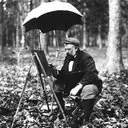
Lathrop's artistic trajectory traced a significant evolution in American landscape painting from Tonalism to Impressionism. His early work was characterized by darker colors and an emphasis on mood, consistent with the Tonalist aesthetic. After settling in New Hope in 1899, his palette gradually brightened, and he developed the more luminous Impressionist style for which he became best known. His approach to landscape was deeply connected to direct observation of nature, often painted en plein air from his boat or along the riverbanks.
Lathrop's pedagogical method reinforced this commitment to outdoor painting. He conducted summer classes in which he took students on his barge, named "Sunshine," along the Delaware Canal, offering them the opportunity to sketch the passing landscape directly. This teaching practice paralleled William Merritt Chase's classes at Shinnecock Hills and Birge Harrison's landscape classes for the Art Students League at Woodstock, New York, and similarly contributed to the development of an American art colony centered on plein air practice.
Major works
While specific titles of major works are not extensively documented in the available sources, several significant achievements and holdings can be established. In 1922, Lathrop received the Temple Gold Medal from the Pennsylvania Academy of the Fine Arts for his painting "October Evening." His works are now held in numerous major institutions across the United States, including the Metropolitan Museum of Art in New York, the Smithsonian American Art Museum in Washington, D.C., the Philadelphia Museum of Art, the Pennsylvania Academy of the Fine Arts, the National Gallery of Art, The Phillips Collection, the Fogg Art Museum, the Montclair Art Museum, the Brandywine River Museum, and the James A. Michener Art Museum, among many others.
Influences & students
Lathrop's development was shaped by several key figures and institutions. William Merritt Chase, under whom he studied briefly at the Art Students League of New York, provided direct pedagogical influence. The Barbizon School painters, whose work he observed in France, influenced his early Tonalist approach. His friend and fellow painter Henry B. Snell offered crucial career advice at multiple junctures, encouraging his return to New York in 1896 and his pursuit of watercolor painting.
Lathrop's own influence as a teacher and community builder proved equally significant. His students and followers included Adelaide Deming, Agnes Lawrence Pelton, Robert Spencer, and Margaret Fulton Spencer. Other artists who studied with him or were drawn to the New Hope colony through his presence included Charles Rosen, Daniel Garber, Morgan Colt, Rae Sloan Bredin, Mary Elizabeth Price, and John Folinsbee. The Sunday afternoon teas hosted by his wife Annie became important gathering points for this artistic community.
Legacy
Lathrop's legacy rests primarily on his role as a catalyst for Pennsylvania Impressionism and the New Hope art colony. In 1916, he joined with Charles Rosen, Daniel Garber, Morgan Colt, Rae Sloan Bredin, and Robert Spencer to form The New Hope Group, which exhibited together in 1916 and 1917 at venues including the Cincinnati Art Museum, Detroit Art Institute, Corcoran Gallery, Carnegie Museums, and Arlington Gallery in New York City. Though short-lived, the group formed an early core of the Pennsylvania Impressionism school. His institutional recognition included membership in the National Academy of Design, service on numerous exhibition juries, the gold medal at the 1915 Panama, Pacific International Exposition in San Francisco, and election to the American Academy of the Fine Arts. The Phillips Mill, which he helped establish as a community art center and where he served as first president, remains part of the Phillips Mill Historic District and continues as a significant cultural institution. Scholarly attention to his work has continued, with publications including Brian H. Peterson's "Intimate Vistas: The Poetic Landscapes of William Langson Lathrop" (1999) and "Pennsylvania Impressionism" (2002), both from the James A. Michener Art Museum, and an exhibition "William Langson Lathrop: Tonalism to Impressionism" organized by Tom Folk at the Emily Lowe Gallery, Hofstra University, and the Allentown Art Museum in 1981-1982.
Works by William Langson Lathrop
Collections represented


Artists in a similar vein