Artist
Célestin Nanteuil
France
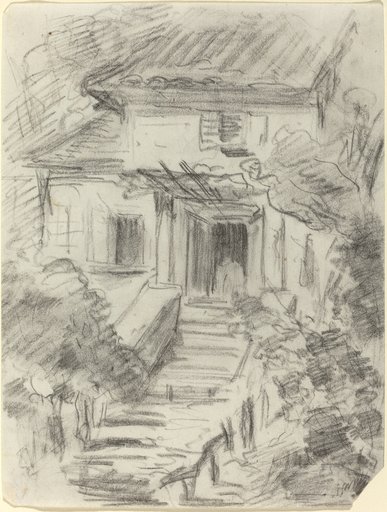
Célestin Nanteuil is a France Impressionism artist. 31 works are cataloged here, principally at National Gallery of Art.
Célestin-François Nanteuil-Lebœuf, known as Célestin Nanteuil (French pronunciation: ; 11 July 1813 – 6 September 1873), was a French painter, engraver and illustrator closely tied to the Romantic movement in France. He was born in Rome to French parents who were part of Joseph Bonaparte's entourage. Nanteuil entered the École des Beaux-Arts in 1827, where he studied under Eustache-Hyacinthe Langlois, and then worked in the studio of Dominique Ingres. In 1848, he was made Director of Académie des beaux-arts and later became the curator of the Musée des beaux-arts in Dijon. He died in Bourron-Marlotte at the age of 60. His elder brother, Charles-François, was a noted sculptor who won the Prix de Rome in 1817.
Overview
Célestin-François Nanteuil-Lebœuf, known as Célestin Nanteuil (11 July 1813-6 September 1873), was a French painter, engraver, and illustrator whose career spanned one of the most vibrant periods of nineteenth-century French art. Born in Rome to French parents attached to Joseph Bonaparte's entourage, Nanteuil became a central figure of the Romantic movement in France, producing innovative book illustrations, etchings, and paintings that bridged the fiery experimentation of the 1830s with the more settled academic conventions of the Second Empire. His work as an illustrator for Victor Hugo, Théophile Gautier, Alexandre Dumas, and Honoré de Balzac placed him at the heart of Romantic literary culture, while his later administrative roles as director of the Académie des beaux-arts and curator of the Musée des beaux-arts in Dijon reflected his establishment within the French artistic hierarchy.
Biography & dates
Nanteuil was born on 11 July 1813 in Rome, where his French parents were part of Joseph Bonaparte's entourage. His elder brother, Charles-François Nanteuil-Lebœuf, was a noted sculptor who won the Prix de Rome in 1817. The family background placed Nanteuil within an environment of artistic ambition from an early age. He entered the École des Beaux-Arts in Paris in 1827, studying under Eustache-Hyacinthe Langlois before joining the studio of Dominique Ingres. Around 1829, he met Victor Hugo, initiating a friendship that would profoundly shape his career. Nanteuil became part of the circle of Romantics surrounding Hugo, participating in the famous bataille d'Hernani in 1830, and in 1836 accompanied the poet and his mistress on a trip to Normandy. He was associated with the Jeunes-France, frequented Alexandre Dumas and Pétrus Borel, and developed a particularly close relationship with Gérard de Nerval, whose works he illustrated alongside Tony Johannot. A passionate but unrequited attachment to the actress Marie Dorval inspired letters of intense lyricism. In 1843, Nanteuil co-founded the periodical Les Artistes contemporains with lithographers Eugène Prosper Leroux and Adolphe Mouilleron and painters Henri Baron and Louis Français; the venture lasted until 1847. His administrative career began in earnest in 1848 when he was appointed director of the Académie des beaux-arts in Dijon, later becoming curator of the Musée des beaux-arts in the same city. He was named a Chevalier of the Légion d'honneur by decree of 12 August 1868. Nanteuil died in Bourron-Marlotte (Seine-et-Marne) on 6 September 1873 at the age of 60, though some sources give the date as 7 September.
Style & movement
Nanteuil's artistic identity was fundamentally shaped by his immersion in French Romanticism. His early work displayed the chaotic, exuberant compositions characteristic of the Jeunes-France, with Théophile Gautier later recalling an etching of extraordinary eccentricity that Nanteuil produced for Gautier's poetic collection Albertus. Champfleury, in his Vignettes romantiques (1883), described Nanteuil in terms that captured the androgynous, otherworldly quality Romantic artists cultivated, noting his easy emotion and blushing modesty. Nanteuil's distinctive contribution to illustration lay in his inventive compositional structures, particularly his frontispieces, which typically divided into multiple small frames surrounding a central subject, each containing episodic narrative elements. His etchings were executed with verve and deliberately eschewed the meticulous precautions of professional engravers. He worked extensively in etching, lithography, and wood engraving, excelling particularly in etching, the medium he used for the four frontispieces of Victor Hugo's collected works in 1832. His lithographic work included reproductions of paintings by Titian, José de Ribera, and Diego Velázquez for an anthology of the Museo del Prado published in Madrid in 1857. Over time, his style evolved from the turbulent inventiveness of his early Romantic period toward more conventional production, becoming what critics described as a regular supplier of illustrations for respectable romances and classic texts. Medievalism formed a significant strand of his inspiration, and he developed a personal neo-Gothic style that drew on the vogue for medieval art among Romantic circles. He also worked en plein air with other Romantic landscape painters at the île de la Chaussée.
Major works
Nanteuil's most celebrated achievements came in the domain of book illustration during the early 1830s. His frontispieces and illustrations for the works of his Petit Cénacle companions remain among his most characteristic productions: Albertus and Les Jeunes-France by Théophile Gautier; Feu et Flamme by Philothée O'Neddy; Venezia la bella by Alphonse Royer, which contains two of his finest etchings; the Impressions de voyage, Angèle, and the first collective edition of the Théâtre of Alexandre Dumas; Samuel by Paul de Musset; Le balcon de l'opéra by Joseph d'Ortigue; and the Poésies of Hippolyte Tampucci. These works from 1832-1834 represent the peak of his inventive period. He also contributed illustrations to L'Artiste and Le Monde dramatique, and designed sets for social events, including a ball given by Alexandre Dumas in March 1833. His painted works earned medals at the Paris Salons of 1837, 1848, and 1861, as well as at the Paris Exposition Universelle of 1867, though few of his paintings have survived in the public consciousness. A notable exception is Un rayon de soleil (1848), now in the Musée des Beaux-Arts de Valenciennes. Among his surviving paintings in public collections are Le Dernier soleil (1870) in Beaune; the pendant paintings Perdition and Tentation (both 1859), Le Printemps ramène les amours (1863), Apollon gardant les troupeaux du roi Admète (c. 1869), and La Lecture de Don Quichotte (1873) in Dijon; and at Nemours, a group of drawings including caricature portraits and La Fuite en Égypte (1833), an etching. He also illustrated an edition of Don Quixote published by Francisco de Paula Mellado in 1855, and contributed to the Furne edition of Balzac's works.
Influences & students
Nanteuil's formation combined academic training with the stimulating intellectual milieu of 1830s Paris. At the École des Beaux-Arts, he studied under Eustache-Hyacinthe Langlois before entering the studio of Dominique Ingres, whose classical precision left its mark on his draftsmanship even as he pursued Romantic themes. The German Wikipedia source also mentions Jean-Charles Langlois as a teacher, suggesting some confusion in sources between Eustache-Hyacinthe Langlois and Jean-Charles Langlois, both active as artists and teachers in this period. His most significant personal and professional relationship was with Victor Hugo, whom he met around 1829; this connection opened doors to the leading literary figures of the era and provided steady illustration work. His collaboration with Tony Johannot on illustrations for Gérard de Nerval represents another important artistic partnership. Nanteuil's own role as a mentor and influence is less documented in the available sources, though his position as director of the Académie des beaux-arts in Dijon from 1848 placed him in a pedagogical and administrative role over subsequent generations of artists. The co-founders of Les Artistes contemporains, Eugène Prosper Leroux, Adolphe Mouilleron, Henri Baron, and Louis Français, formed his immediate professional circle in the 1840s.
Legacy
Nanteuil's posthumous reputation rests primarily on his contributions to Romantic illustration and the vivid documentation of 1830s literary culture in his work. Théophile Gautier devoted a chapter to him in Histoire du Romantisme (1874), and Champfleury memorialized him in Les vignettes romantiques (1883) and in a separate study, Le drame amoureux de Célestin Nanteuil (1887), based on unpublished letters to Marie Dorval. Henri Béraldi included a brief biography and catalogue raisonné of his prints in Les graveurs du 19e siècle (1890), and Philippe Burty published a monograph, L'Age du Romantisme: Célestin Nanteuil, Graveur et Peintre (1887). Aristide Marie produced two significant studies: Un Imagier romantique (1910) and a more extensive Célestin Nanteuil, Peintre, Acquafortiste et Lithographe (1924). The Musée des Beaux-Arts in Dijon organized a major retrospective in 1973, and the Château-Musée de Nemours held an exhibition in 1983. A 2013 tribute at the Musée des Beaux-Arts de Dijon, Hommage à Célestin Nanteuil, illustrated pamphlet, confirmed his continuing local significance. His cultural afterlife extends to literature itself: he appears as a character in the Goncourt brothers' roman à clef Charles Demailly (1860), under the name Grancey. In the art market and among collectors, his prints, particularly the early etchings, have attracted sustained interest as documents of Romantic visual culture, while his paintings remain considerably rarer and less well known.
Works by Célestin Nanteuil
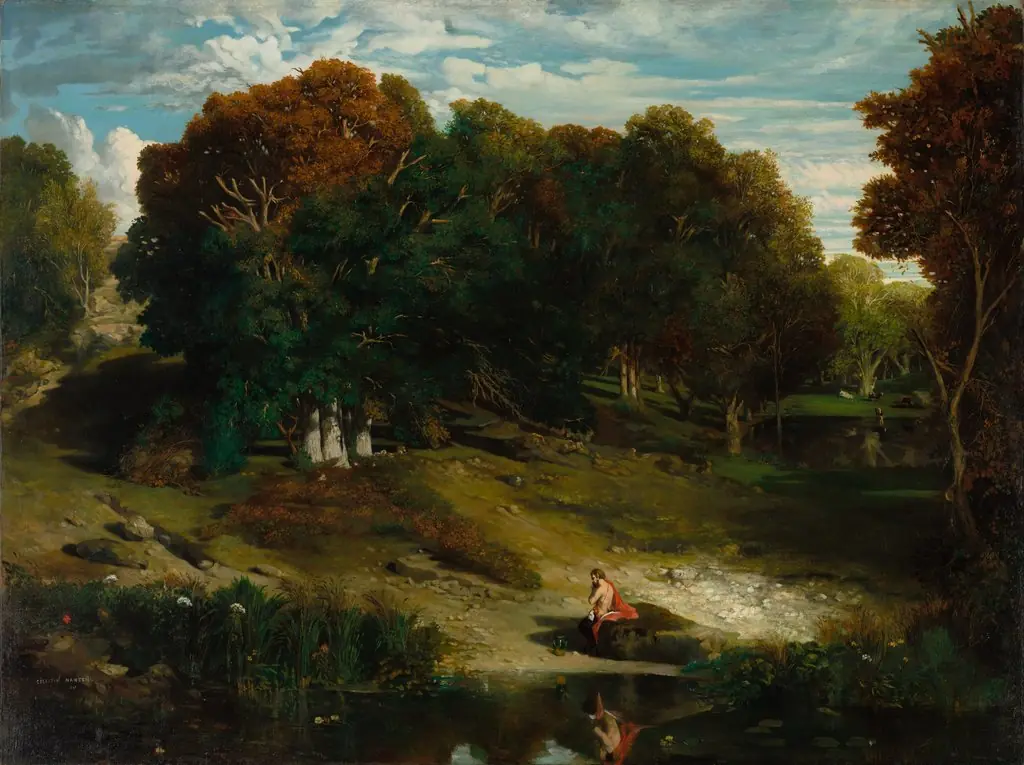 In the Forest
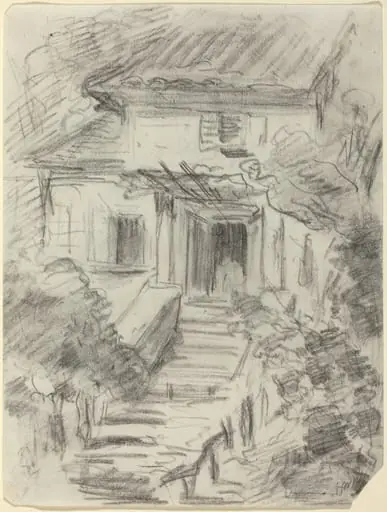 Music Title
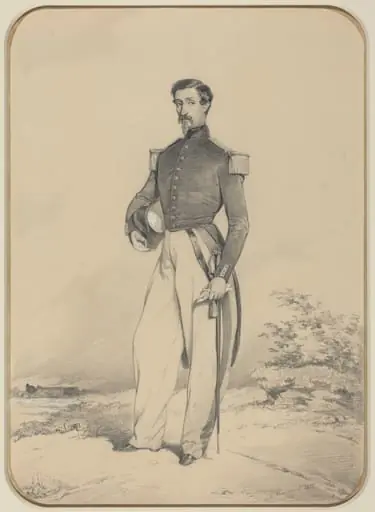 French Officer
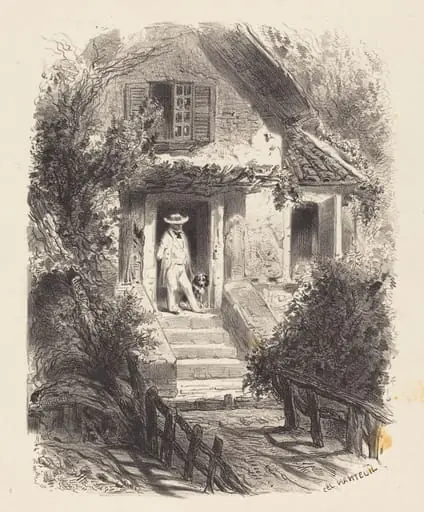 Music Title
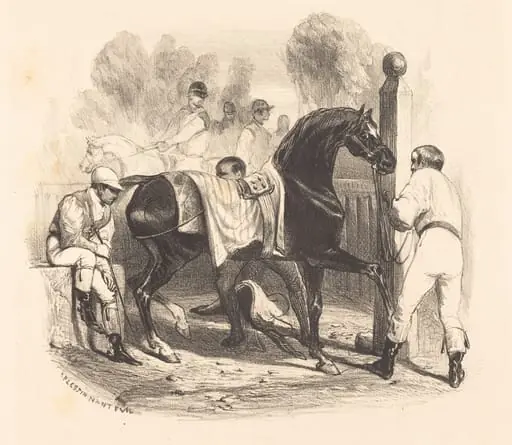 Horse before the Race
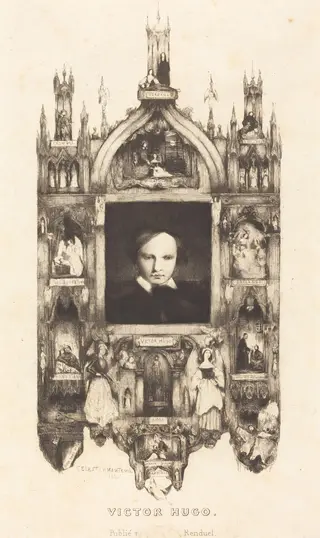 Victor Hugo
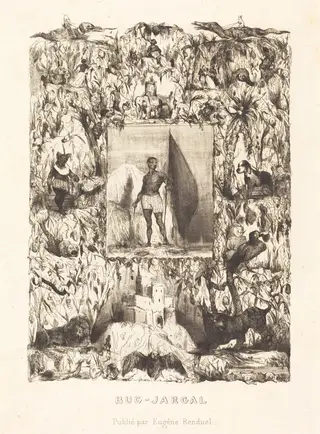 Bug-Jargal
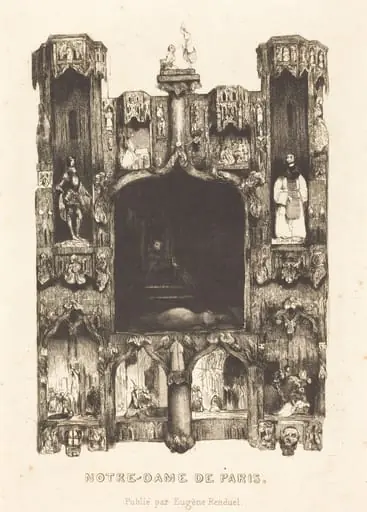 Notre-Dame de Paris
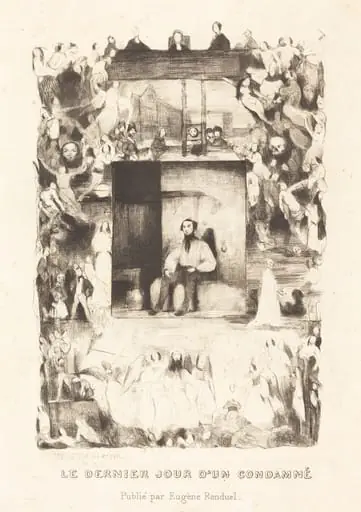 Le dernier jour d'un condamne
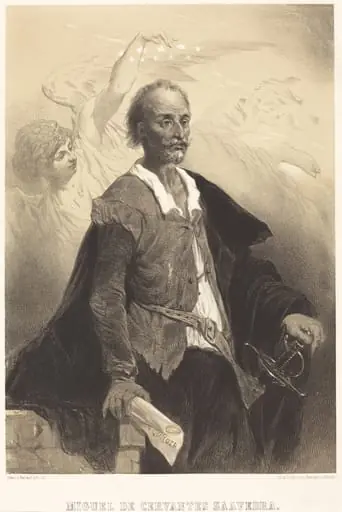 Miguel de Cervantes Saavedra
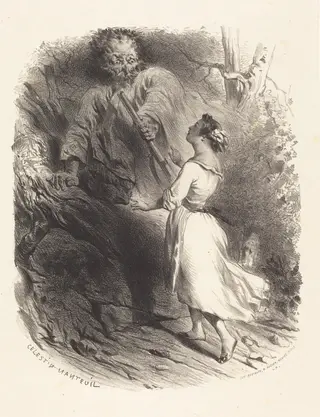 Hunter Surprised
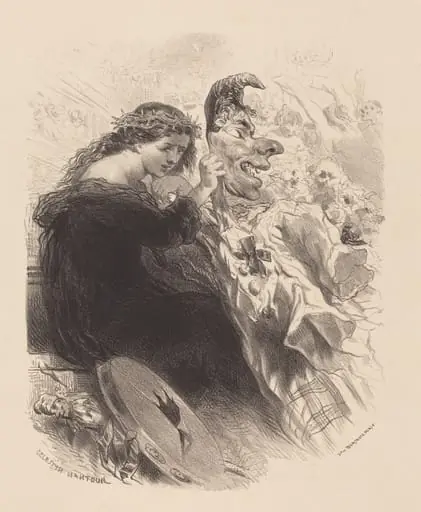 The Woman Behind the Mask
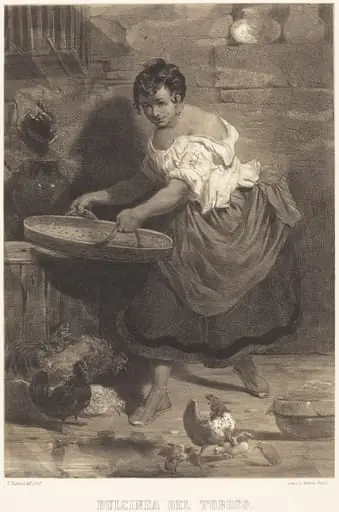 Dulcinea del Toboso
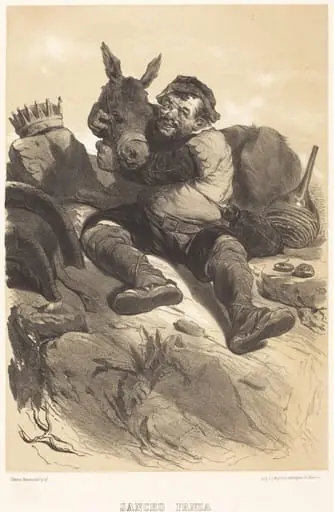 Sancho Panza
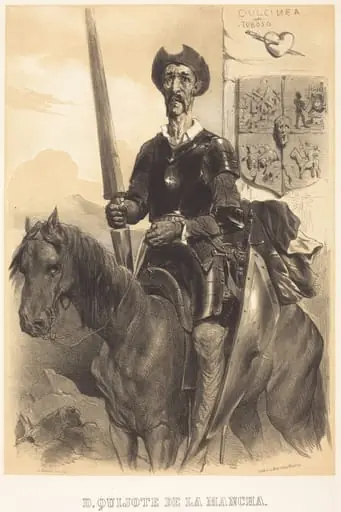 Don Quixote de la Mancha
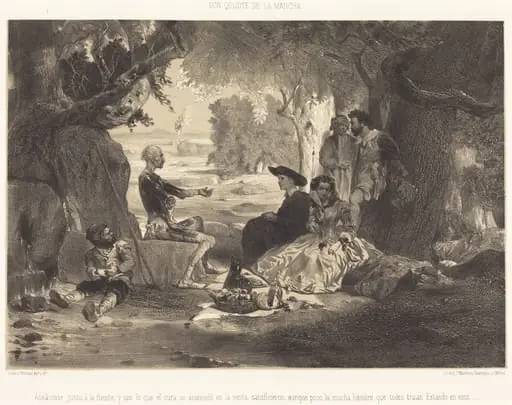 Apeáronse junto á la fuente
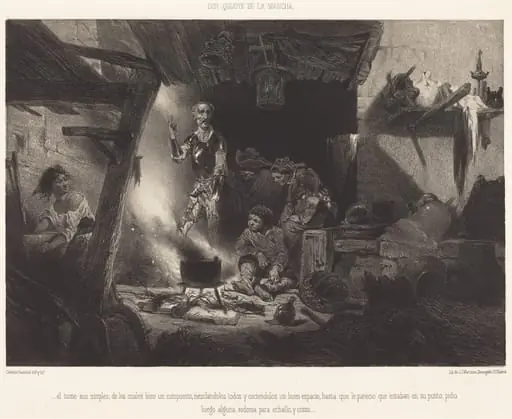 ...il tomo sus simples...
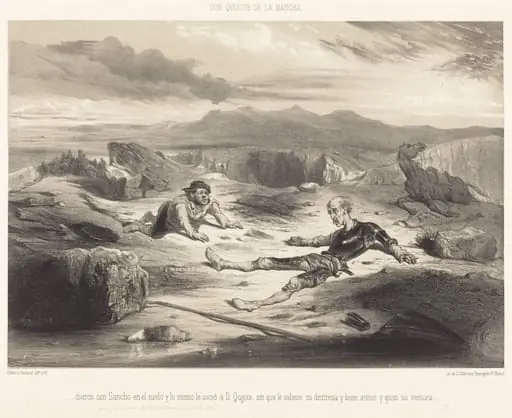 ...dieron con Sancho en el suelo y lo mismo le avinó d D. Quixote...
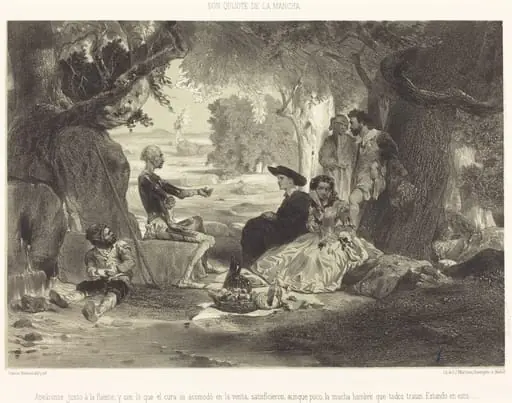 Apeáronse junto à la fuente...
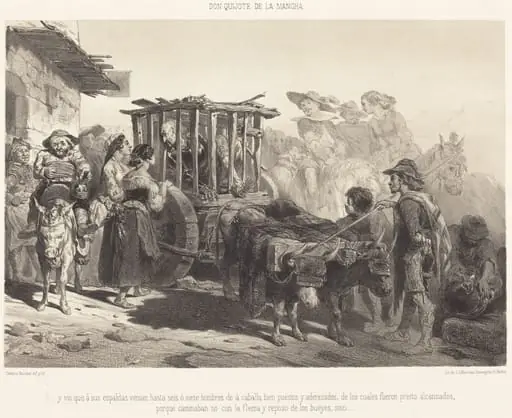 ...y vio que à sus espaldas venian hasta seis ó siete hombres...
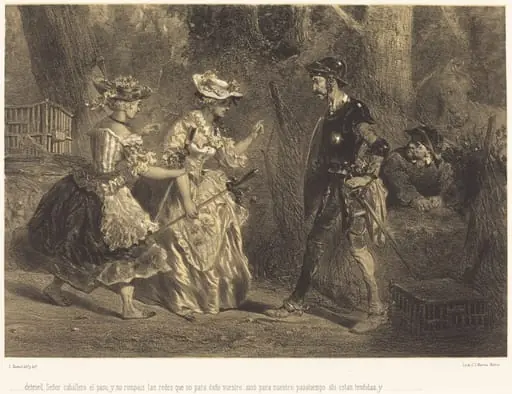 ...detened Señor caballero el paso...
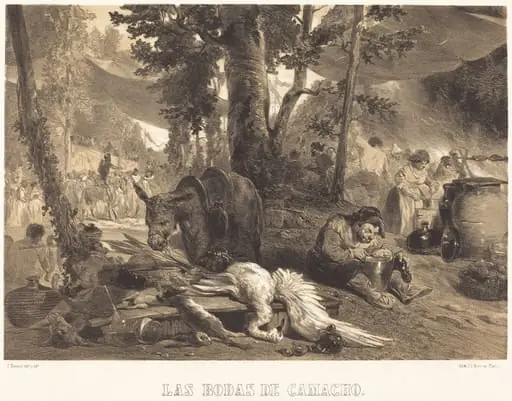 Las Bodas de Camacho
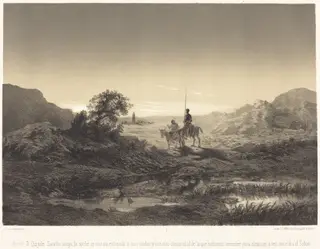 Dijolé D. Quijote: sancho amigo, la noche se nos va entrando...
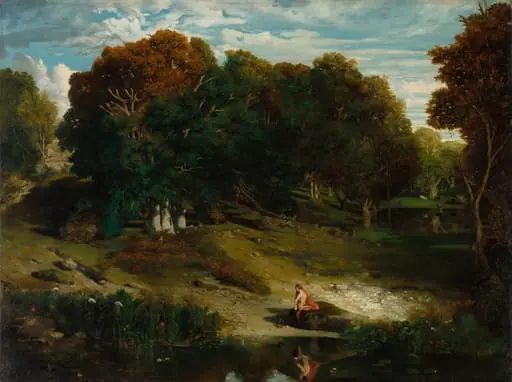 In the Forest
31 works in the catalog · 24 shown
Collections represented


Artists in a similar vein