Artwork
...y vio que à sus espaldas venian hasta seis ó siete hombres...
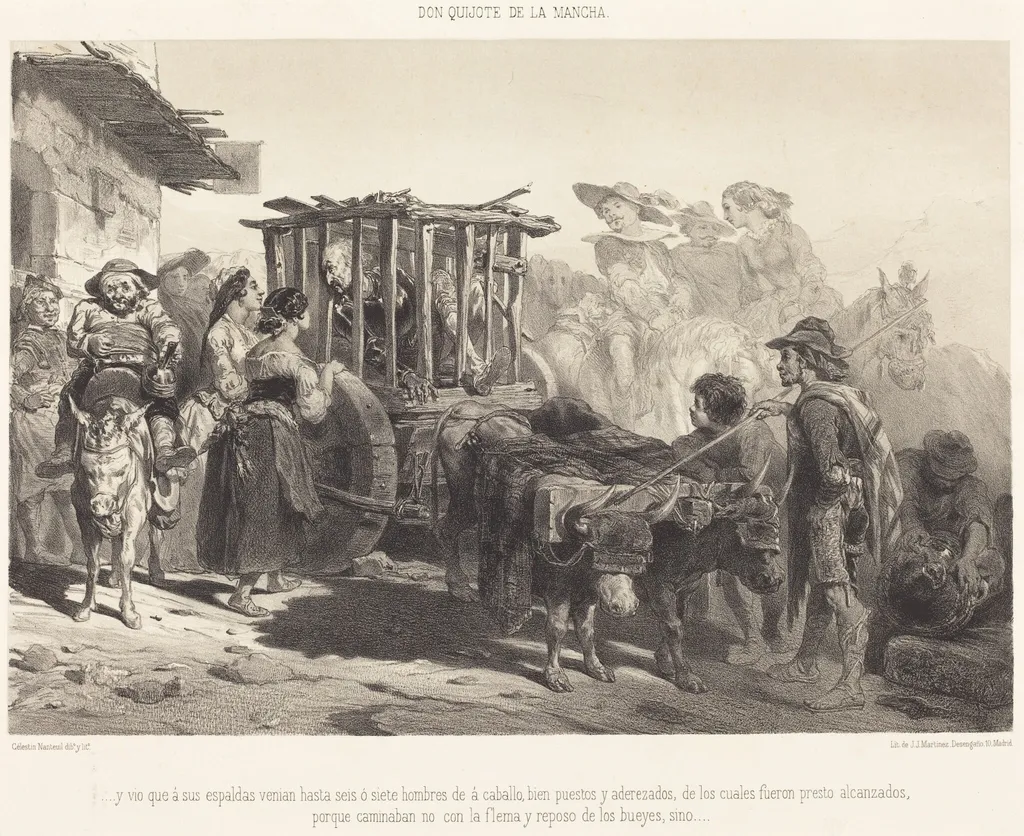
...y vio que à sus espaldas venian hasta seis ó siete hombres... is an ink print by the Impressionist artist Célestin Nanteuil. It dates from 1855 and is held in the collection of the National Gallery of Art.
- Inscription
- Inscribed:upper center: DON QUIJOTE DE LA MANCHA; lower left: Célestin Nanteuil dibo y lit; lower right: Lith de J J. Martinez, Desengaño 10, Madrid; lower center: y vis que á sus espaldas venian hasta seis ó siete hombres...
About this work
Overview
...y vio que à sus espaldas venian hasta seis ó siete hombres... is a color lithograph on wove paper created by Célestin Nanteuil around 1855.
Subject & Meaning
The scene depicts a lively street with various figures and animals, including a horseman conversing with a woman and a group of men in discussion or preparation. The title references Don Quixote, suggesting the print illustrates a moment from the narrative.
Technique & Style
Nanteuil employed rapid, expressive lines to convey movement and energy, characteristic of a style that was innovative for its time.
History & Provenance
Célestin Nanteuil, a French artist associated with the Romantic movement, was born in Rome in 1813 and studied under Eustache-Hyacinthe Langlois and Dominique Ingres. He later held prominent positions in French art institutions.
Own this work as a print
Artist & collection
Artist
Célestin-François Nanteuil-Lebœuf, known as Célestin Nanteuil (French pronunciation: ; 11 July 1813 – 6 September 1873), was a French painter, engraver and illustrator closely tied to the Romantic movement in France.

 On the Road to Santa Fe
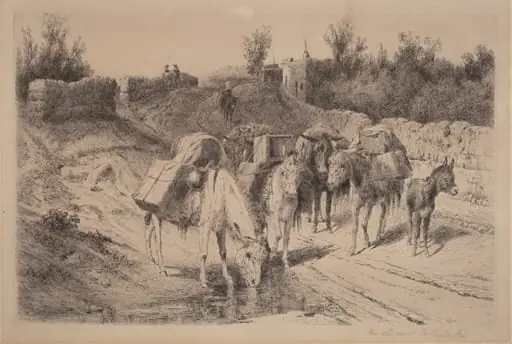 On the Road to Santa Fe
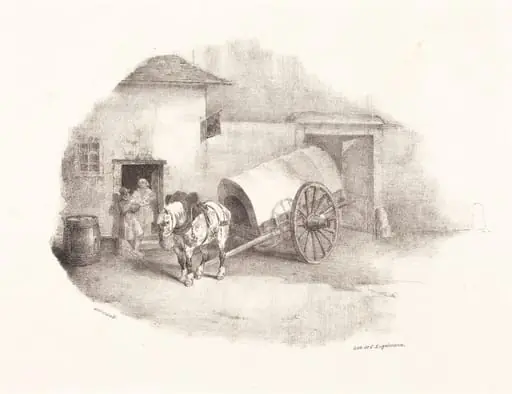 Cheval de charrette sorti des Limons
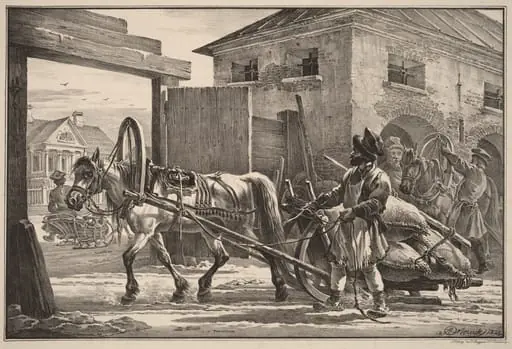 Sled Loaded with Flour Led by an Isvoschik
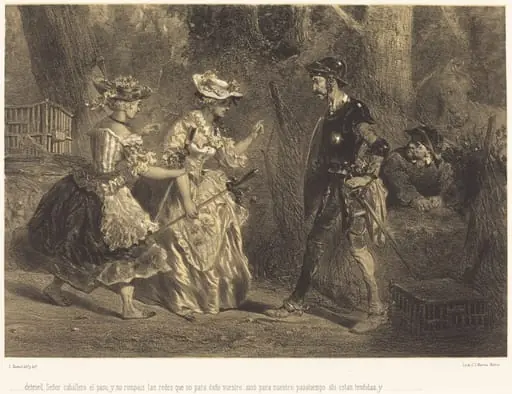 ...detened Señor caballero el paso...
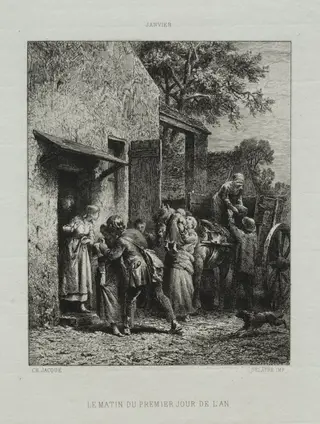 Le Matin du premier jour de l'an
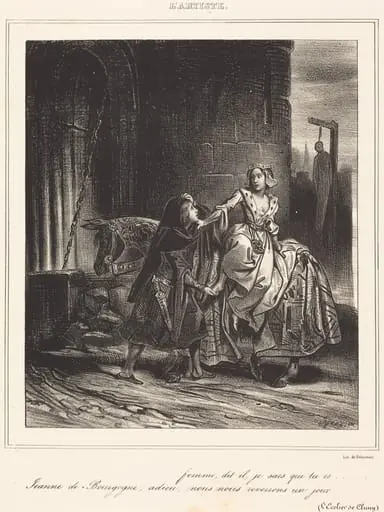 Jeanne de Bourgogne
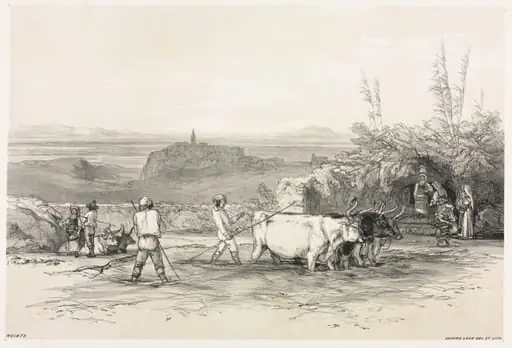 Views in Rome and Its Environs: Roiate
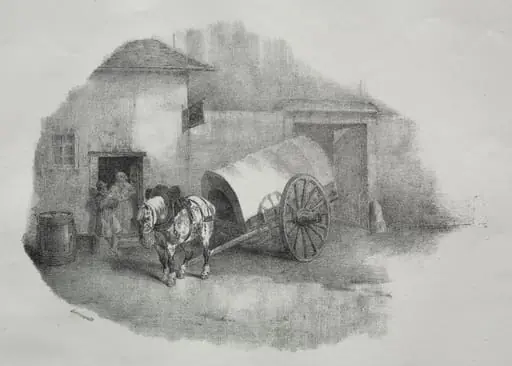 Cheval de charrette sorti des limons
 Russian Soldiers with a Barber
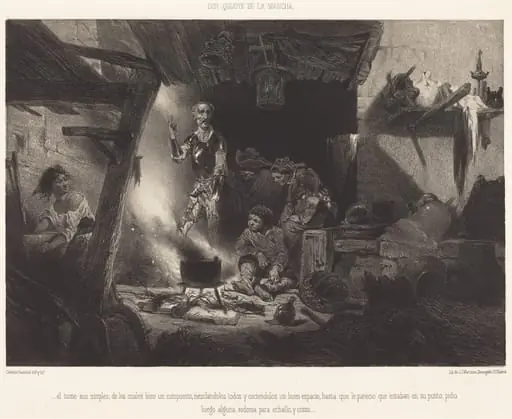
- ...il tomo sus simples...