Artwork
Bug-Jargal
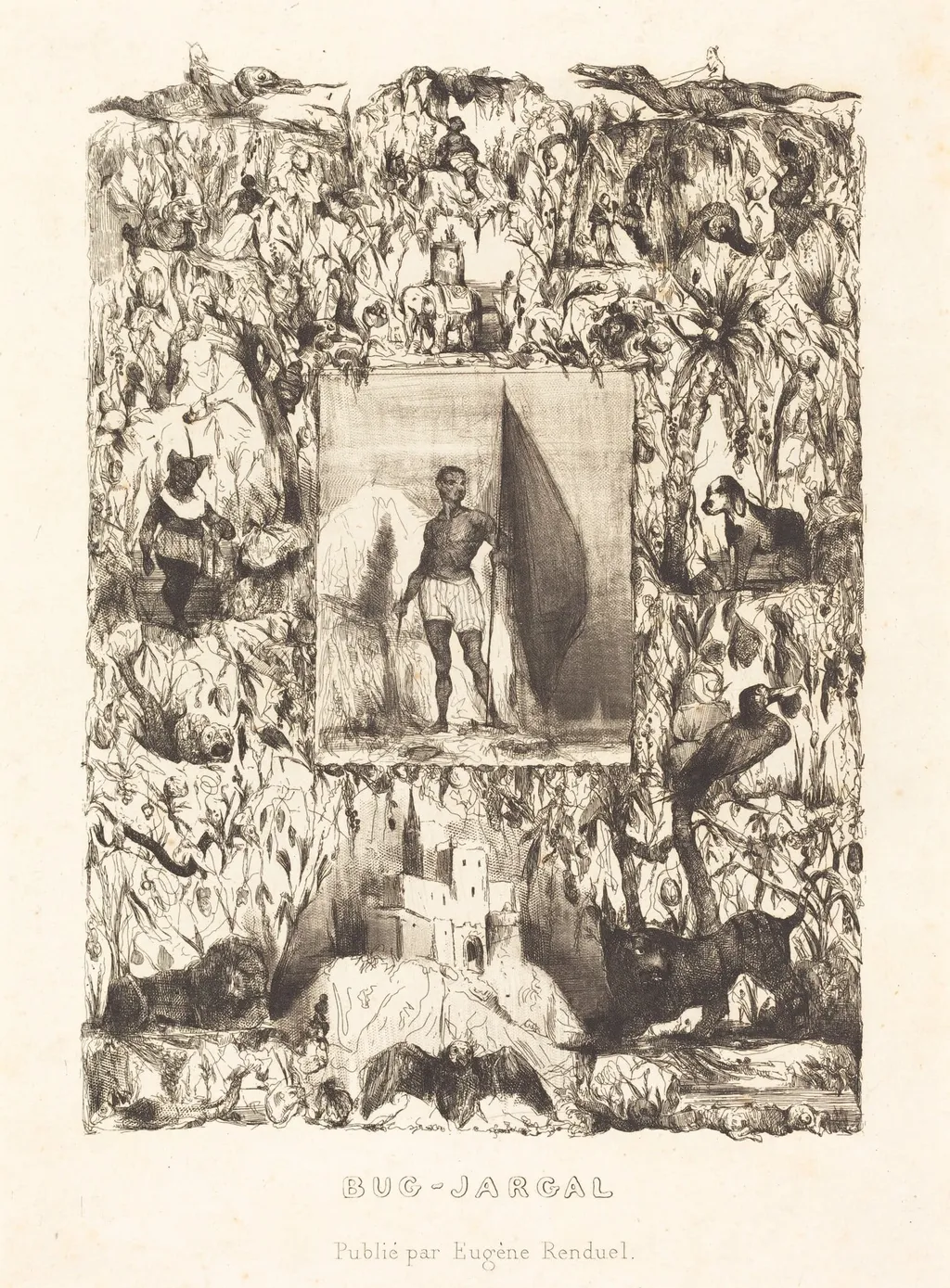
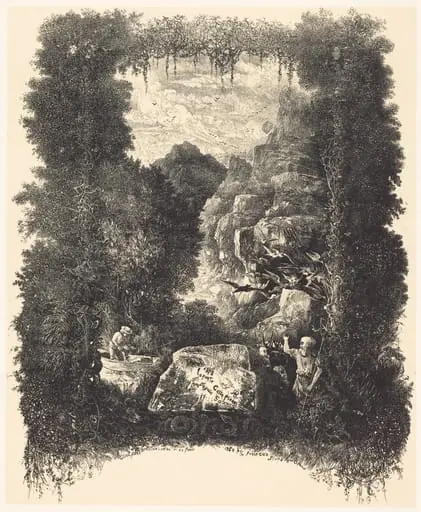
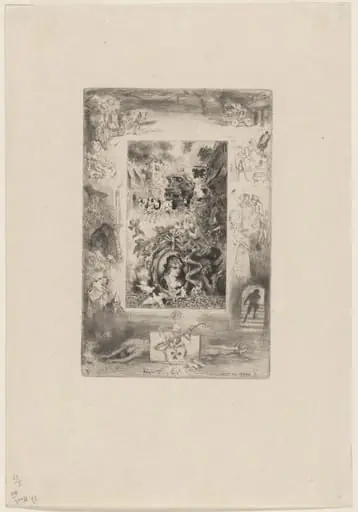
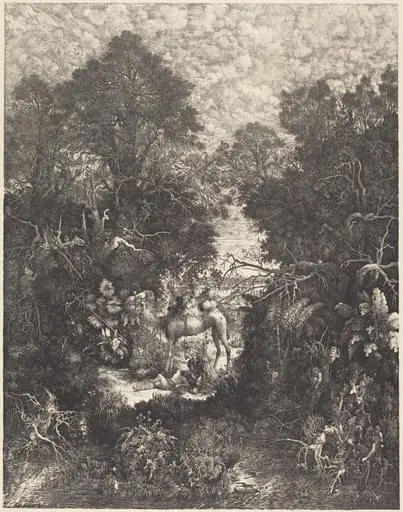
Bug-Jargal is an ink print by the Romanticist artist Célestin Nanteuil. It dates from 1832 and is held in the collection of the National Gallery of Art.
About this work
Overview
Trained at the École des Beaux-Arts under Langlois and Ingres, he was active as an illustrator and later held curatorial roles in Dijon.
Célestin Nanteuil created the 1832 etching Bug-Jargal as part of his engagement with French Romantic printmaking. Trained at the École des Beaux-Arts under Langlois and Ingres, he was active as an illustrator and later held curatorial roles in Dijon. This work stems from his broader practice of translating literary and historical subjects into graphic form, reflecting the period’s fascination with exoticism and emotional intensity.
Subject & Meaning
The etching depicts Bug-Jargal, a central figure from Victor Hugo’s 1826 novel of the same name, set during the Haitian Revolution. He is shown bare-chested, draped in a white garment, holding a large leaf amid dense vegetation. Surrounding figures and a distant castle suggest a landscape of conflict and natural abundance.
The image conveys the tension between civilization and wilderness, aligning with Romantic themes of noble savagery and colonial upheaval.
Technique & Style
Nanteuil employed etching and drypoint to achieve rich tonal variation and intricate texture. Fine lines define the foliage and figures, while deeper incisions create shadows and depth. The medium’s capacity for fine detail allowed him to render the lush environment and the figure’s muscular form with a tactile quality. The composition avoids idealization, favoring atmospheric immediacy over classical precision, characteristic of Romantic graphic art.
History & Provenance
The print was produced shortly after Hugo’s novel appeared, capitalizing on its public resonance. Nanteuil’s association with literary illustration placed him within a network of artists responding to contemporary fiction. While the original publication context is documented, the etching’s early ownership records are sparse. It later entered institutional collections, reflecting its status as a significant example of 1830s French print culture.
Context
Nanteuil’s work emerged during a period when French artists increasingly turned to colonial narratives and non-European subjects. The Haitian Revolution and its aftermath fueled literary and visual interest in rebellion, identity, and racial dynamics. Bug-Jargal fits within this trend, mirroring Romanticism’s broader preoccupation with the exotic, the tragic, and the sublime in human experience.
Legacy
Though Nanteuil is less known today than his contemporaries, Bug-Jargal remains a notable example of Romantic printmaking tied to literary adaptation. It illustrates how visual artists engaged with political and cultural debates through illustration. The work contributes to understanding how 19th-century French print culture mediated complex colonial narratives, influencing later illustrative traditions.
Own this work as a print
Artist & collection
Artist
Célestin-François Nanteuil-Lebœuf, known as Célestin Nanteuil (French pronunciation: ; 11 July 1813 – 6 September 1873), was a French painter, engraver and illustrator closely tied to the Romantic movement in France.