Artist
William Perkins Babcock
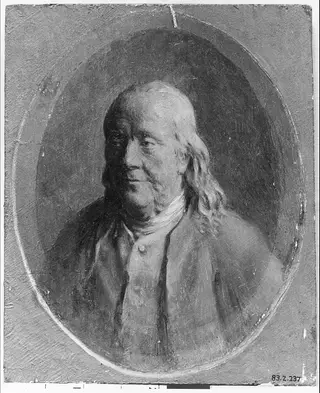
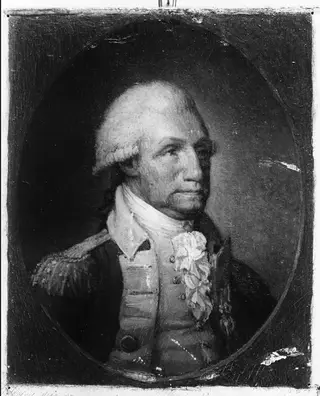
United States
William Perkins Babcock is an United States American Impressionism artist. 12 works are cataloged here, principally at Museum of Fine Arts Boston.
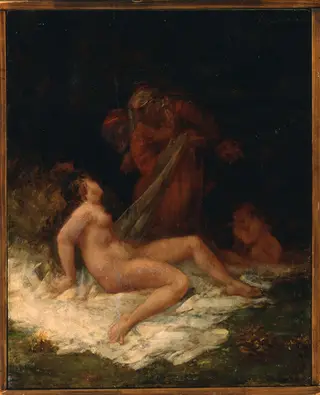
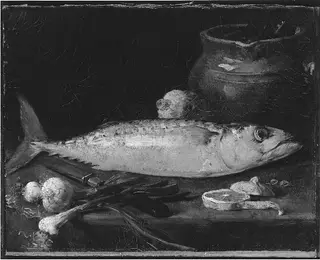
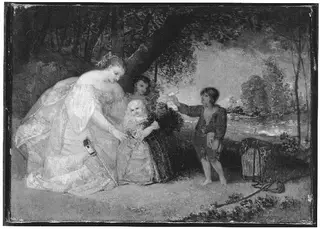
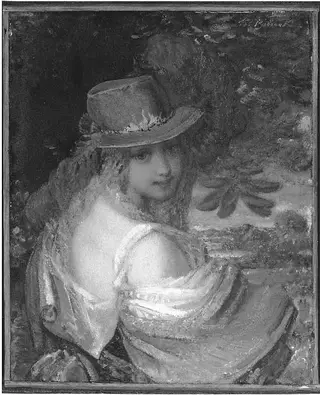
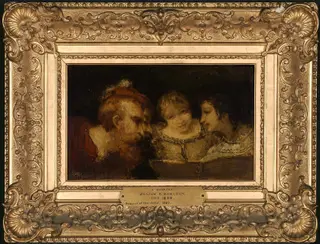
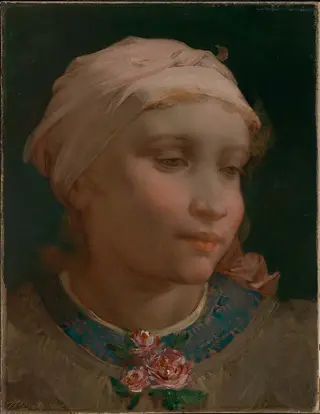
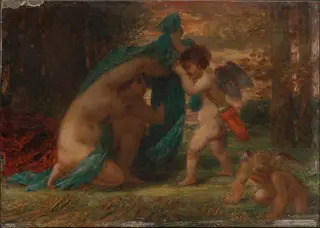
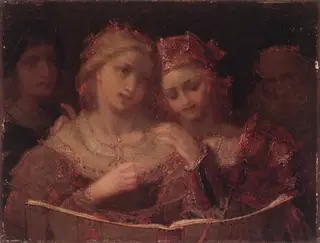
William Perkins Babcock painted quiet 19th-century scenes where figures gather or pause—look at *Girl with a Pink Bonnet* (1865) or the musicians in *The Quartet* (1861). His oils blend genteel New England life with softly lit interiors and garden paths. One canvas even sets a “Classical Scene” (1852) against draped fabrics and columns, a small echo of academic training. Next, step inside *The Red Hat* (1862) and watch the slant of afternoon light on a single figure’s shoulder.
Overview
William Perkins Babcock (1826-1899) was an American painter and draftsman who spent nearly his entire career as an expatriate in France, becoming a significant bridge between American and French art circles in the mid to late nineteenth century. Born in Boston, he was among the earliest American artists to study with the influential French academic painter Thomas Couture, and he developed enduring friendships with leading figures of the Barbizon School, most notably Jean-François Millet. Babcock's work encompassed peasant scenes, biblical subjects, mythological themes, still lifes, and landscapes, and he was sufficiently esteemed in his lifetime to be considered, in 1863, one of the greatest painters in the United States. His role in introducing fellow American artists to Millet and the Barbizon aesthetic helped shape the reception of French naturalism in the United States.
Biography & dates
William P. Babcock was born on January 17, 1826, in Boston, Massachusetts. In 1847, at age twenty-one, he traveled to Paris to study painting with Thomas Couture, making him one of the first Americans to enter the atelier of this prominent French master. He established his studio in Montmartre at 46 rue Lepic. Babcock subsequently settled in the village of Barbizon, on the edge of the Fontainebleau Forest, where he lived for many decades in a small cottage described as being surrounded by roses. He remained in Barbizon until at least 1891, when records place him still in the village at 42 Grande Rue. After the death of his close friend Jean-François Millet in 1875, increasing numbers of tourists began visiting Barbizon, and Babcock, disturbed by their perceived irreverence, eventually relocated closer to Paris. In the mid-1890s he moved to Bois-d'Arcy, in the quartier de la Tremblaye, where he occupied half of an old villa. He died there on July 26, 1899. Throughout his life, Babcock maintained connections to the American art world, exhibiting regularly at the Boston Atheneum between 1853 and 1870 and at the National Academy of Design in 1863, while also beginning to show at the Paris Salon in 1868.
Style & movement
Babcock's artistic practice was shaped by his immersion in the French naturalist movement and his direct contact with the Barbizon School, a European trend toward increased naturalism in which the ideal subject was the everyday life of rural people. Working in multiple genres, he painted peasant scenes, biblical subjects, mythological themes, still lifes, and landscapes, and he also worked in charcoal. His figure painting was particularly influenced by Jean-François Millet, the leading Barbizon painter whose approach to peasant subjects left a marked impression on Babcock's own figurative work. While rooted in the naturalist ethos of Barbizon, Babcock's range extended beyond pure landscape or rural genre to encompass classical and religious themes, suggesting an artist who combined the technical training of Couture's academic atelier with the observational priorities of the Barbizon circle. His continued residence in Paris and his market connections to Boston indicate that he navigated both French and American artistic contexts throughout his career.
Major works
Specific titles of individual works by Babcock are not recorded in the available sources, but the range of his production is well documented. He painted peasant scenes, biblical subjects, mythological themes, still lifes, and landscapes. The Boston Museum of Fine Arts holds a large collection of his figurative works, reflecting his sustained market presence in his native city despite his lifelong residence in France. During his lifetime, he was particularly known for his landscapes and portraits. His exhibition record includes multiple showings at the Boston Atheneum from 1853 to 1870, the National Academy of Design in 1863, and the Paris Salon from 1868 onward. Babcock also acquired a significant personal collection of paintings by French Barbizon artists, including several works that Millet painted on commission for him.
Influences & students
Babcock's primary artistic training came from Thomas Couture, the French academic painter under whom he studied beginning in 1847. His most consequential artistic relationship, however, was his friendship with Jean-François Millet, which began after Babcock's arrival in France and lasted until Millet's death in 1875. Babcock was present at Millet's second marriage in 1853 and signed his friend's death certificate in 1875, testament to the depth of their bond. Babcock played a pivotal role as an intermediary between the Barbizon School and American artists, introducing William Morris Hunt, George Inness, and Robert Loftin Newman to Millet at a time when the French Academic art world reviled Millet's work. Hunt in particular became a strong exponent of the Barbizon School in America as a result of this connection. Babcock was also introduced to the wood engraver Timothy Cole while in Barbizon; the two became close friends, and Babcock was described by Cole as one of the best authorities on art matters in Europe. Later, concerned about living alone in old age, Babcock invited Cole and his sons to spend summers in the other half of his villa at Bois-d'Arcy. There is no record of Babcock himself teaching pupils or maintaining a formal atelier.
Legacy
Babcock's posthumous reputation rests primarily on his role as a conduit for Barbizon naturalism in America and his personal friendships with major artists of the period. In 1863, he was considered one of the greatest painters in the United States, a remarkable standing for an artist who had already spent sixteen years abroad. His collection of Barbizon paintings, including commissioned works by Millet, represented a significant assembly of the movement's output, though the subsequent disposition of this collection is not recorded. The Boston Museum of Fine Arts preserves a substantial group of his figurative works, ensuring ongoing scholarly access to his painted oeuvre. His market in Boston during his lifetime suggests that his work found appreciative audiences in both France and the United States. The friendship with Timothy Cole endured until Babcock's final years and produced an unusual late-life domestic arrangement that speaks to the personal esteem in which he was held. While no pupils are recorded, his influence operated through the artists he introduced to Millet, particularly William Morris Hunt, whose promotion of Barbizon aesthetics in America carried Babcock's enthusiasms into broader artistic circles.
Works by William Perkins Babcock
Collections represented


Artists in a similar vein
Artist