Artist
Kanō Yasunobu

Japan
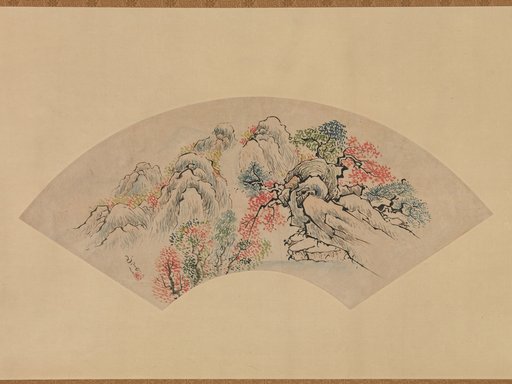
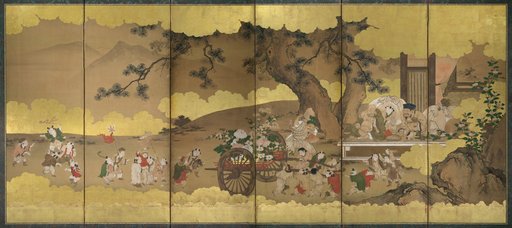
Kanō Yasunobu is a Japan Baroque artist. 8 works are cataloged here, principally at Metropolitan Museum of Art.
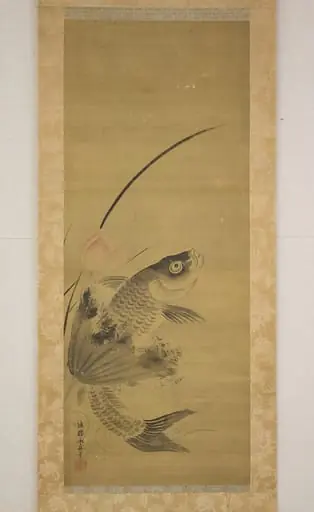
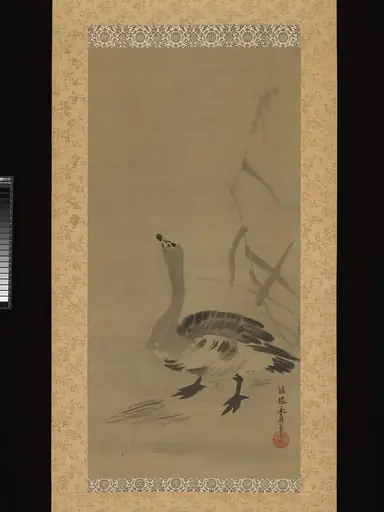
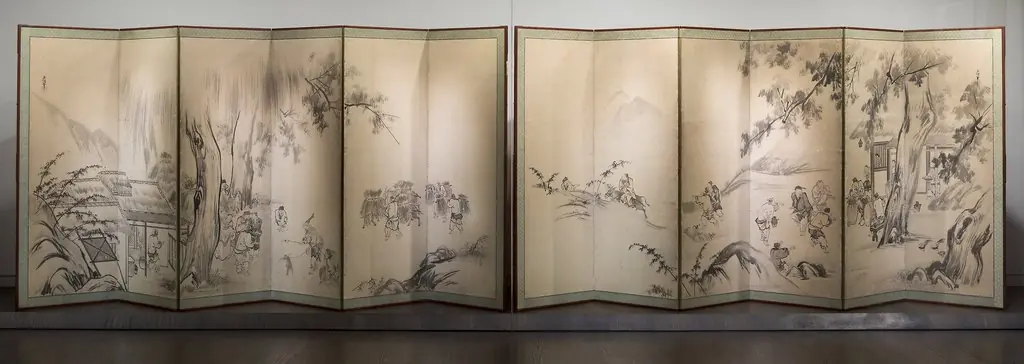
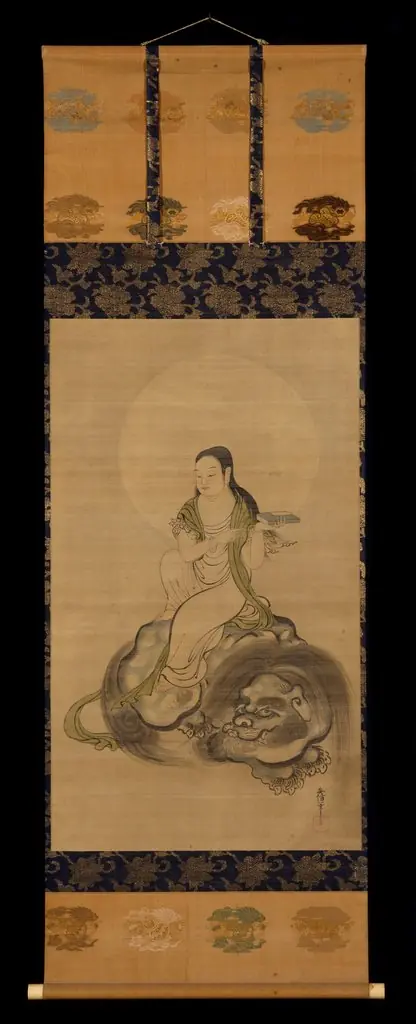
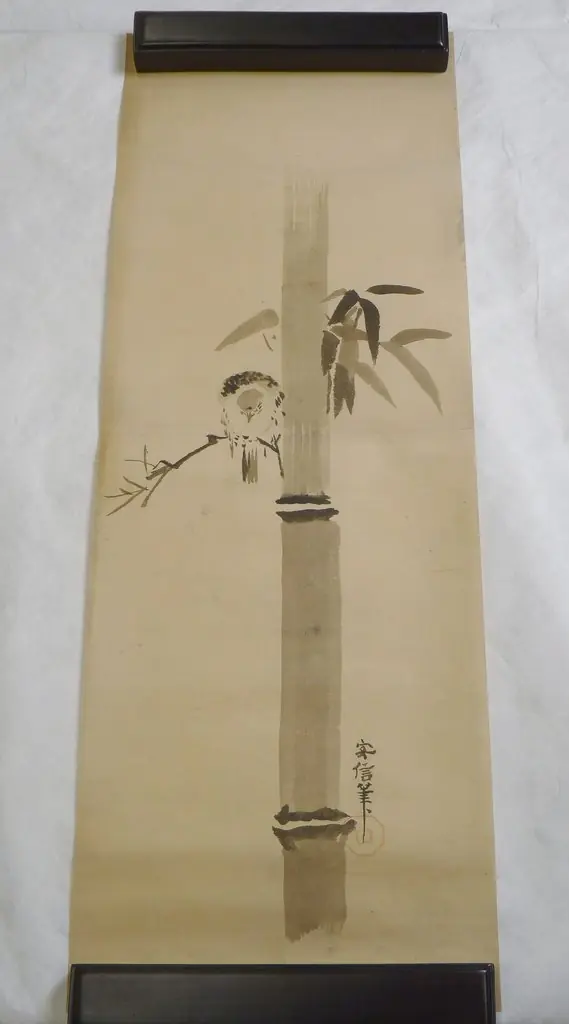
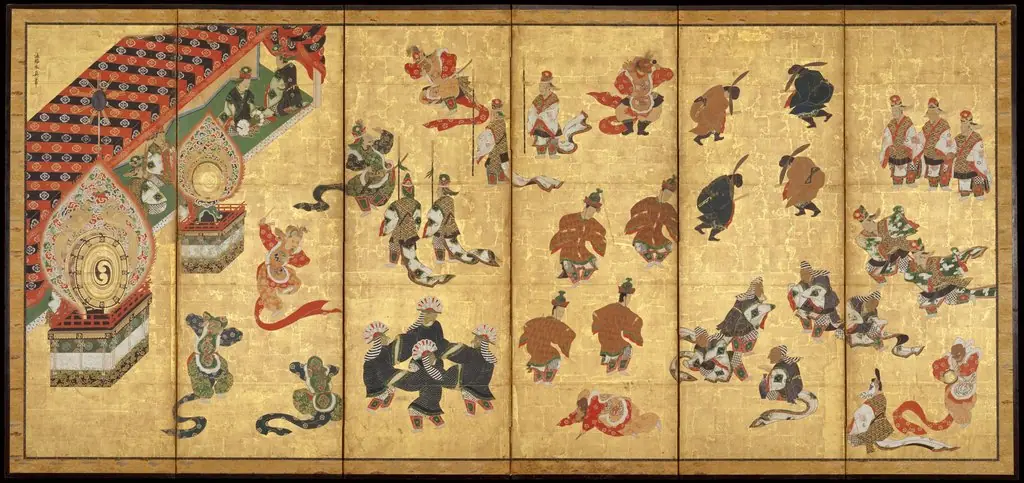
Kanō Yasunobu (狩野 安信, 10 January 1614 – 1 October 1685) was a Japanese painter of the Kanō school of painting during the Edo period. He was the third son of Kanō Takanobu, who had been head of the school, and succeeded Kanō Sadanobu as head of the Kyoto branch in 1623 until he joined his brothers in . Yasunobu was the youngest brother of Kanō Tan'yū, one of the most prominent painters of the Kanō school. His best remembered work is the Gadō Yōketsu, a Kanō school history and training manual. He also worked under the art names Eishin (永真) and Bokushinsai (牧心斎).
Overview
Kano Yasunobu (1614-1685) was a Japanese painter of the early Edo period and a central figure in the Kano school, the dominant painting academy in Japan from the late medieval through early modern eras. The third son of Kano Takanobu, head of the school, Yasunobu led the Kyoto branch from 1623 before eventually joining his elder brothers in Edo as an official painter (goyo eshi) for the Tokugawa shogunate. Though his artistic skill is generally regarded as inferior to that of his celebrated brothers Tan'yu and Naonobu, Yasunobu secured his historical importance through scholarship and institutional leadership. His most significant contribution was the Gadō Yōketsu (1680), the first written training manual and history of the Kano school, which codified techniques previously transmitted only through oral instruction. He also worked under the art names Eishin and Bokushinsai.
Biography & dates
Kano Yasunobu was born in Kyoto on 10 January 1614, the third son of Kano Takanobu (1571-1618). His father died when Yasunobu was still a child. Following Takanobu's death in 1618, the Kyoto line continued under Kano Sadanobu, son of Kano Mitsunobu, who adopted Yasunobu because he had no heir. In 1623, Yasunobu succeeded Sadanobu as head of the Kyoto Kano at the age of nine. He studied painting under Kano Koi and his elder brother Tan'yu. During the Kan'ei era (1624-1644), he moved to Edo, where his brothers had already established themselves as goyo eshi, exclusive painters for the Tokugawa shogunate. In Edo, he received a residence at Nakabashi and founded the Nakabashi branch, which became the main line (honke) of the Kano school from that time. He was awarded the honorary title Hogen in 1662. Yasunobu participated in screen and wall paintings (shoheki-ga) for the imperial palace in Kyoto across multiple eras, including the Kan'ei, Joo (1652-1654), Kambun (1661-1672), and Empo (1673-1680) periods, working on buildings such as the Shishinden. He died in Edo on 1 October 1685 at the age of 72 and was buried at Hommon-ji in Ikegami.
Style & movement
Yasunobu's artistic approach was characterized by disciplined study and faithful copying of masters' models. His color work followed the idiom of his brother Tan'yu, while his ink wash painting possessed what contemporaries described as realistic vigour. The sources consistently note that his technique was studied rather than spontaneous, learned through careful replication rather than personal innovation. This methodical approach aligned with the Kano school's emphasis on technical mastery and the transmission of established conventions. His work in shoheki-ga (screen and wall paintings) for both the imperial palace in Kyoto and shogunal commissions exemplifies the Kano school's role as the official painting academy serving both court and military elite during the Edo period.
Major works
Yasunobu's most celebrated and historically significant work was not a painting but a text: the Gadō Yōketsu (画道要訣, The Secret Way of Painting), published in 1680. This work served as both a history of the Kano school and a training manual for its painters. Before its publication, Kano techniques were transmitted orally from master to apprentice, with considerable disunity in teaching methods across the school's various branches. The Gadō Yōketsu thus represented a crucial institutional innovation, standardizing instruction and preserving knowledge in written form. Among his painted works, his wall paintings at Gyokurin-in, a subtemple of Daitoku-ji in Kyoto, are noted as particularly well known. He also collaborated with his brother Tan'yu on decorations for Nijo Castle in Kyoto.
Influences & students
Yasunobu's primary teachers were Kano Koi and his elder brother Kano Tan'yu (1602-1674), one of the most prominent painters of the Kano school. The family structure of the Kano school was central to its operation: his father Takanobu had established the framework, while his brothers Tan'yu and Naonobu moved to Edo to become goyo eshi for the Tokugawa shogunate. Yasunobu's adoption by dors Sadanobu in 1623 positioned him to maintain the Kyoto line before he too joined the Edo establishment. The Nakabashi branch that Yasunobu founded in Edo became the main line (honke) of the Kano school. The sources do not specify individual pupils by name, but his manual the Gadō Yōketsu served as a pedagogical tool for subsequent generations of Kano painters.
Legacy
Yasunobu's posthumous reputation rests primarily on his institutional and scholarly contributions rather than on his painting. Contemporary and later assessments have generally ranked his artistic skill below that of his brothers Tan'yu and Naonobu, yet his role in codifying Kano practice proved essential to the school's longevity. The Gadō Yōketsu ensured the systematic transmission of techniques across branches and generations, addressing the disunity that had characterized earlier oral instruction. As founder of the Nakabashi branch in Edo, he established a lineage that became the main line of the Kano school. His burial at Hommon-ji in Ikegami, at the edge of Edo, marks his permanent association with the city where he had built his career. The sources note his continued recognition in standard reference works on Japanese art, including the Biographical Dictionary of Japanese Art and A Dictionary of Japanese Artists.
Works by Kanō Yasunobu
Collections represented


Artists in a similar vein