Artwork
Untitled
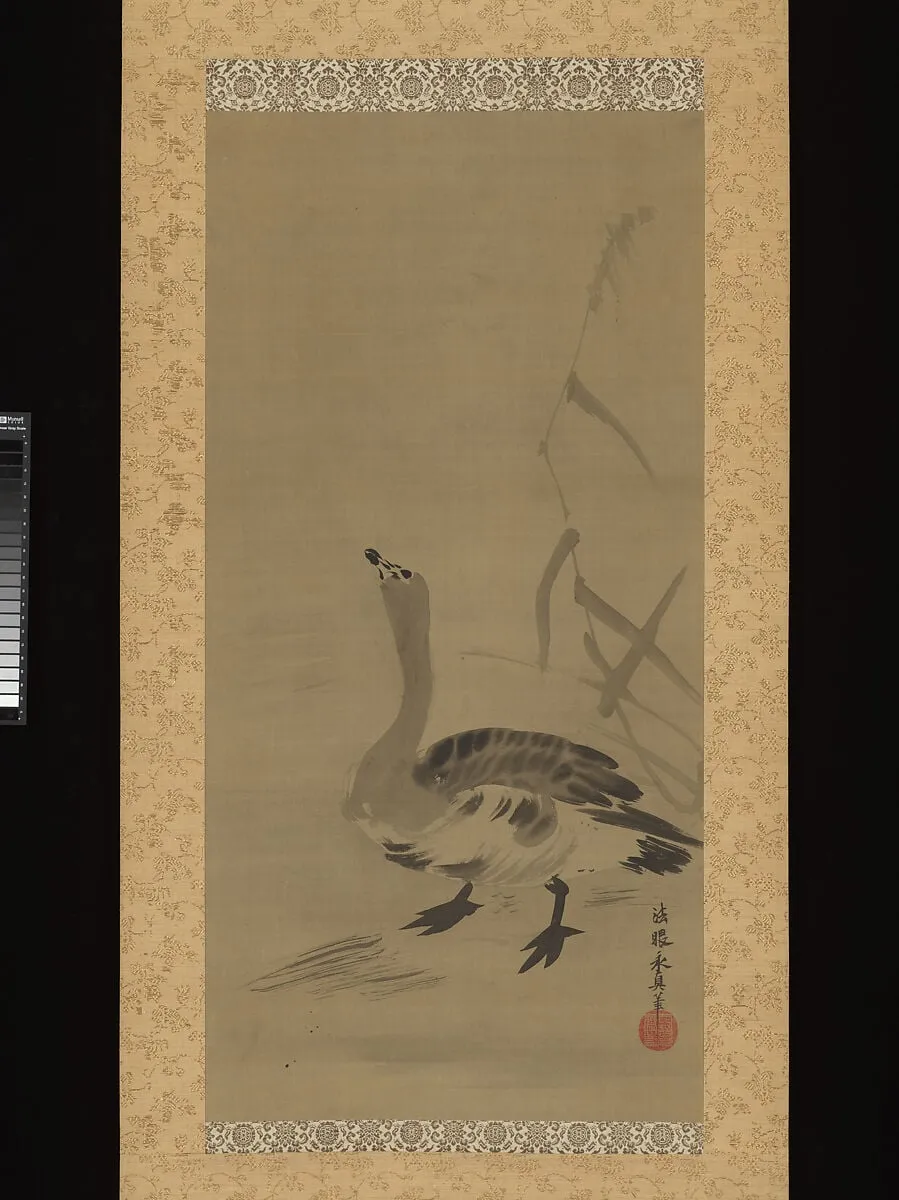
Untitled is an ink painting by the Baroque artist Kanō Yasunobu. It dates from 1649 and is held in the collection of the Metropolitan Museum of Art.
- Accession no.
- 36.100.93
About this work
Subject & Meaning
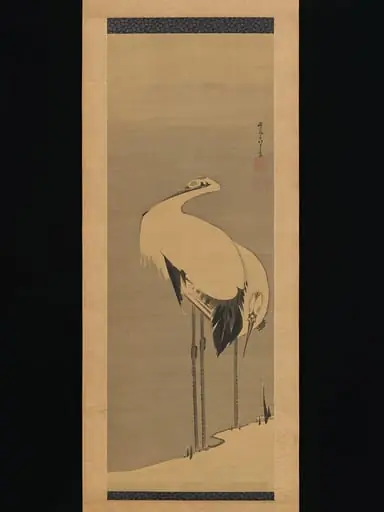
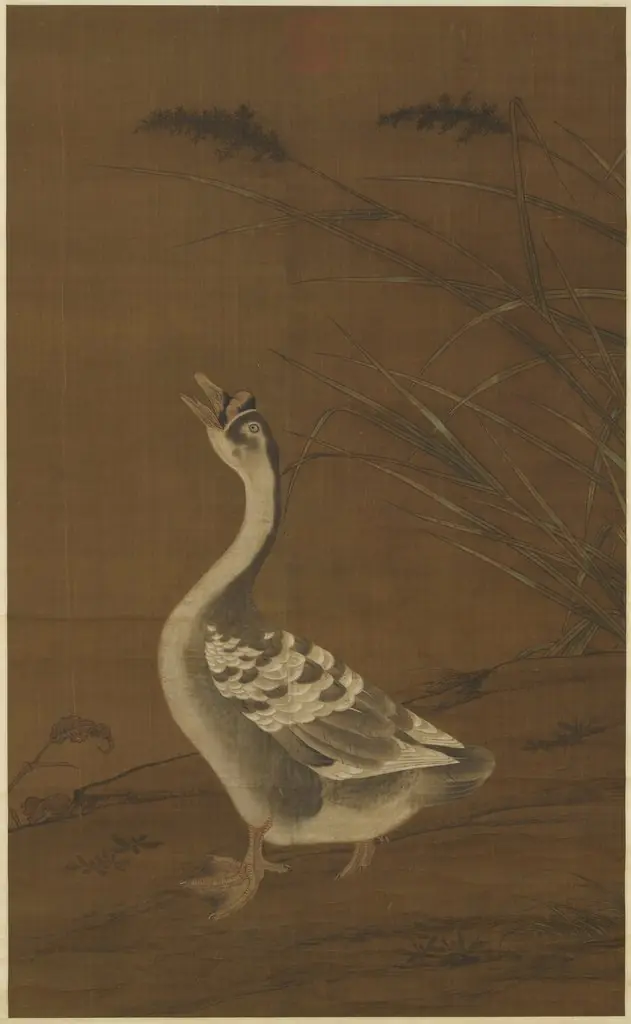
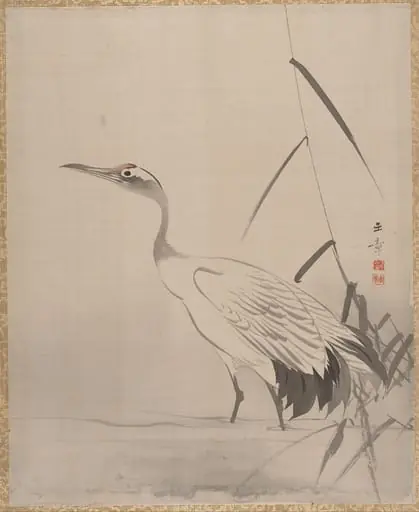
The solitary bird stands near a narrow stream or shoreline, its posture suggesting alertness or stillness.
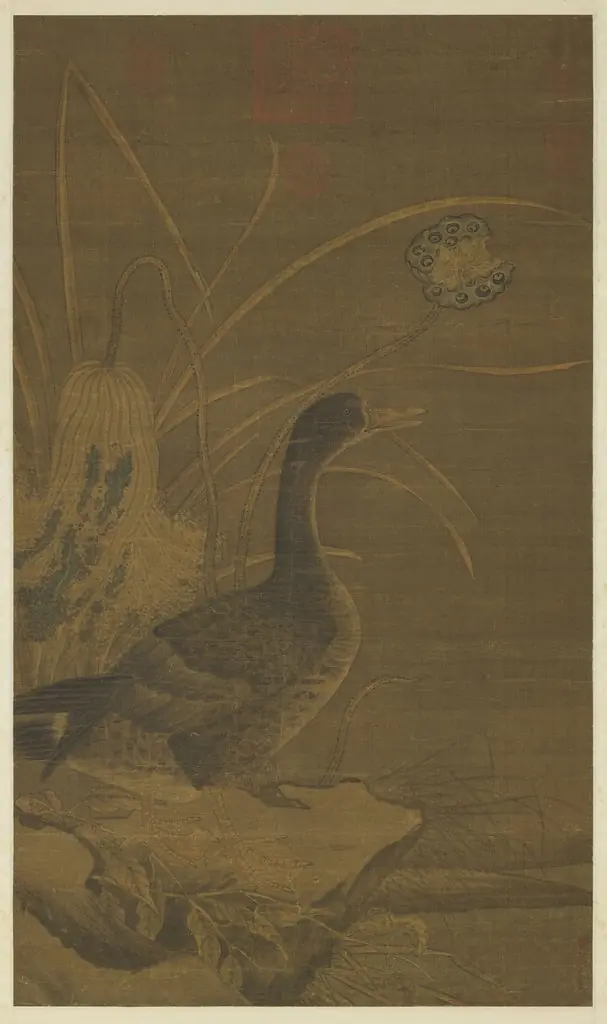
The painting depicts a goose amid a sparse landscape, rendered in ink on silk as a hanging scroll. The solitary bird stands near a narrow stream or shoreline, its posture suggesting alertness or stillness. The composition's minimalism and the bird's prominent placement emphasize a quiet, reflective mood, aligning with the literati-inspired aesthetics cultivated by the Kanō school in mid-seventeenth-century Japan.
Technique & Style
This 1649 hanging scroll by Kano Yasunobu is executed in ink on silk, a traditional medium for Japanese landscape painting. The work depicts a goose and functions as a vertical panel measuring 81.9 cm in height and 40.6 cm in width. The composition relies on the fluid application of ink to define forms and atmospheric space on the silk support.
The hanging scroll format suggests its original function as a display object, likely intended for contemplation in a domestic or ceremonial setting.
History & Provenance
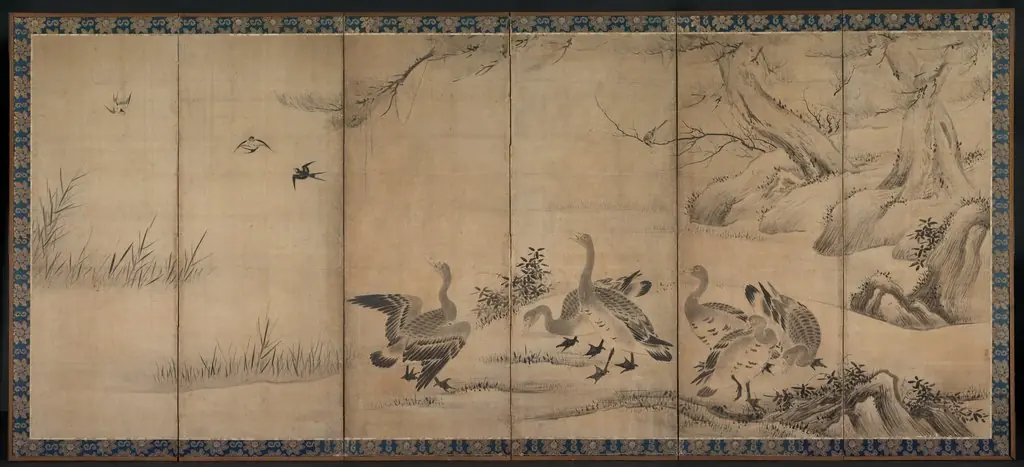
Untitled is a hanging scroll painted by Kano Yasunobu in 1649 using ink on silk. It portrays a goose within a landscape composition and measures 81.9 cm in height and 40.6 cm in width. The scroll was produced in Japan and is now held in the collection of the Metropolitan Museum of Art, New York. No accession number, specific gallery, or exhibition history is documented in the available sources.
Overview
Kano Yasunobu's Untitled, created in 1649, is an ink-on-silk hanging scroll. This landscape painting features geese, rendered with delicate brushwork that captures their movement and the atmospheric quality of the scene. It exemplifies the artist's skill in conveying natural forms and seasonal themes through the monochromatic medium, reflecting the aesthetic sensibilities prevalent in 17th-century Japanese art.
Context
During the 1600s, Japanese painters, including Kano Yasunobu, often worked exclusively with ink, exploring its capacity for diverse tonal variations and expressive forms. This choice of medium allowed artists to achieve both dynamic and subtle effects, aligning with the prevailing aesthetic values of the period. Yasunobu, as a key figure of the Kano school, continued this tradition, demonstrating the versatility and depth achievable with ink painting.
Artist & collection

Artist
Kanō Yasunobu (狩野 安信, 10 January 1614 – 1 October 1685) was a Japanese painter of the Kanō school of painting during the Edo period.