Artwork
Monkey Trainers and Scenes of Chinese Life
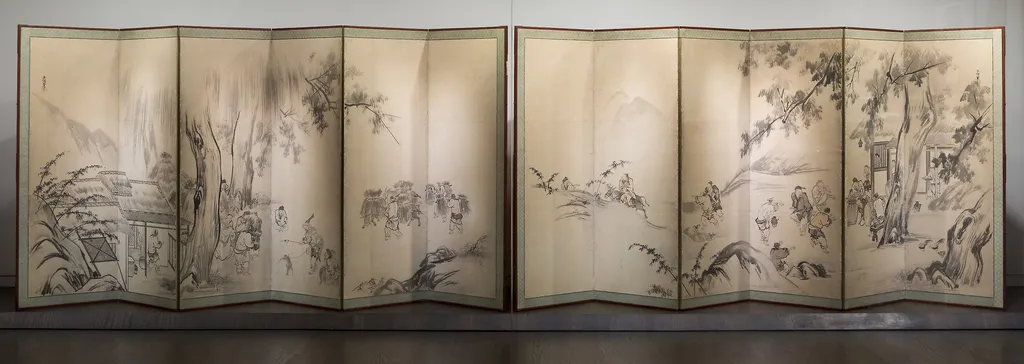
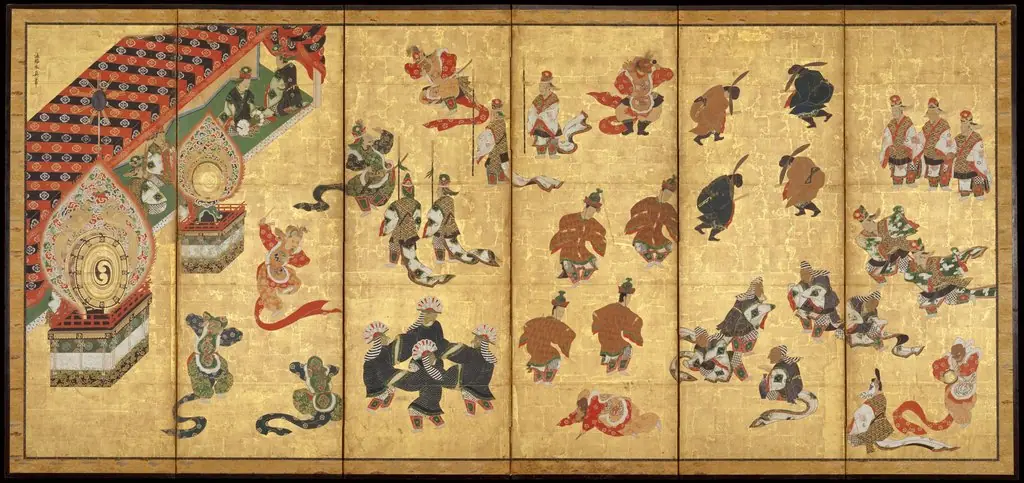
Monkey Trainers and Scenes of Chinese Life is an unspecified painting by the Kanō school artist Kanō Yasunobu. It dates from 1650 and is held in the collection of the Art Institute of Chicago.
About this work
Overview
Created circa 1650, Monkey Trainers and Scenes of Chinese Life is a hanging scroll by Kanō Yasunobu, a leading painter of the Edo‑period Kanō school. The work exemplifies the school’s decorative approach, combining strong ink lines with a lively composition that merges humor with the refined aesthetic of the period’s official painting tradition.
Subject & Meaning
The scroll presents a playful tableau in which monkeys, attired as trainers, direct human figures engaged in assorted tasks. This whimsical reversal of roles offers a satirical commentary on social hierarchies, using the absurdity of animal overseers to highlight the everyday activities of Chinese life that were popular motifs in Japanese art.
Technique & Style
Yasunobu employs the Kanō school’s characteristic bold brushwork, using dense black ink for outlines and washes of muted color to define forms. The composition is balanced yet dynamic, with decorative patterns that frame the central action, reflecting the family’s synthesis of Chinese literati influences and Japanese courtly painting techniques.
History & Provenance
Kanō Yasunobu, the third son of Kanō Takanobu and brother of the celebrated Kanō Tan’yū, headed the Kyoto branch of the Kanō school. The painting was likely produced for a private patron familiar with Chinese-themed genre scenes, and it has remained in Japanese collections, illustrating the school’s continued influence throughout the Edo era.
Artist & collection

Artist
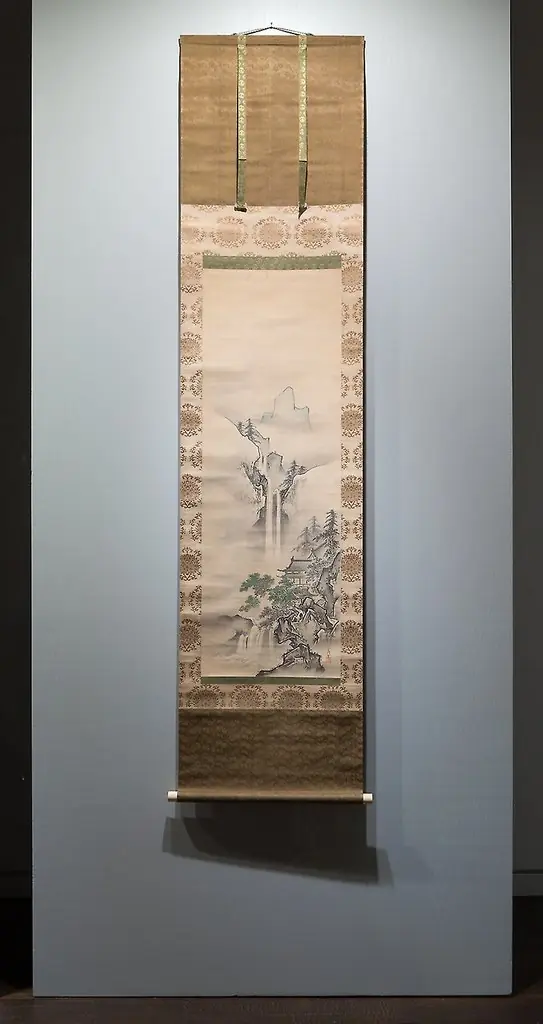
Kanō Yasunobu (狩野 安信, 10 January 1614 – 1 October 1685) was a Japanese painter of the Kanō school of painting during the Edo period.